The Redwood Labyrinth
An ephemeral land art installation at Canon Frome Court.
Listening to the Landscape
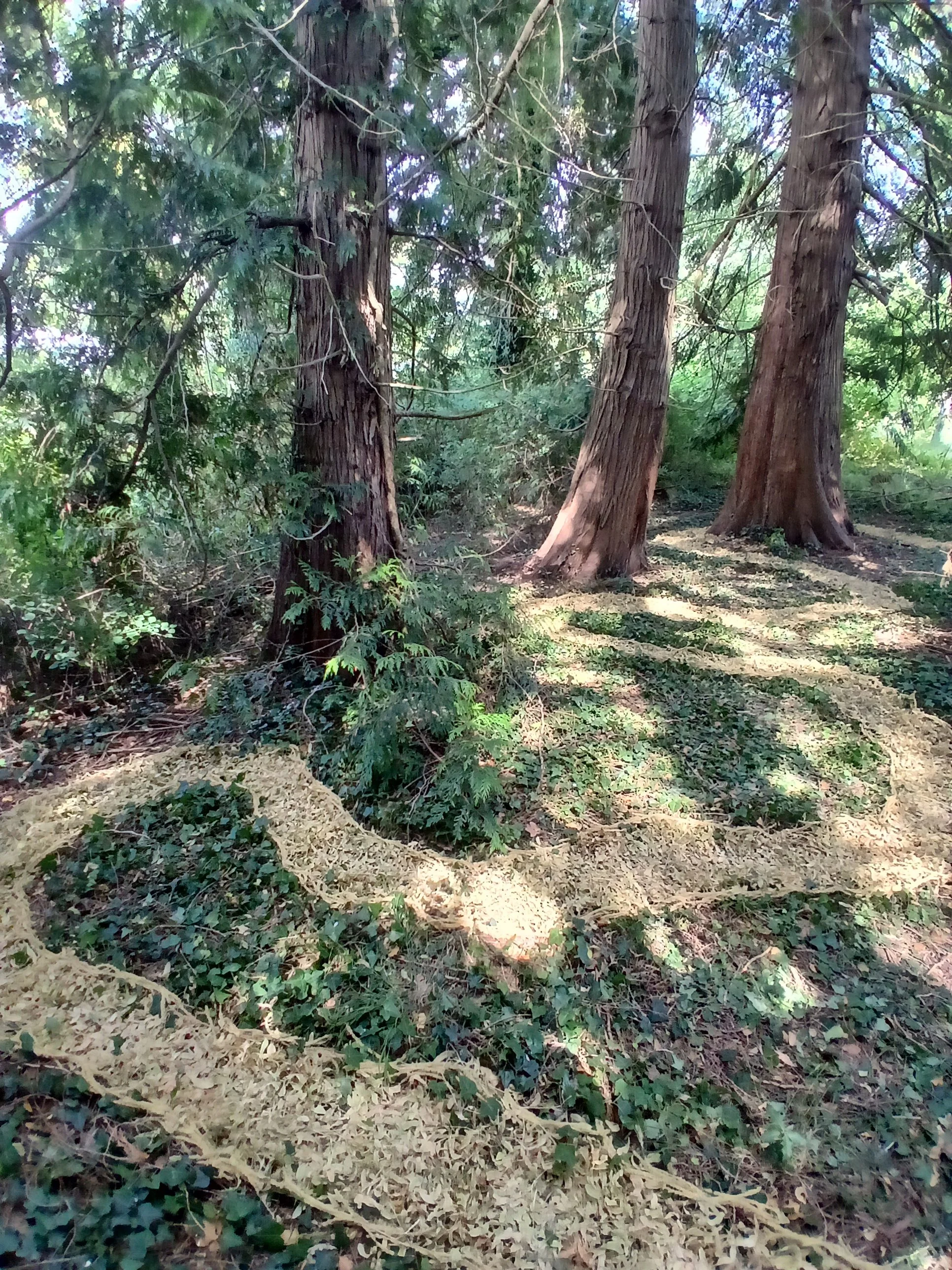
When I arrived at Canon Frome Court for my artist residency, I had no plan for the materials I would use to build a labyrinth, nor its shape. These were to be discovered during the residency.
I create transient, ephemeral land art, allowing the landscape itself to guide the process—and eventually to remove it too. Rather than arriving with predetermined materials or designs, I spend time listening to a place.
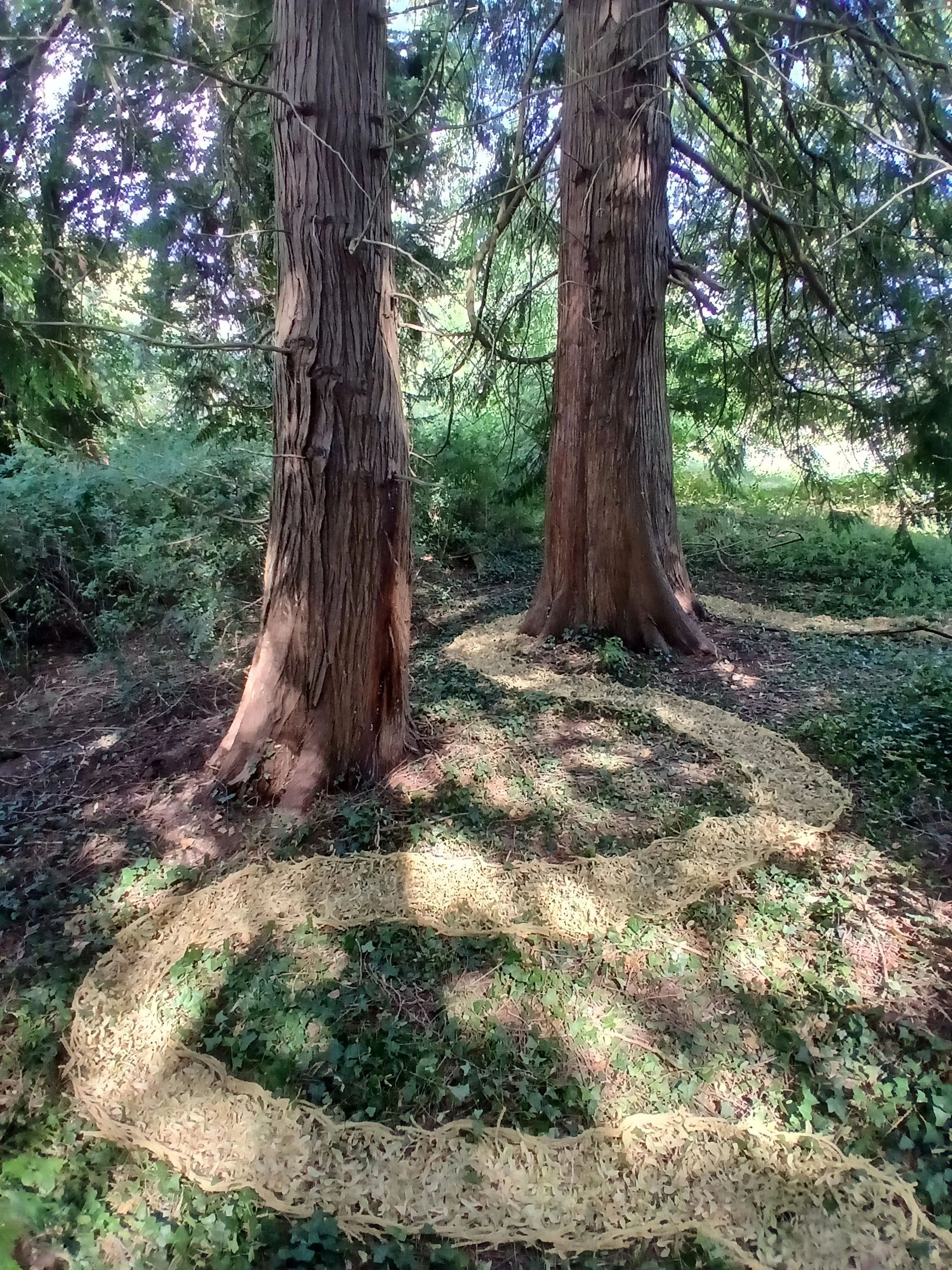
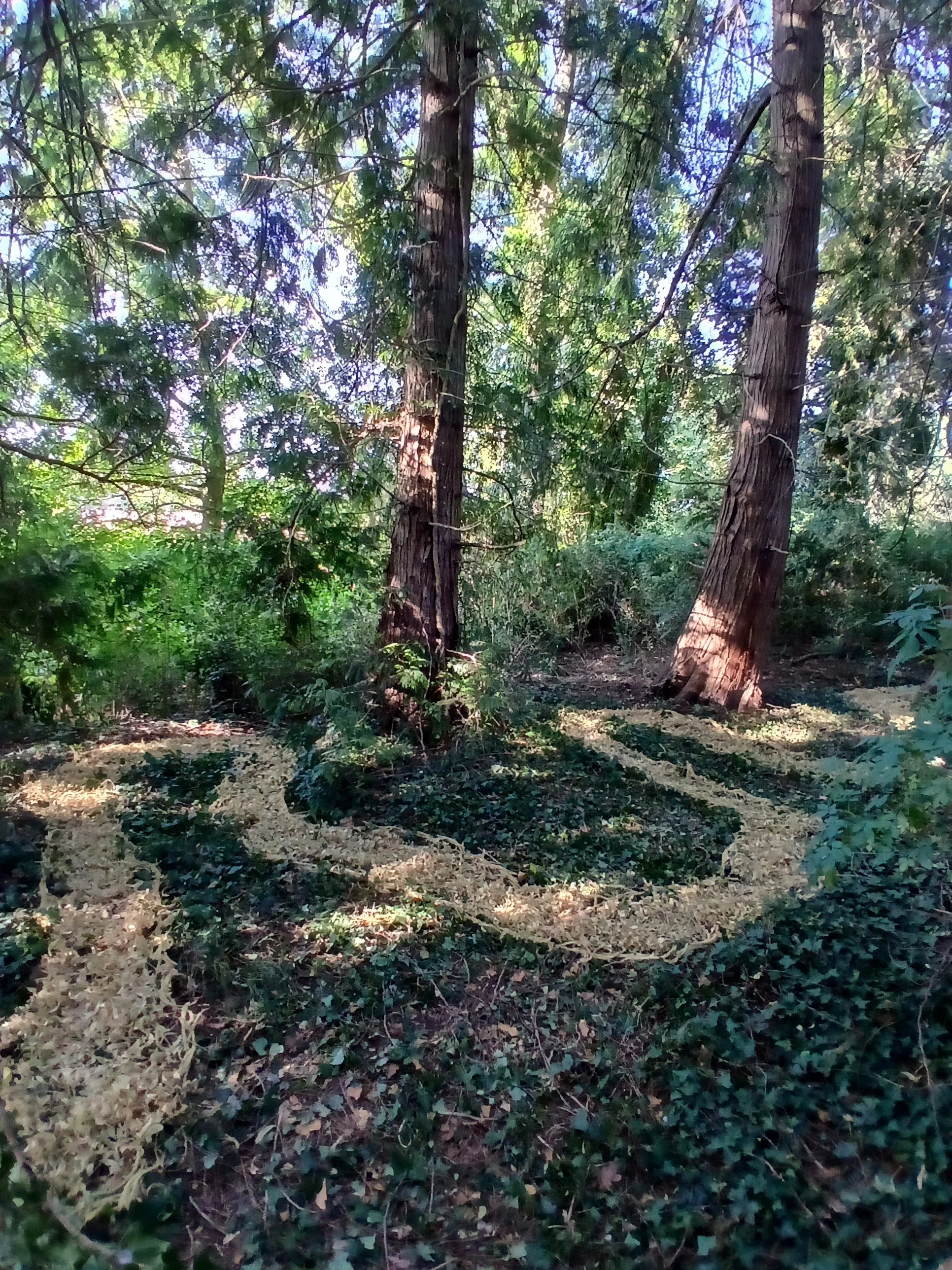
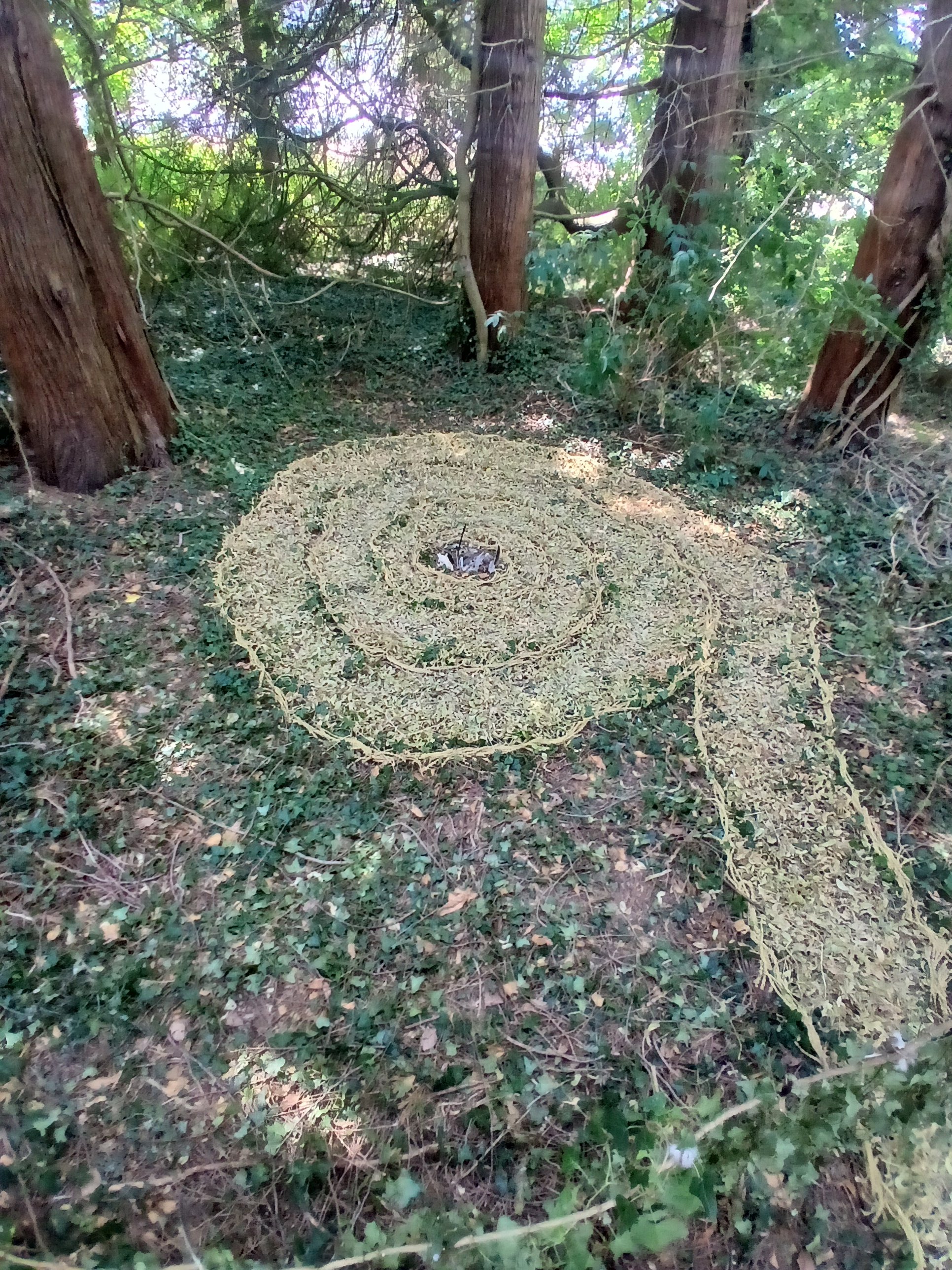
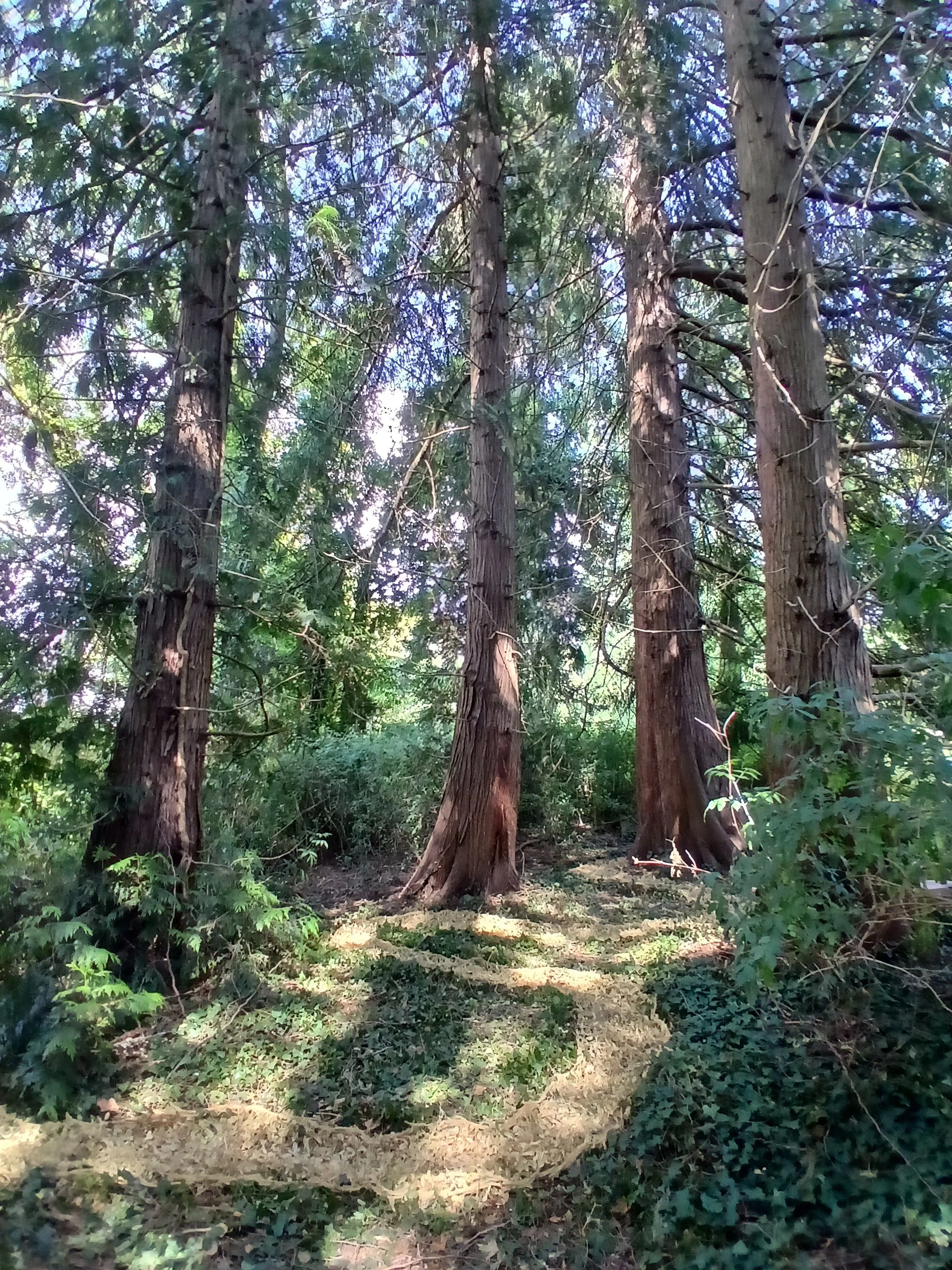
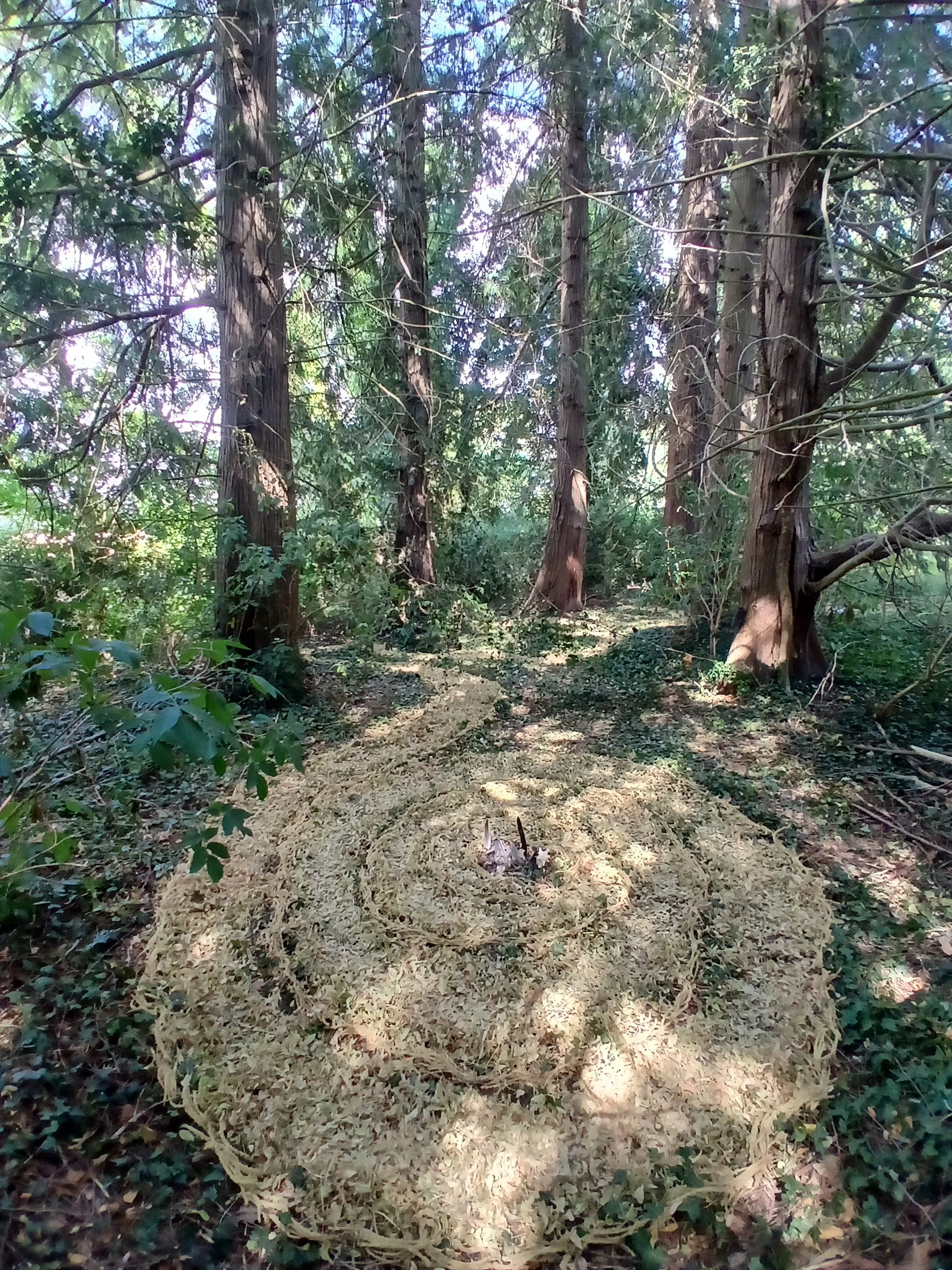
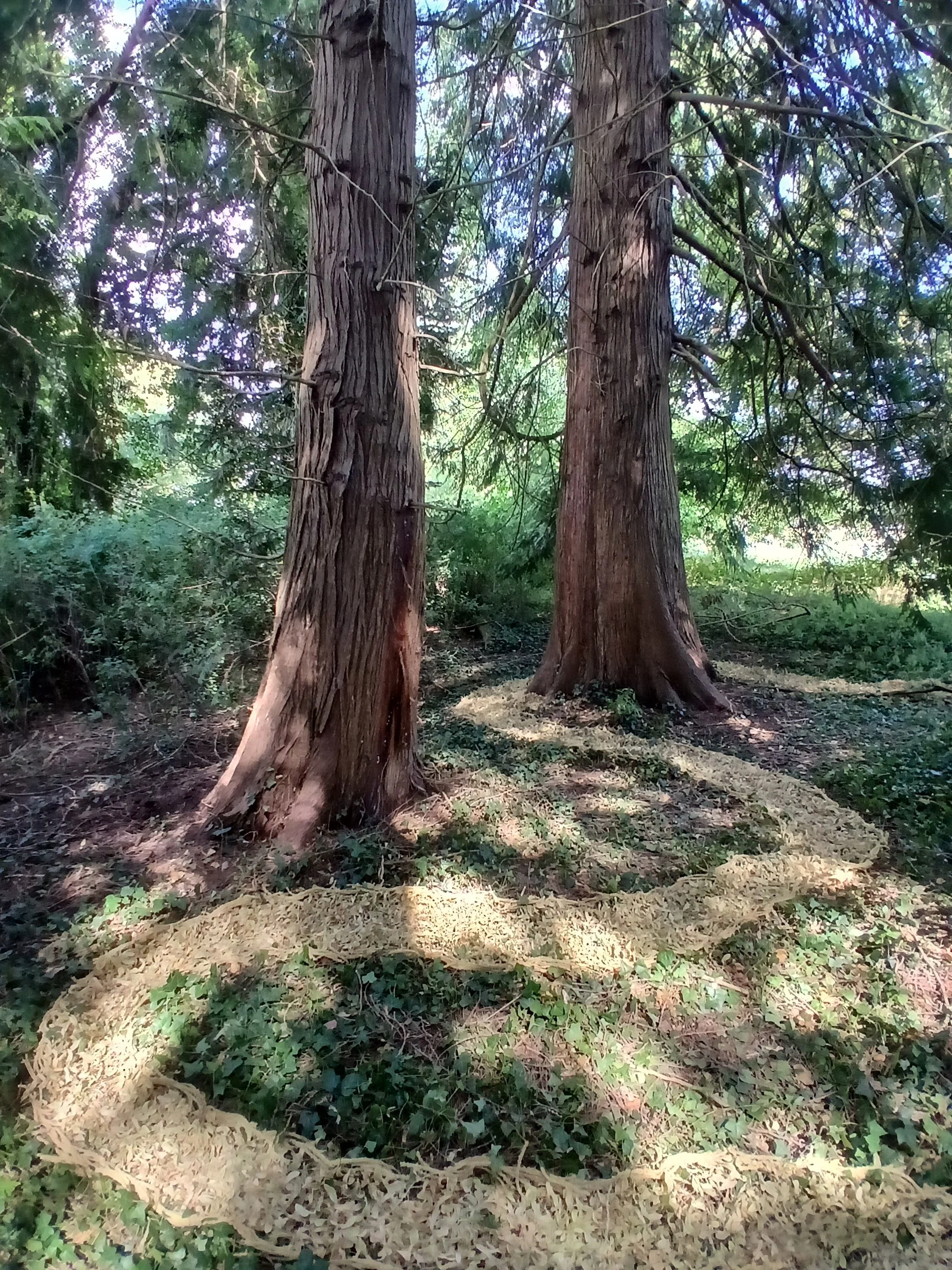
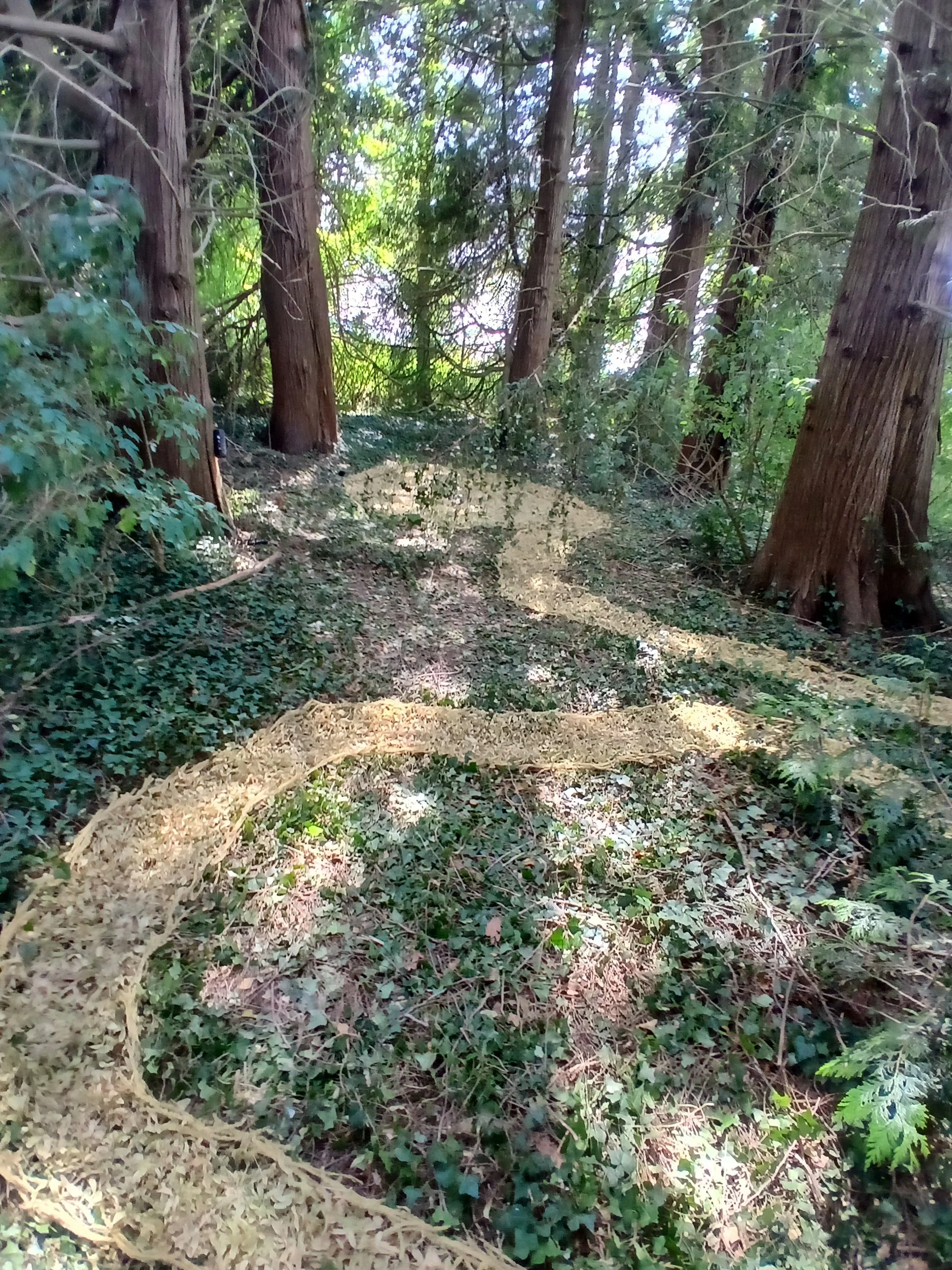
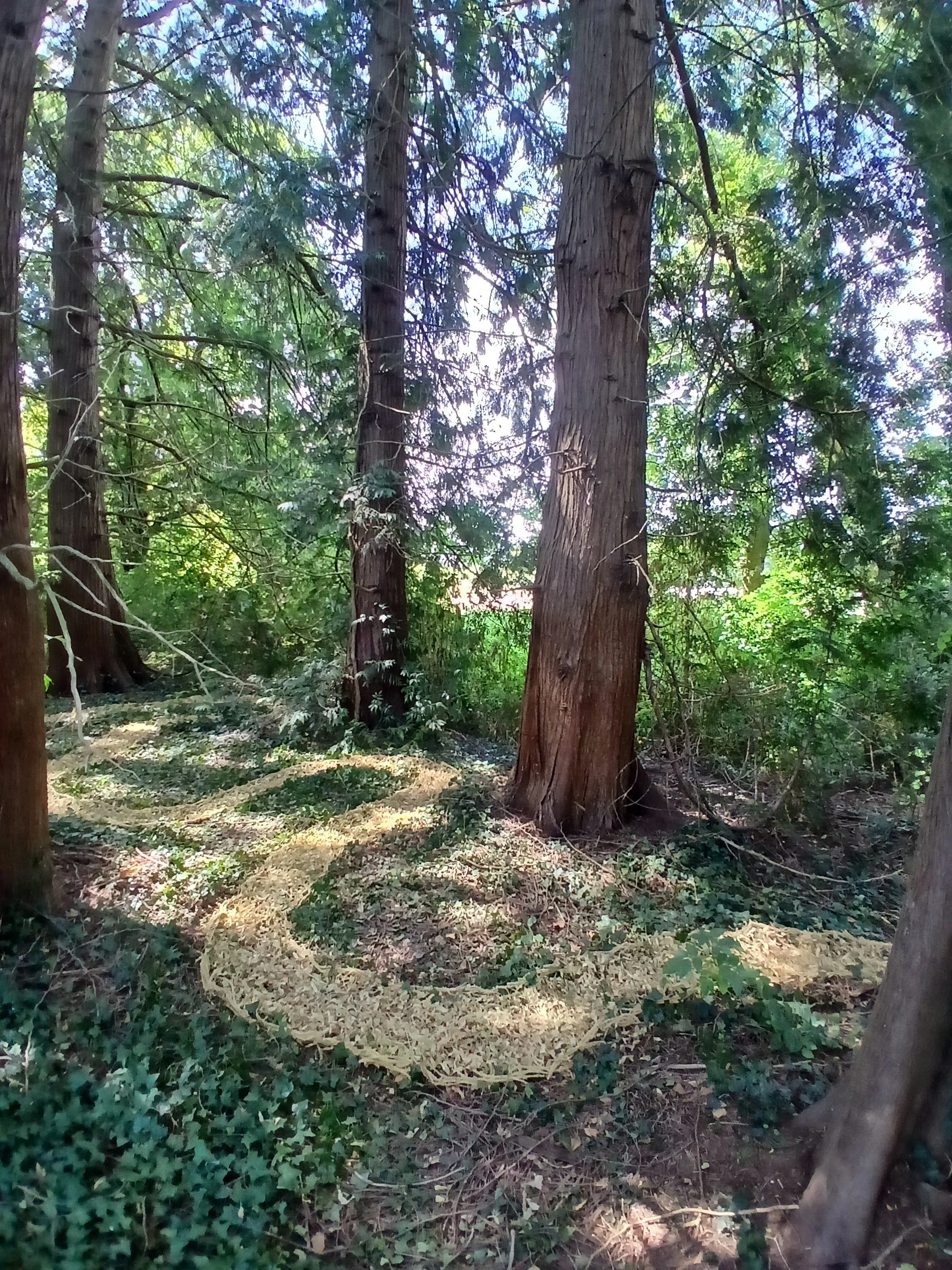
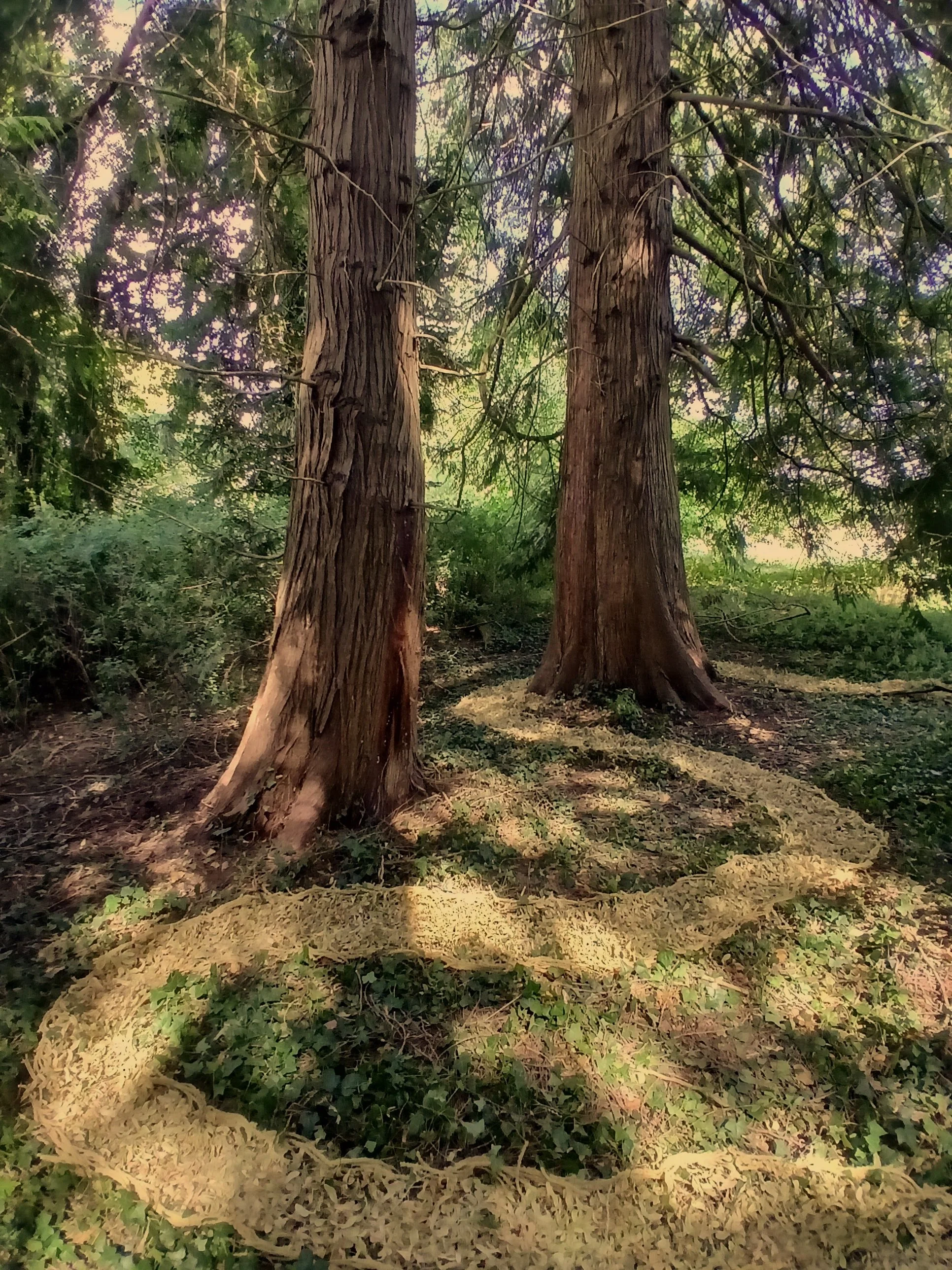
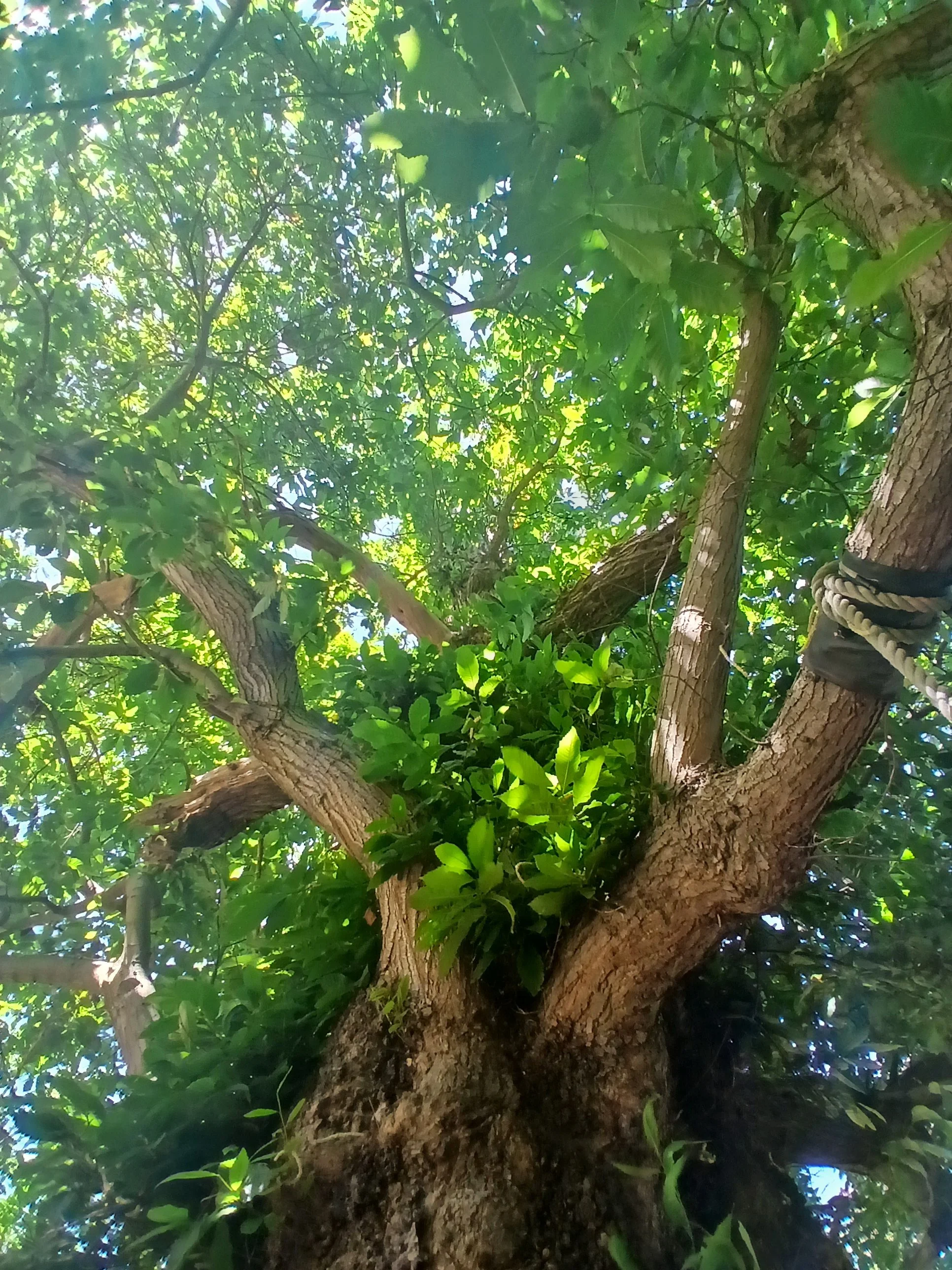
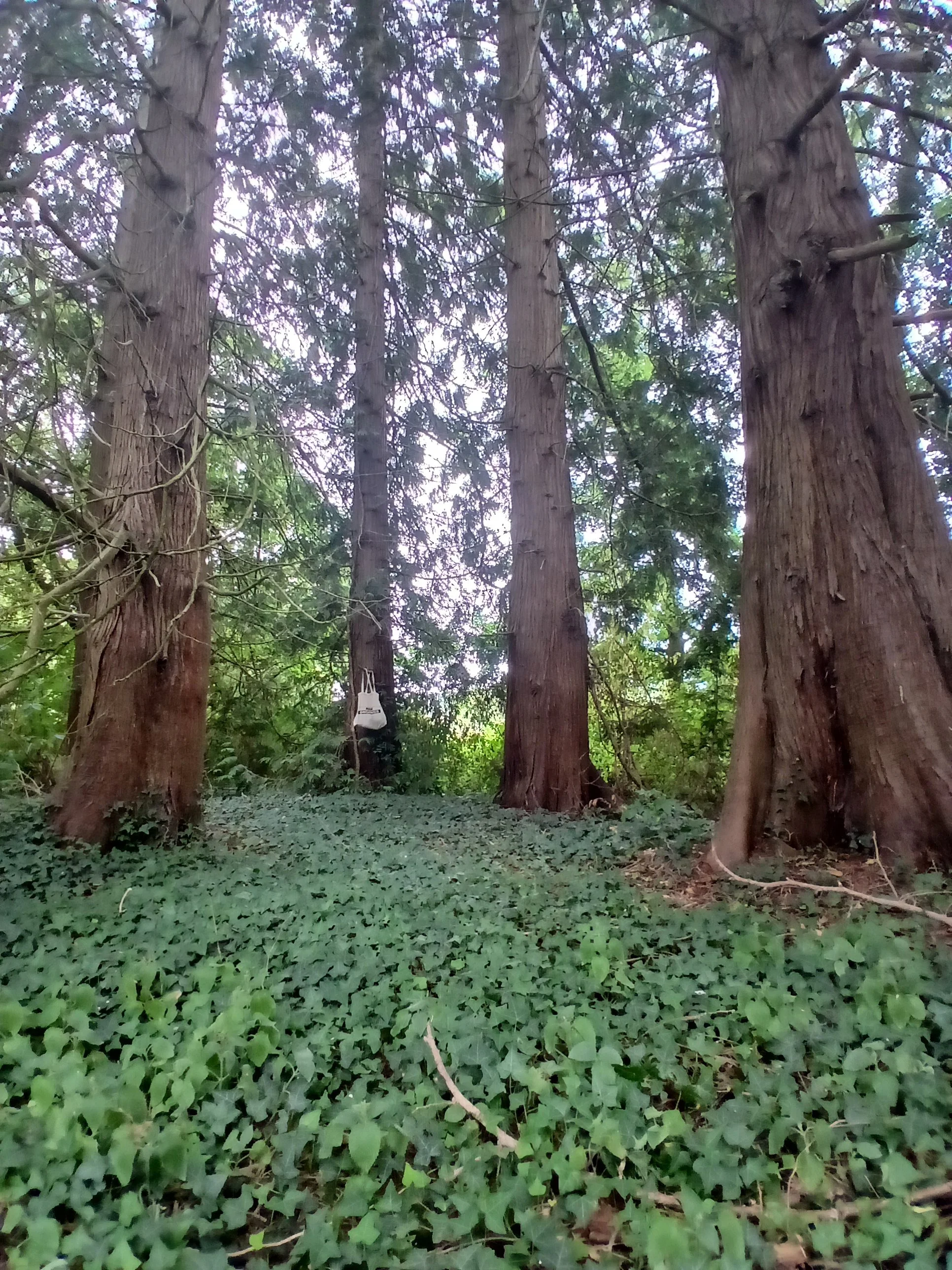
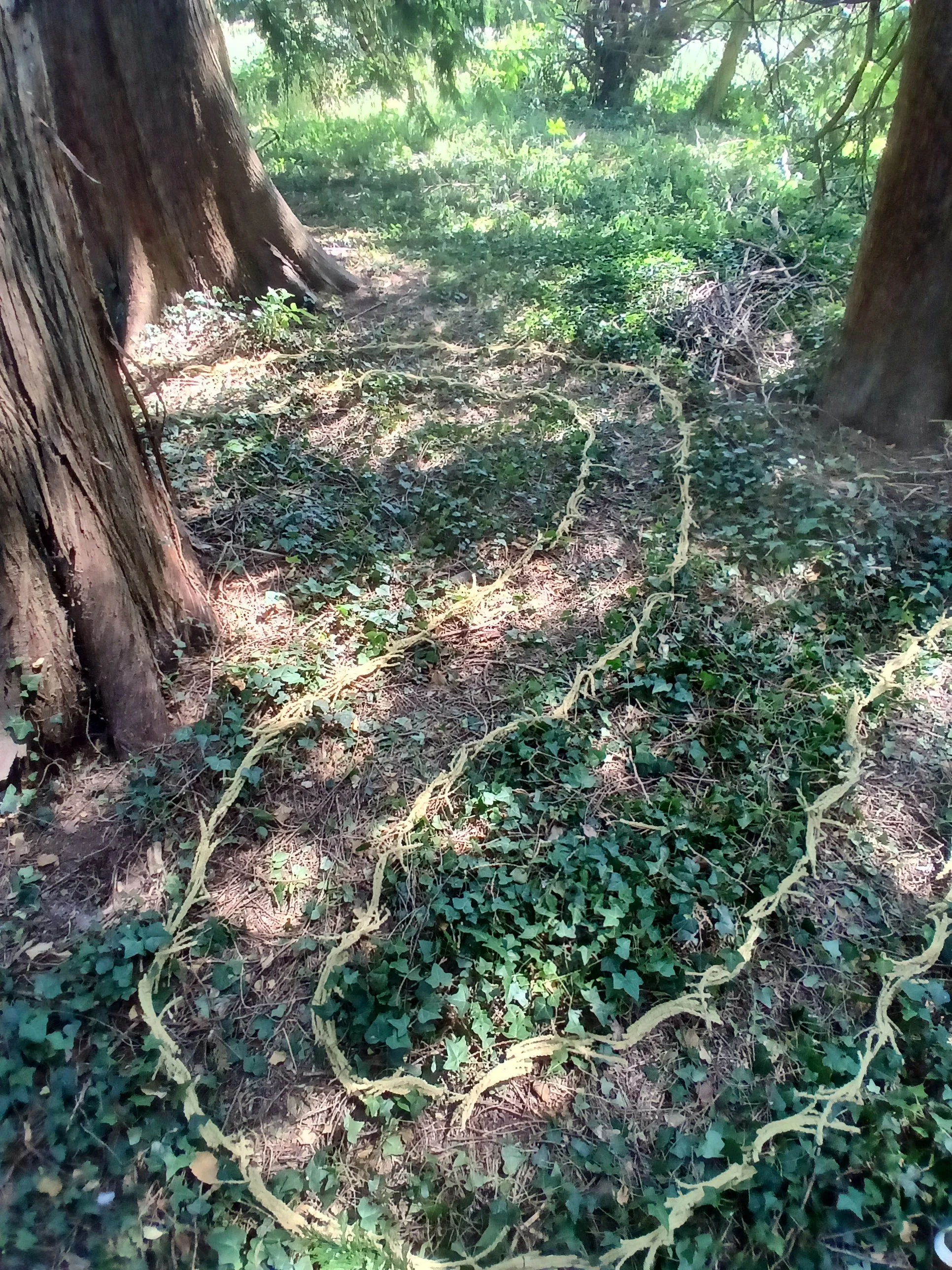
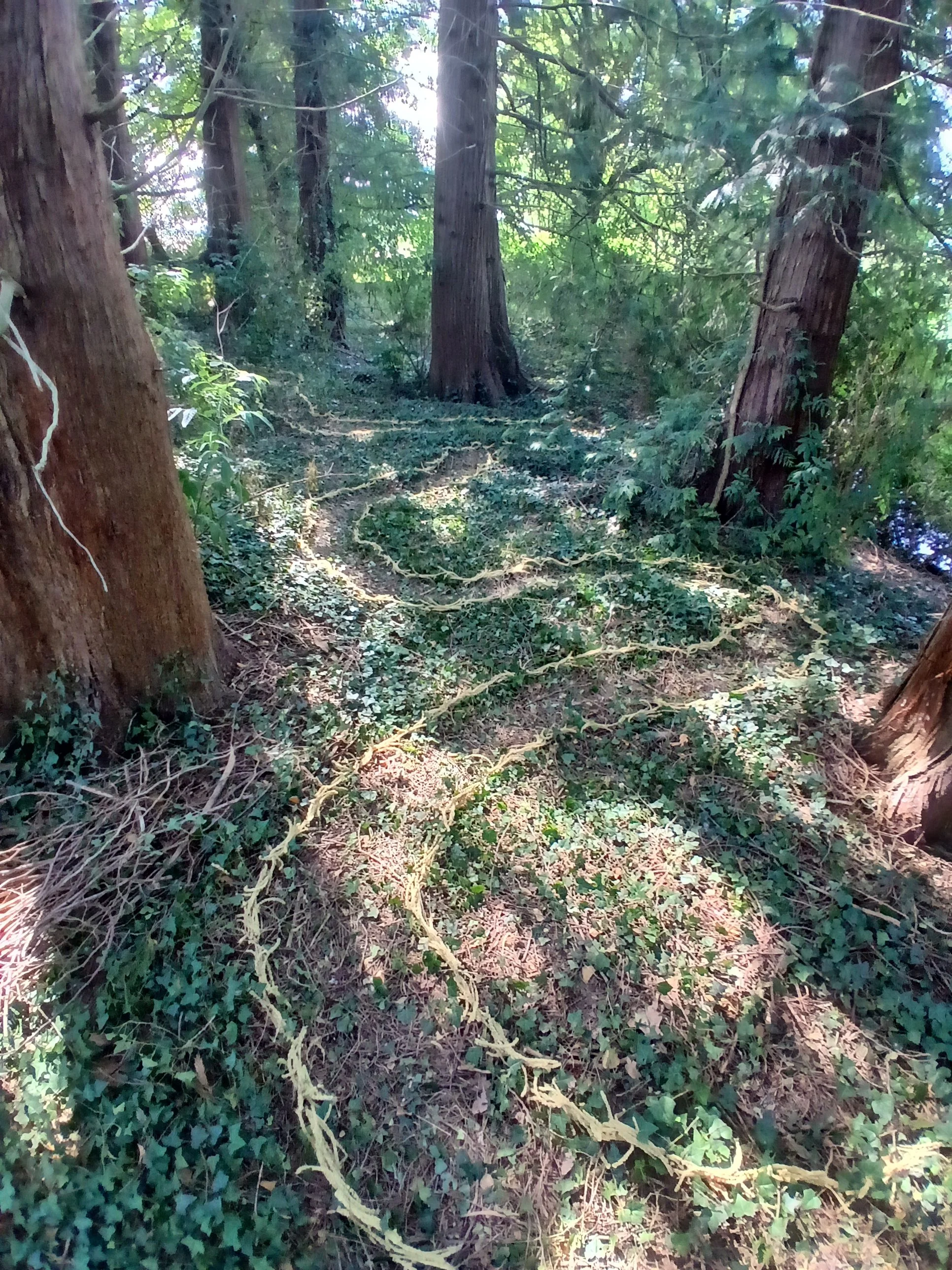
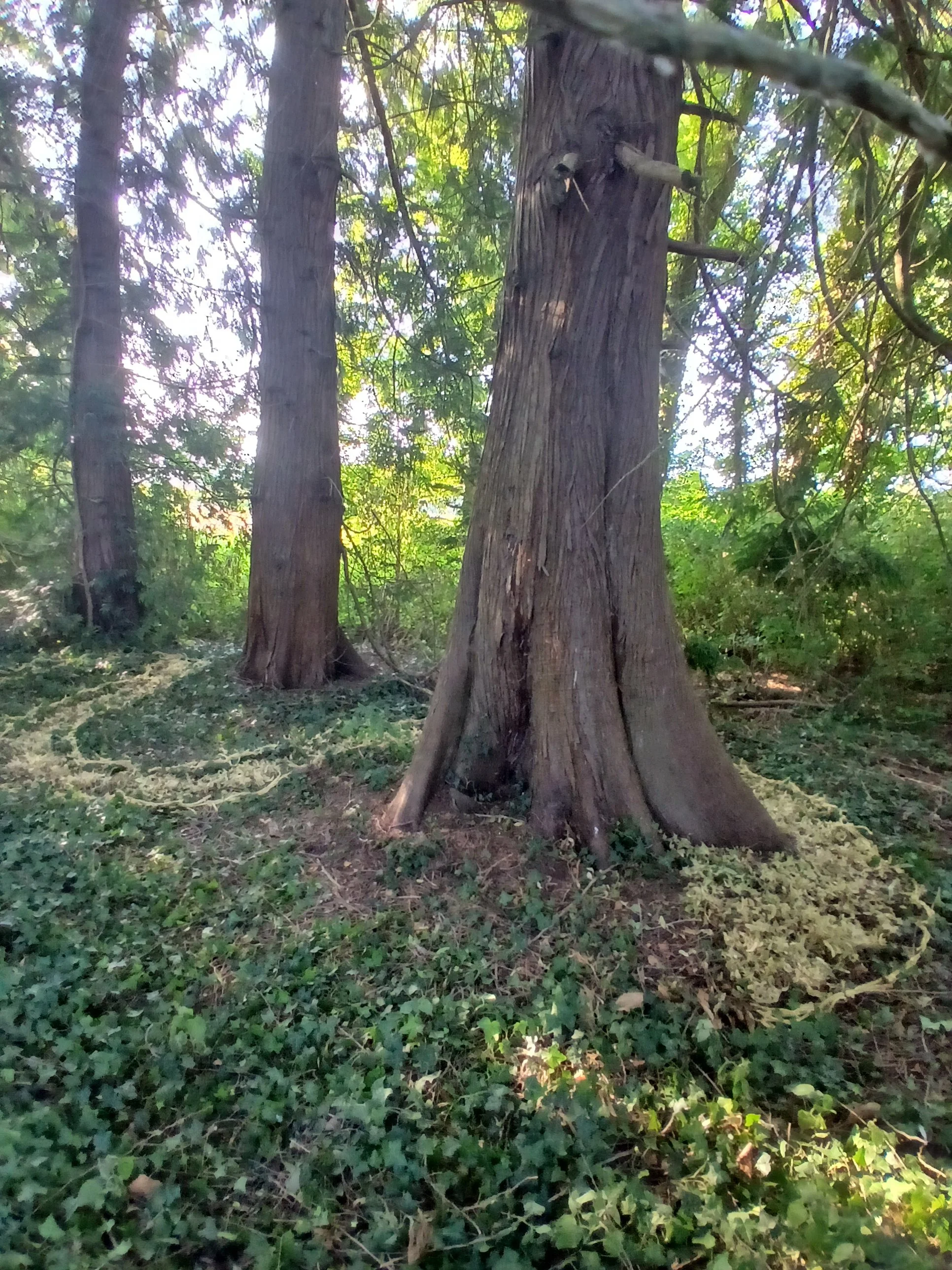
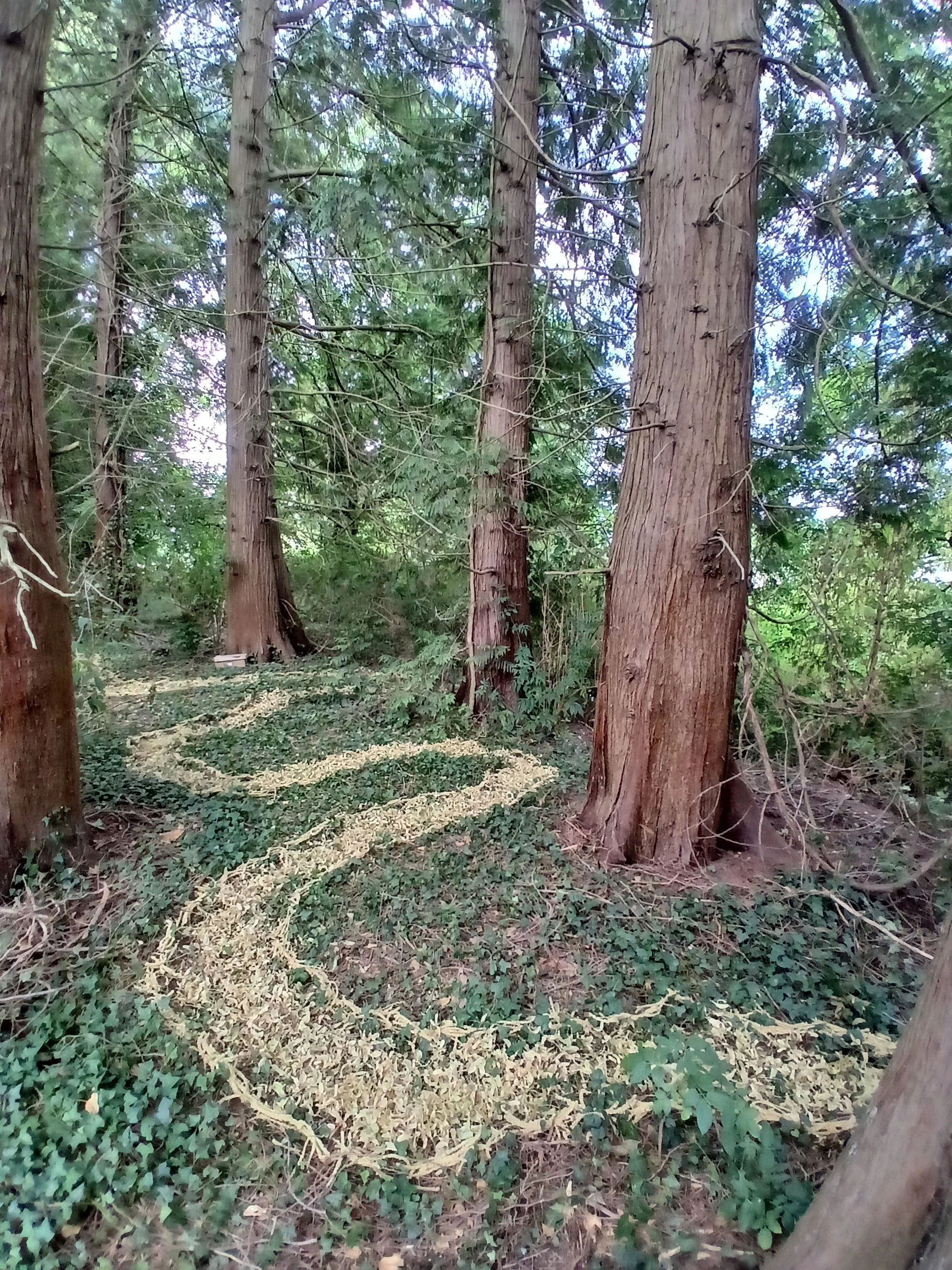
As I wandered through the grounds, one location immediately called to me: a grove of towering Redwoods. The trees naturally suggested a winding path that opened into a circle, which I came to think of as the Council of Redwoods.
From that moment, the labyrinth began to reveal itself.
The labyrinth became an invitation to reconnect with nature's patterns, and through them, to rediscover the curious, playful nature of the inner child.
It is also a reminder that even solitary journeys leave traces, and that individual acts of care contribute to something larger than ourselves. Each offering placed in the ivy curtain and each treasure added to the centre by the children became part of a collective artwork—created through individual moments of connection.
The labyrinth became about seeing the world through the eyes of a child, noticing wonder in our surroundings, and recognising how our own contributions become part of a greater whole.
Materials: Creating with the Land
Everything used to create the labyrinth came from the land itself.
Creating in the height of a British summer brought one particular challenge: finding colours that could stand out against the abundance of green.
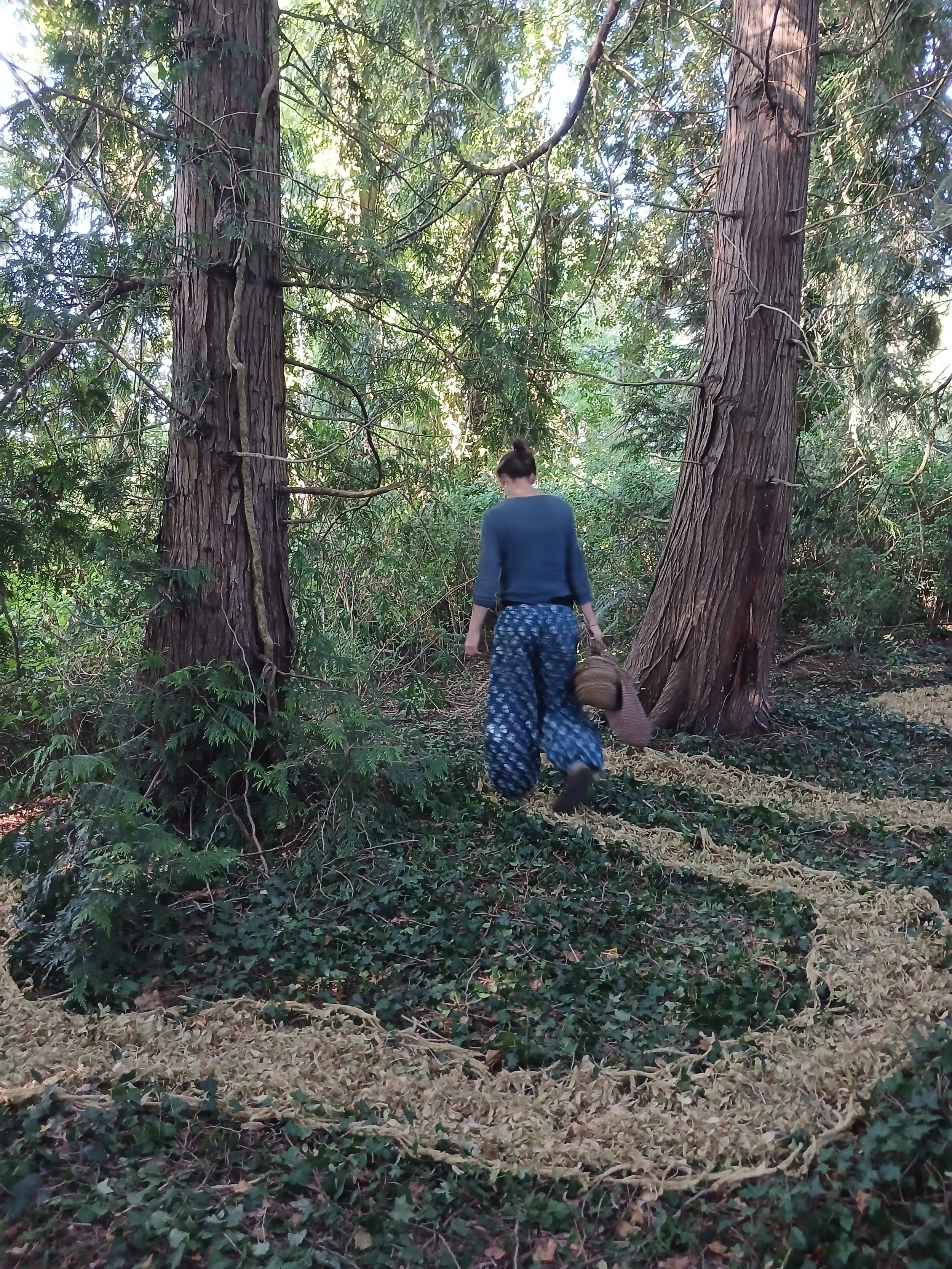
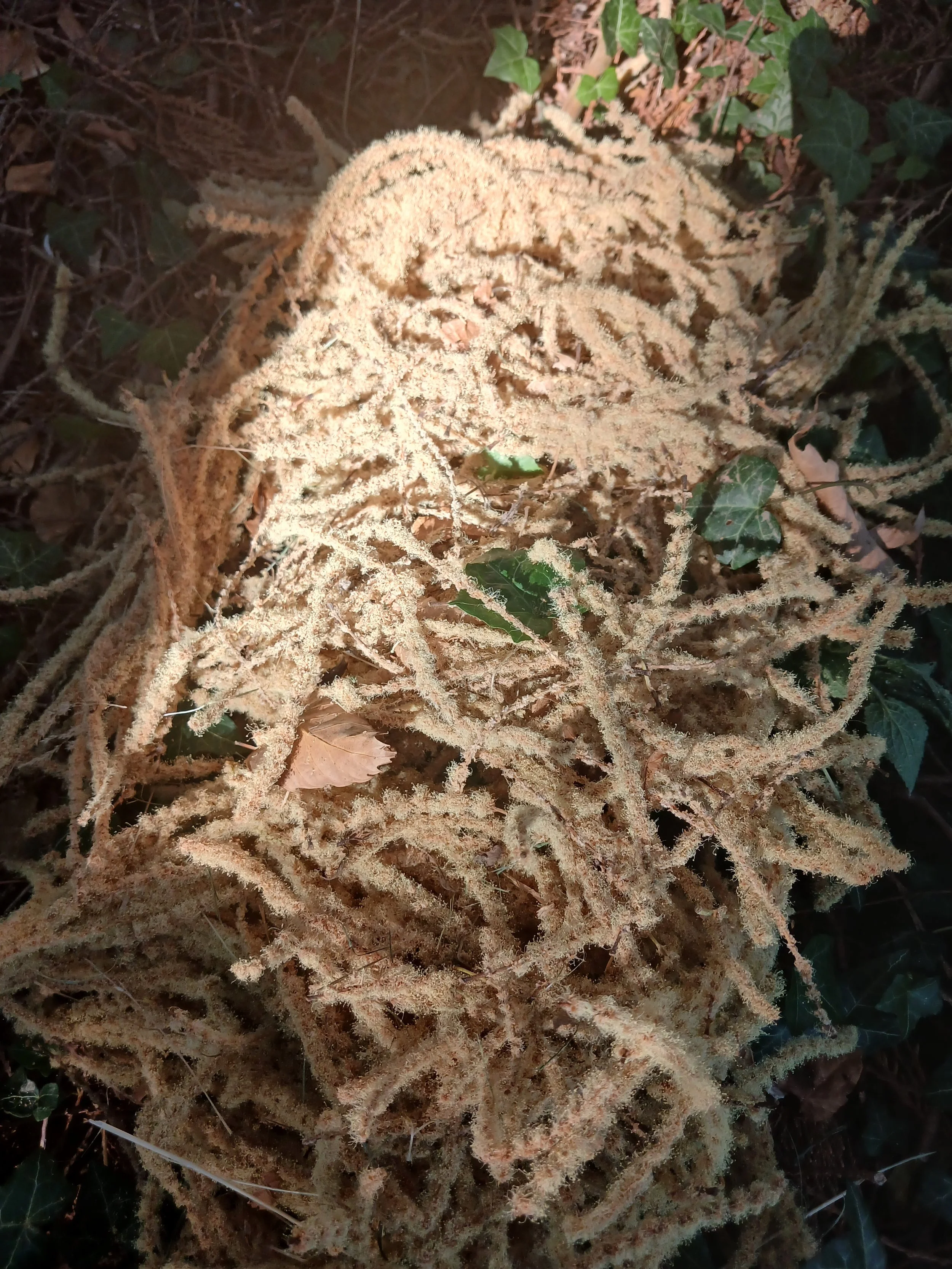
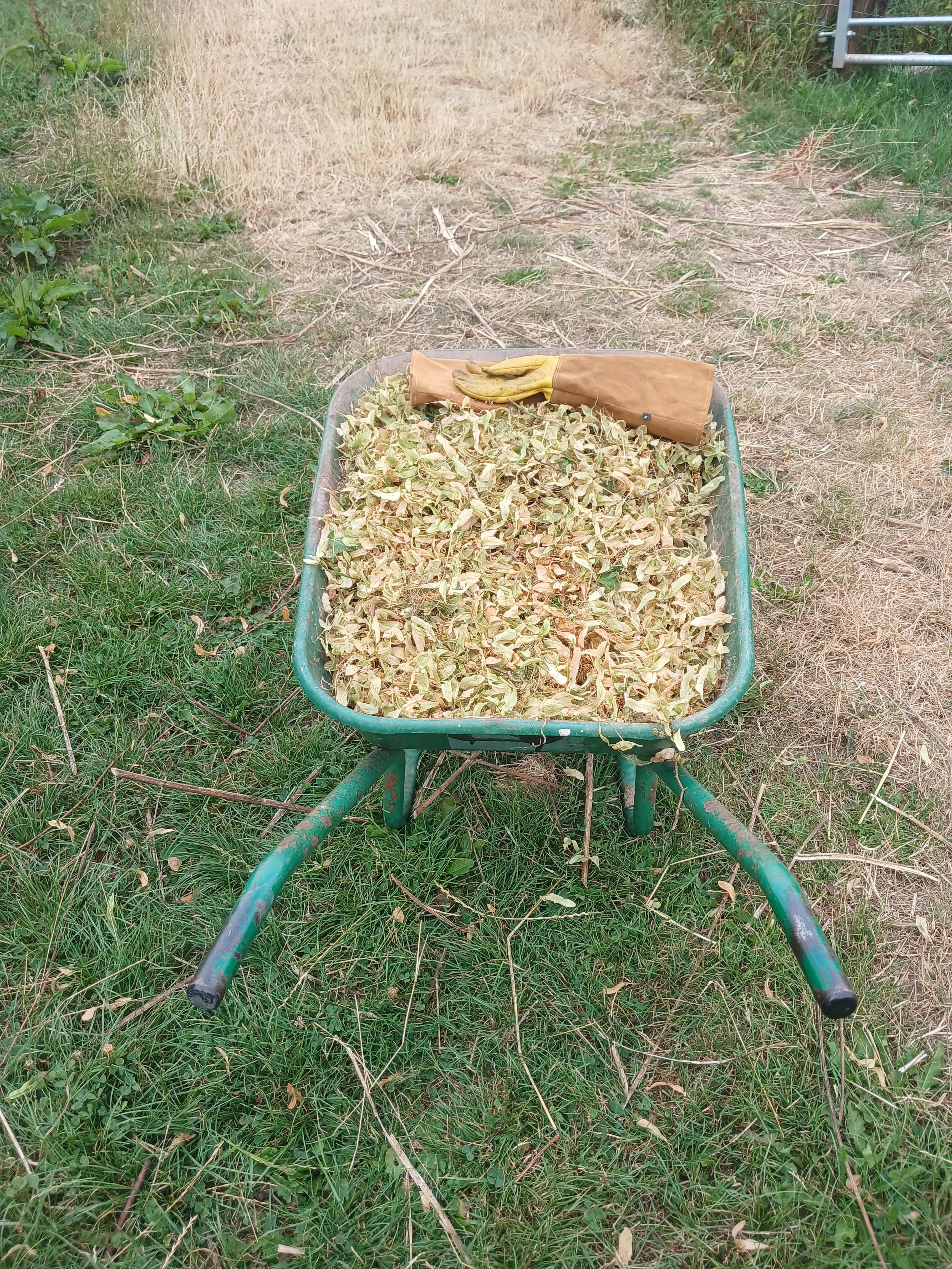
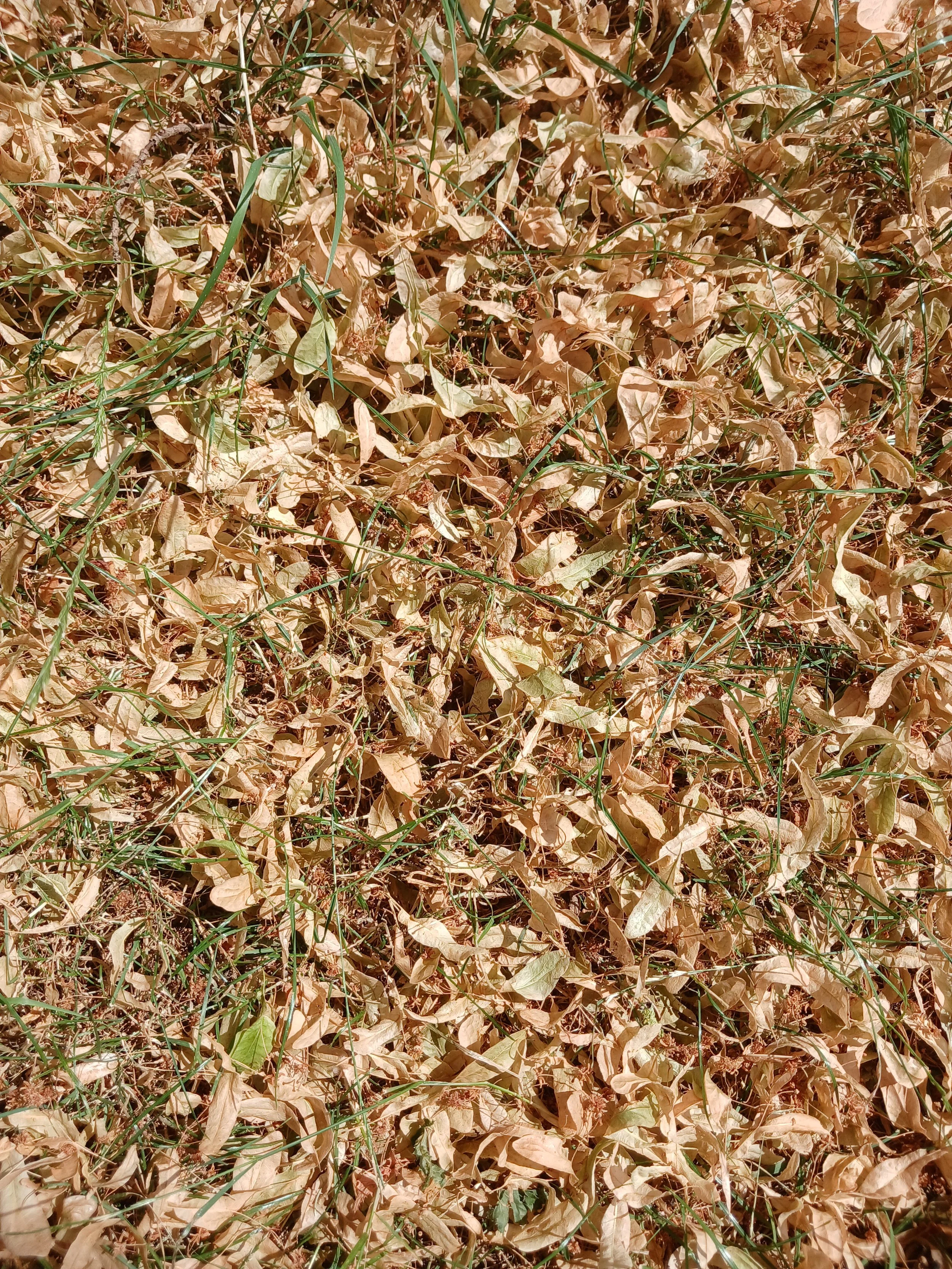
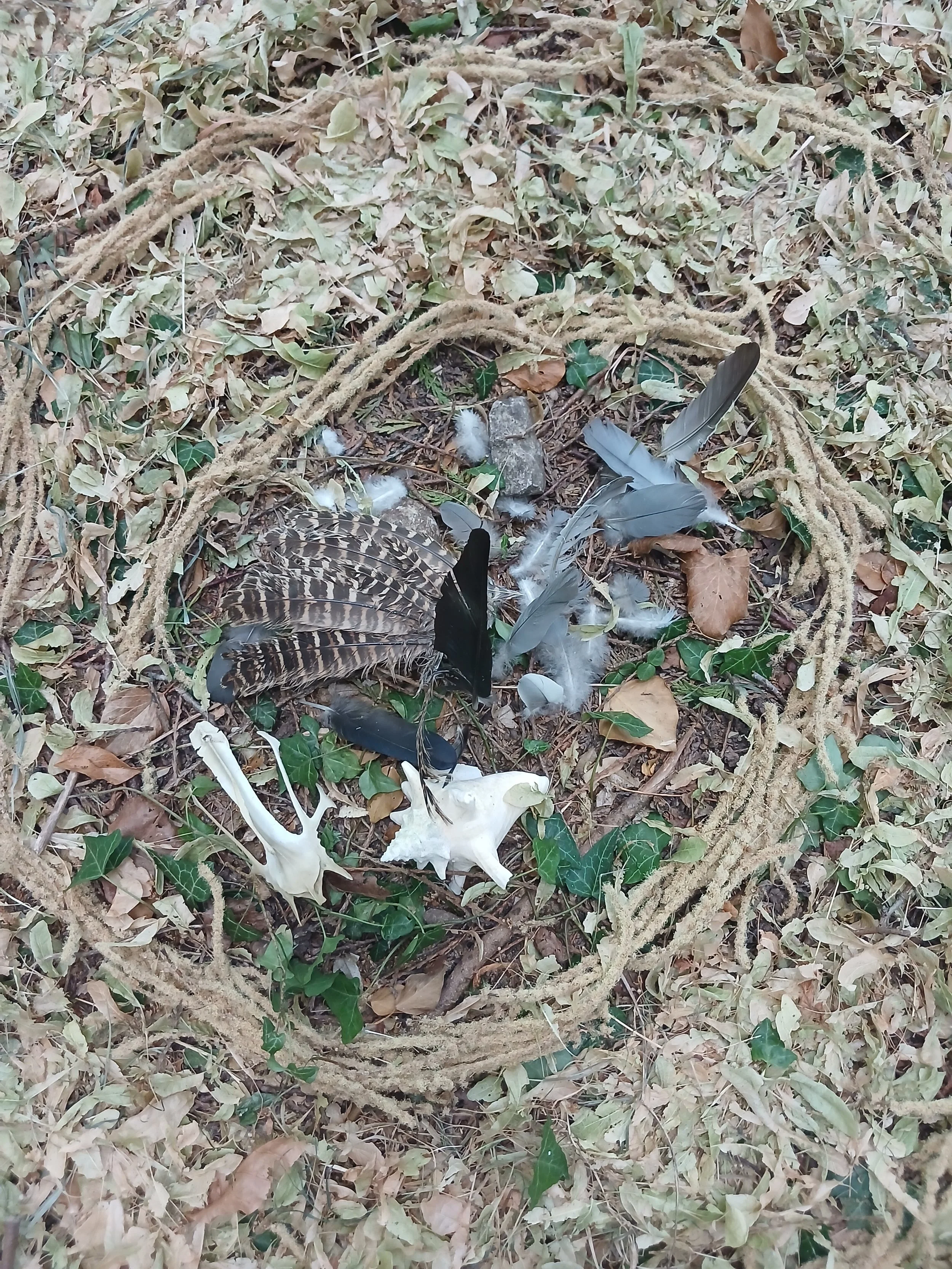
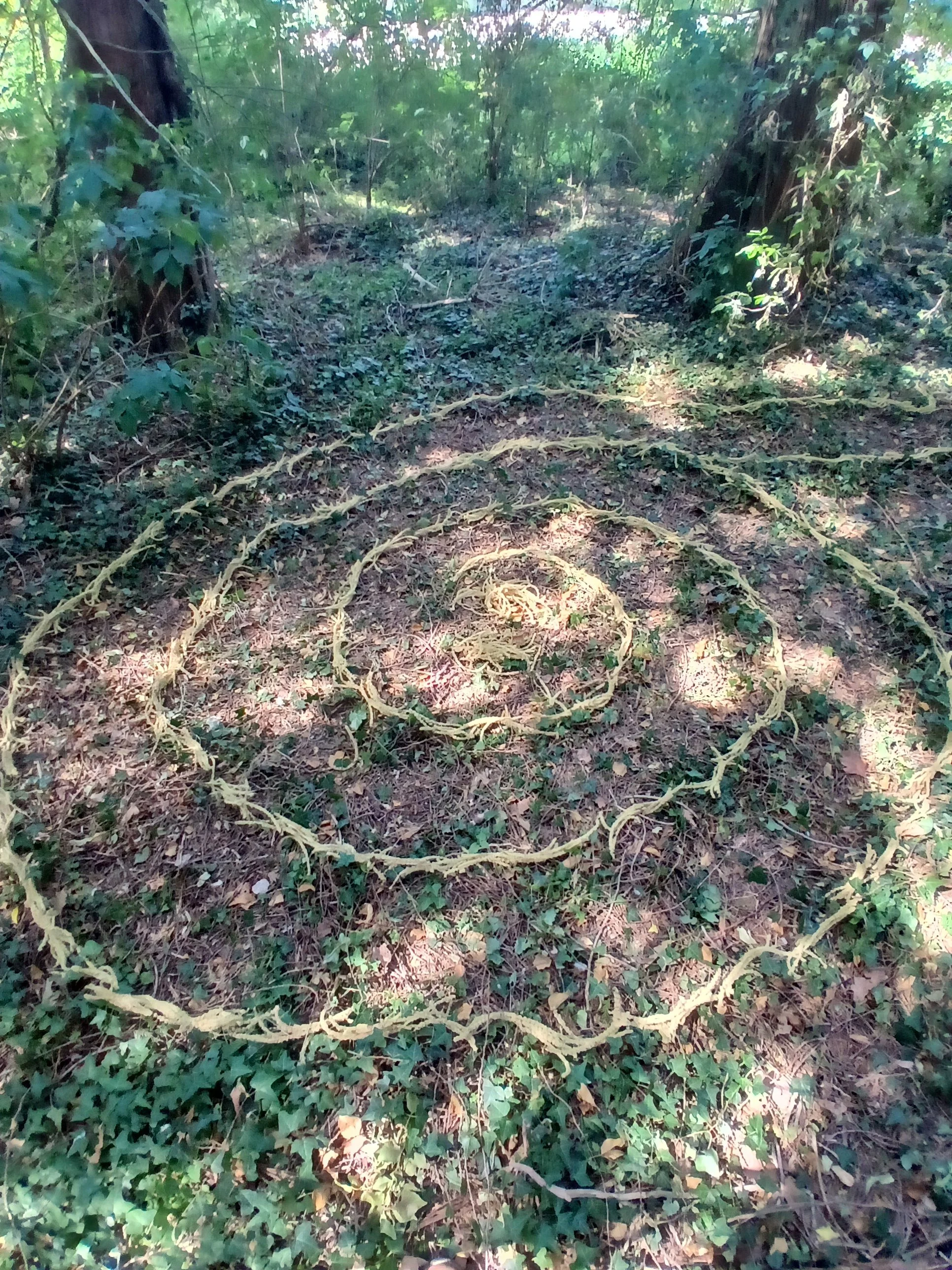
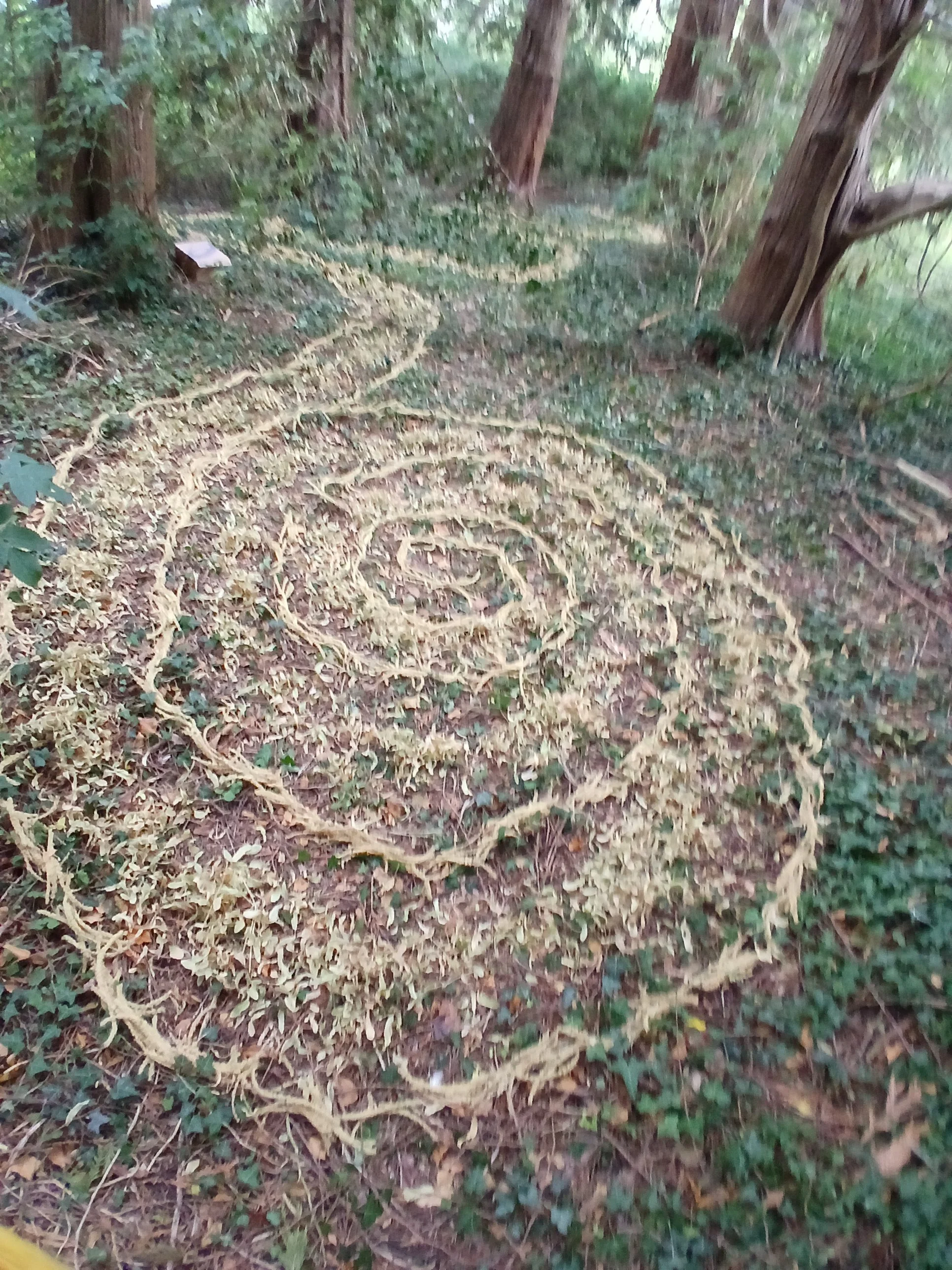
The winding path was outlined using fallen Sweet Chestnut catkins, whose warm golds and pale yellows contrasted beautifully with the woodland floor. Elm leaves marked the pathway itself.
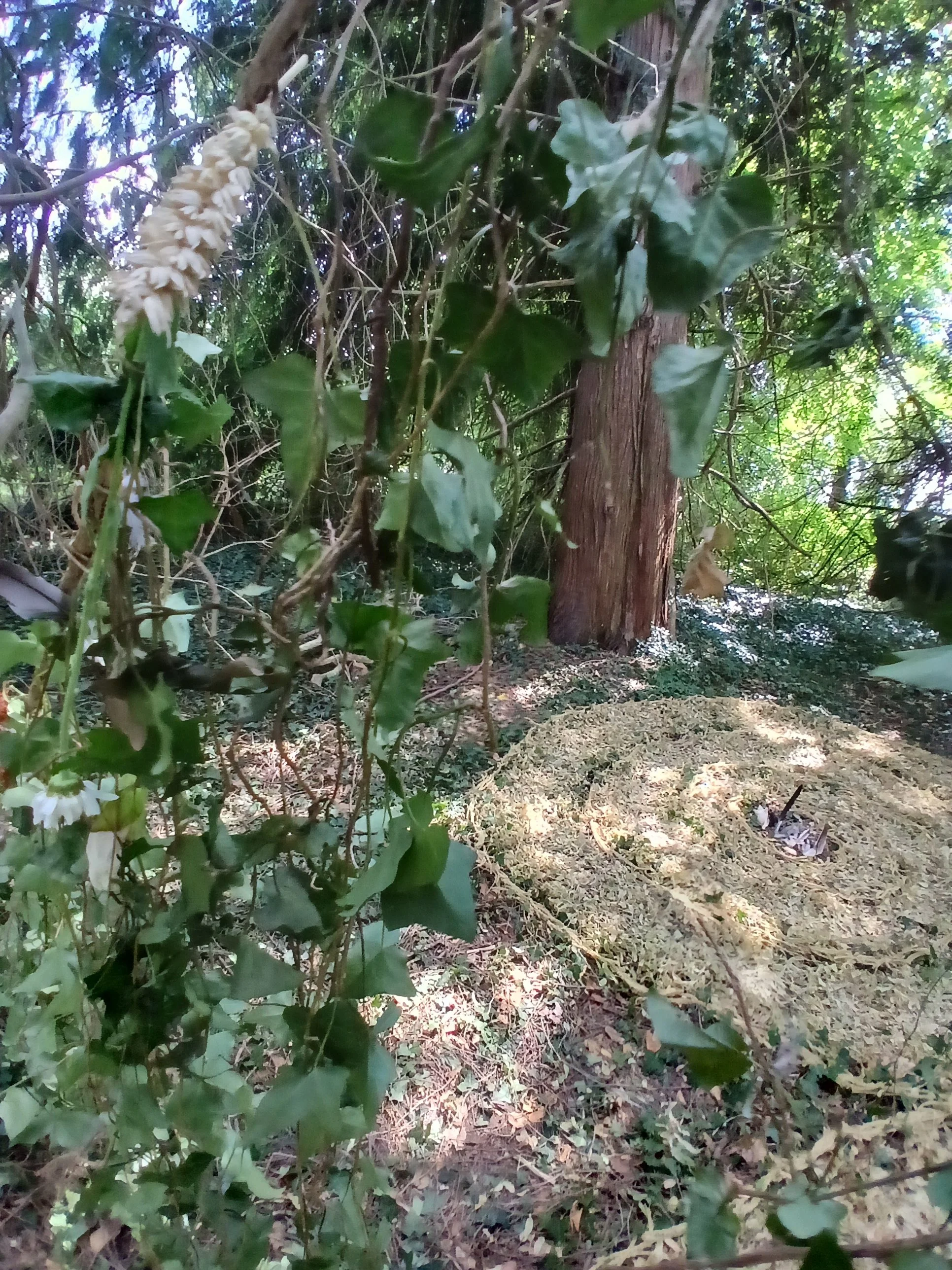
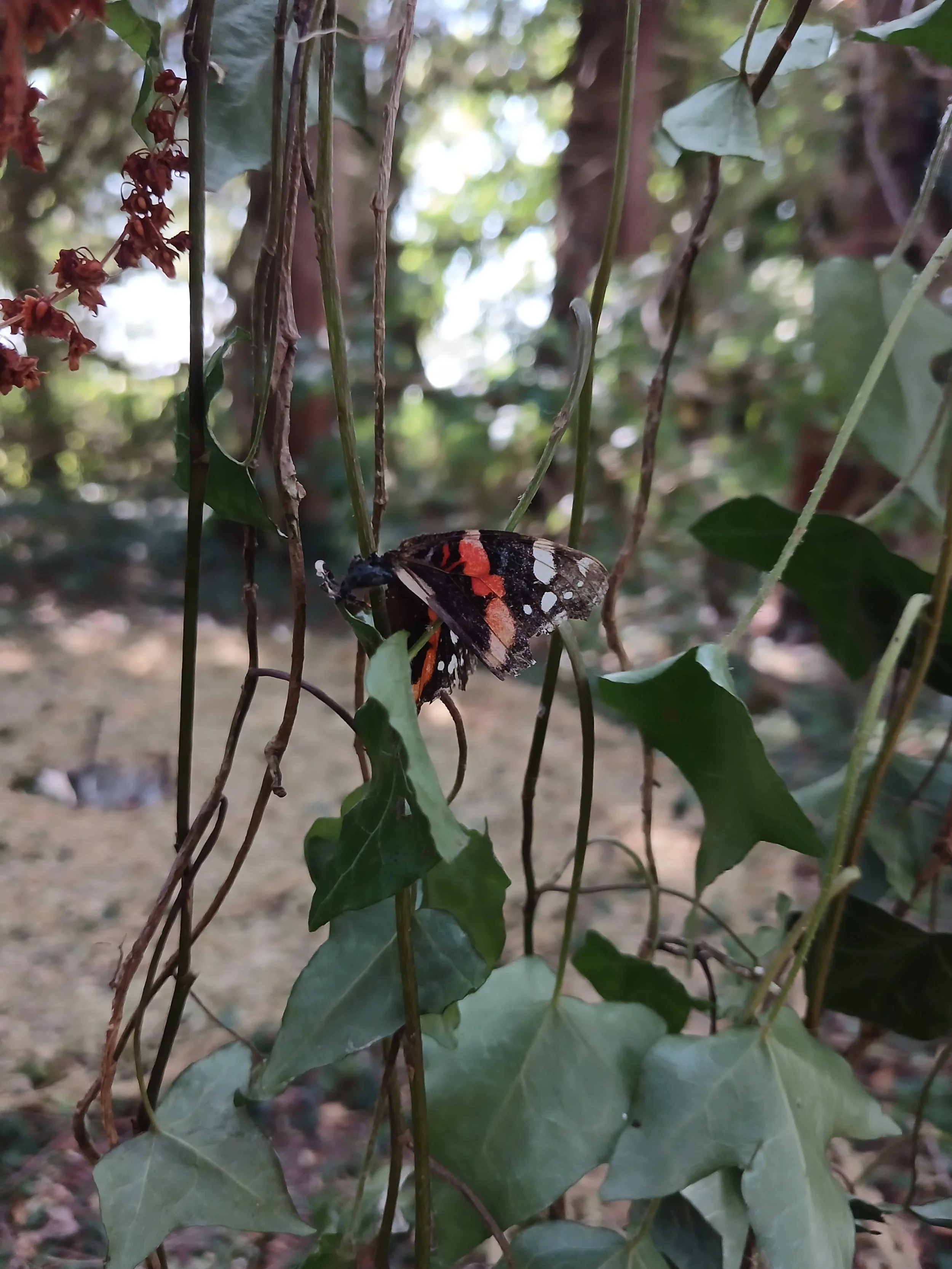
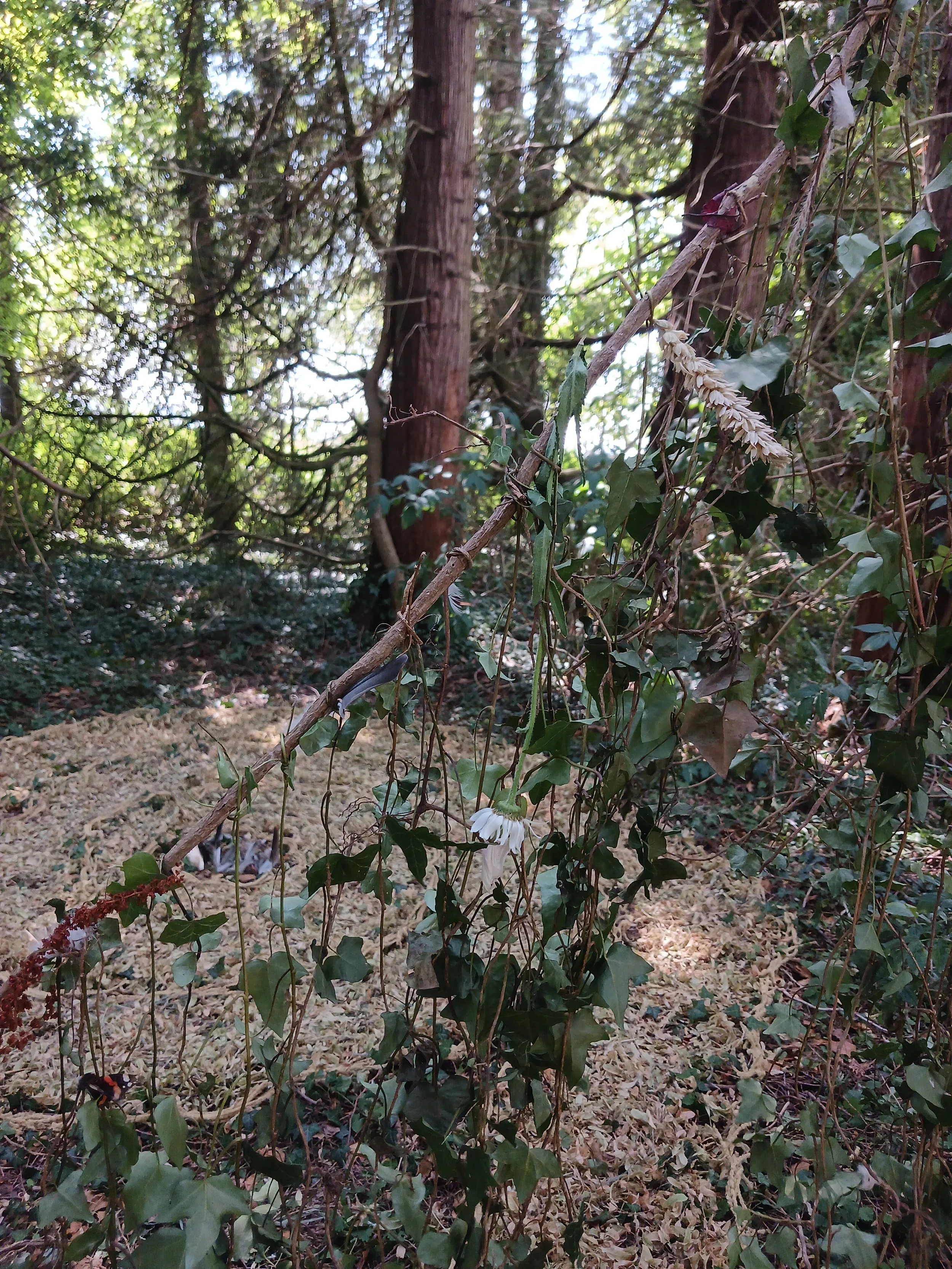
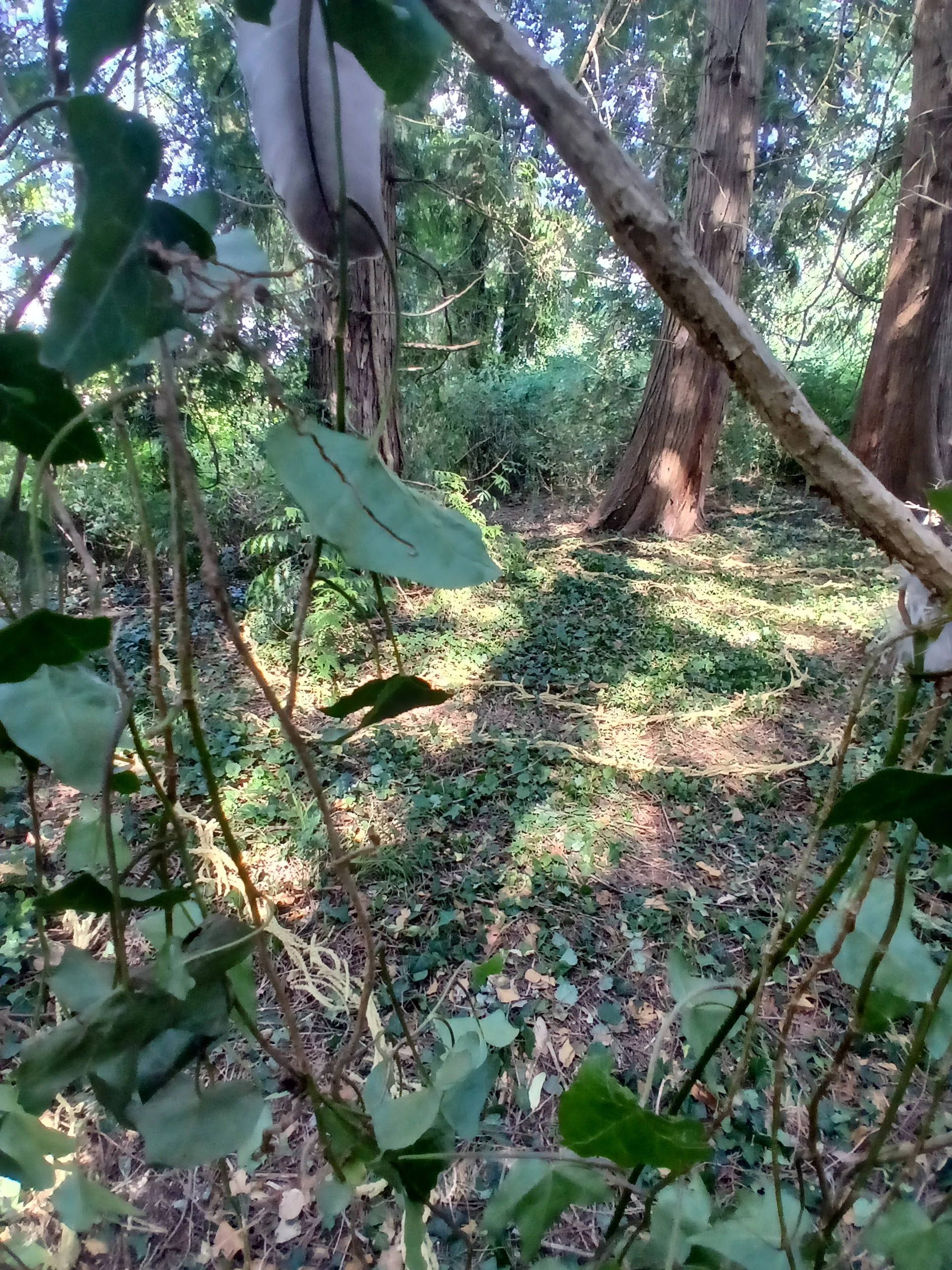
Some creeping ground ivy was carefully lifted to create the curtain that marked the threshold into the spiral. The curtain was suspended from a trailing Redwood root and a branch from another tree.
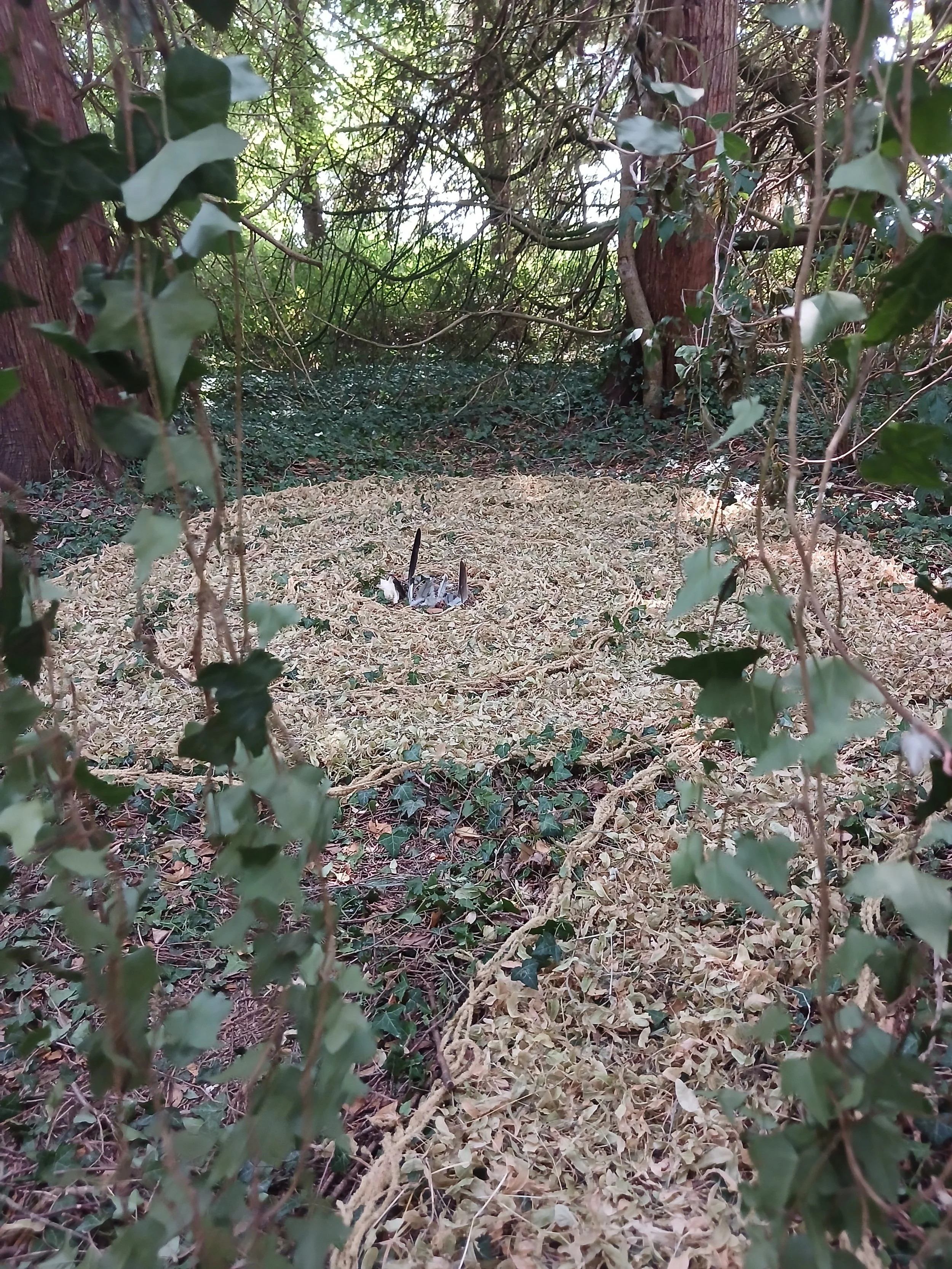
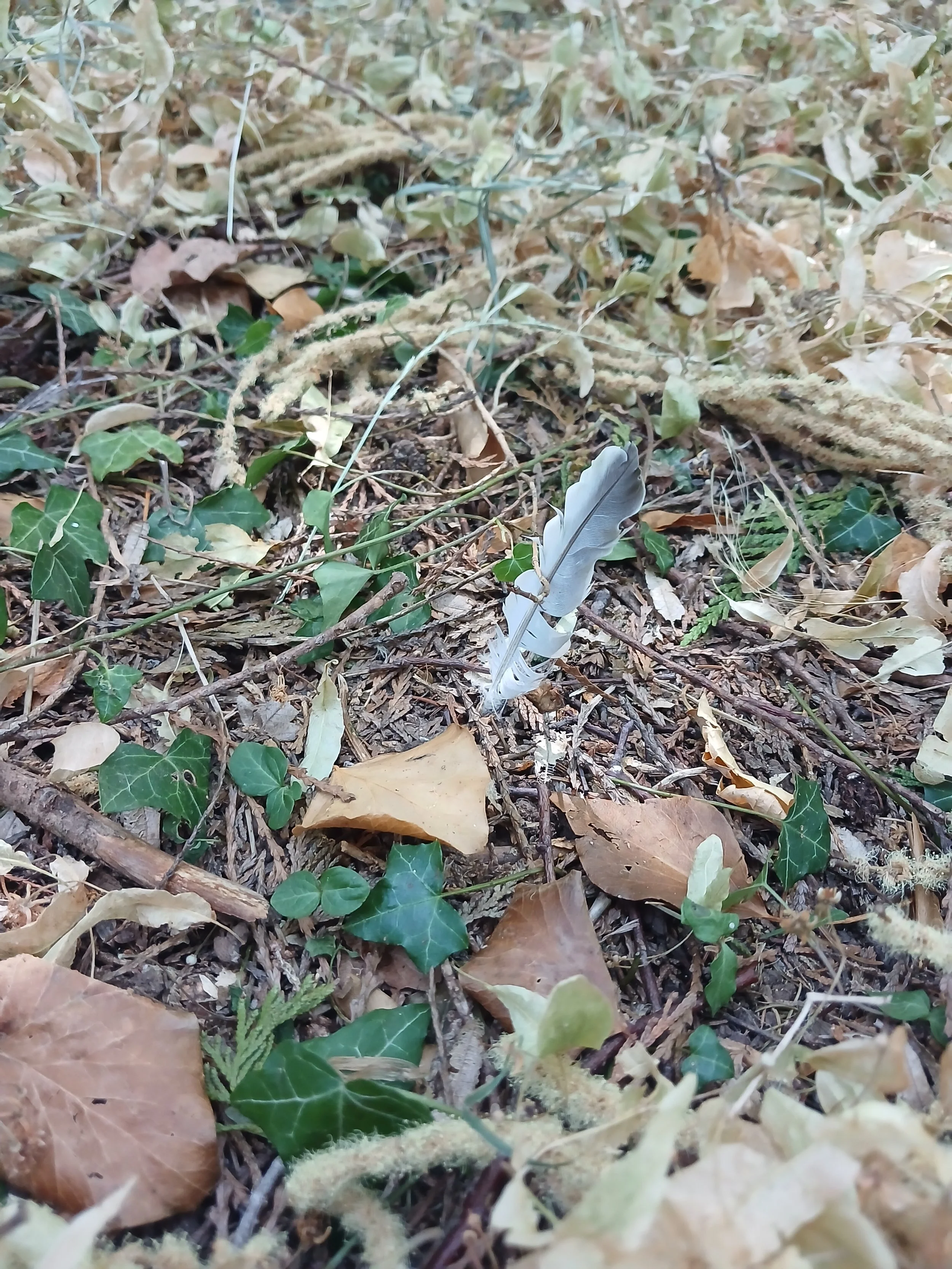
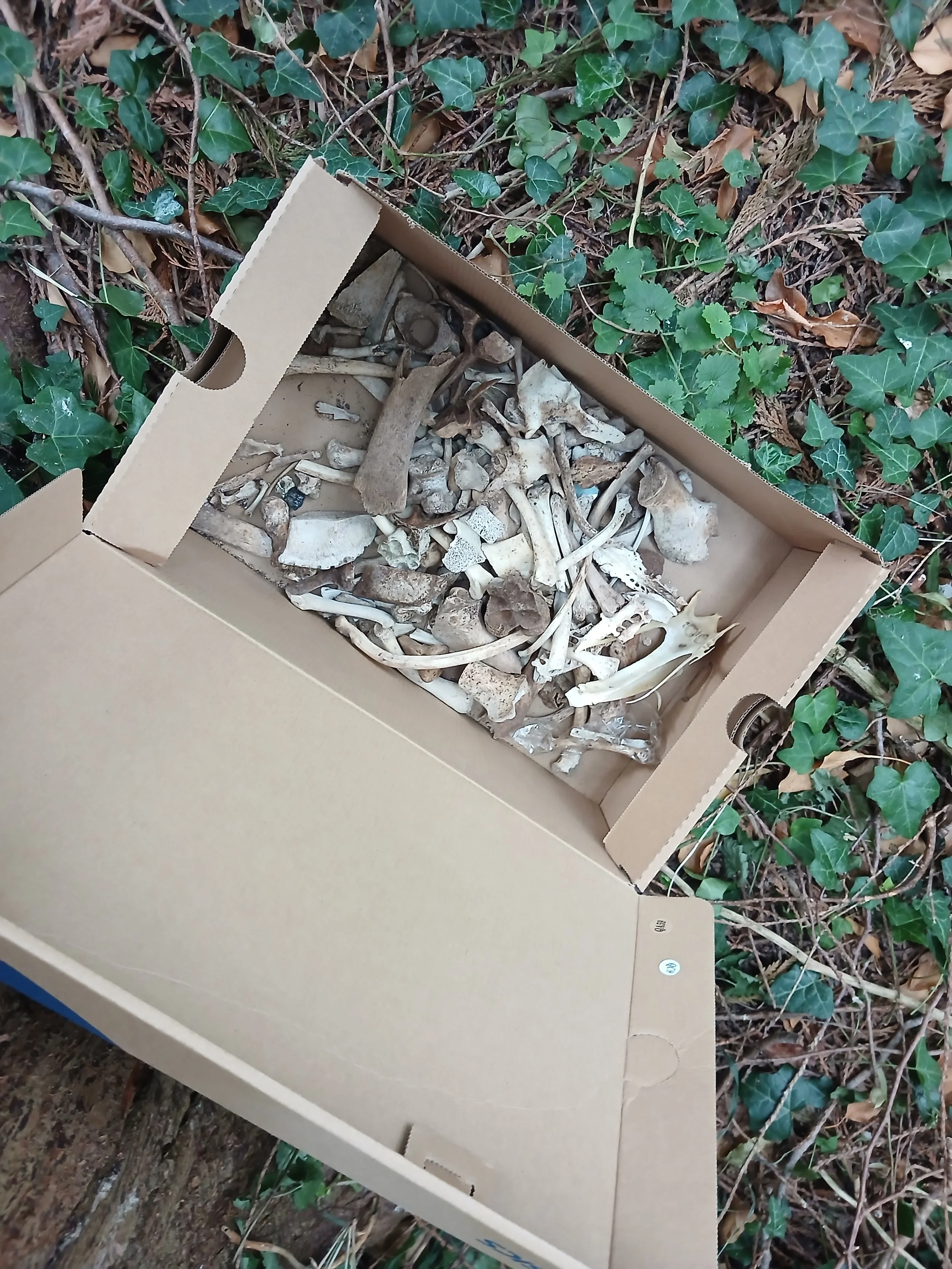
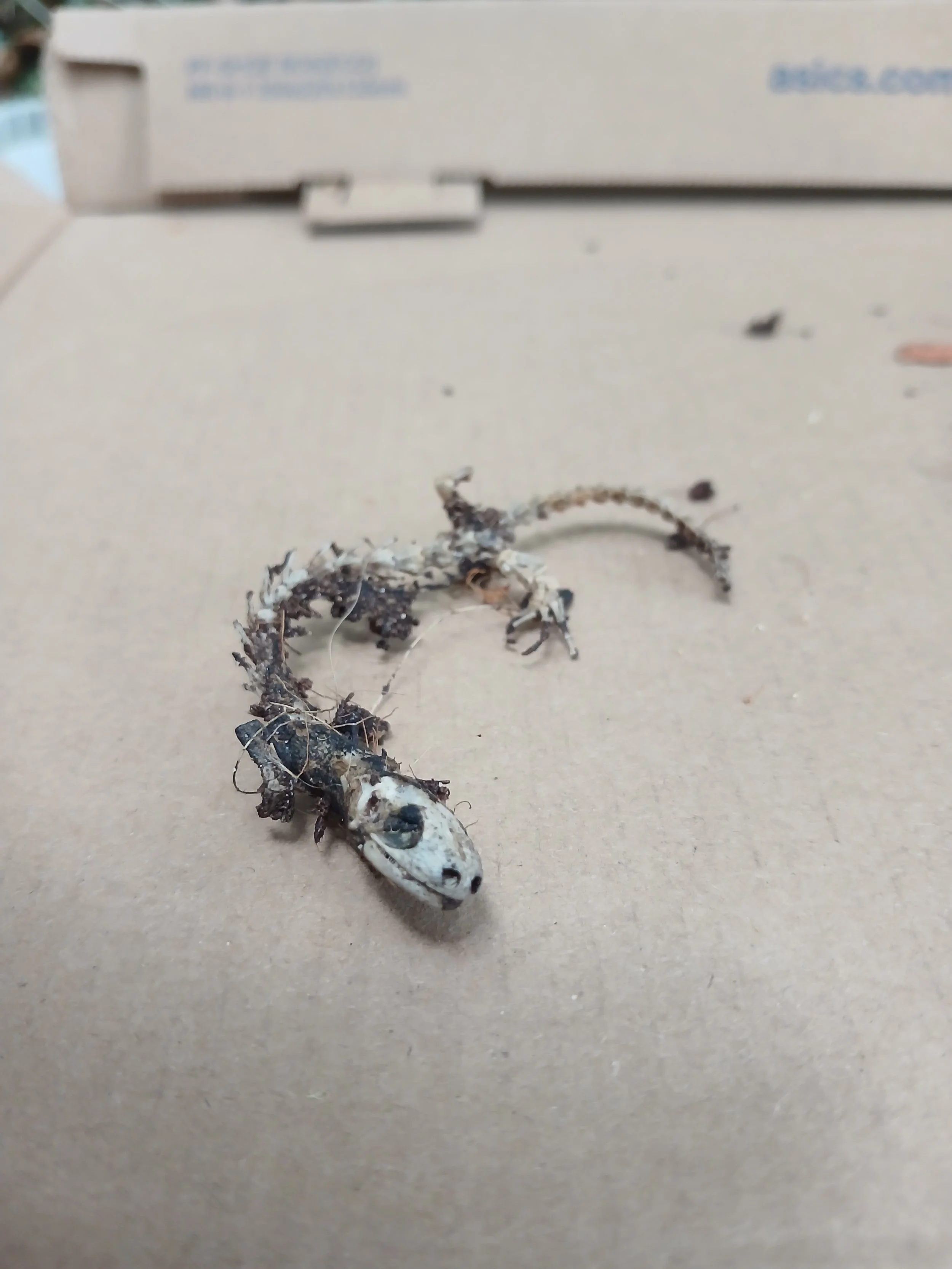
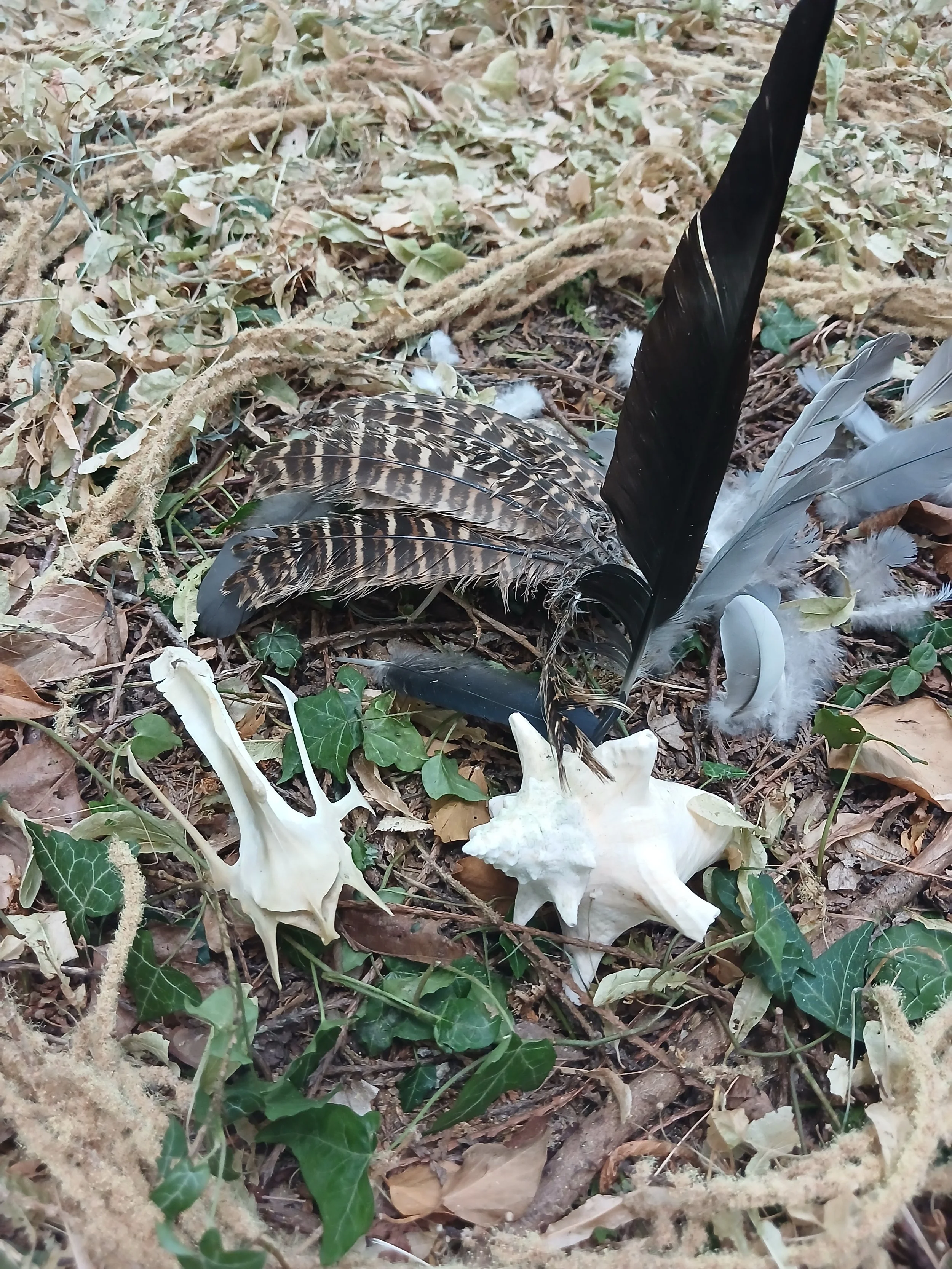
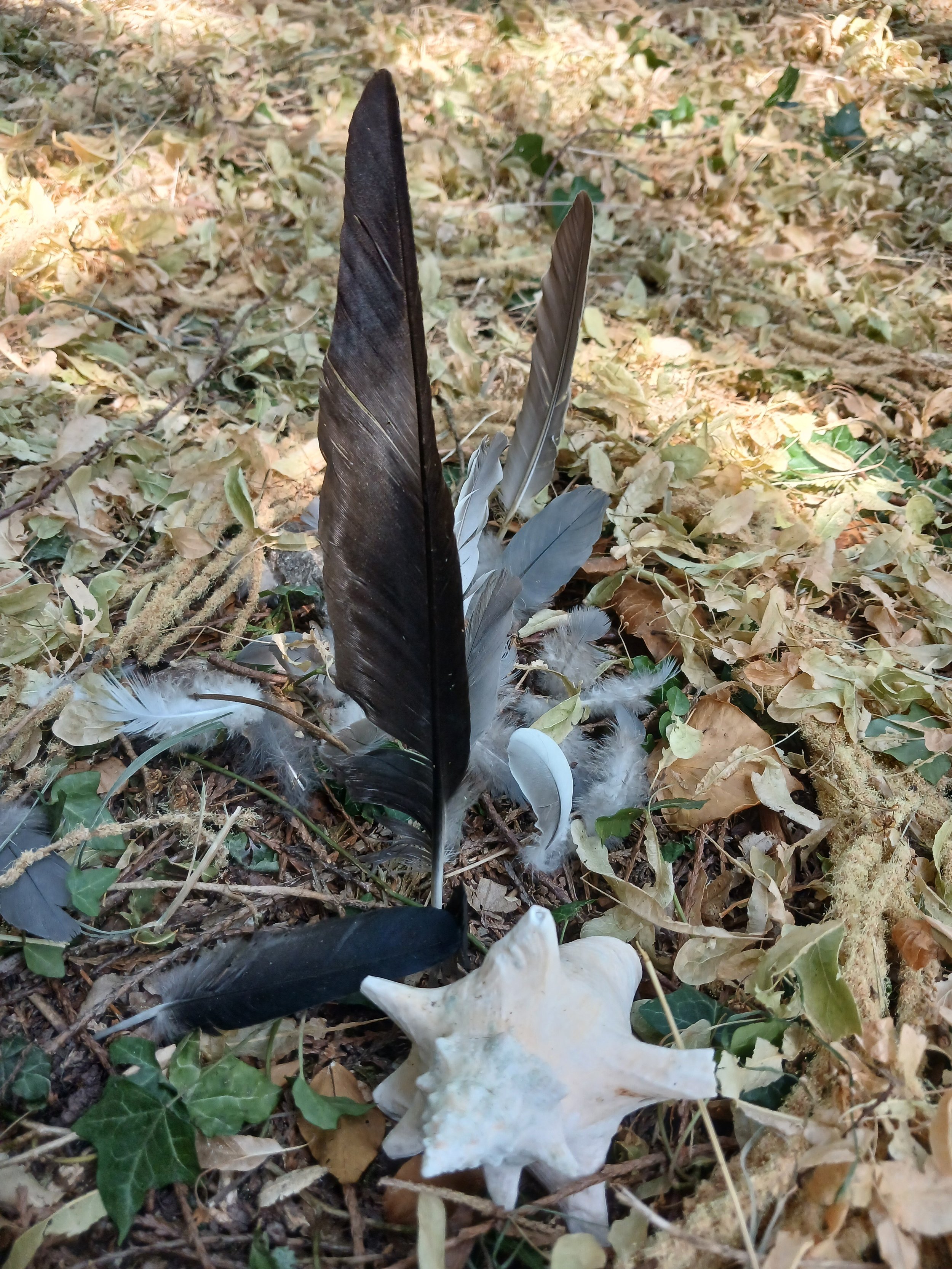
The only materials brought from elsewhere were those contributed by the community: shells, stones, feathers, bones, and other natural treasures that gradually filled the centre of the labyrinth.
Like all ephemeral land art, the work will slowly disappear. The materials will decay, be carried away by the wind, or return to the forest floor, becoming part of the landscape once more.
As the path disintegrates, it can still be walked. Offerings can still be made, and the labyrinth can continue to be replenished until it eventually disappears completely.
Inspirations: Solitude, Children and Community
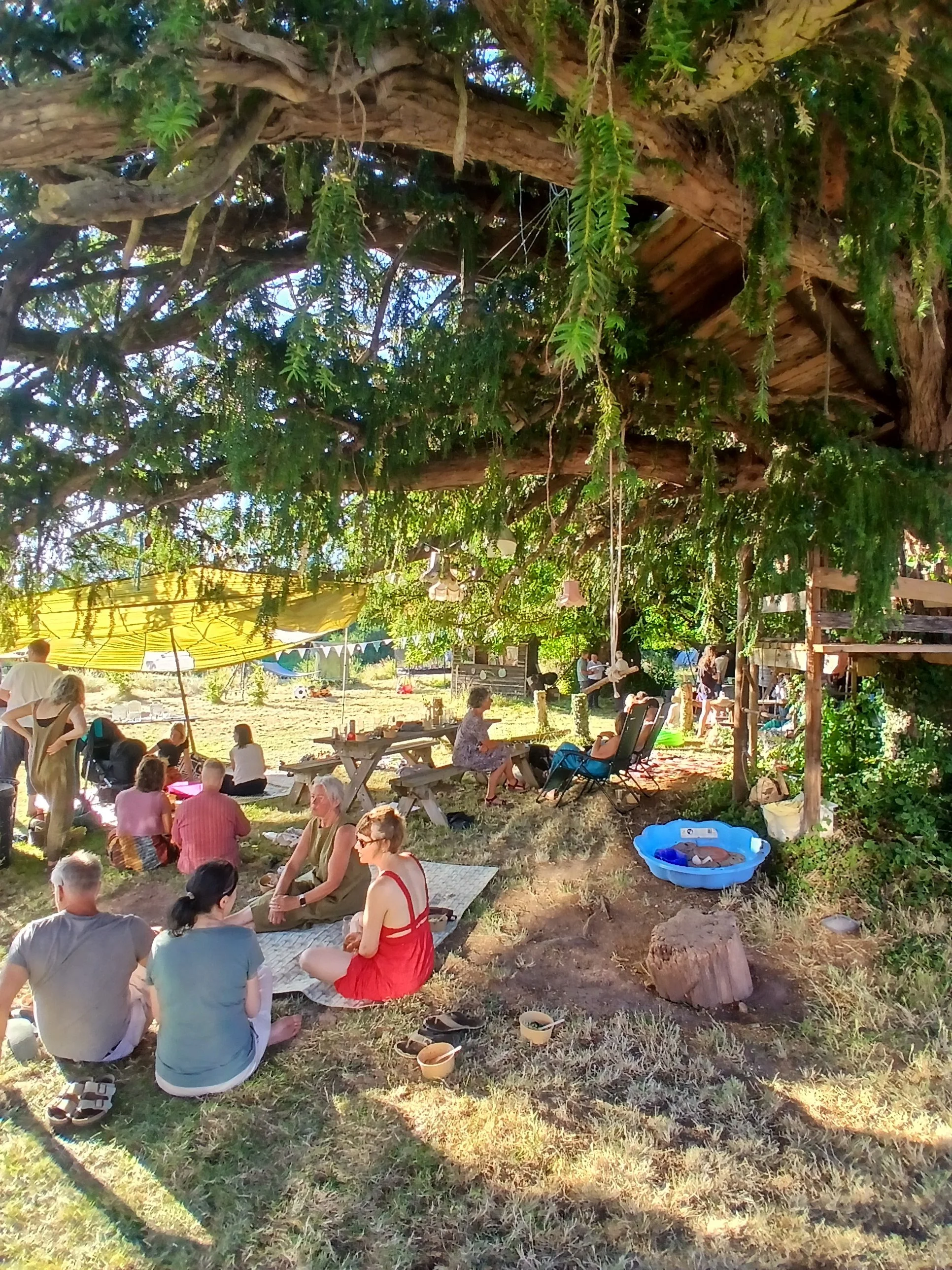
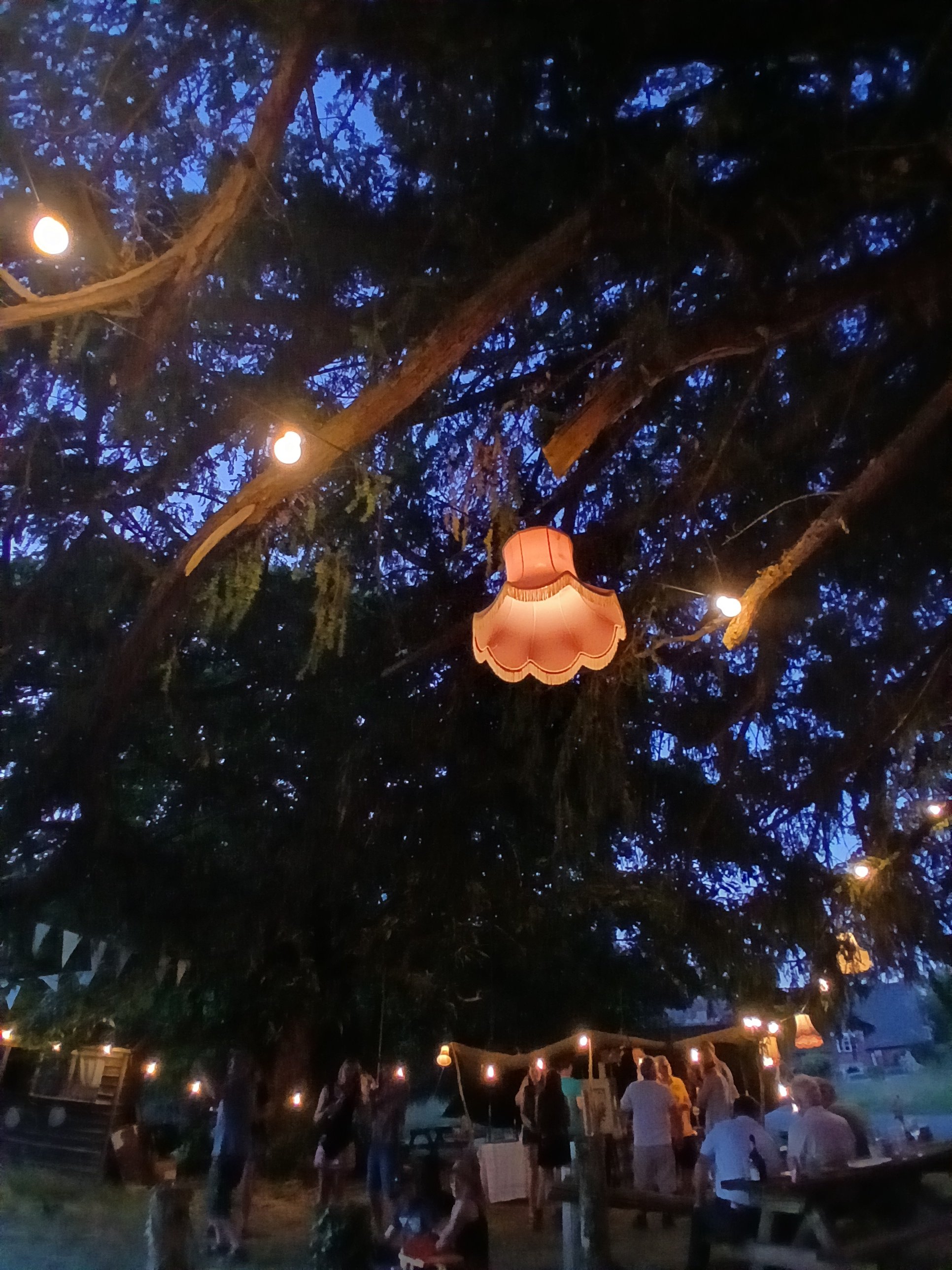
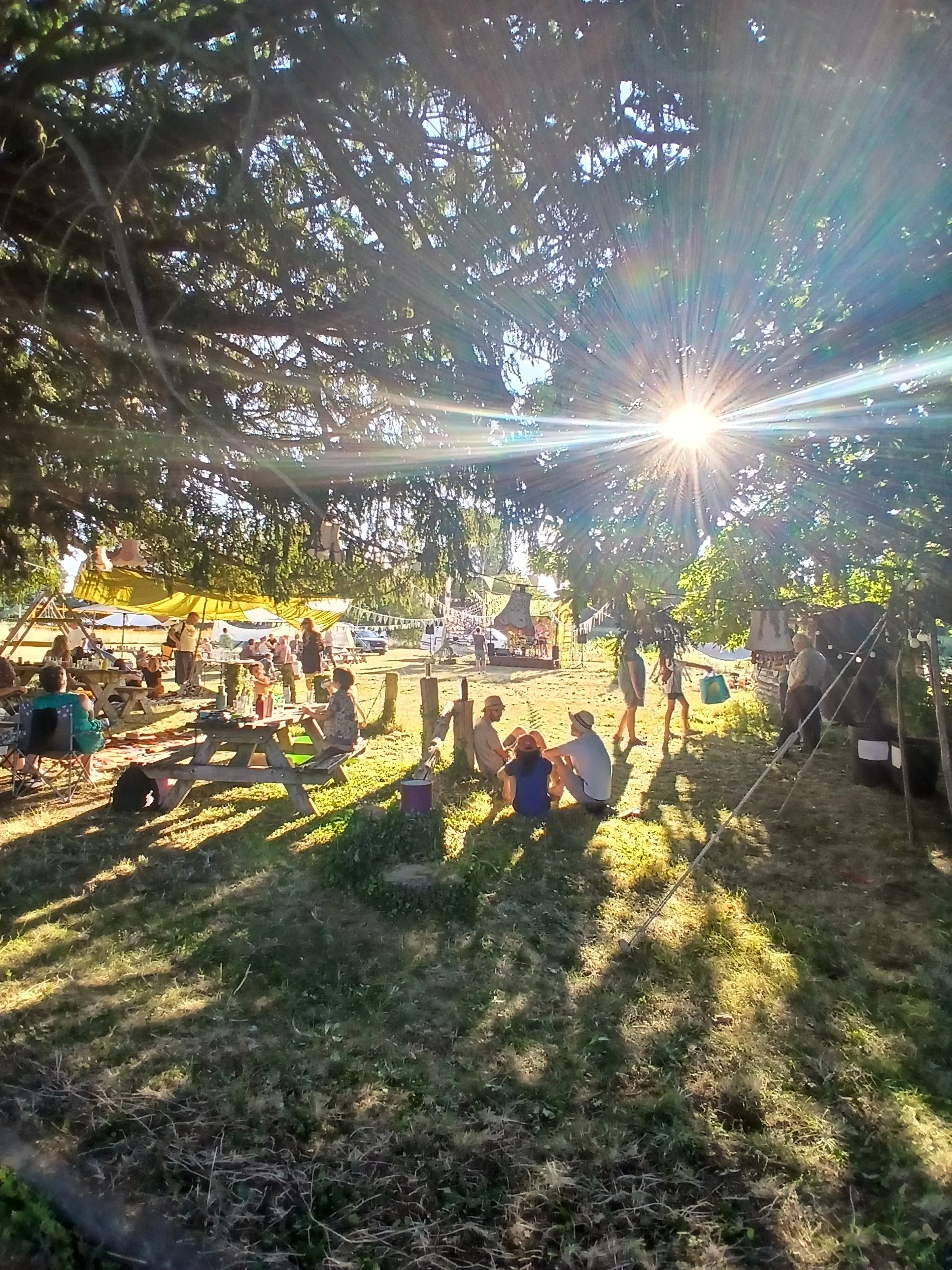
I arrived at Canon Frome Court during their birthday celebrations, which gave me the opportunity to speak with residents about what they felt the labyrinth could offer.
Two themes emerged repeatedly: solitude and children.
The Redwood grove naturally provided a quiet, sheltered place for reflection. A labyrinth is already a solitary journey, but I wanted that solitude to also hold traces of community.
The ivy curtain became the answer.
Residents can see the offerings left by others and contribute their own, creating a tapestry of individual journeys woven together into something collective.
Everything else followed naturally.
A colourful sign invited the children of Canon Frome Court to gather natural treasures for the centre of the labyrinth. Every shell, feather, stone, or bone was placed by hand, making the centre a collective creation.
Adults were invited into a different ritual.
Before entering the spiral, they were asked to leave an offering within the ivy curtain—a flower, a leaf, or something discovered on their own walk to the labyrinth.
The curtain became a threshold.
Passing through it symbolised gratitude, intention, and the willingness to surrender.
As more offerings accumulated, the curtain became a living tapestry of everyone's journeys. Some flowers remained fresh, while others wilted with time, reminding us that every visitor leaves something of themselves behind.
Rivers, Spirals and Trees
Much of my recent work explores rivers, particularly the movement of water through eddies and vortices.
The spiral at the centre of the labyrinth became an extension of this research. Rather than representing a destination, it reflects the natural patterns found throughout living systems: water, weather, growth, and even the pathways of thought.
The joy of being.
A tree is a river wrapped in bark.
The objects gathered by the community echoed these themes too.
Bones spoke of death and transformation.
Feathers suggested air, perspective, and freedom.
Shells carried the memory of water.
Together they formed a portrait of the cycles that connect all living things.
The Meaning Behind the Materials
Ivy
Ivy has long been associated with endurance and transformation.
In Celtic folklore, it was woven into crowns during Midsummer celebrations, while Druids are said to have used it in rituals connected with navigating the shadow and hidden knowledge.
Passing through the ivy curtain became a symbolic threshold—a bridge between the everyday world and the sacred spiral.
Elm
Elm represents intuition, cooperation, protection, and the strength that comes through community.
Sweet Chestnut
Sweet Chestnut symbolises resilience, endurance, and the ability to overcome hardship.
Redwood
Redwood embodies longevity, interconnectedness, deep roots, and interdependence.
Standing beneath these ancient trees reminds us that strength is rarely individual. Like forests, healthy communities thrive through connection.