

Map #5 Colombia
Life on the Farm
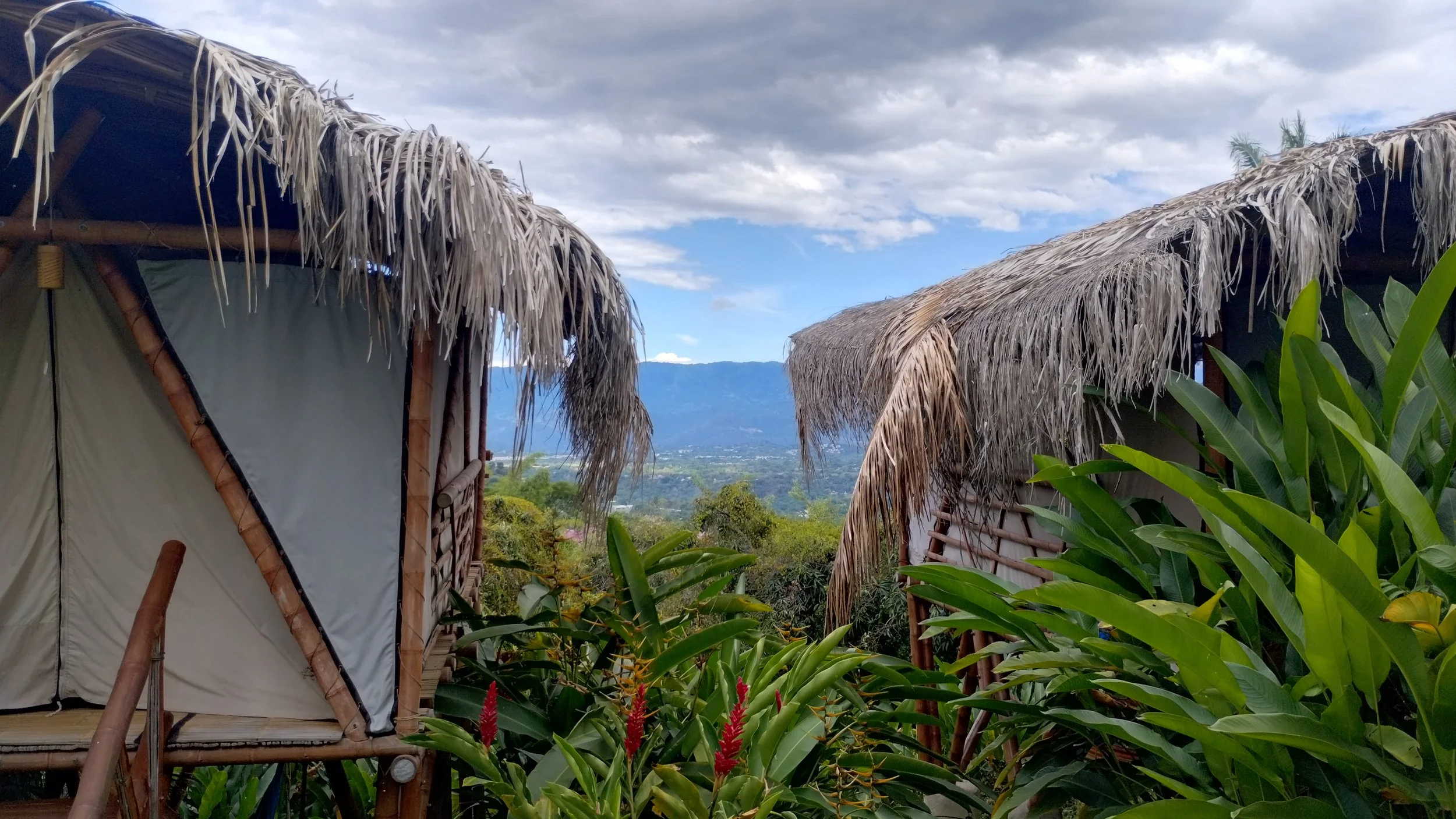
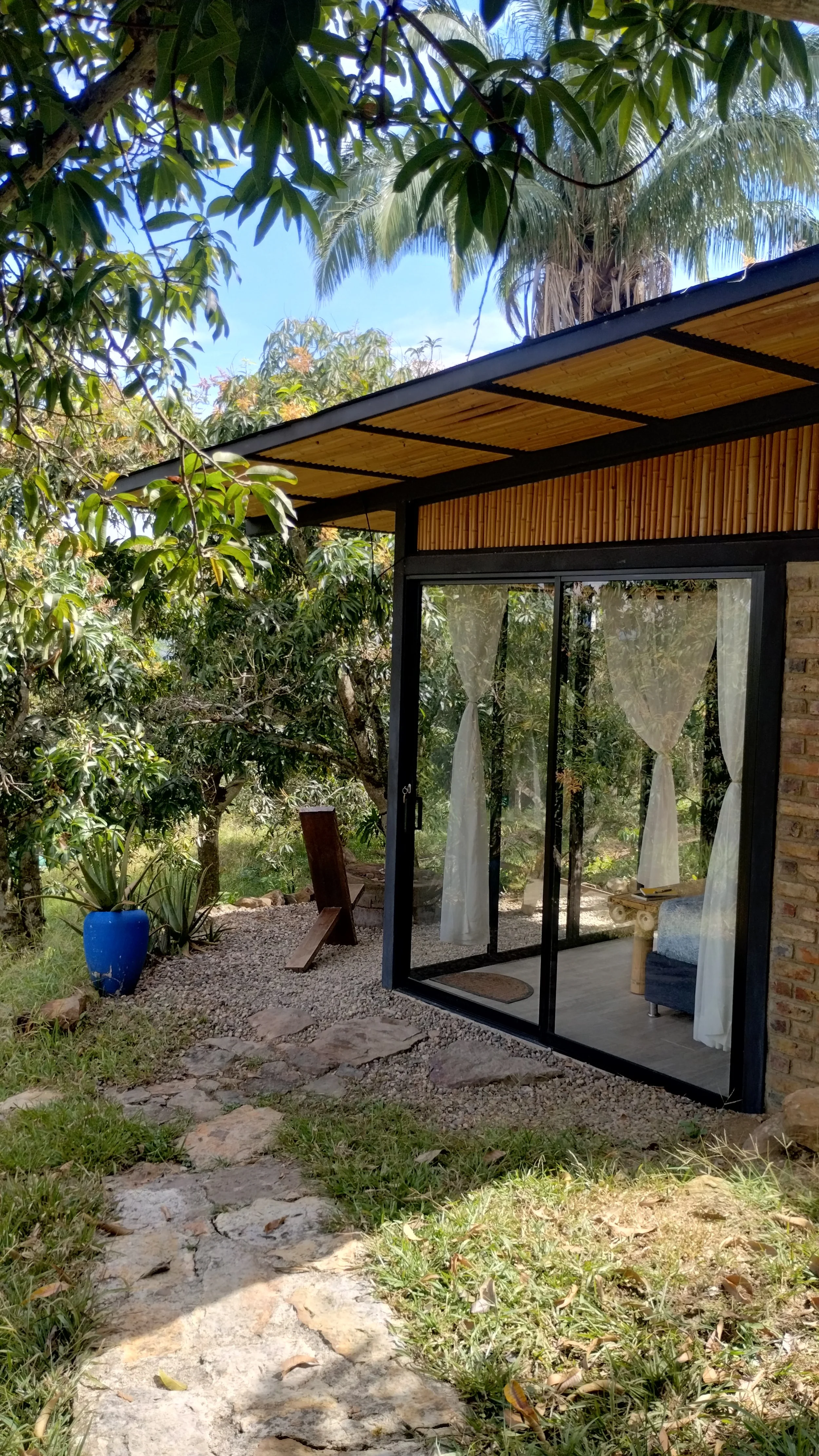
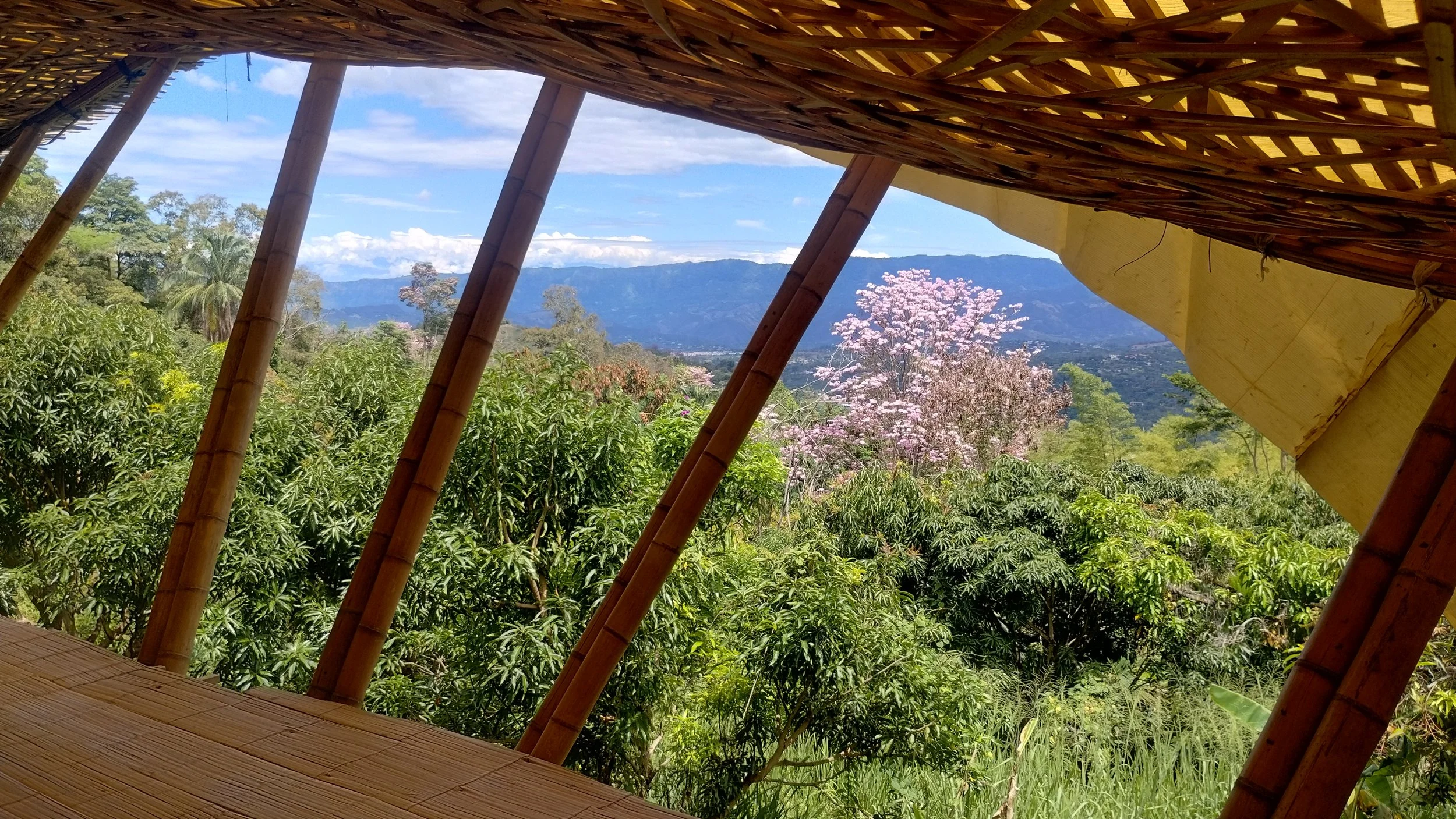
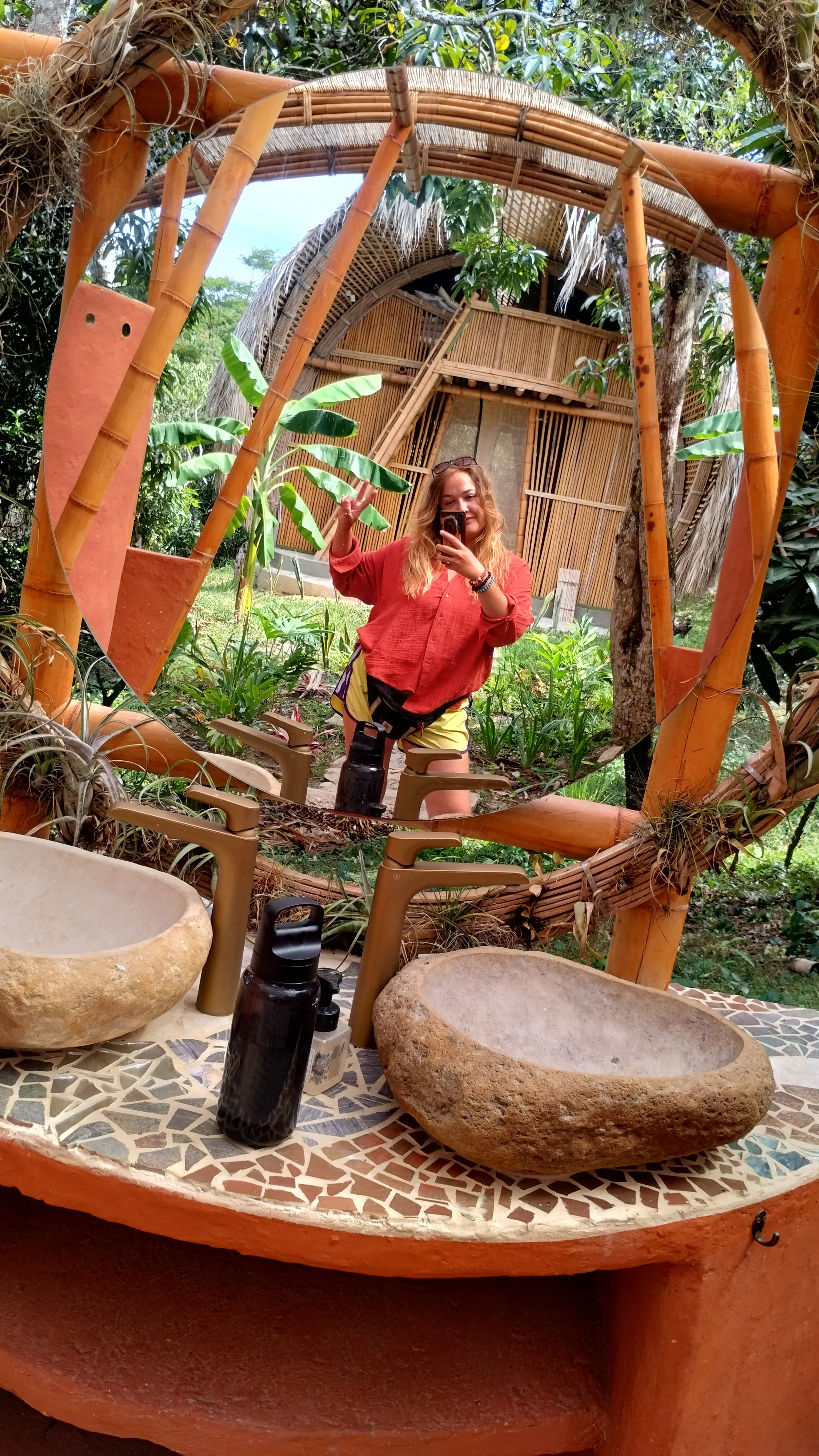
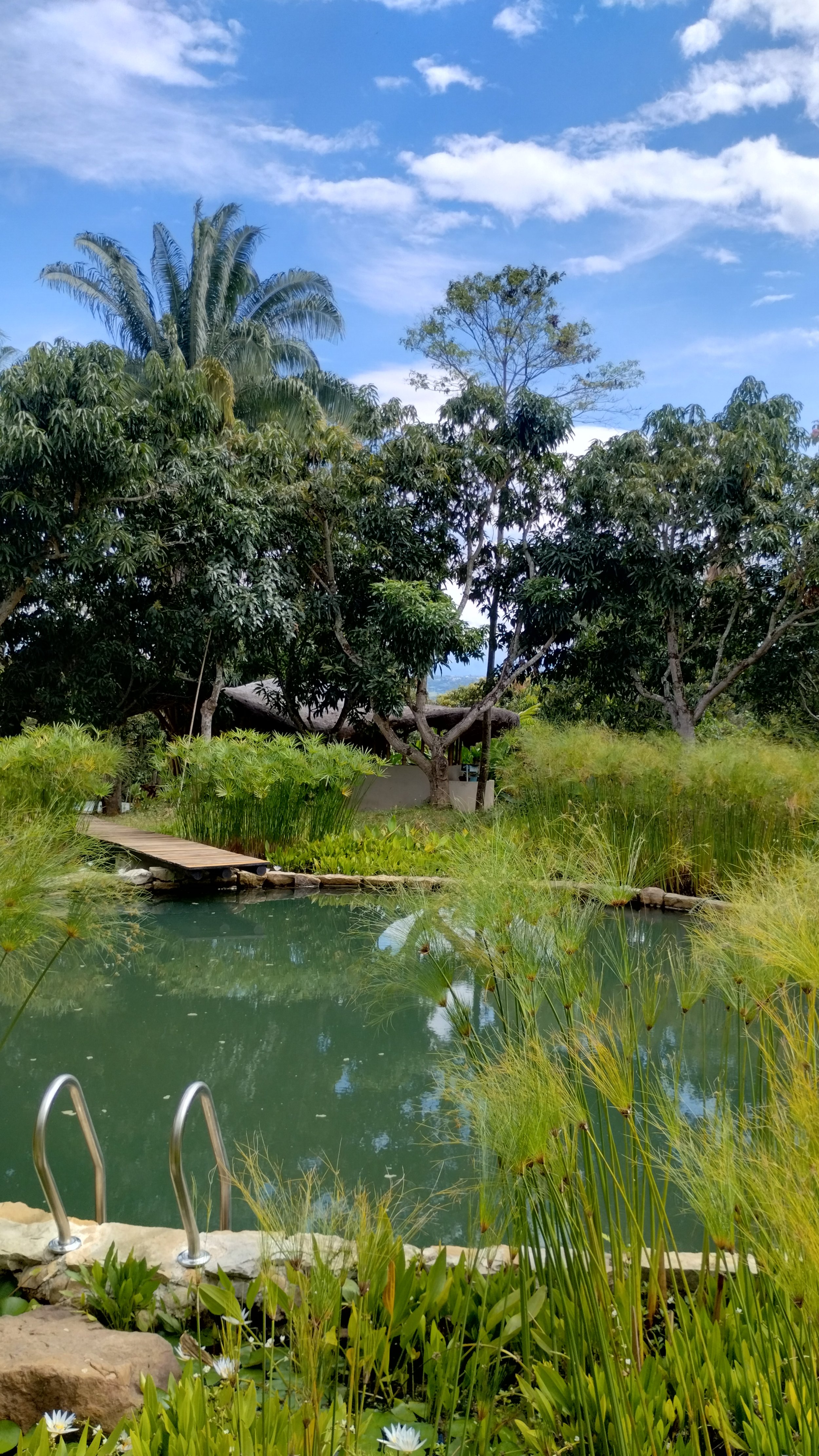
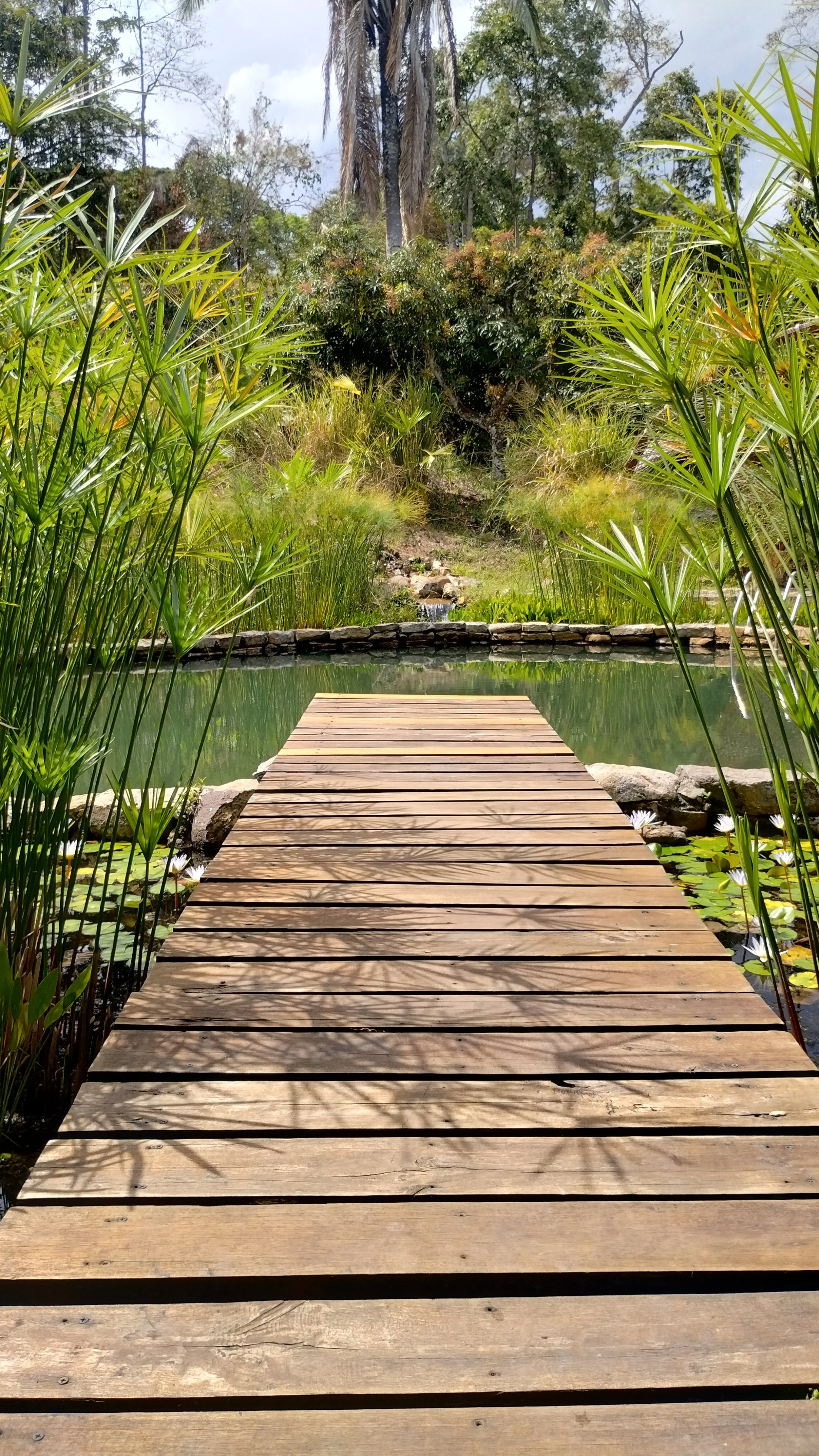
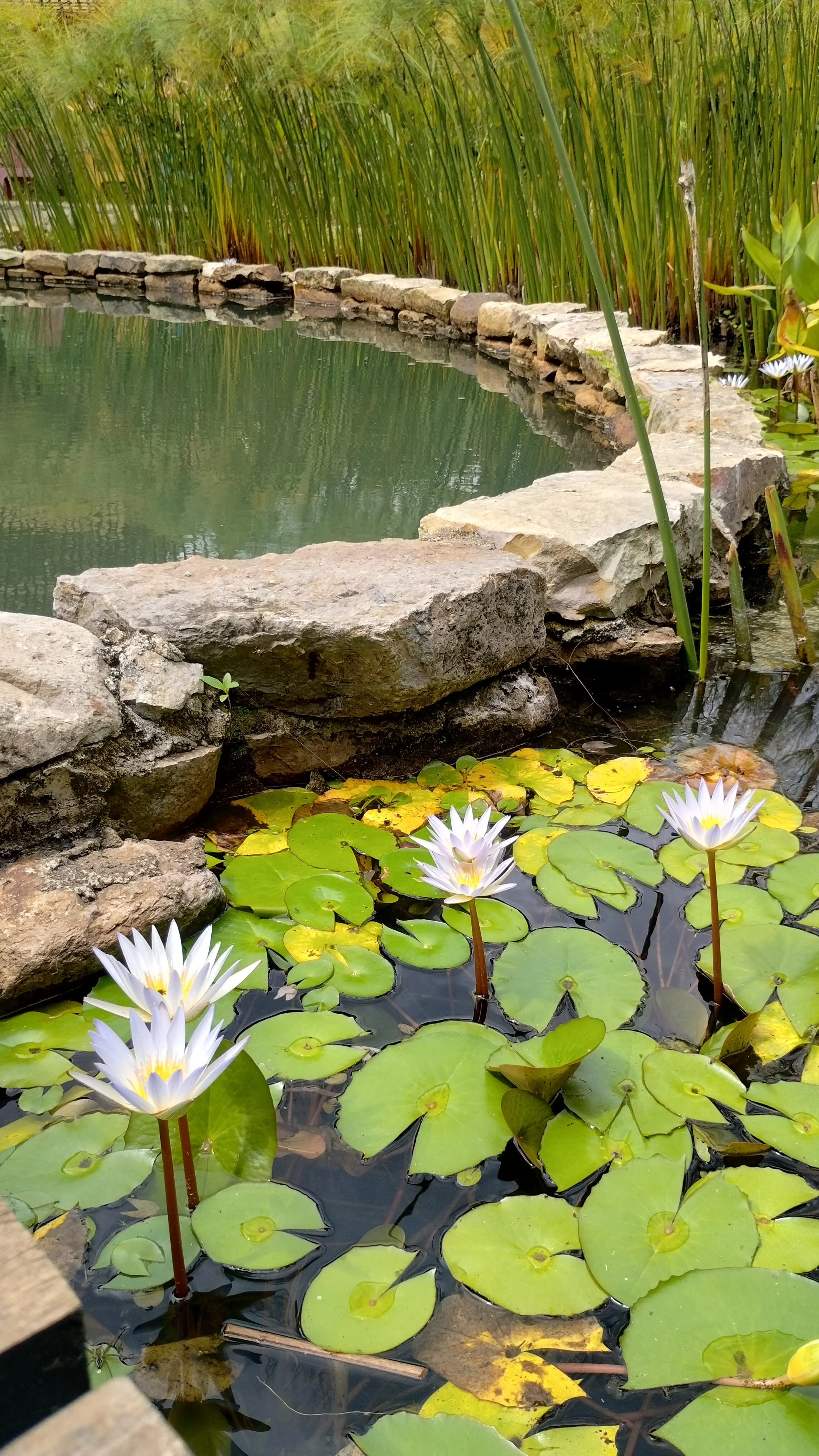
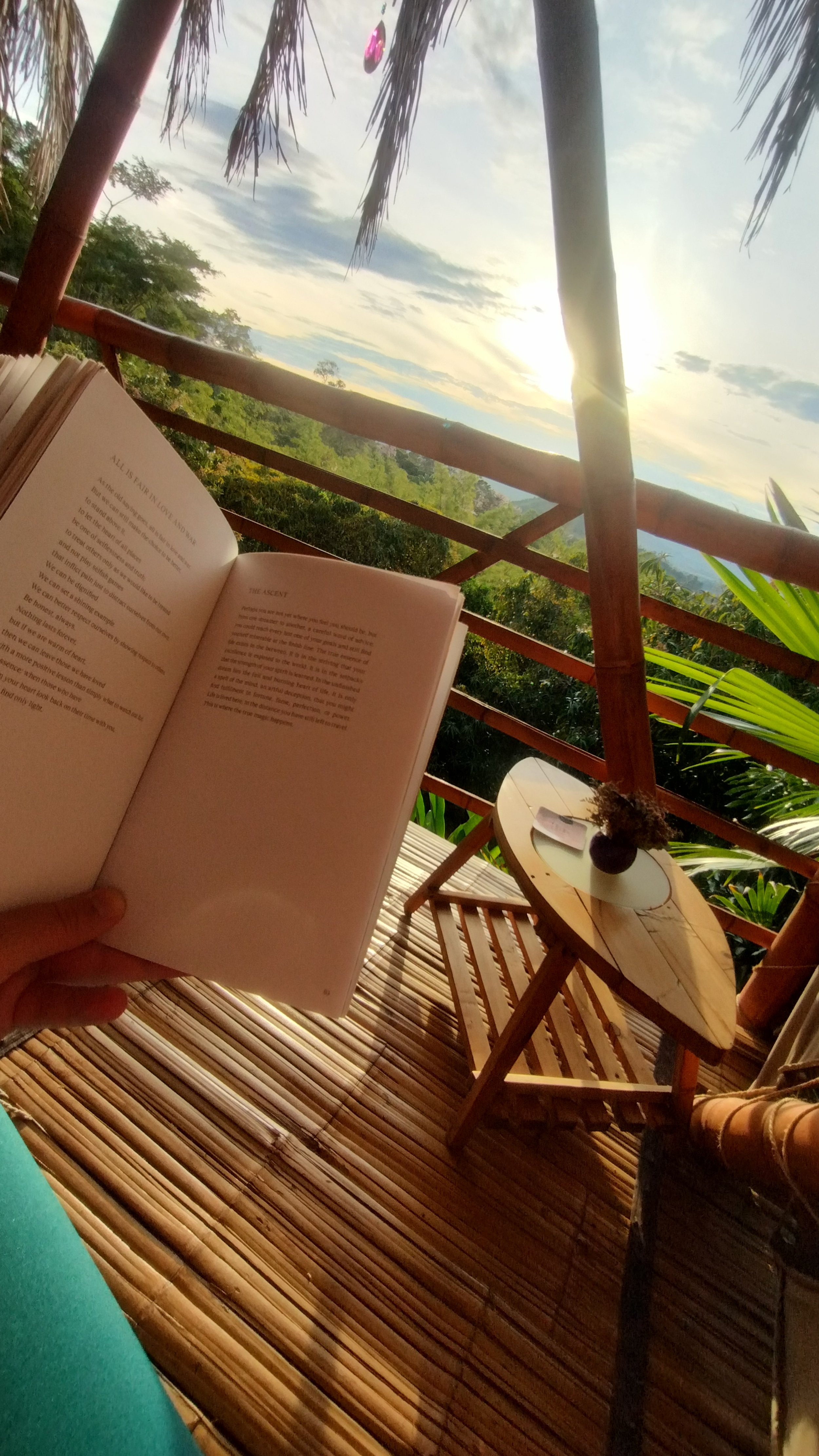
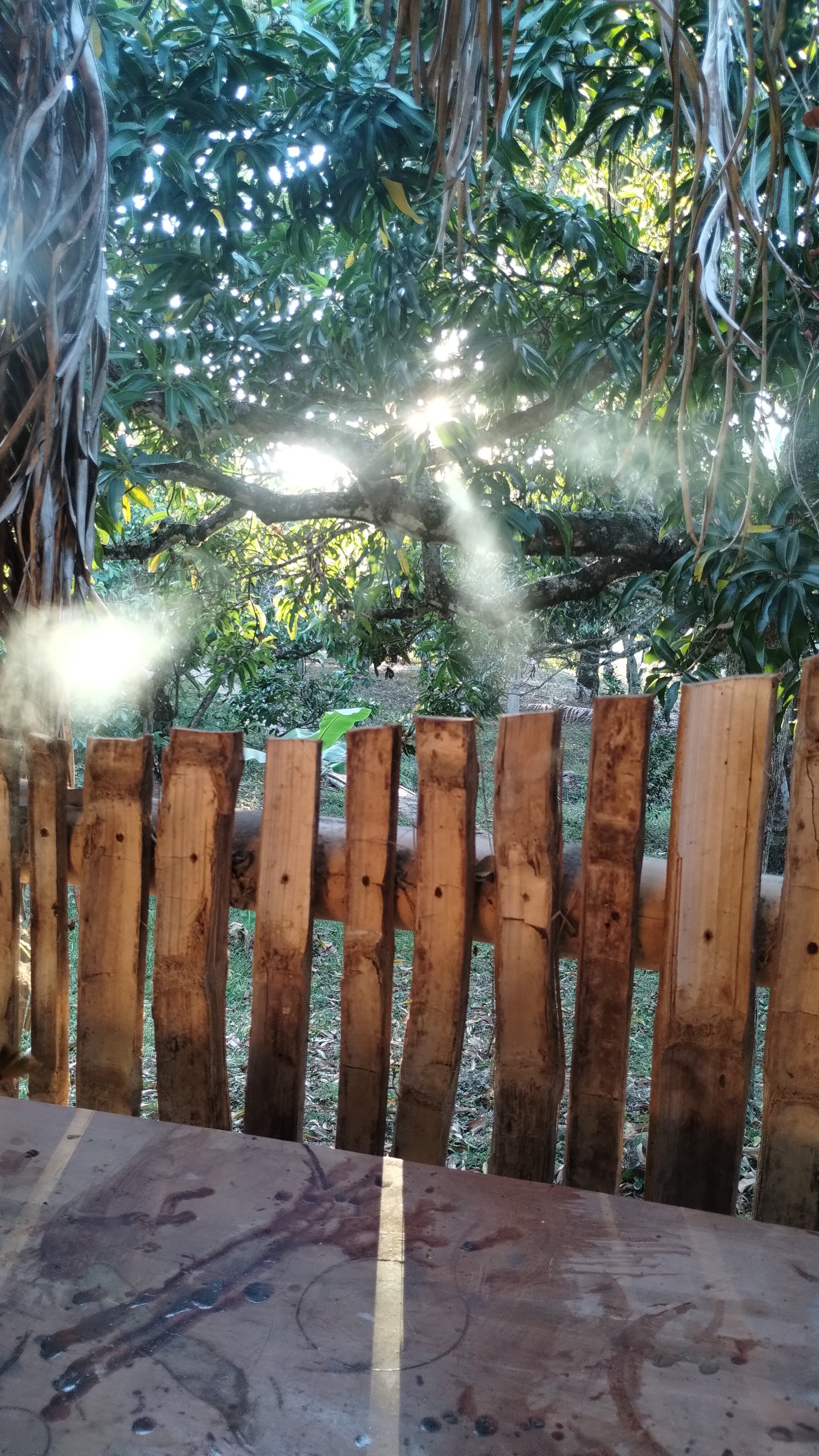
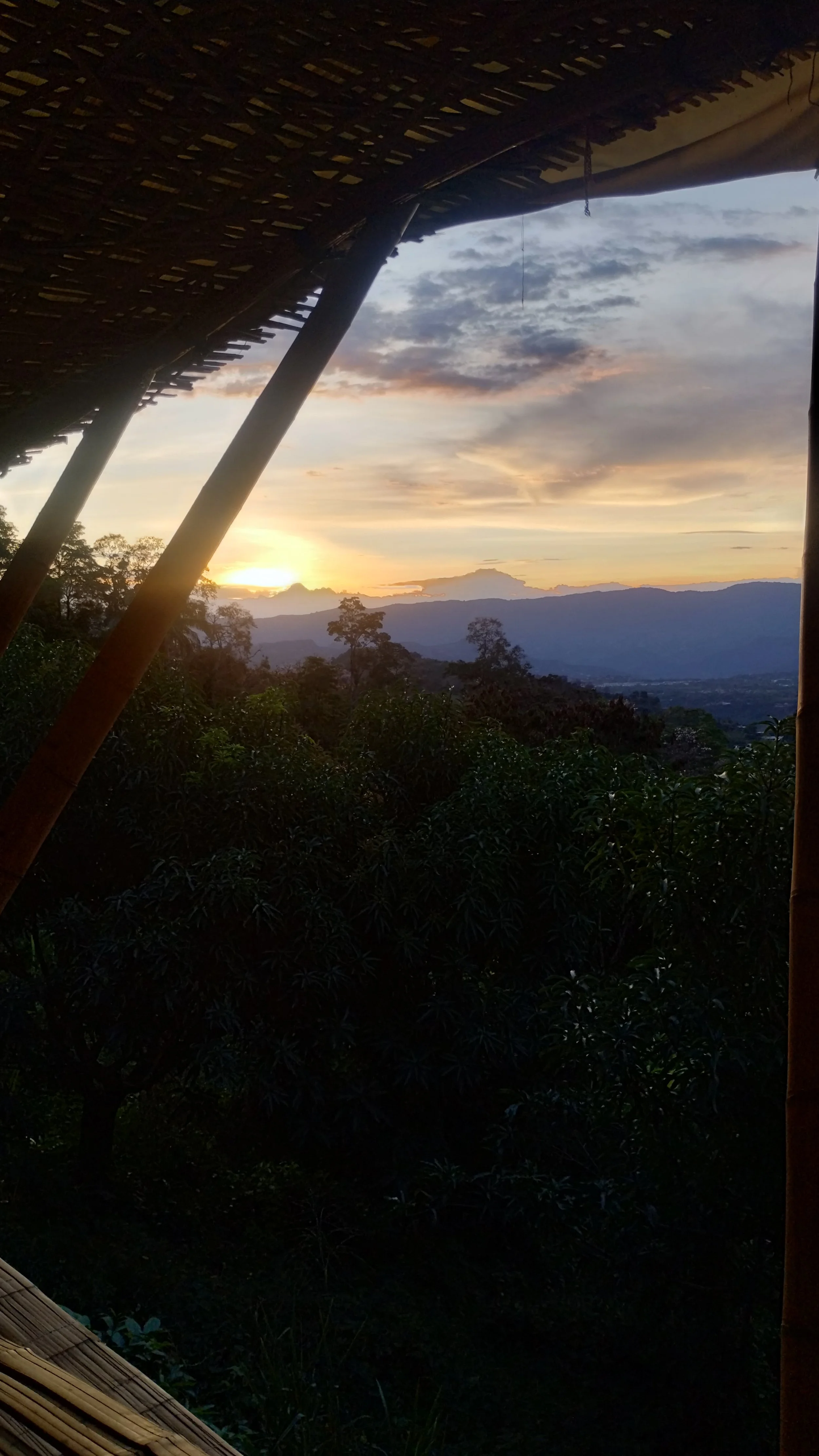
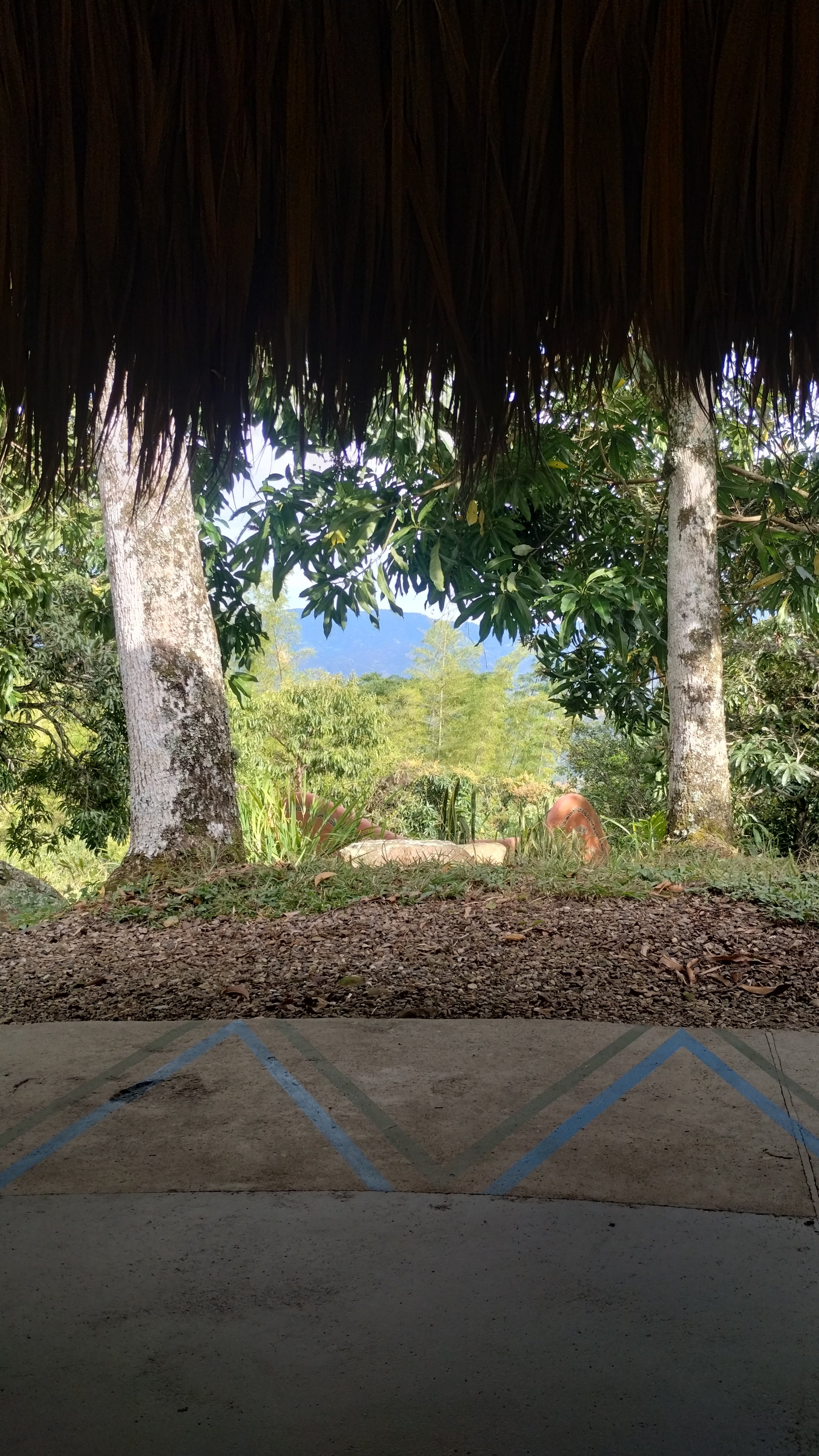
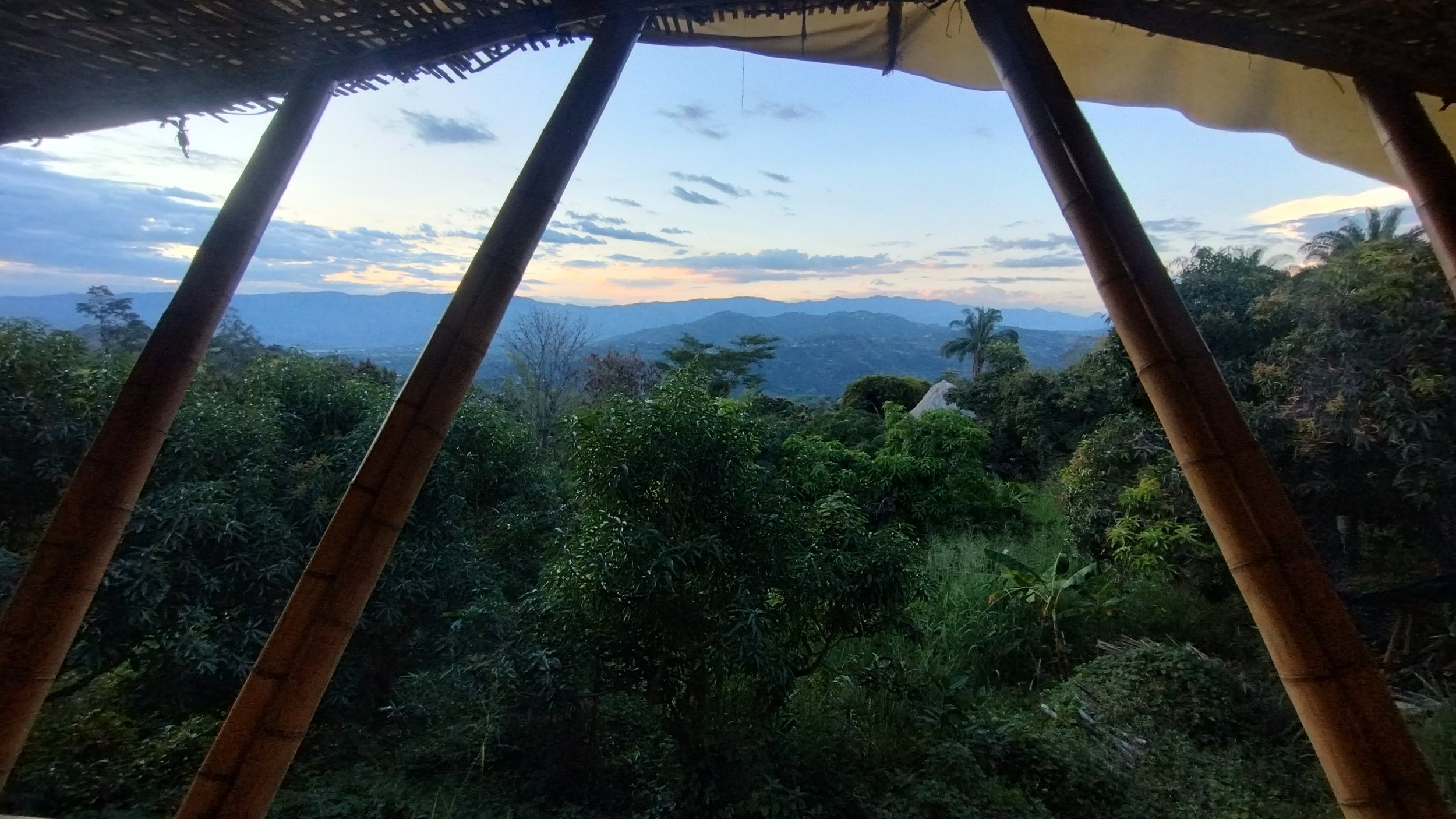
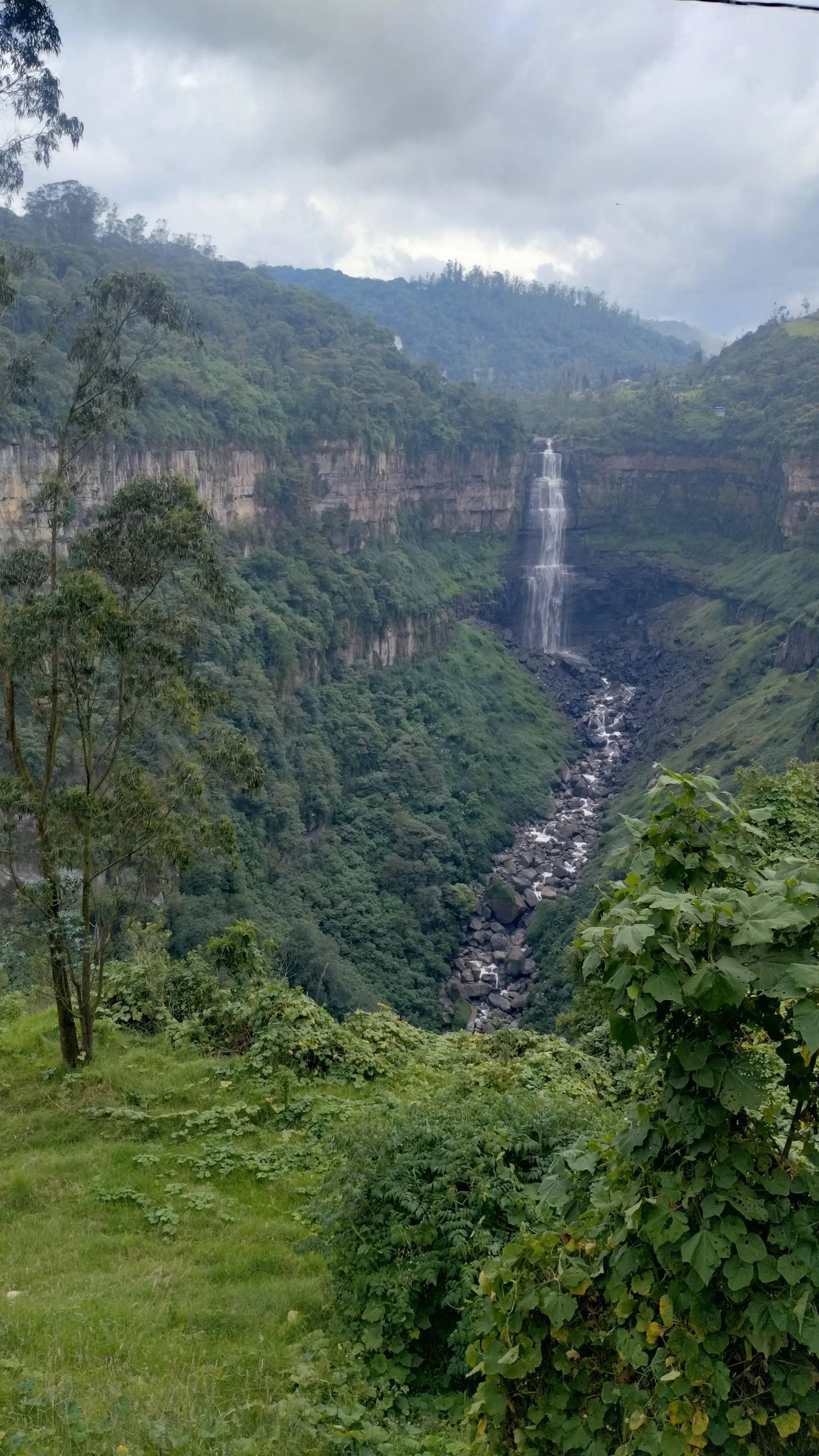
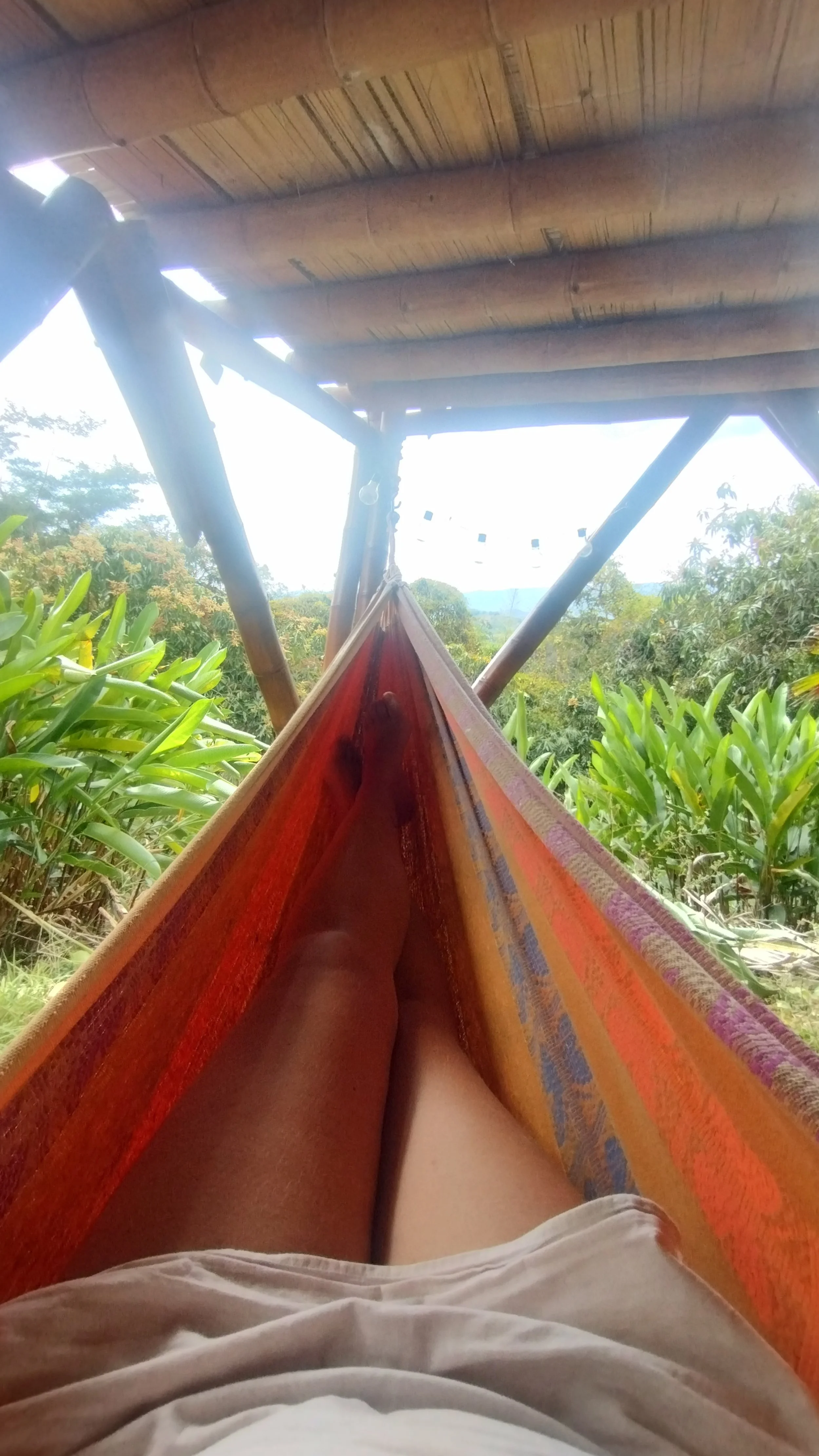
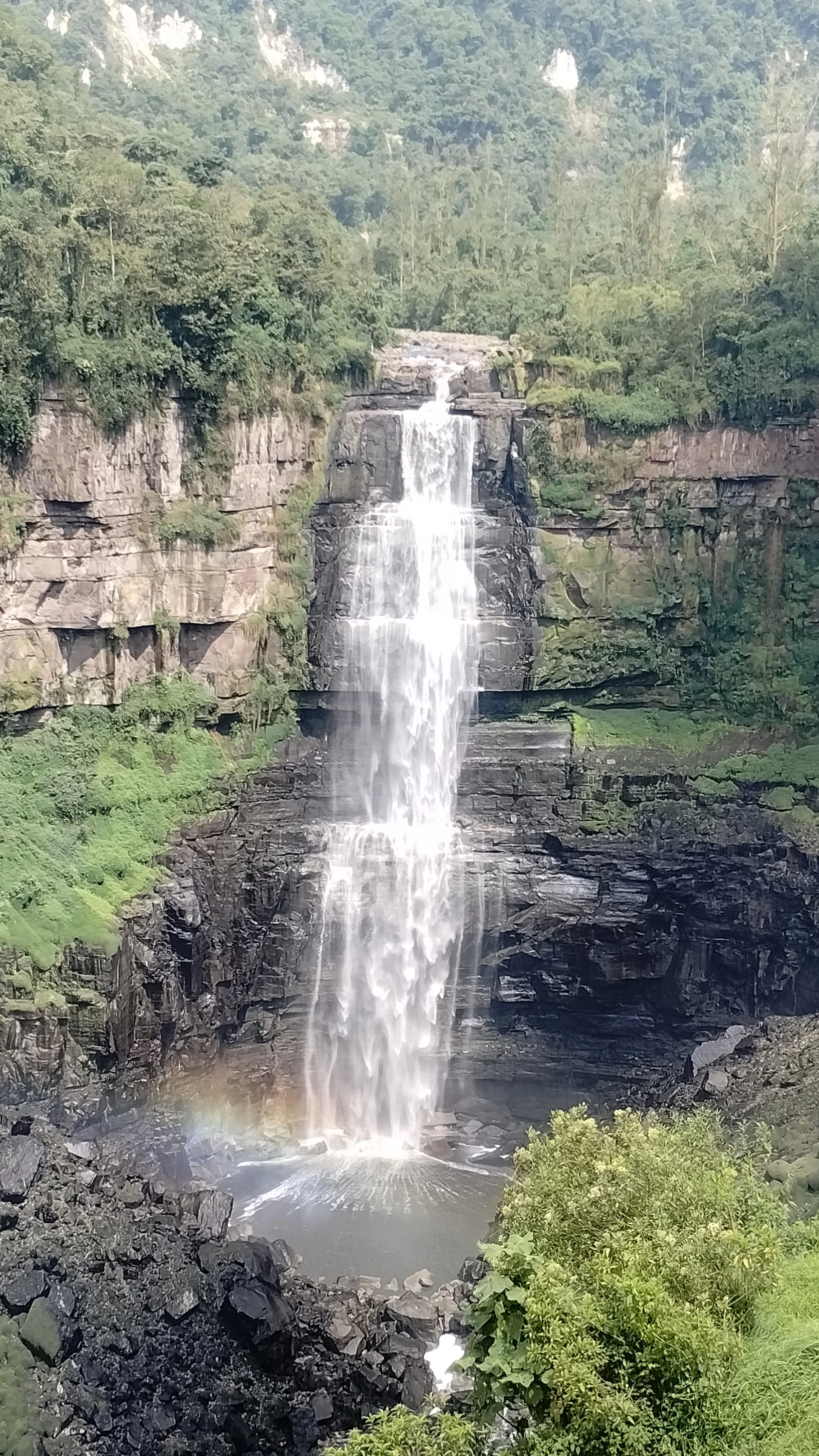
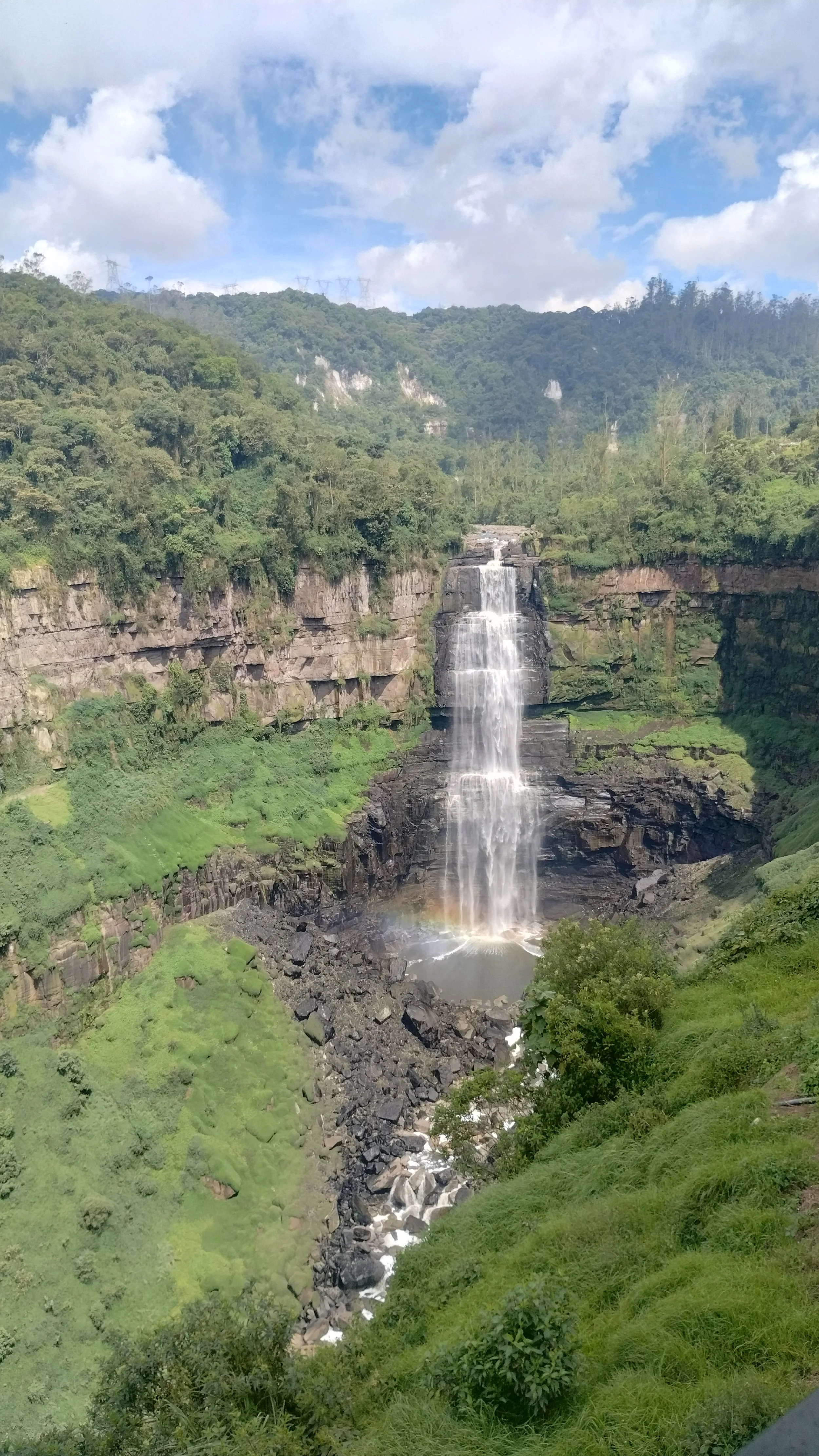
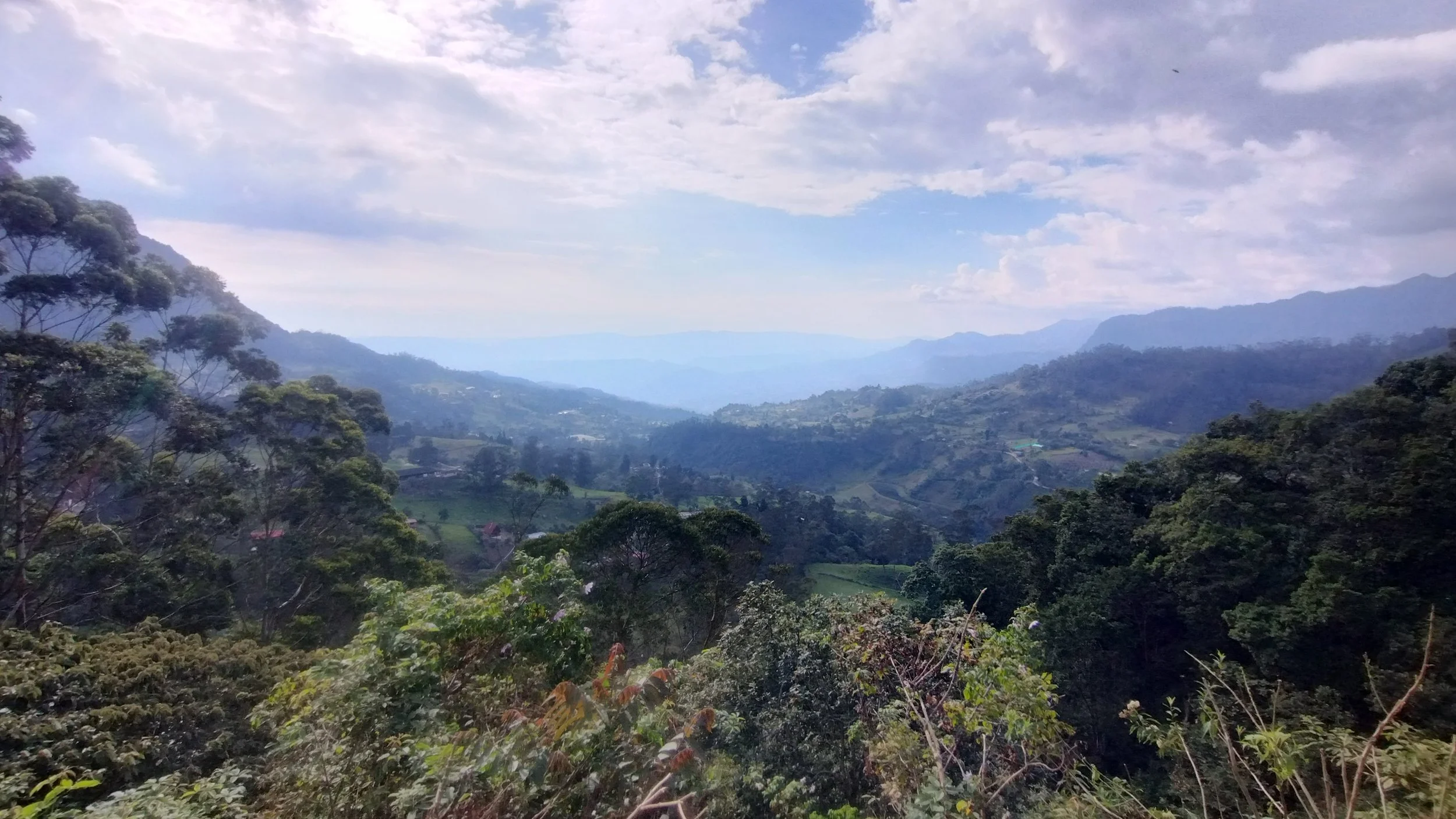
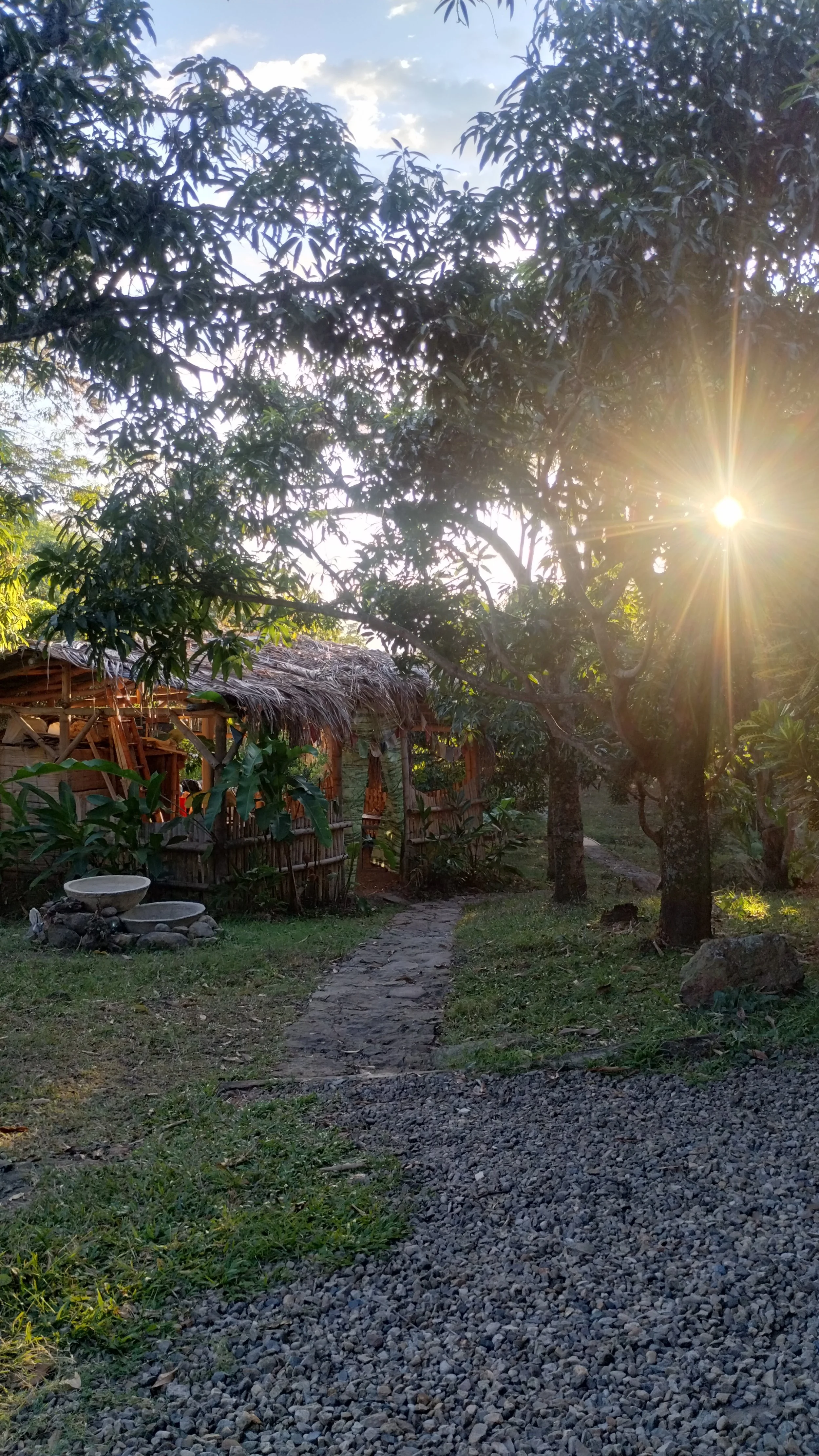
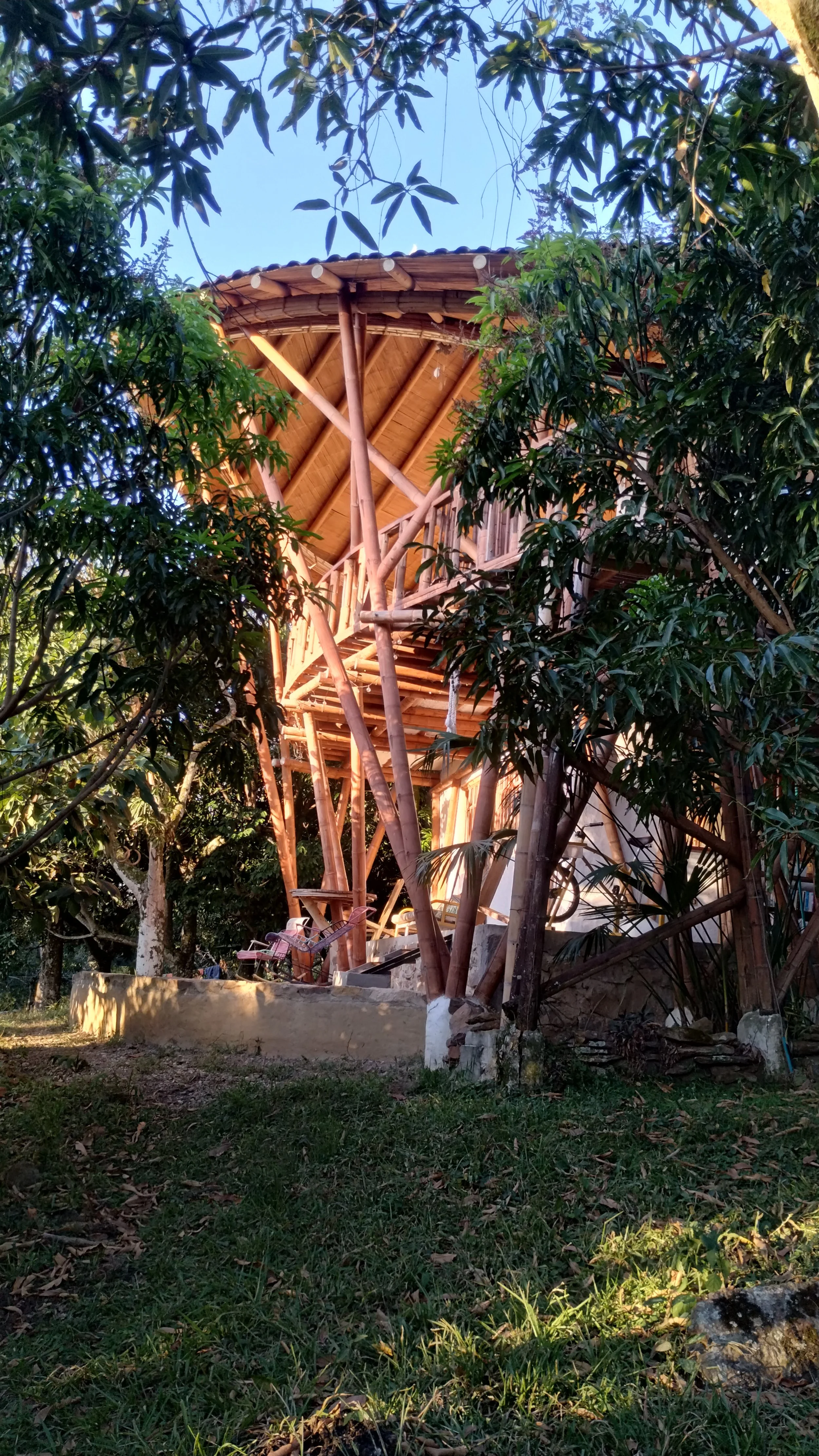
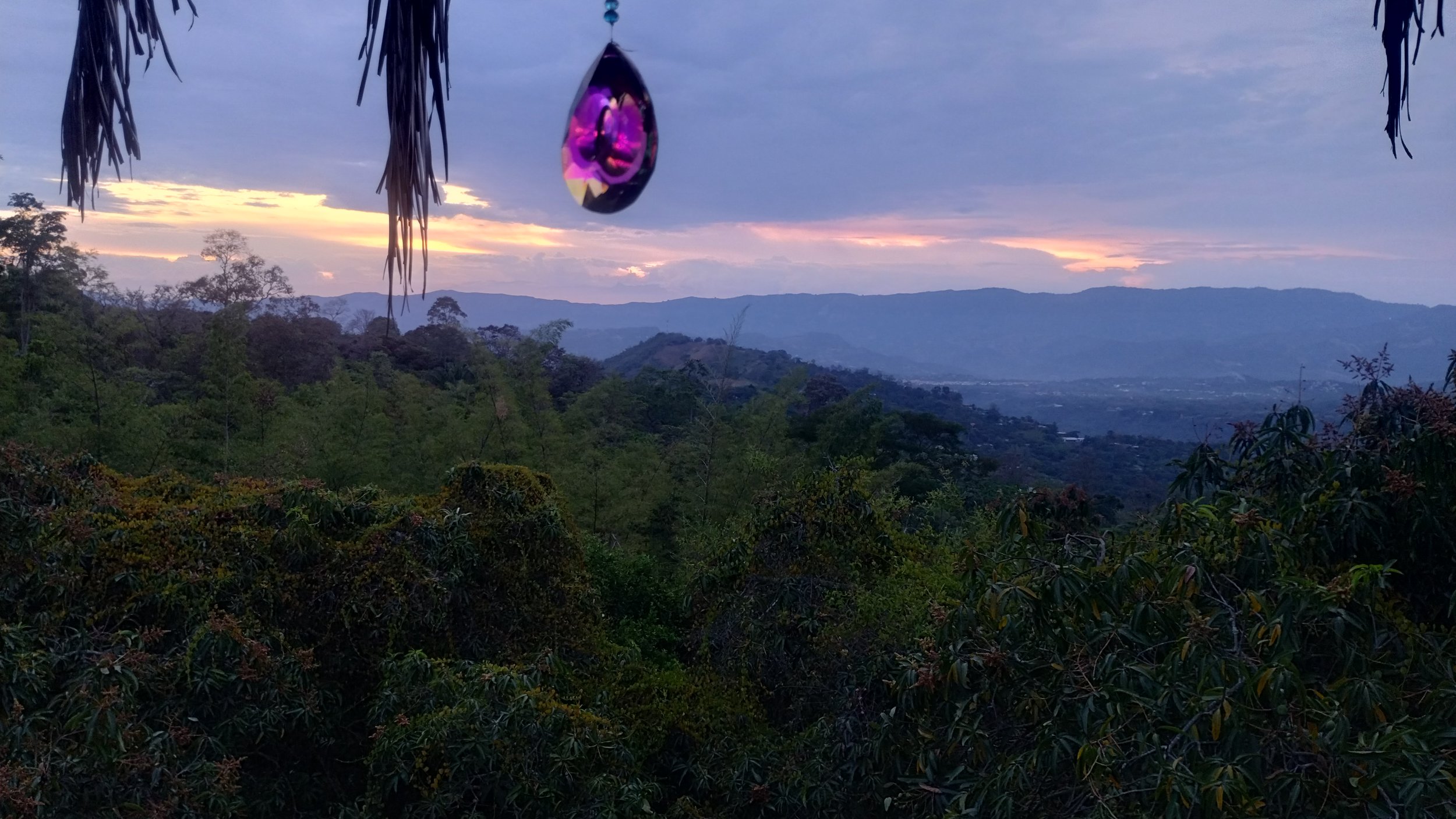
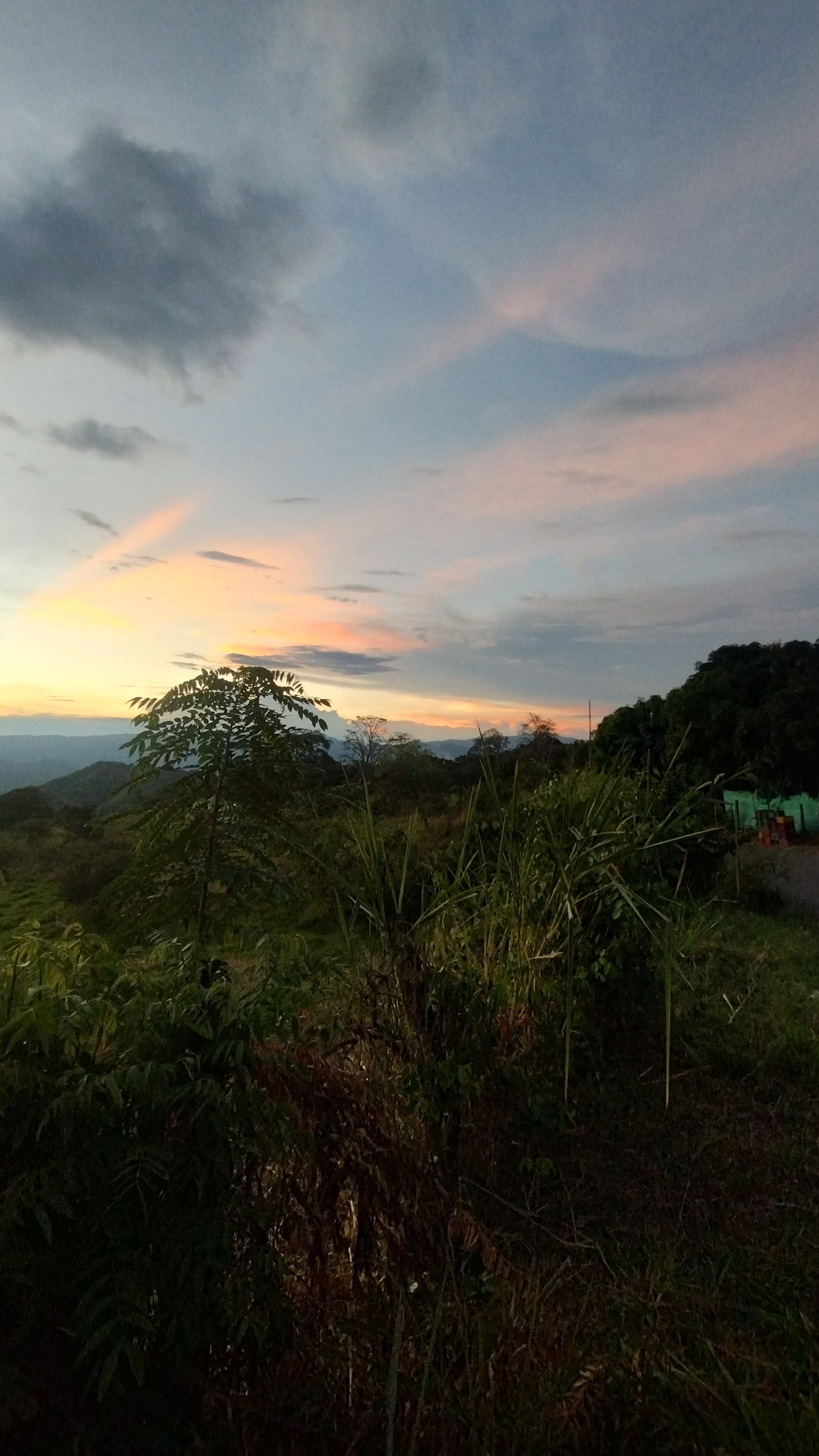
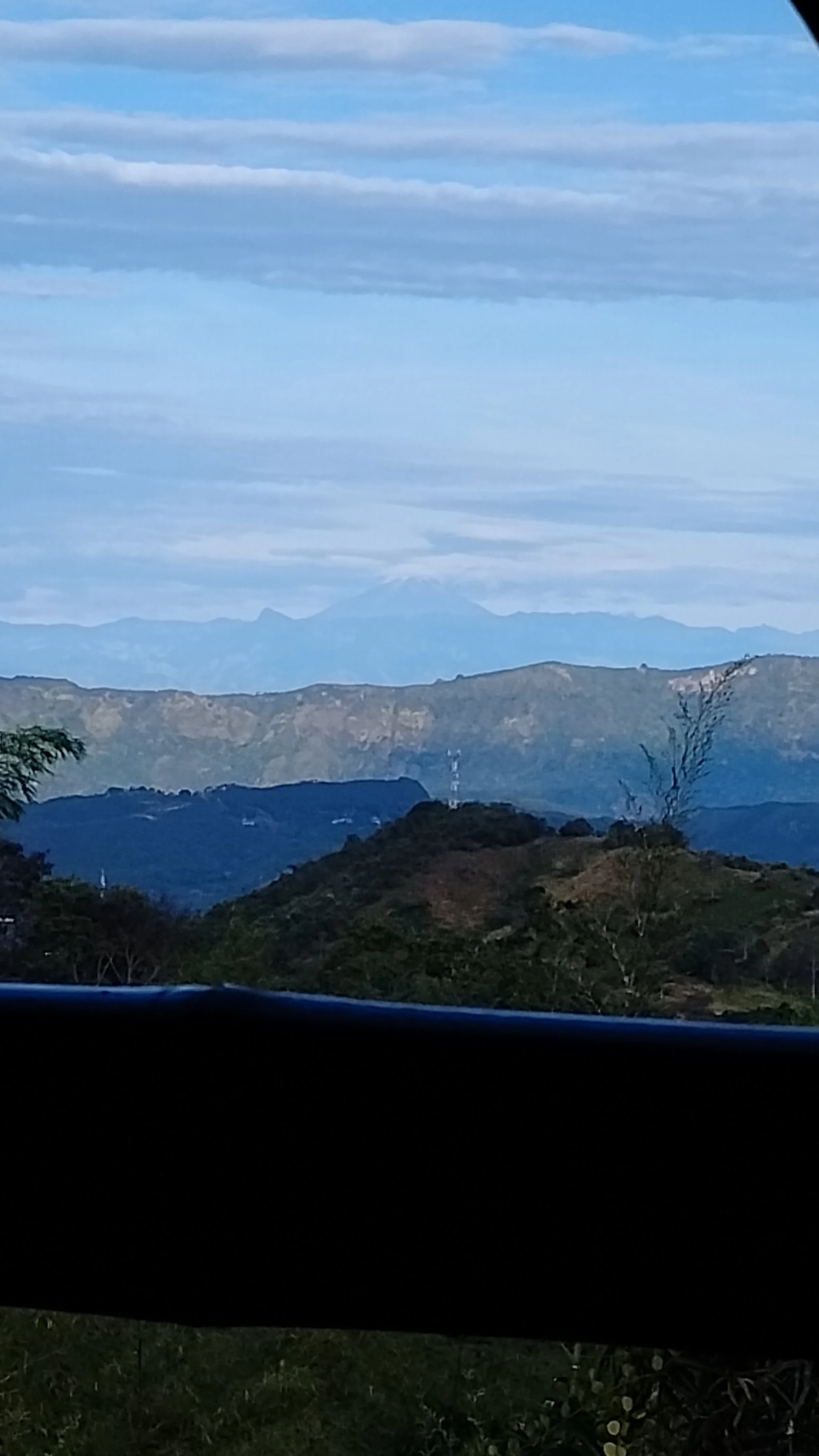
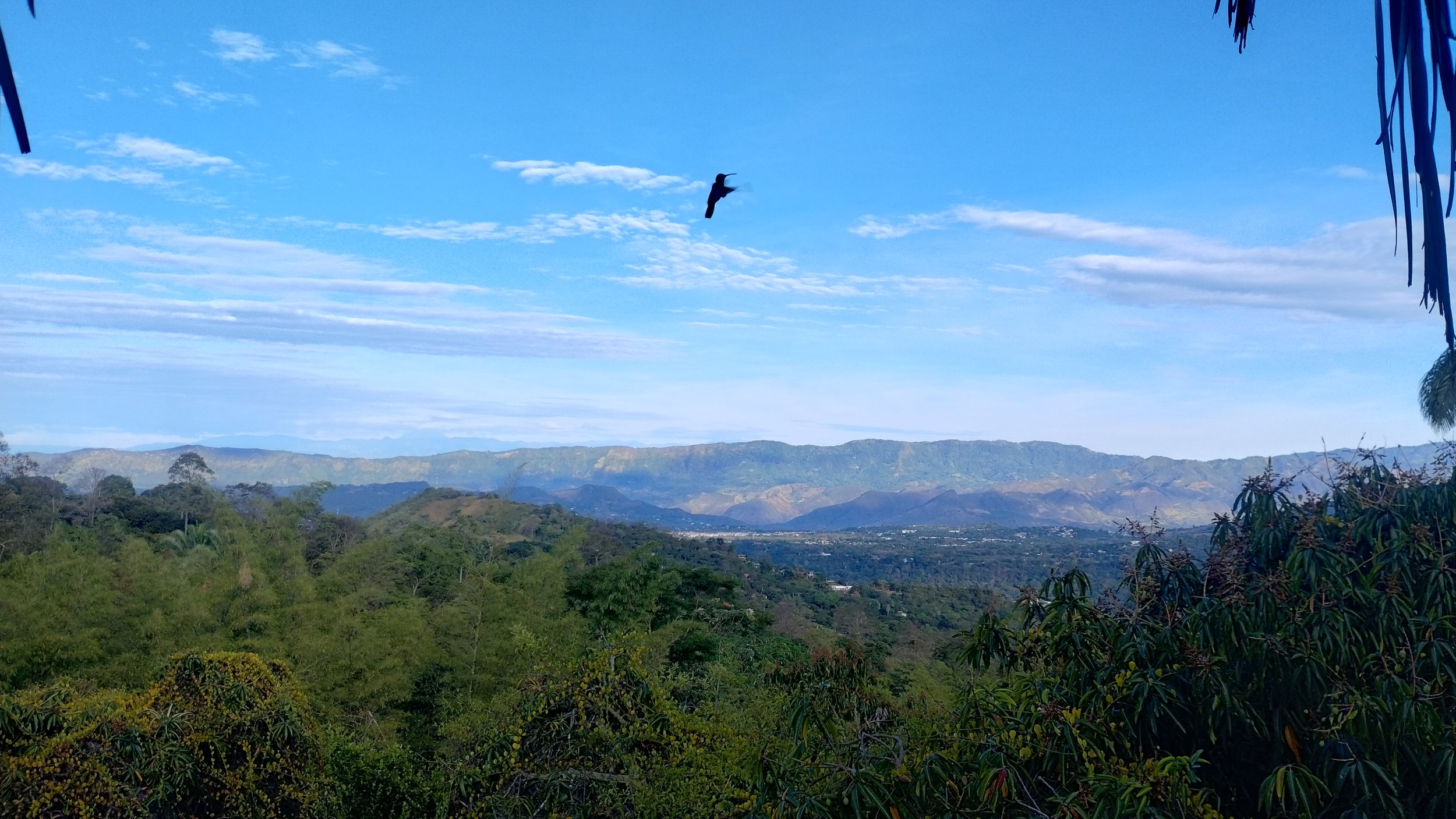
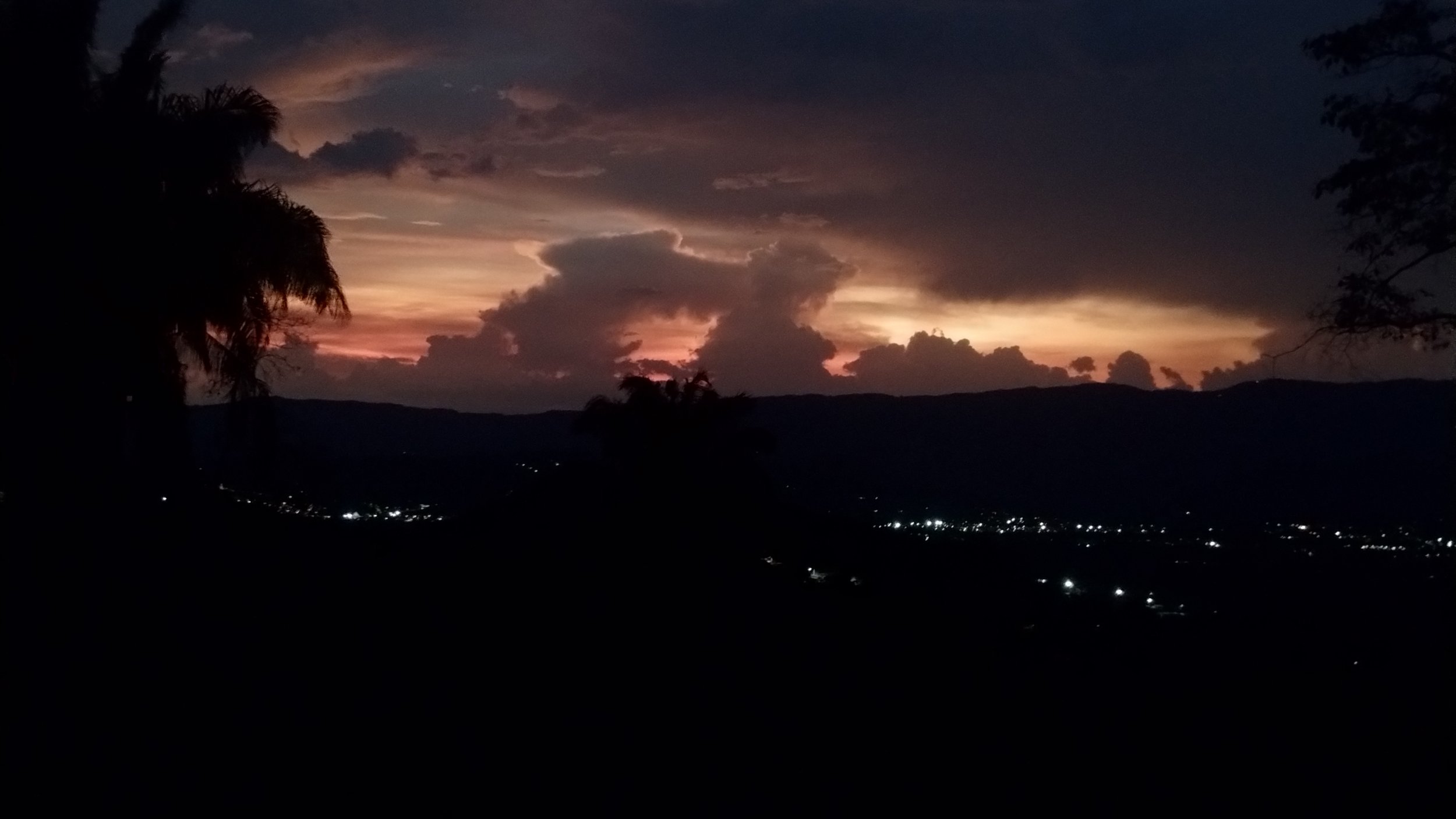
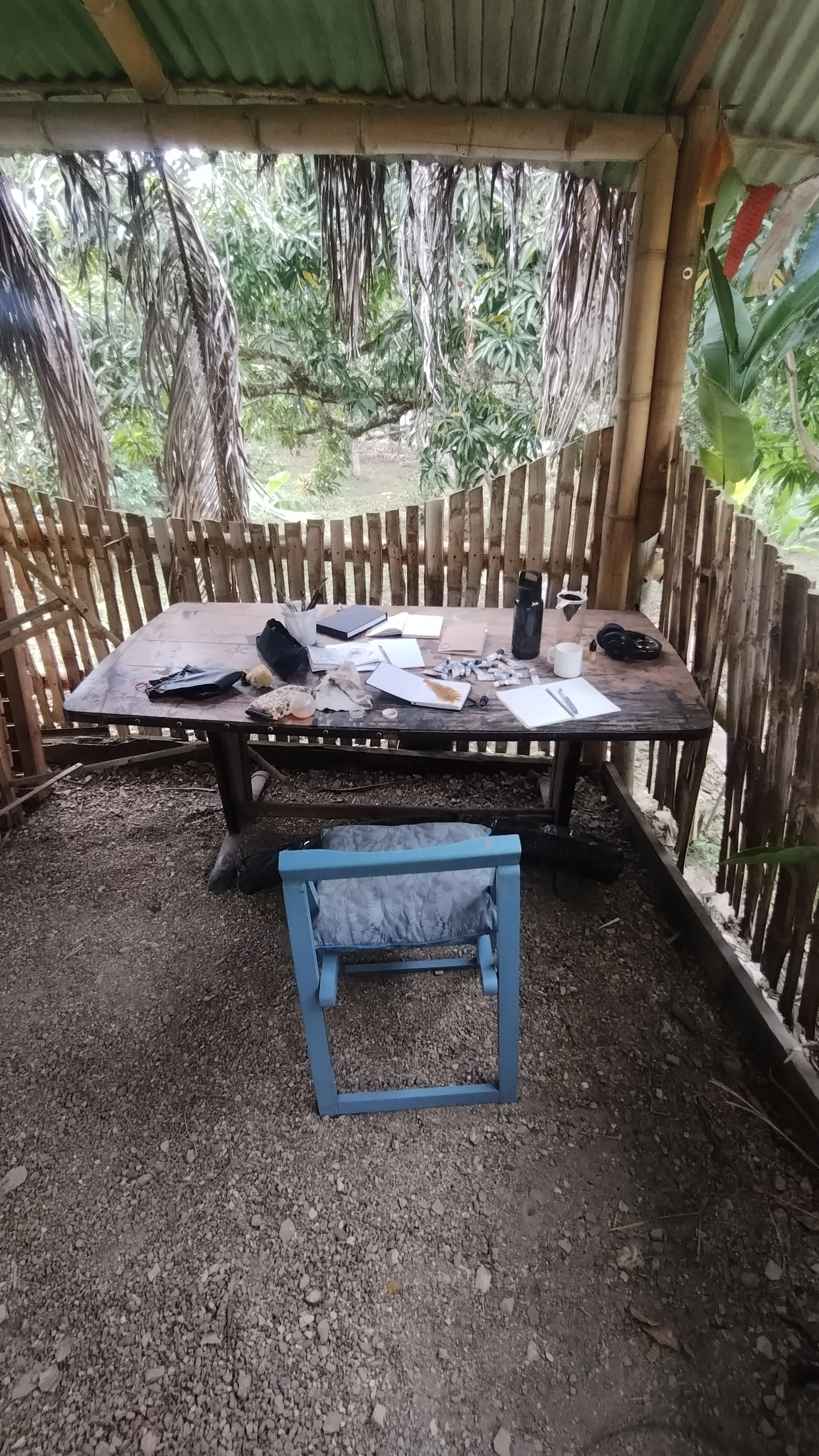
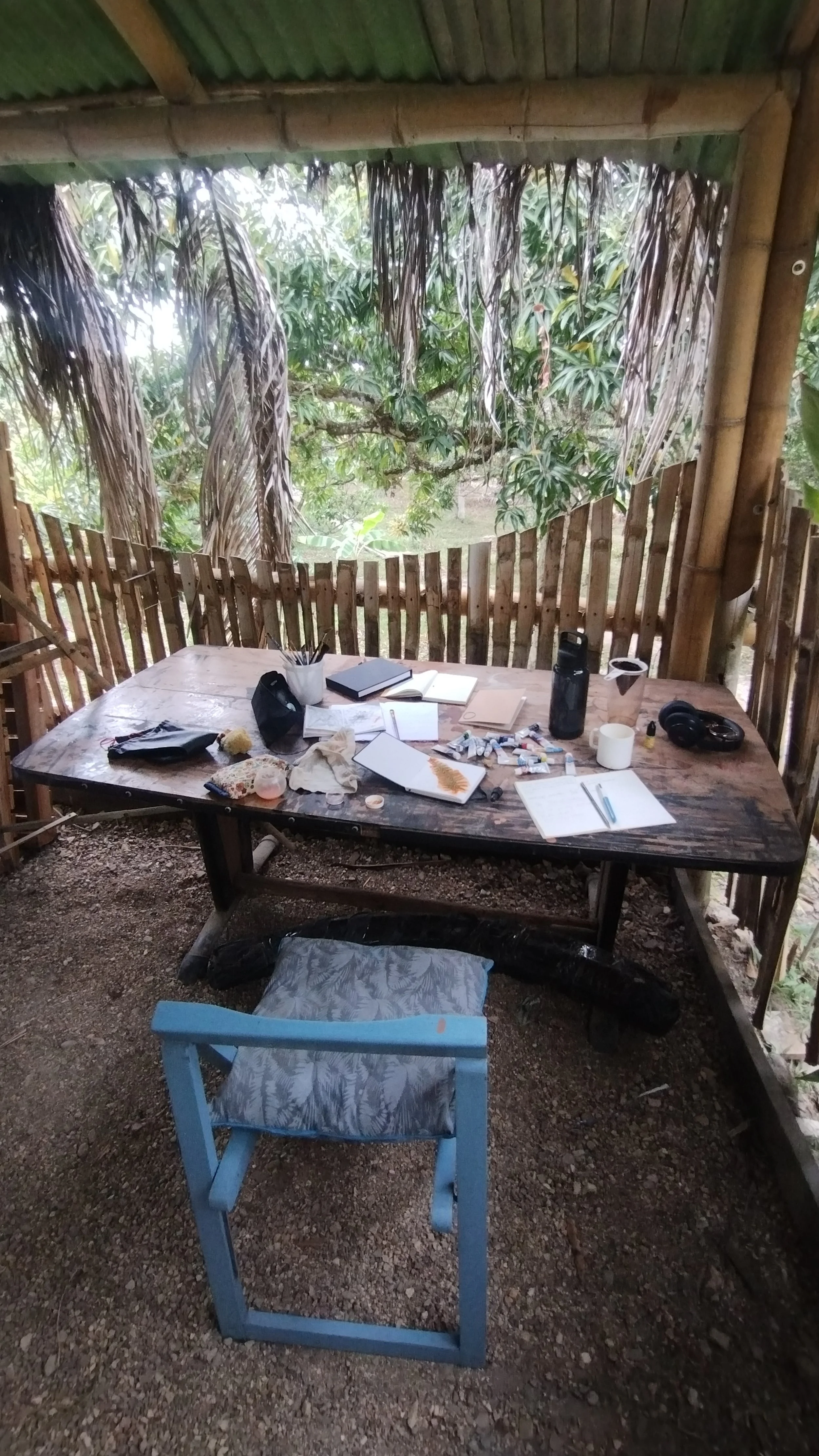
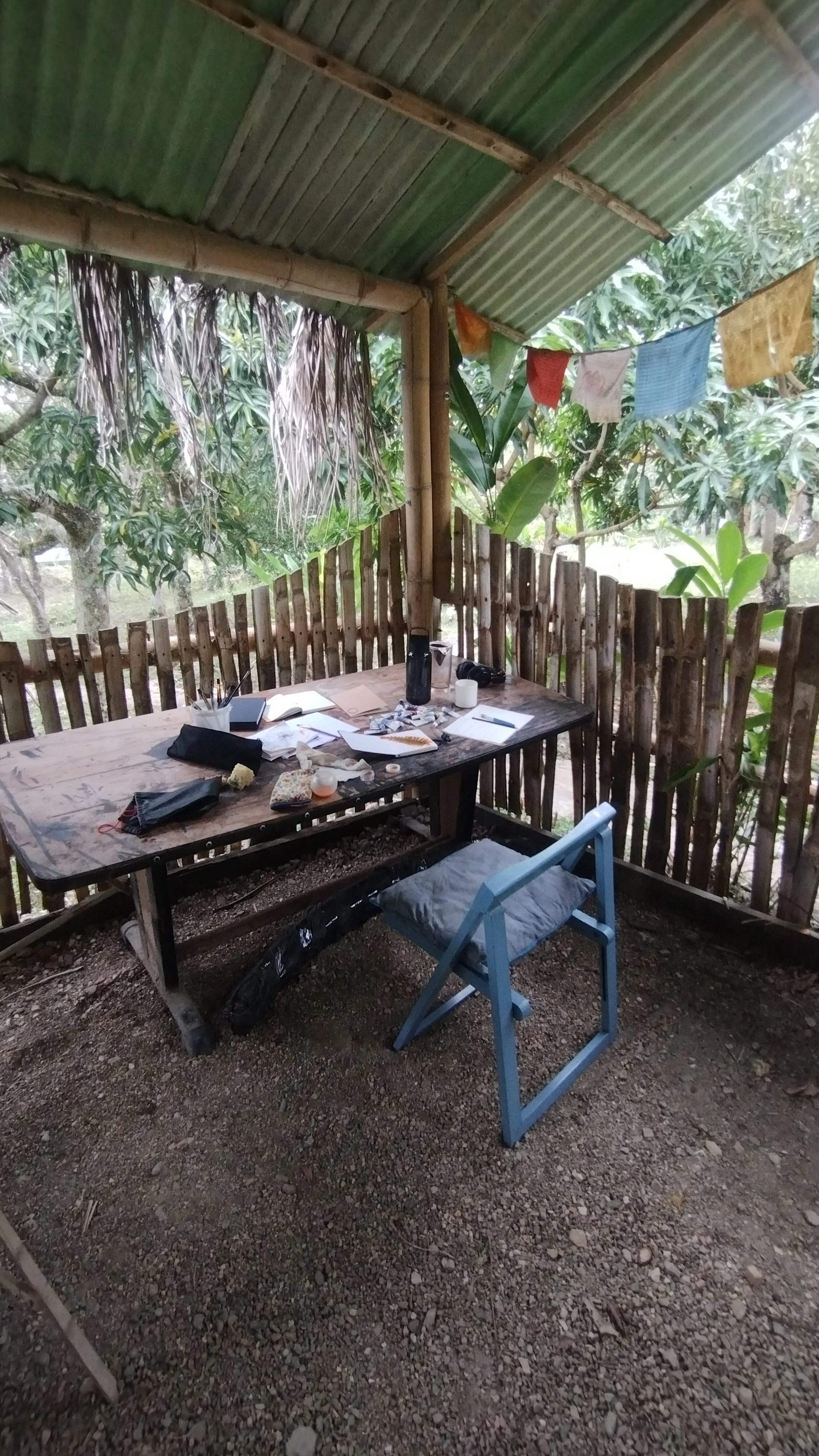
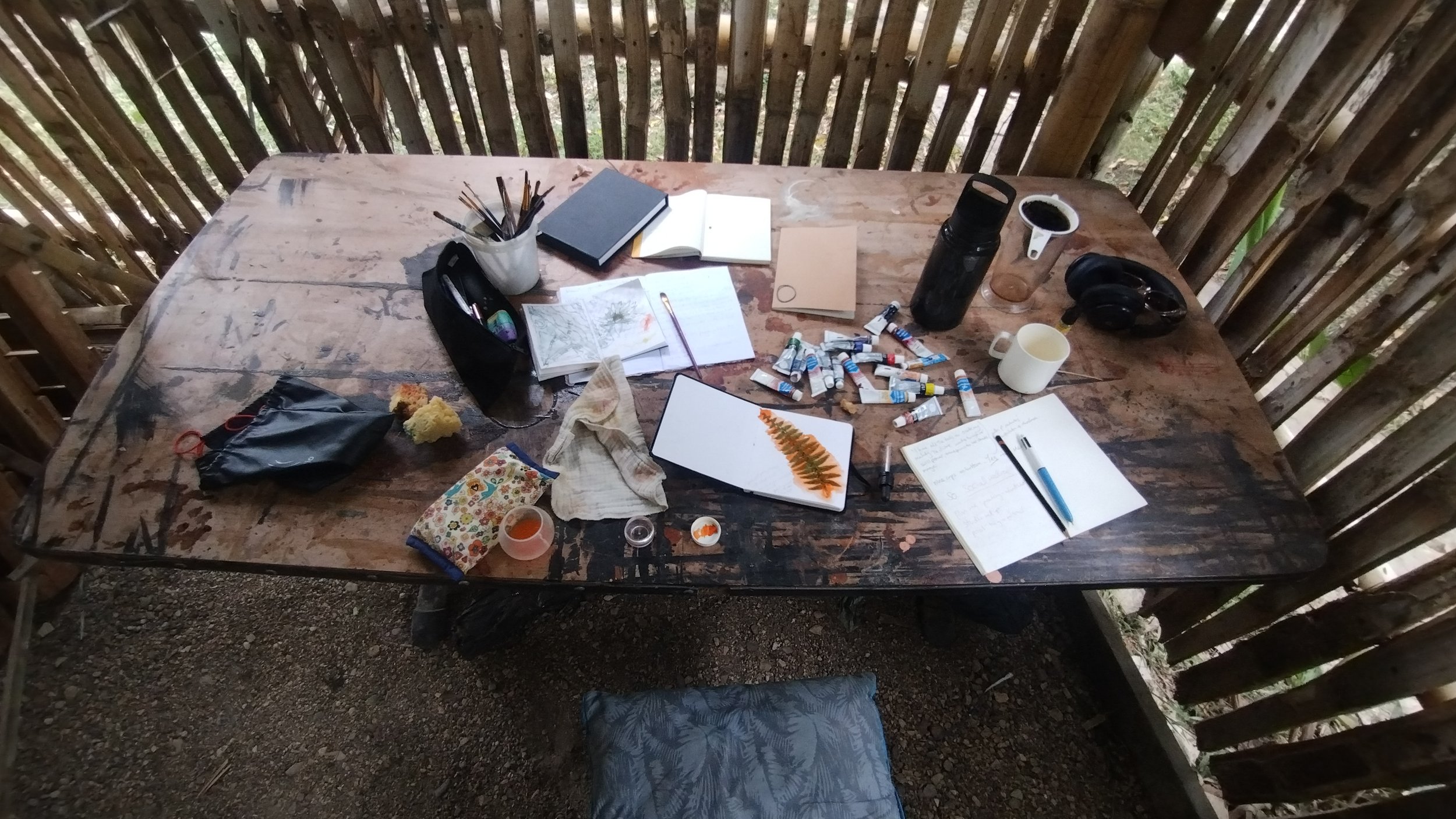
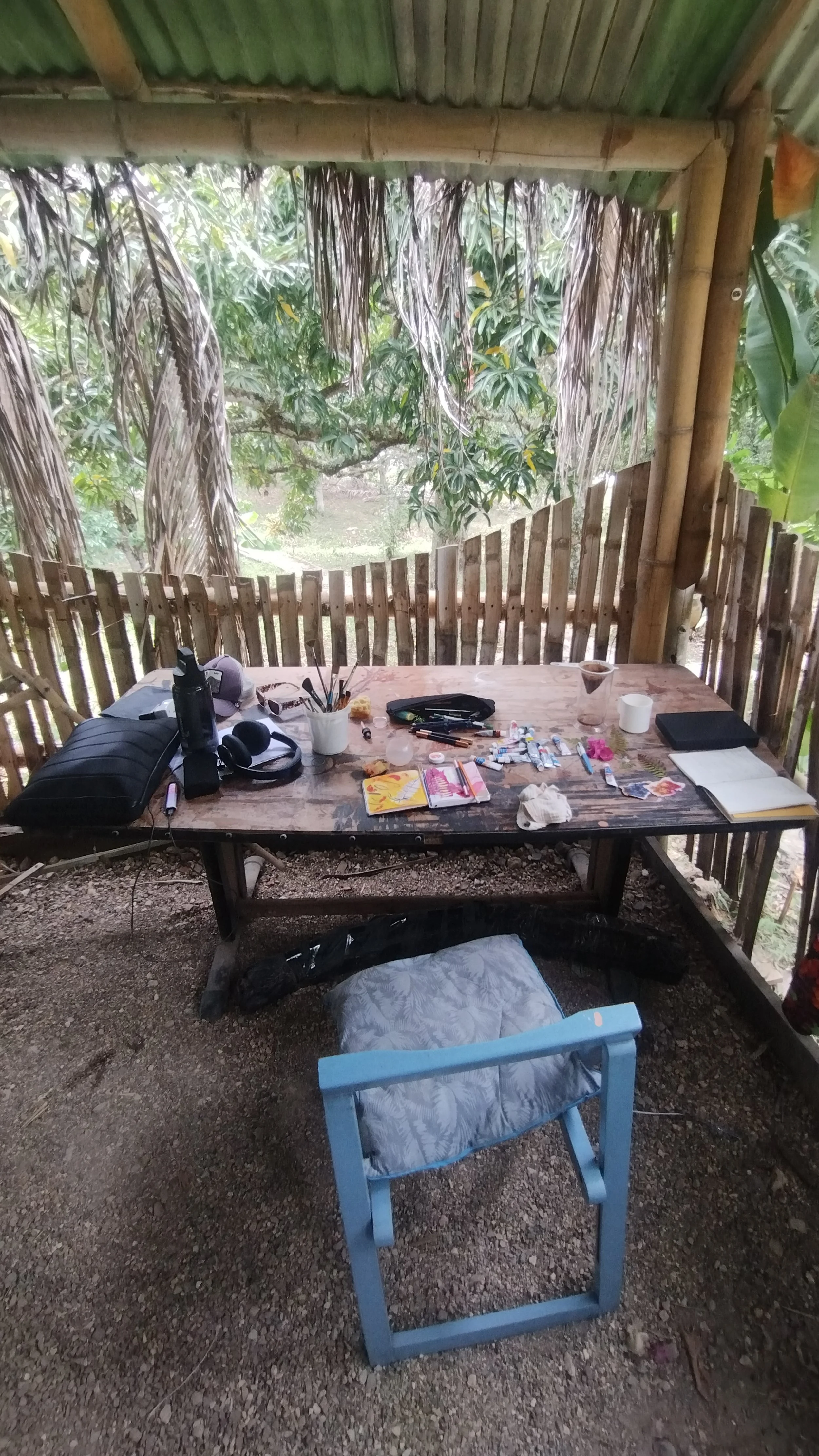
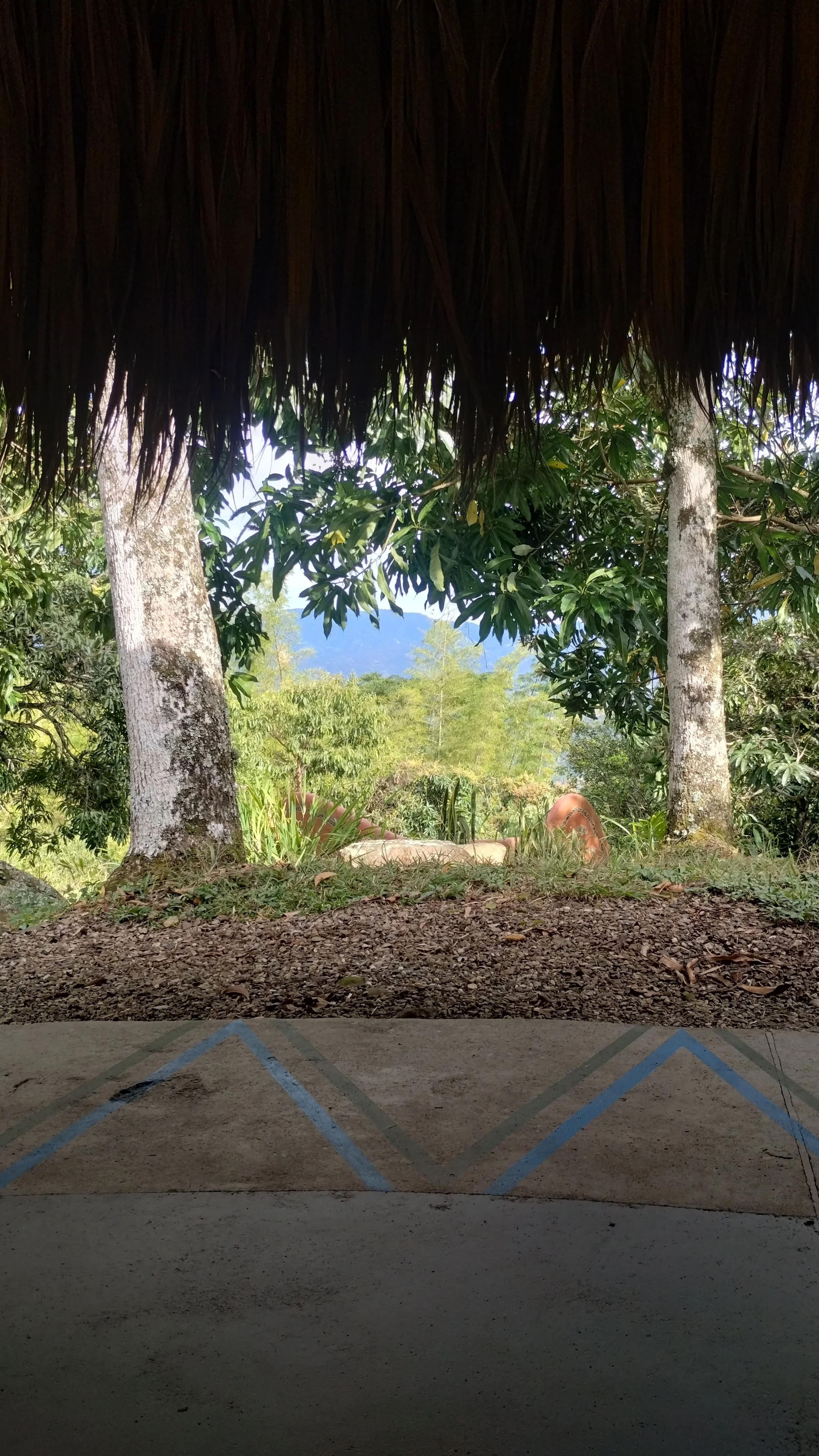
Okay — this is a biggy! I’ve been nestled in the Colombian rainforest for a month now (since 1 October), and I can definitely say: this is paradise. My digs are a thing of beauty (pics below). I’m staying on a mango farm near Anipoima, which boasts over 800 mango trees, along with orange, mandarin, lemon, coffee, cacao, avocado, and a spread of medicinal and edible herbs. You really don’t need to go far to sustain yourself on this three-acre patch of land.
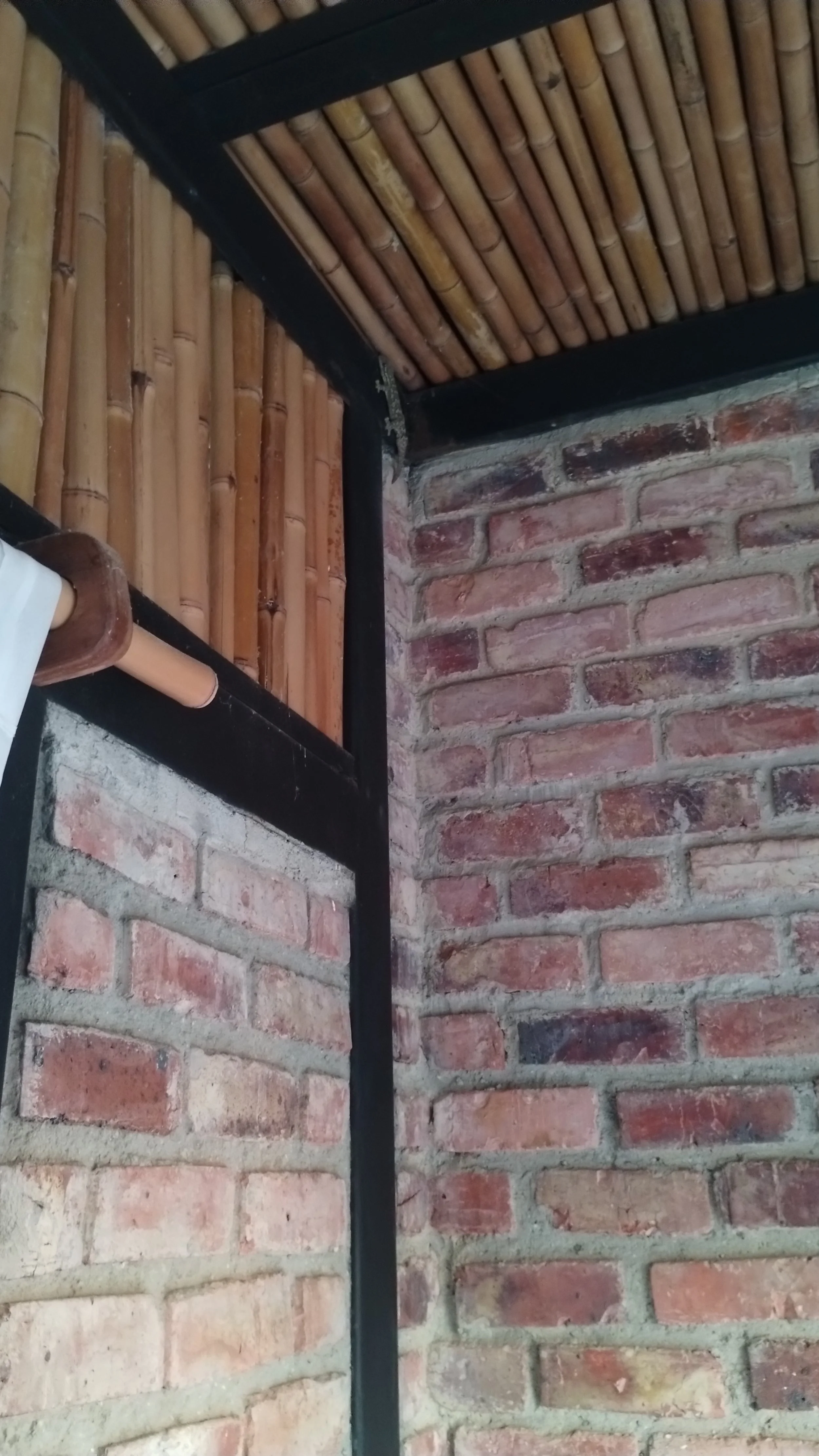
Alongside this abundance, the farm is home to incredible bamboo architecture (pics below). Everything has been lovingly crafted into a home and a space for retreats and residencies. Even the shower foam is made from a plant grown here, and there are homemade aloe vera remedies. The place is called Cultivarte — the perfect name, because everything here cultivates a culture of mindfulness and connection to nature. An ideal spot for an artist on pilgrimage.
Rhythm and Change
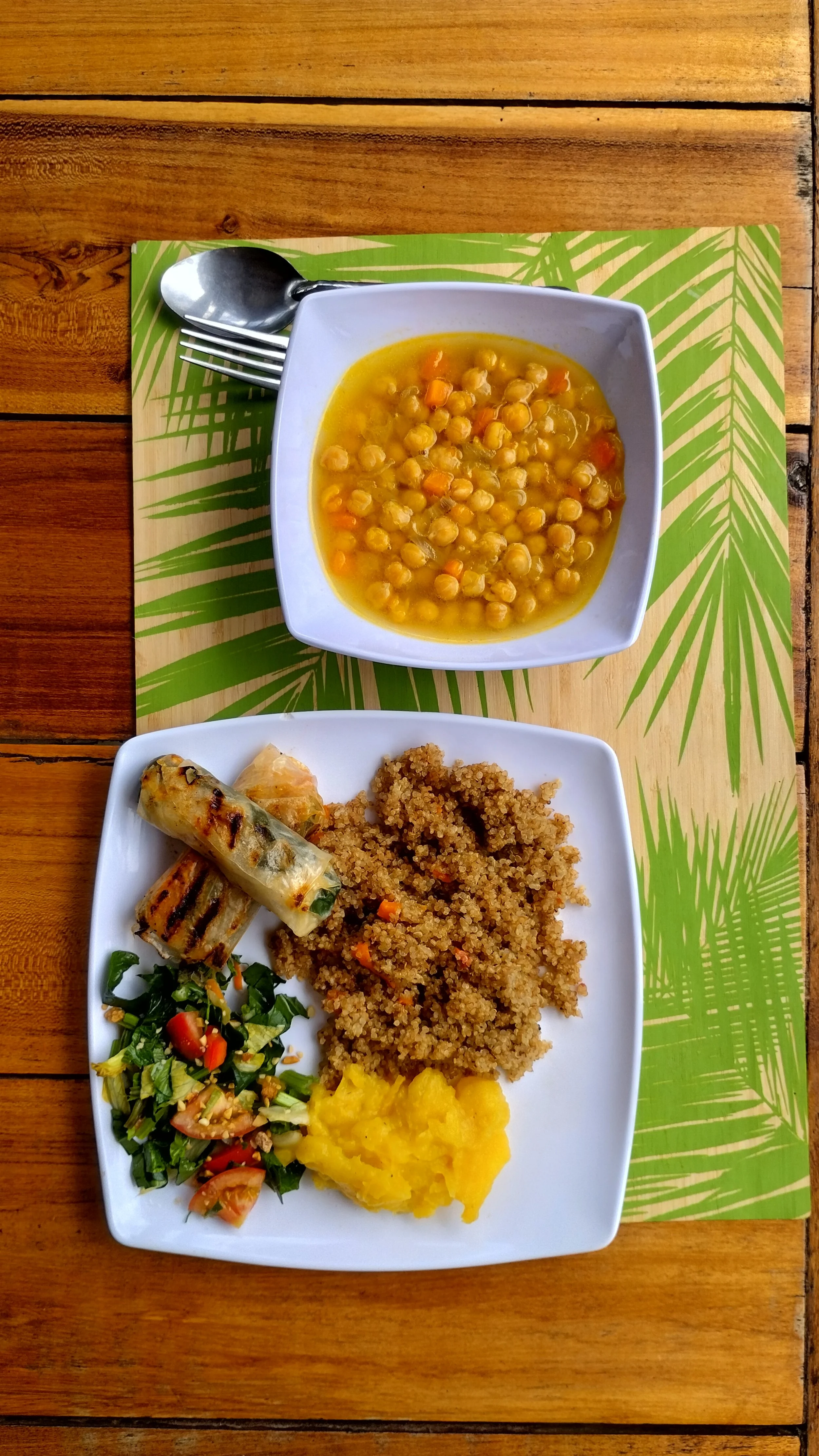
There have been a sequence of changes while I’ve been here. Anyone who comes here would feel them too. Immersion in nature, good vegetarian food, sleeping early (the sun sets around 6pm) and waking with the dawn (sunrise around 5:30am) works quietly but profoundly on the brain. Life here reshapes you. Anyone who comes would feel the shift.
My cabin didn’t have Wi-Fi or much mobile signal — at first it felt alien (which in itself is alien that being away from modern technology is the new natural), but soon I loved it. Without constant online access, I surrendered to natural rhythms: early morning yoga, a nourishing breakfast, days shaped by sunlight and weather. It was a natural luxury, one required to come back to your true nature.
Learning Spanish (sort of)
I arrived knowing no Spanish apart from hola! — so you can imagine the charade type communication! But, like the lack of Wi-Fi, it became a gift. It pushed me to rely less on words and more on presence, gesture, and listening. Over time, my Spanish grew — broken, but improving — and I found deeper connection in silence and attentive listening; the solitude was fruitful.
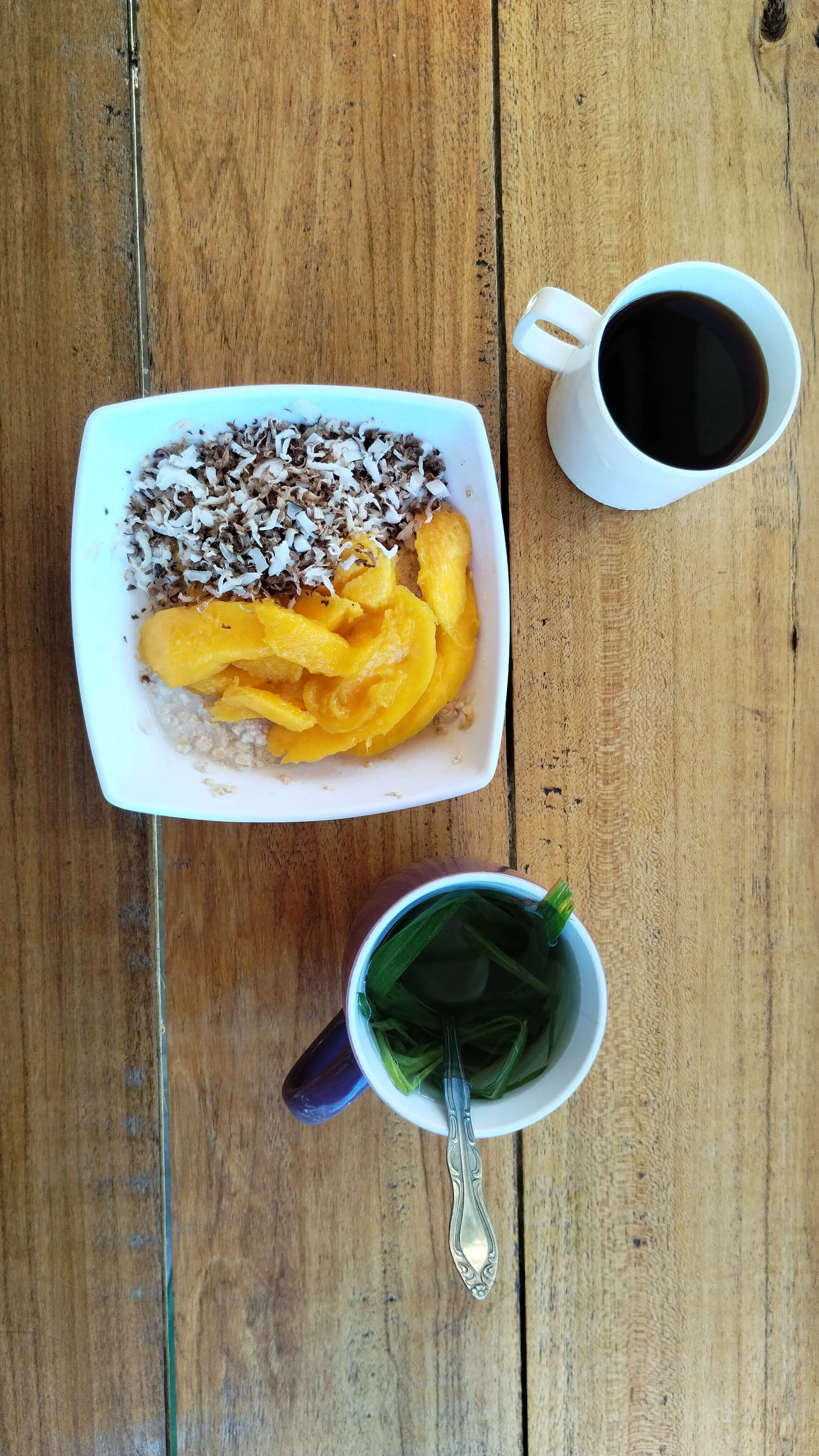
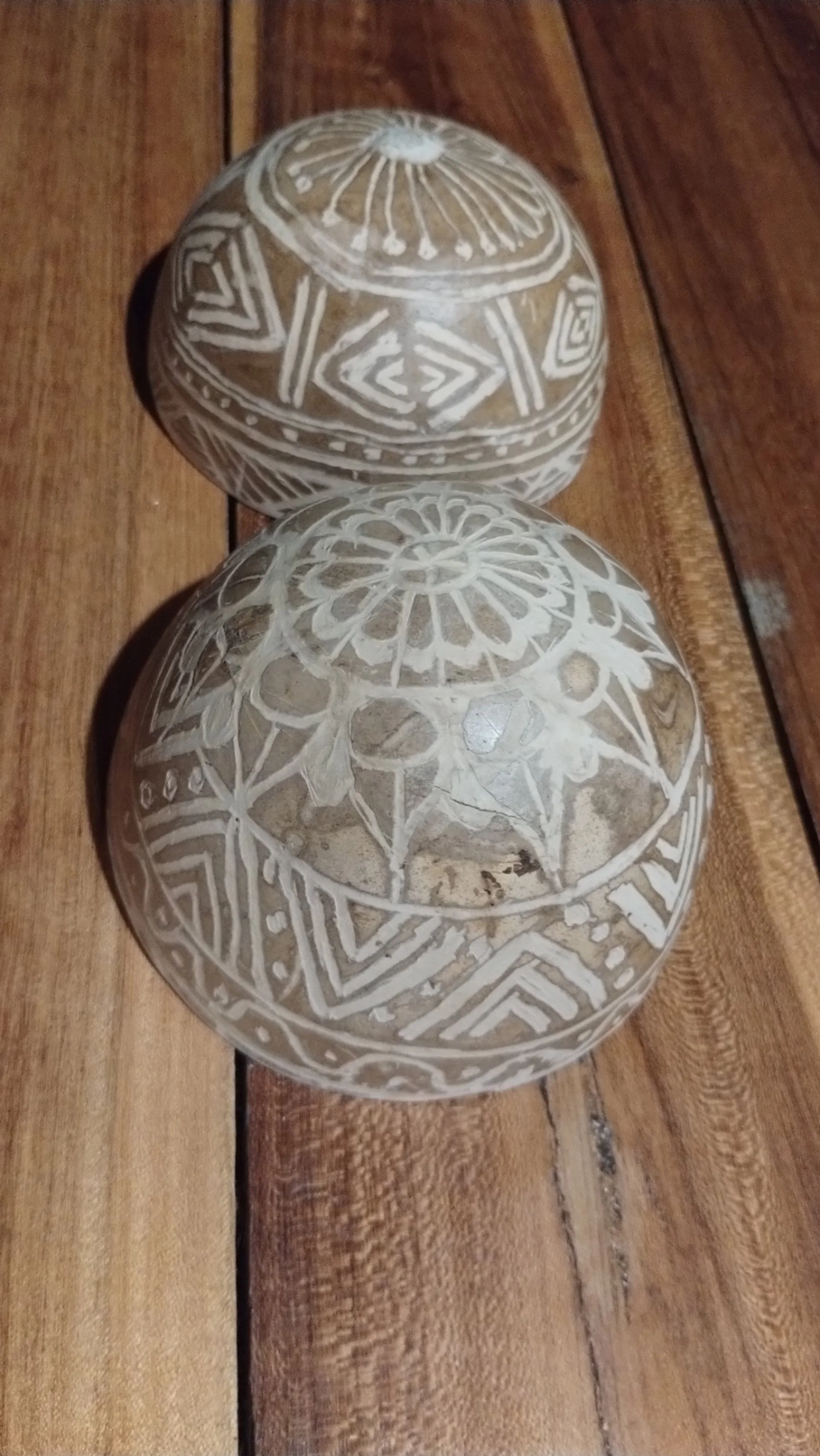
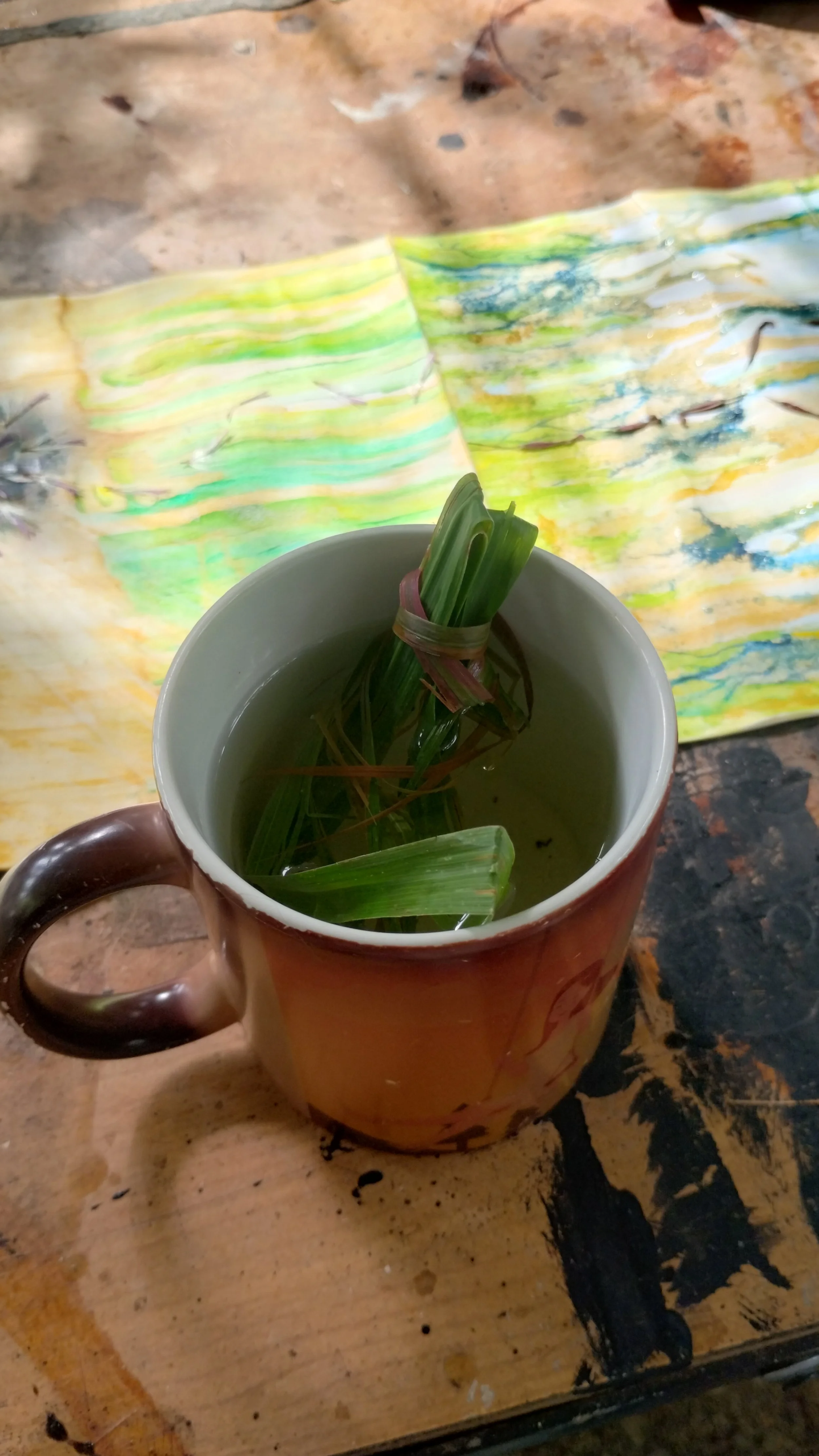
I learnt how to make coconut milk (leche de coco), discovered fresh lemongrass tea as my new favourite drink, and was gifted a beautifully engraved totumo by a volunteer. Volunteers arrive every couple of weeks from around the world, which refreshes the energy.
Encounters with Animals and plants
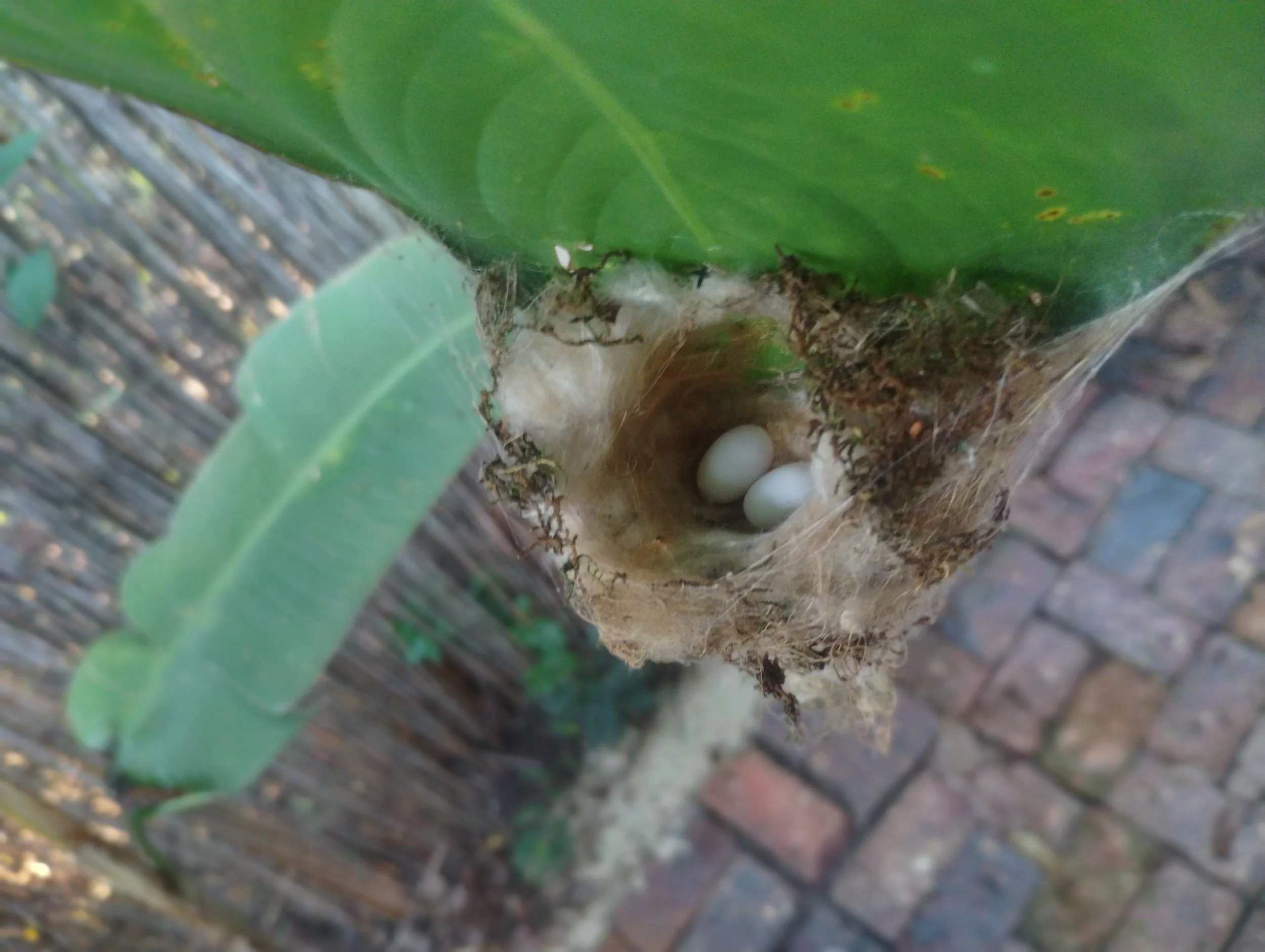
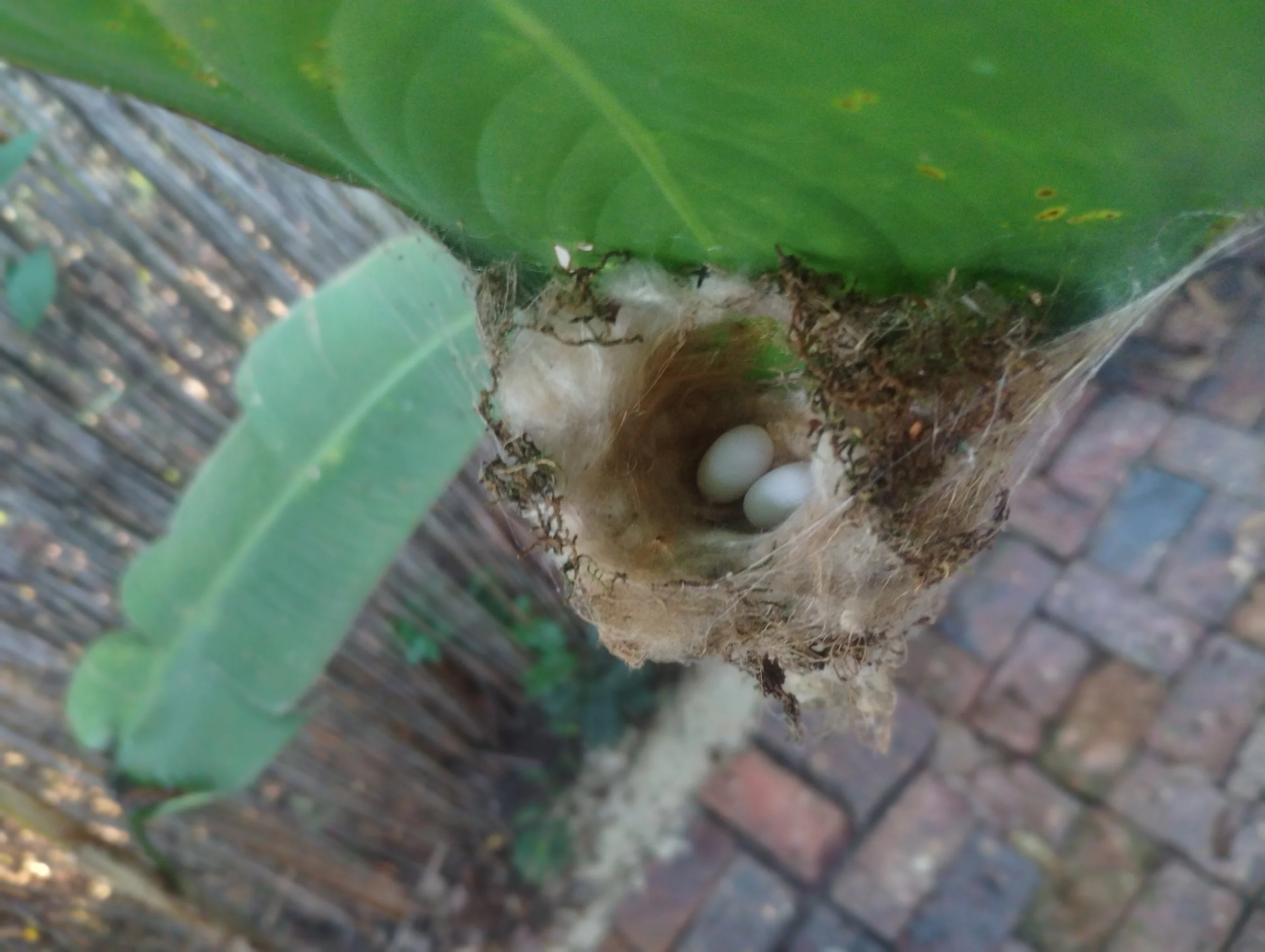
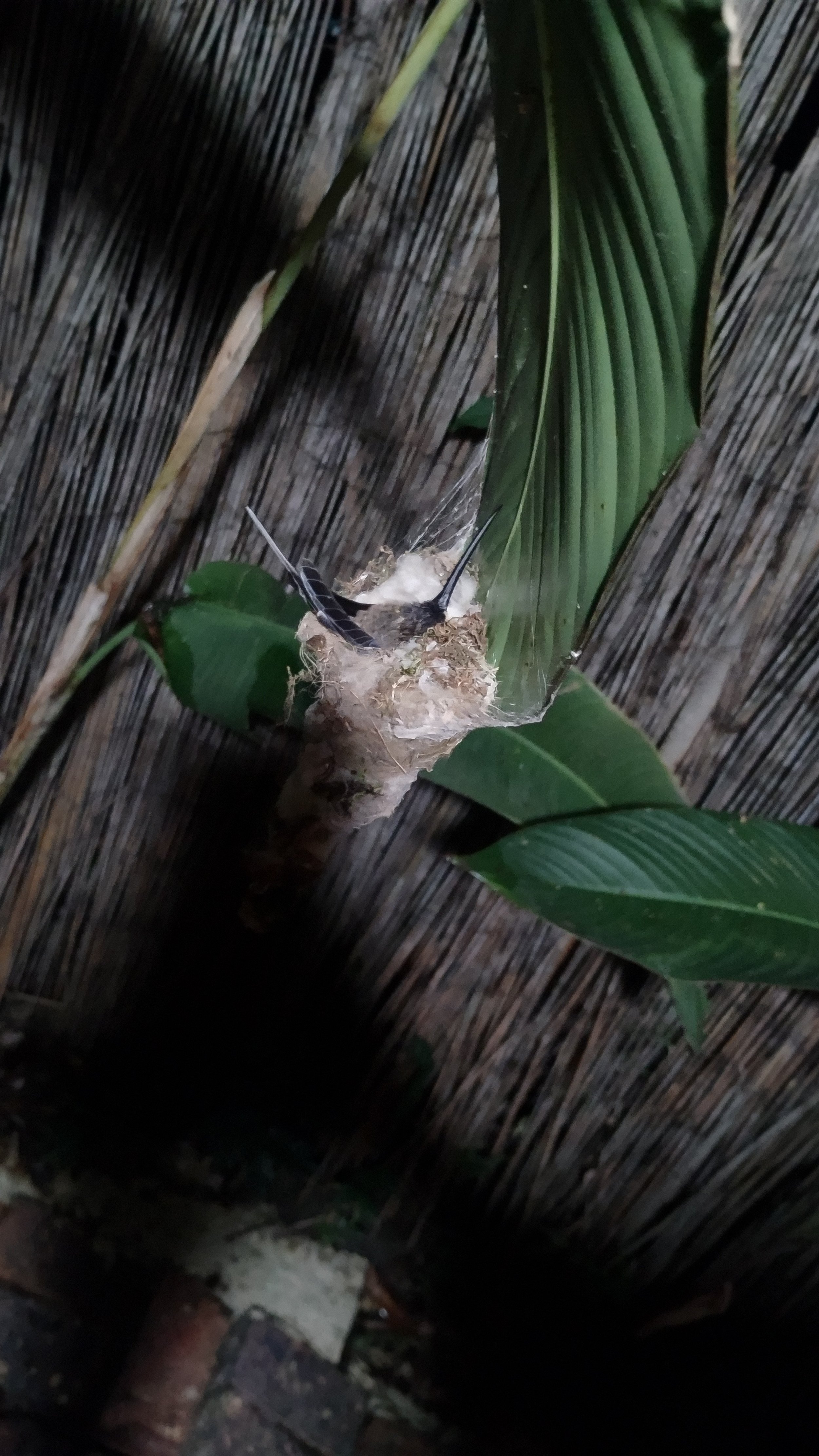
The animals here deserve their own section. One of the most special encounters: a hummingbird chose to make her nest under a giant leaf in my outdoor shower (I now shower elsewhere to give her peace). I captured the sight on my YouTube channel (link below). She appears to be a black-billed hermit — a solitary little creature — and that felt like kinship.
Dozens of geckos over the month shared my cabin. At first they unsettled me, but soon I was glad of their company (and mosquito-control). The farm is also home to two friendly dogs, Shoo Shoo and Manchez, and two affectionate cats. Their visits were a balm, since one of the hardest parts about travelling was leaving my own cat behind (though she’s being cared for from afar).
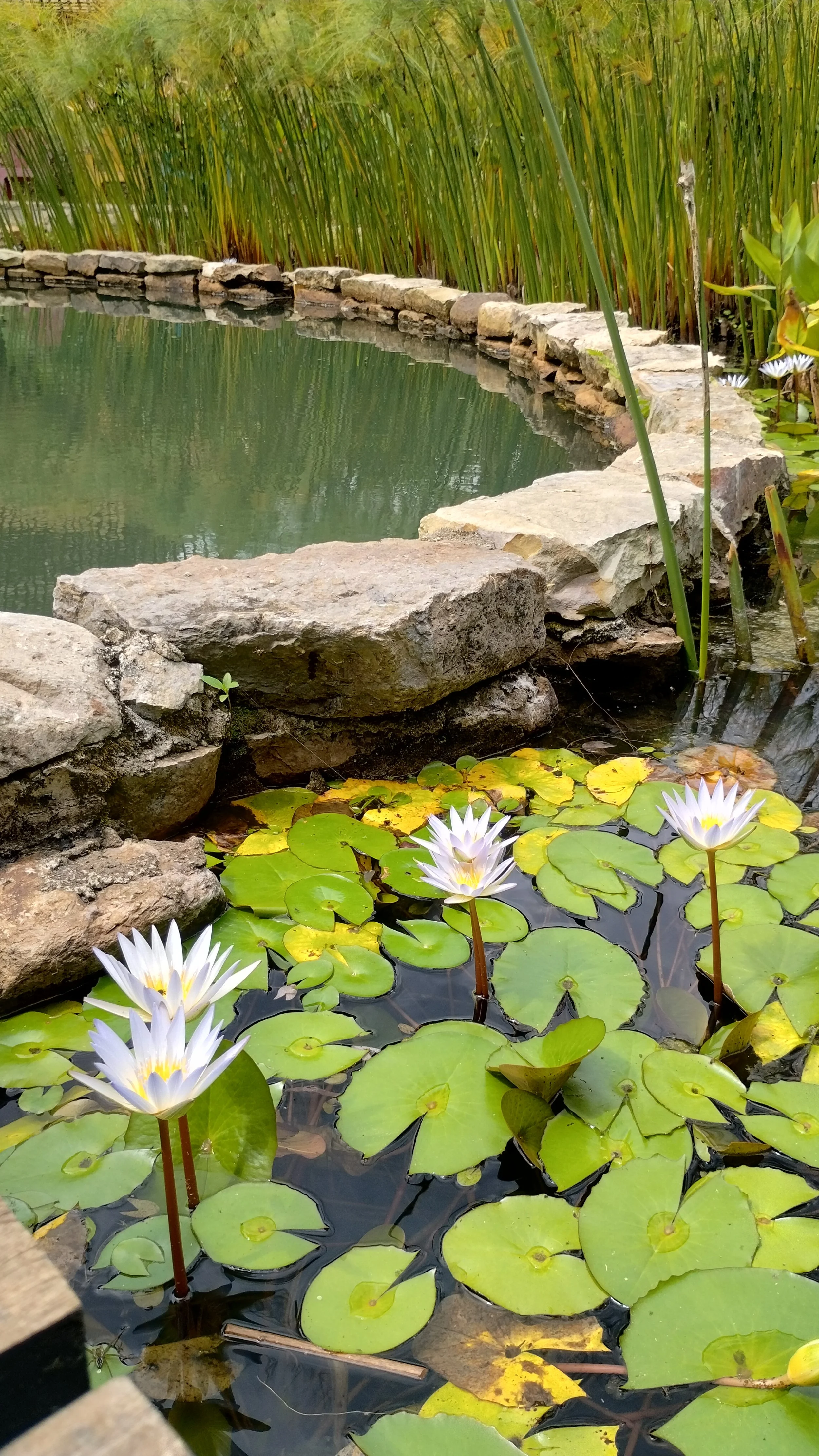
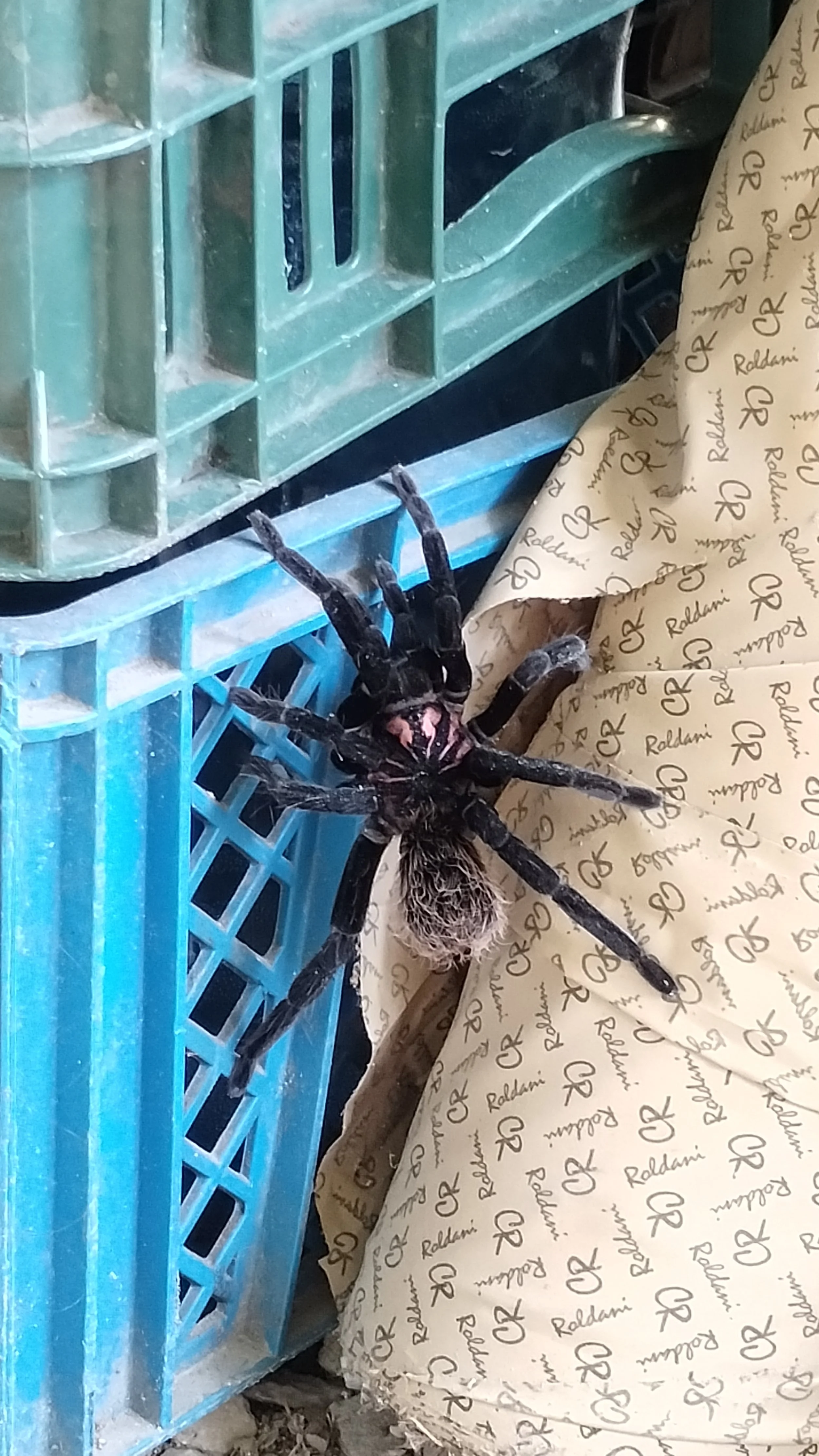
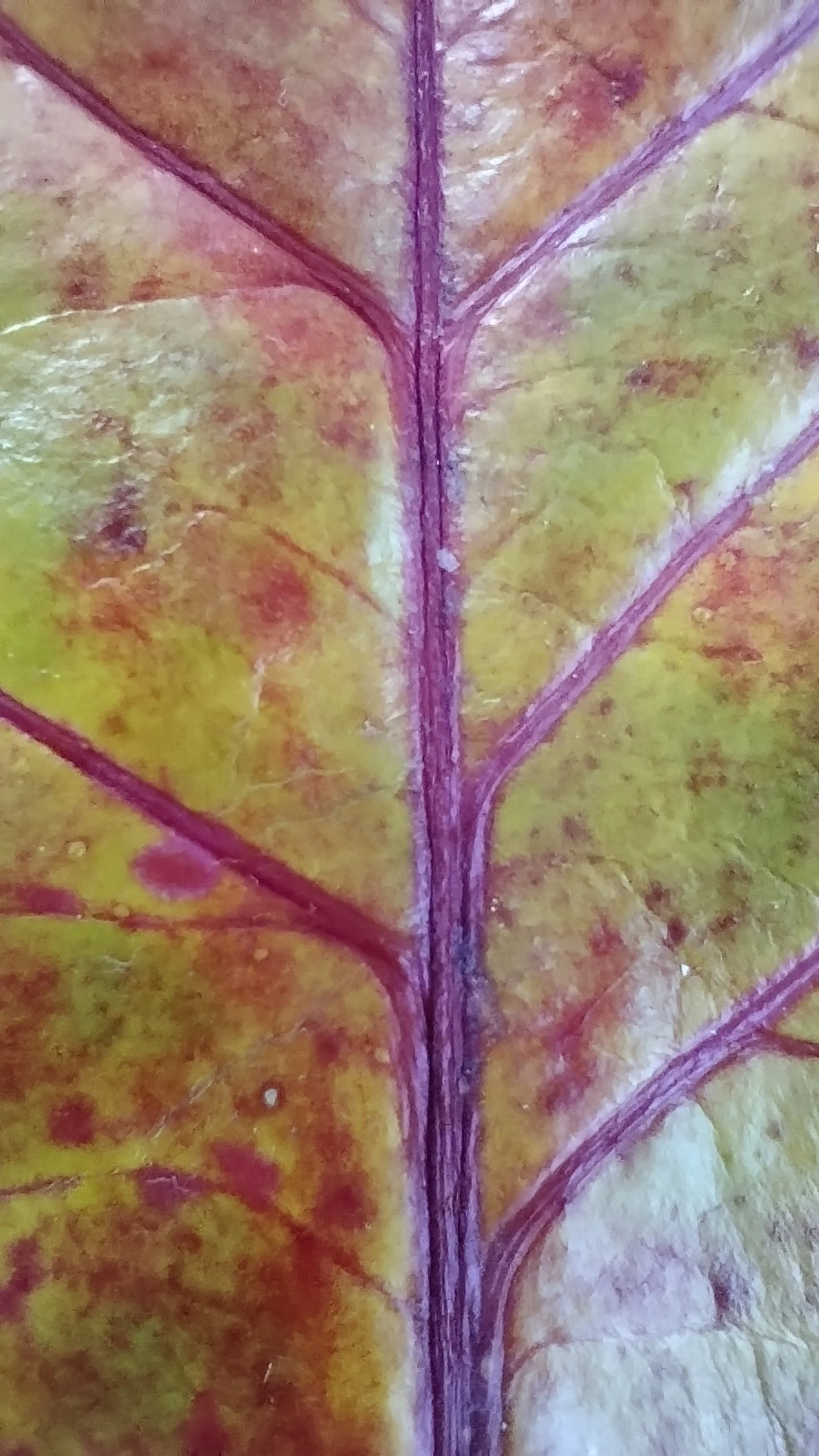
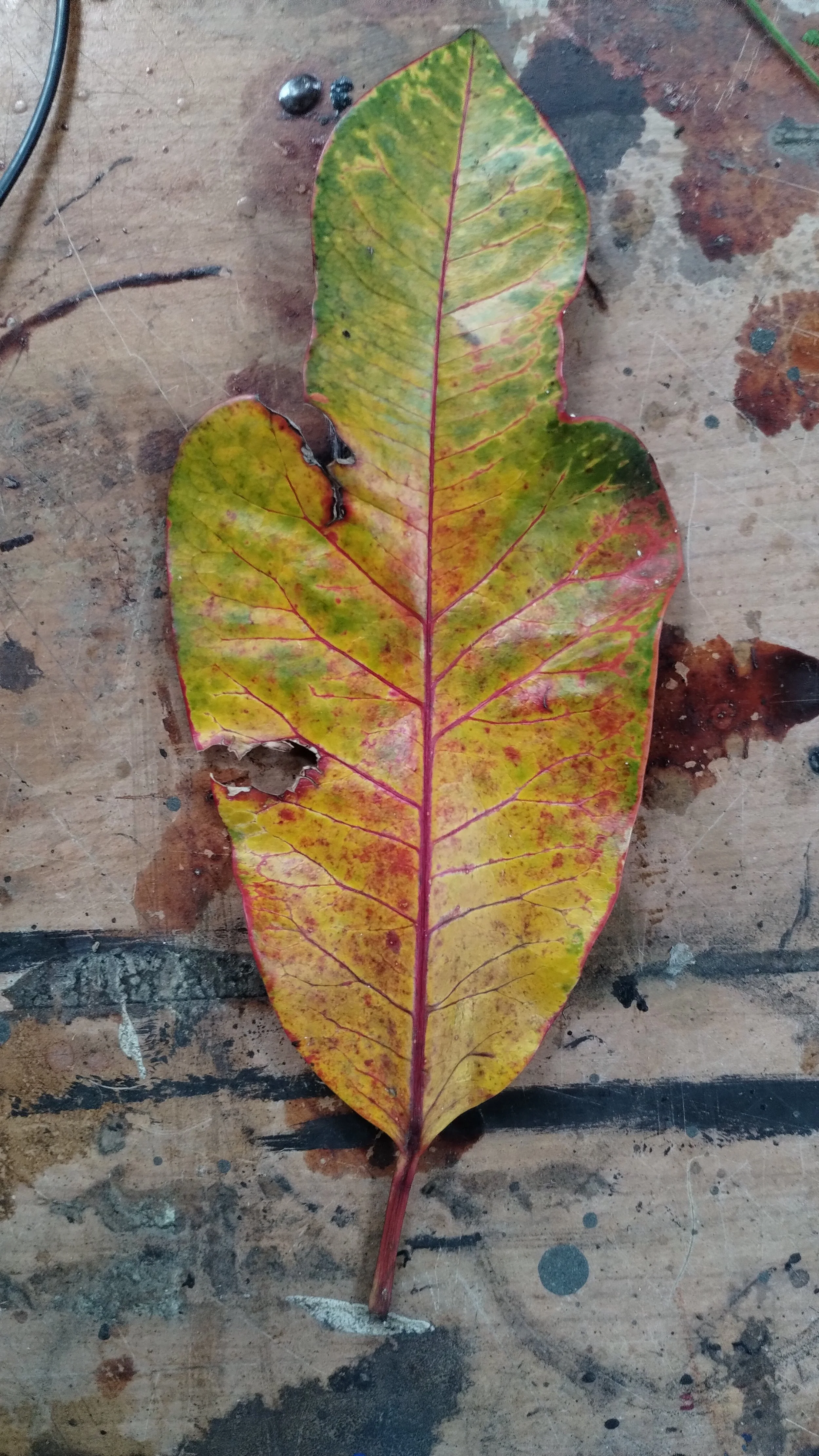
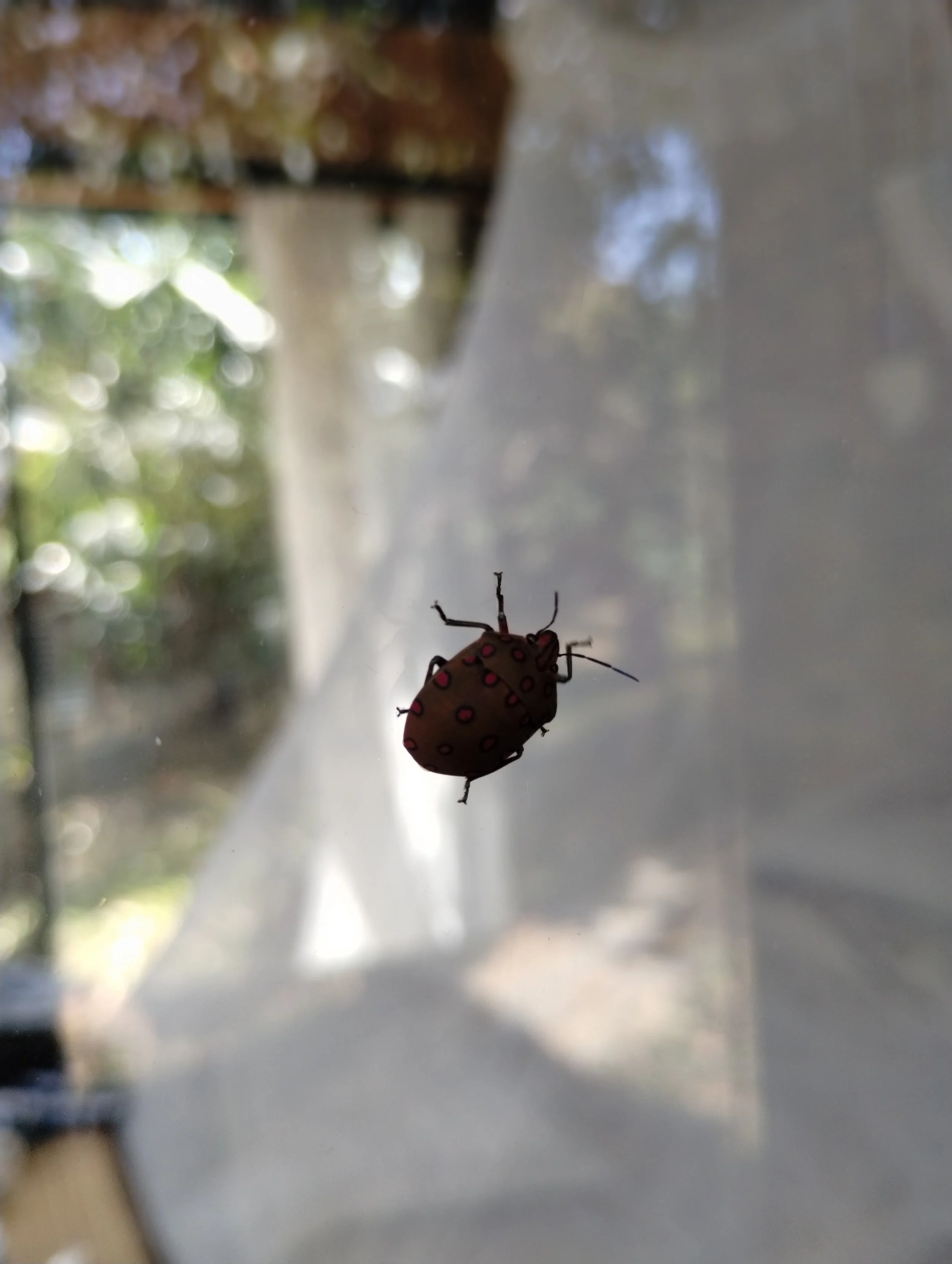
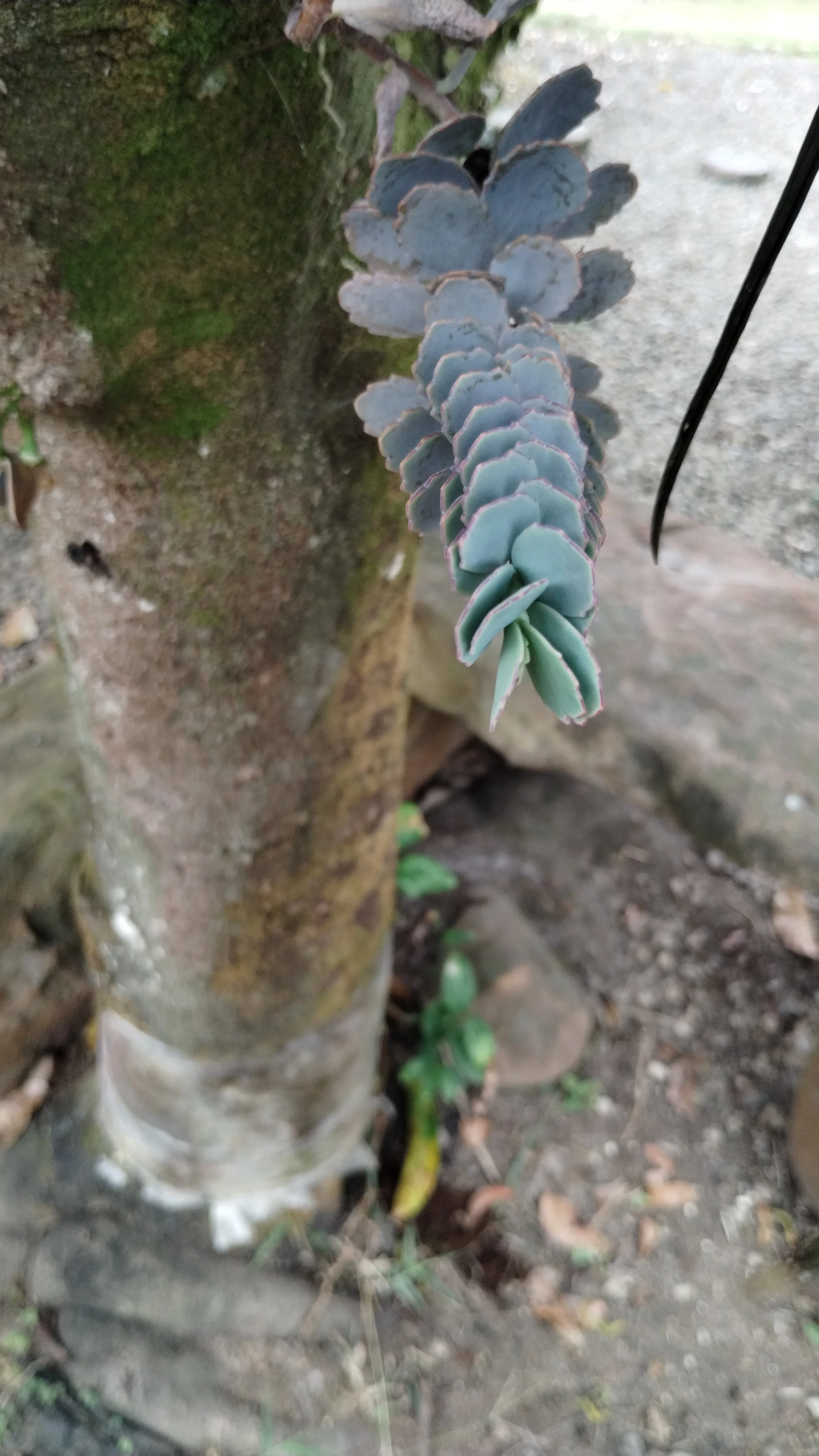
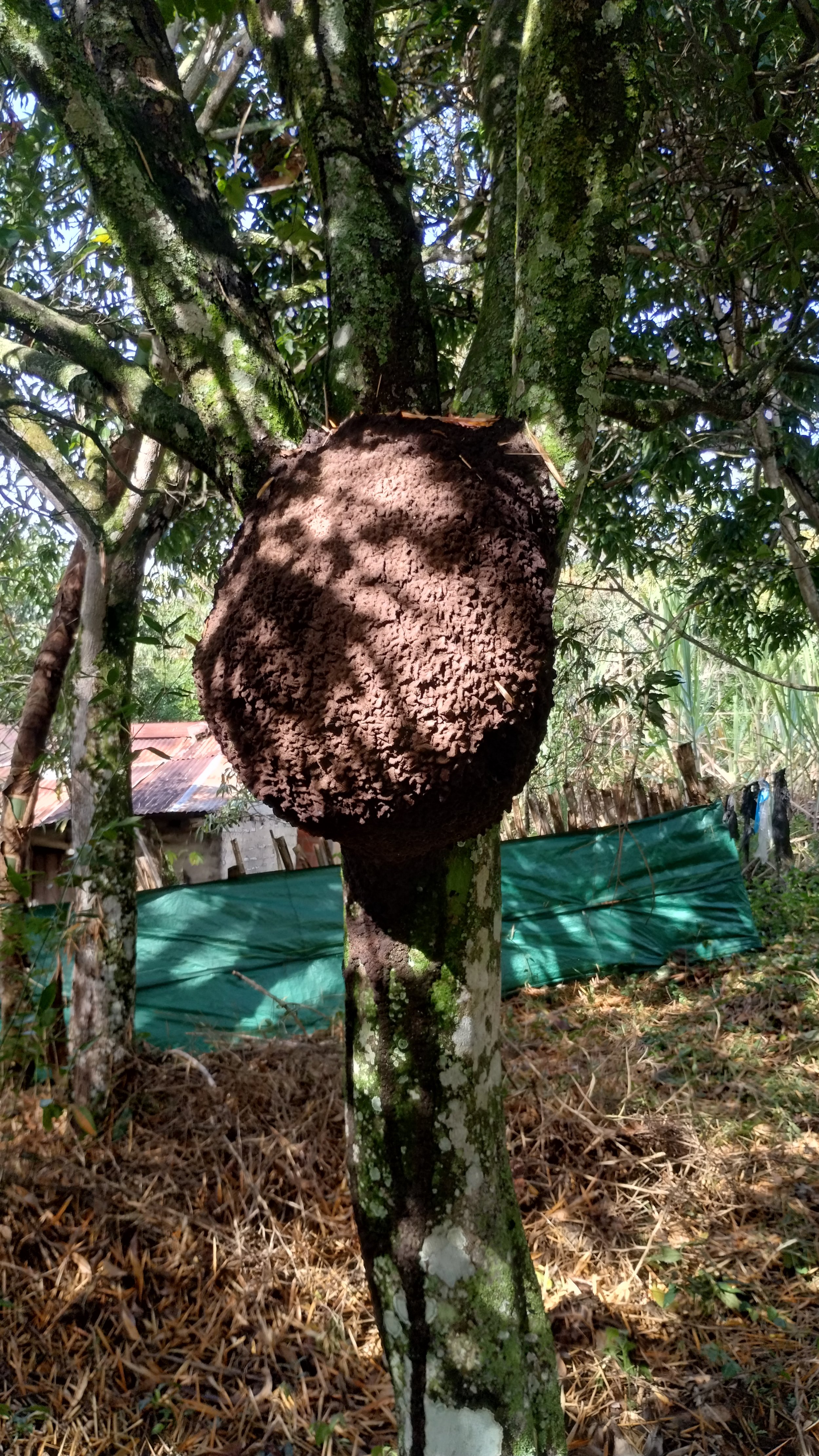
I also crossed paths with a tarantula, a baby scorpion, and a dazzling array of birds and plants (pics below), which are already feeding inspiration for my children’s book Mind the Gap (more on that at my next residency).
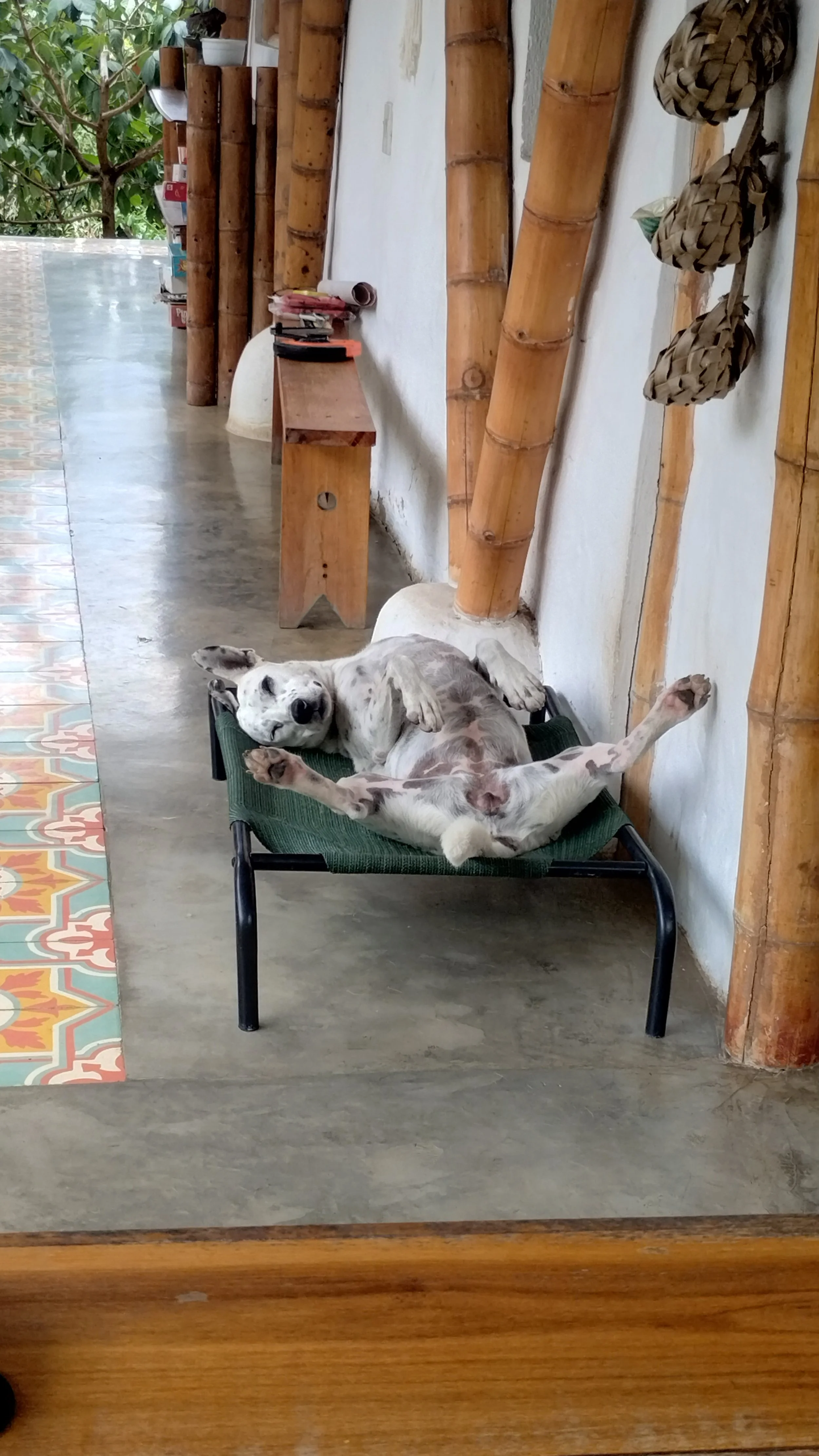
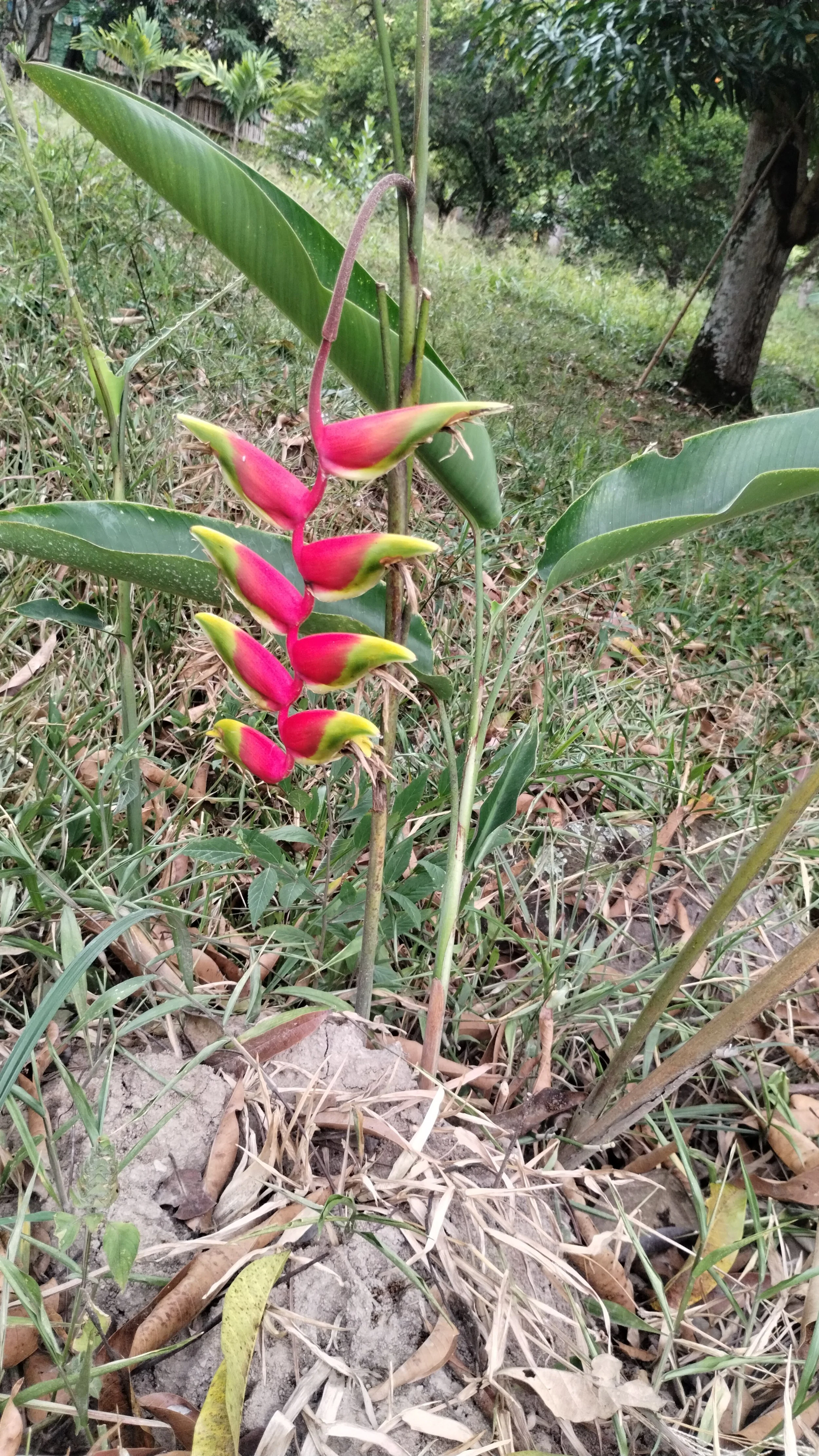
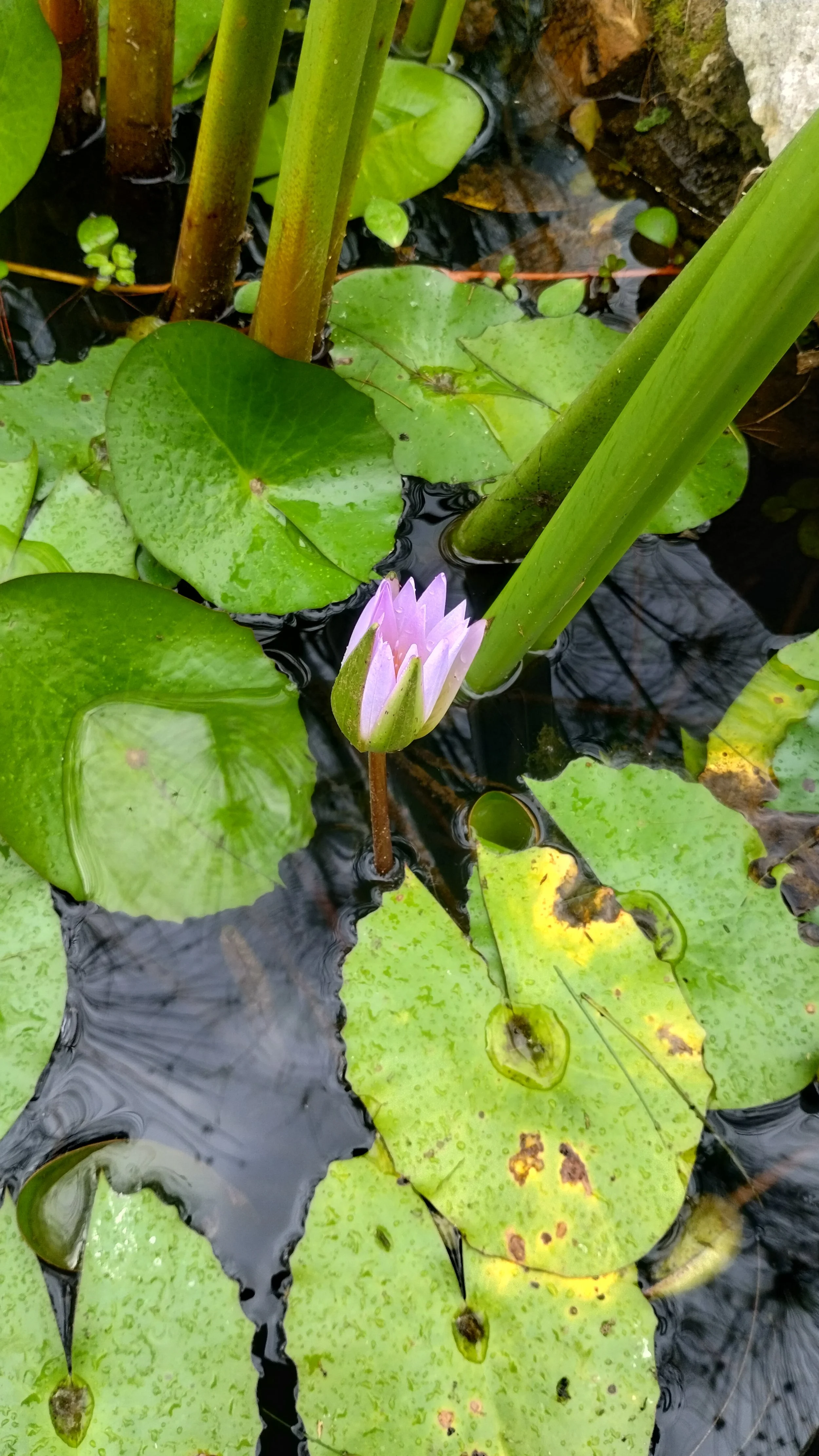
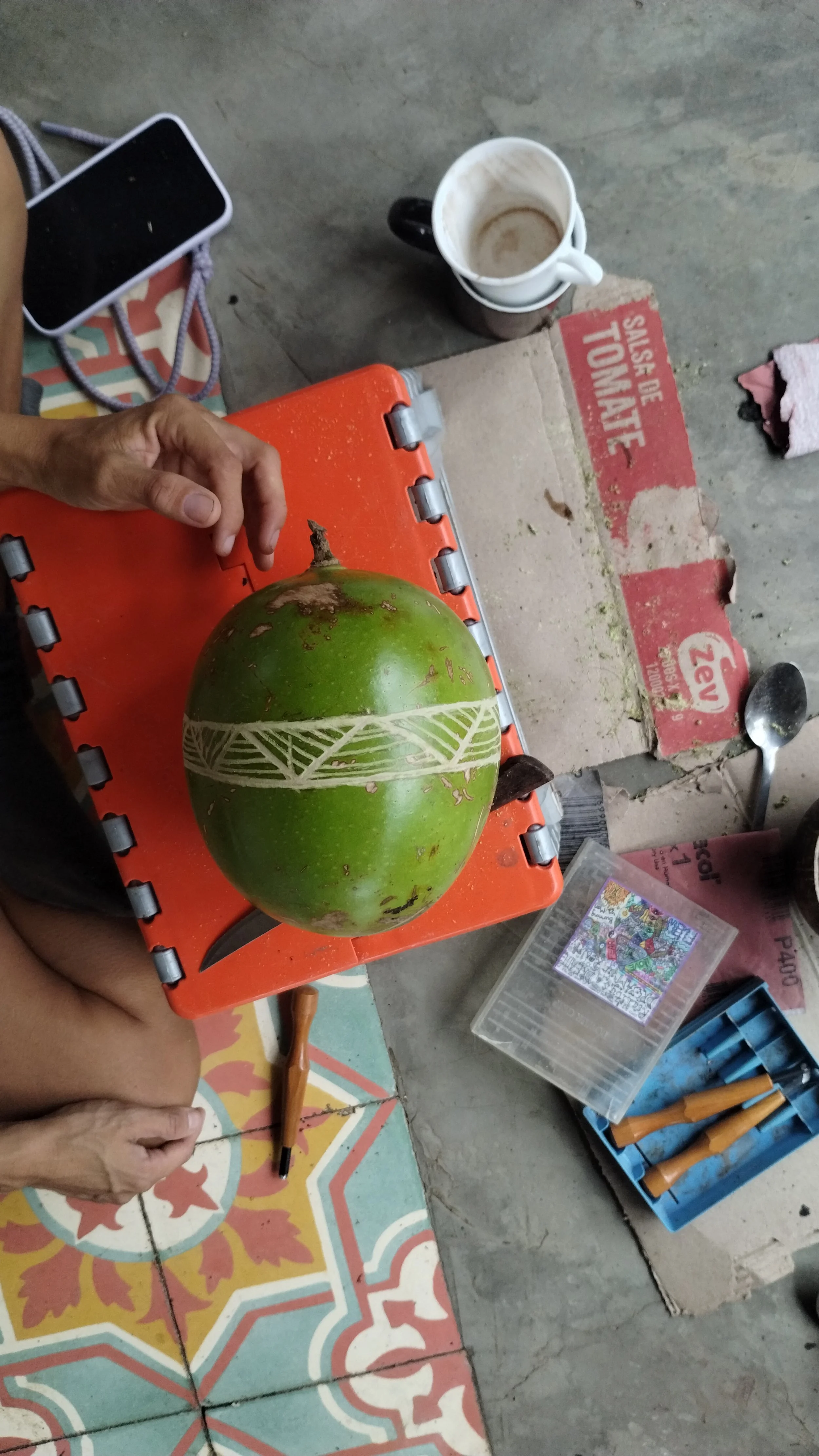
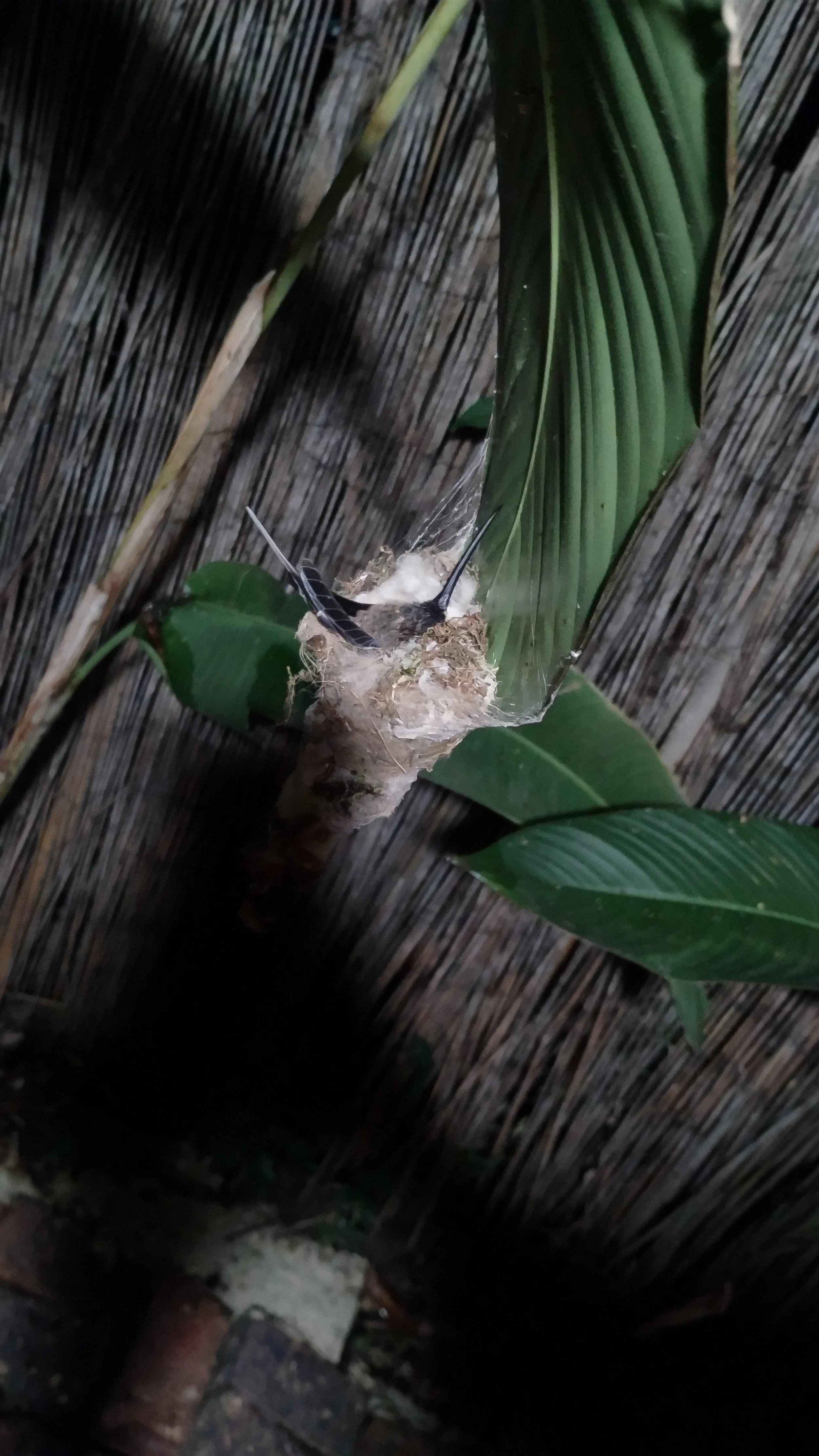
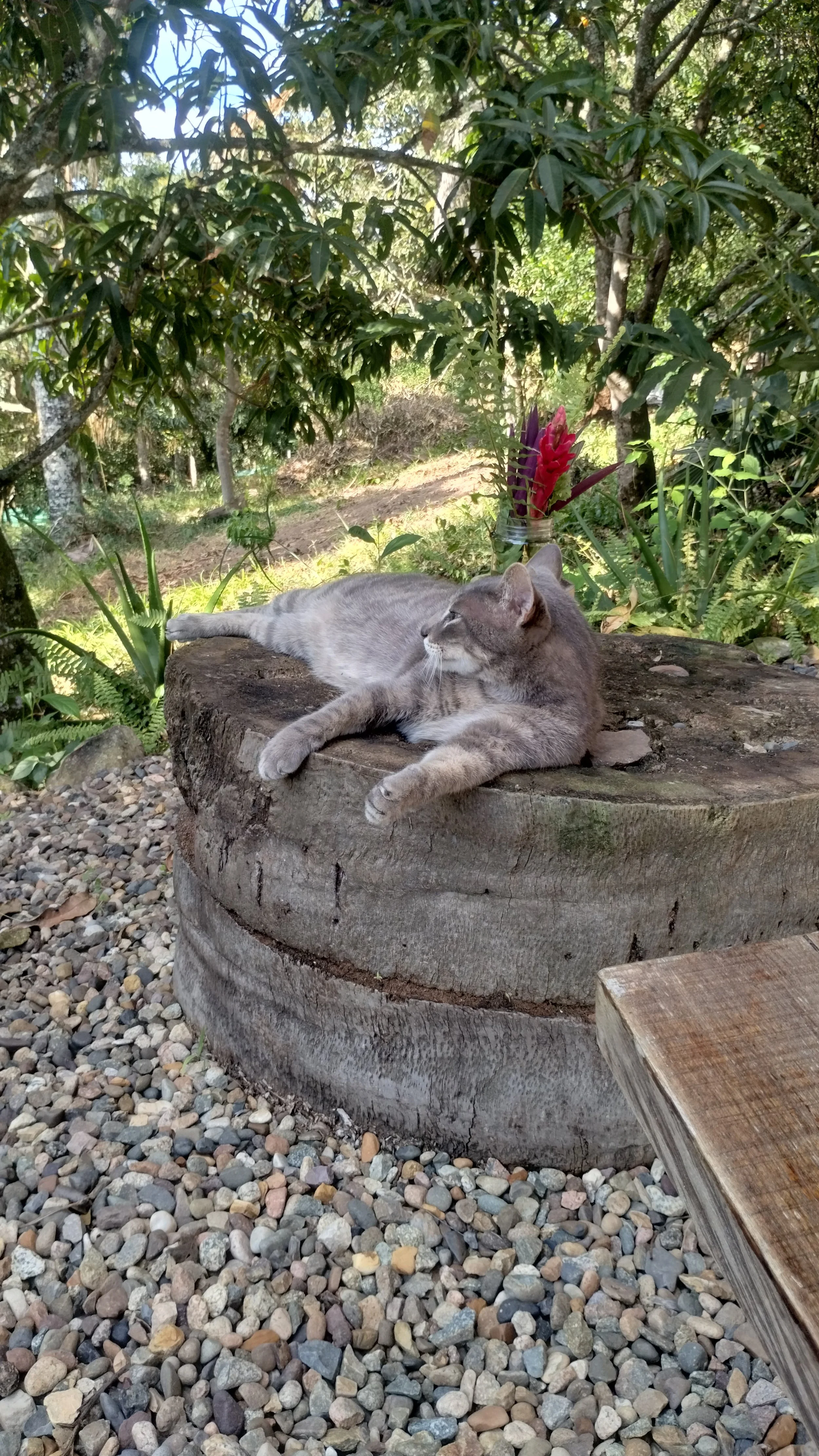
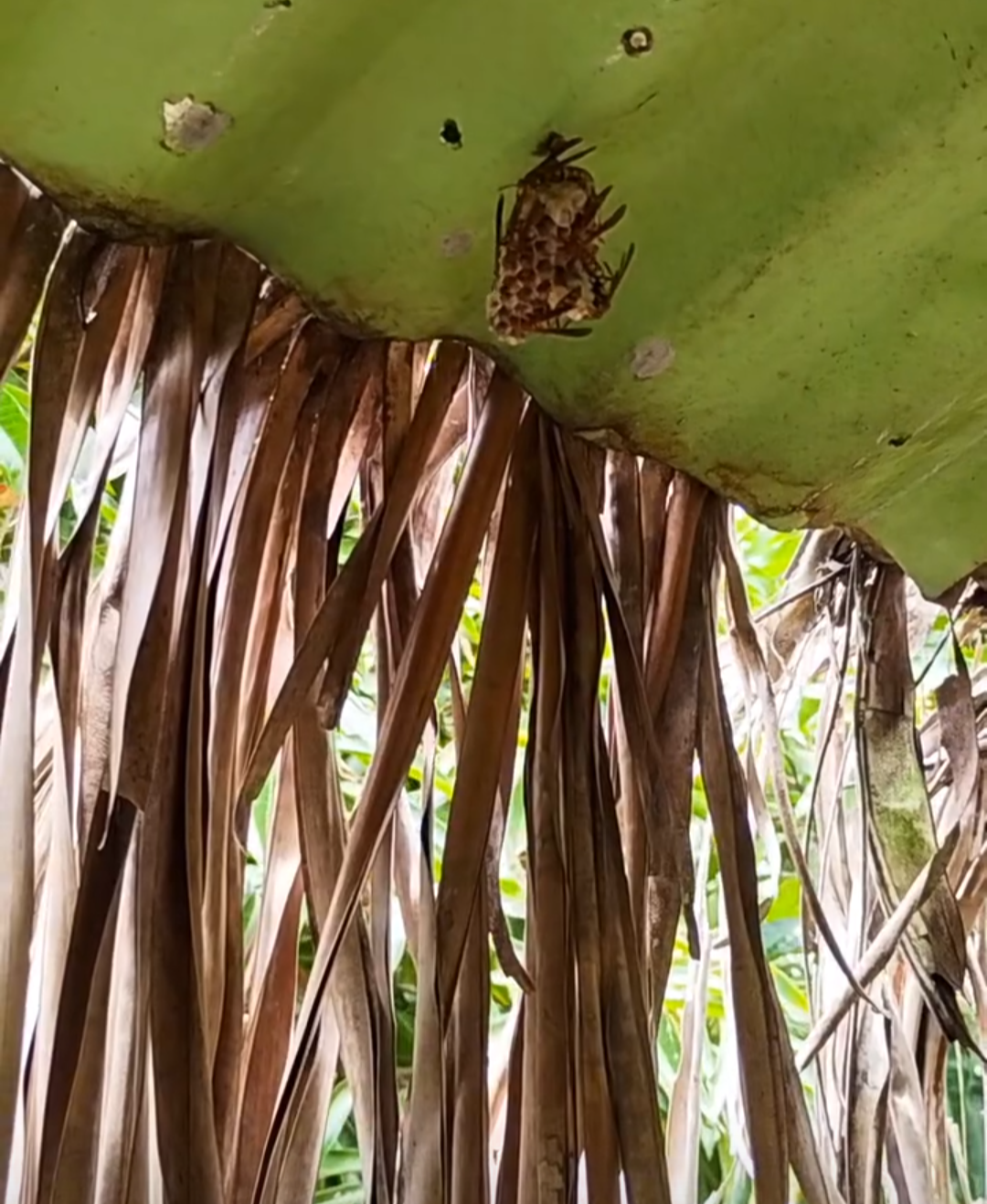
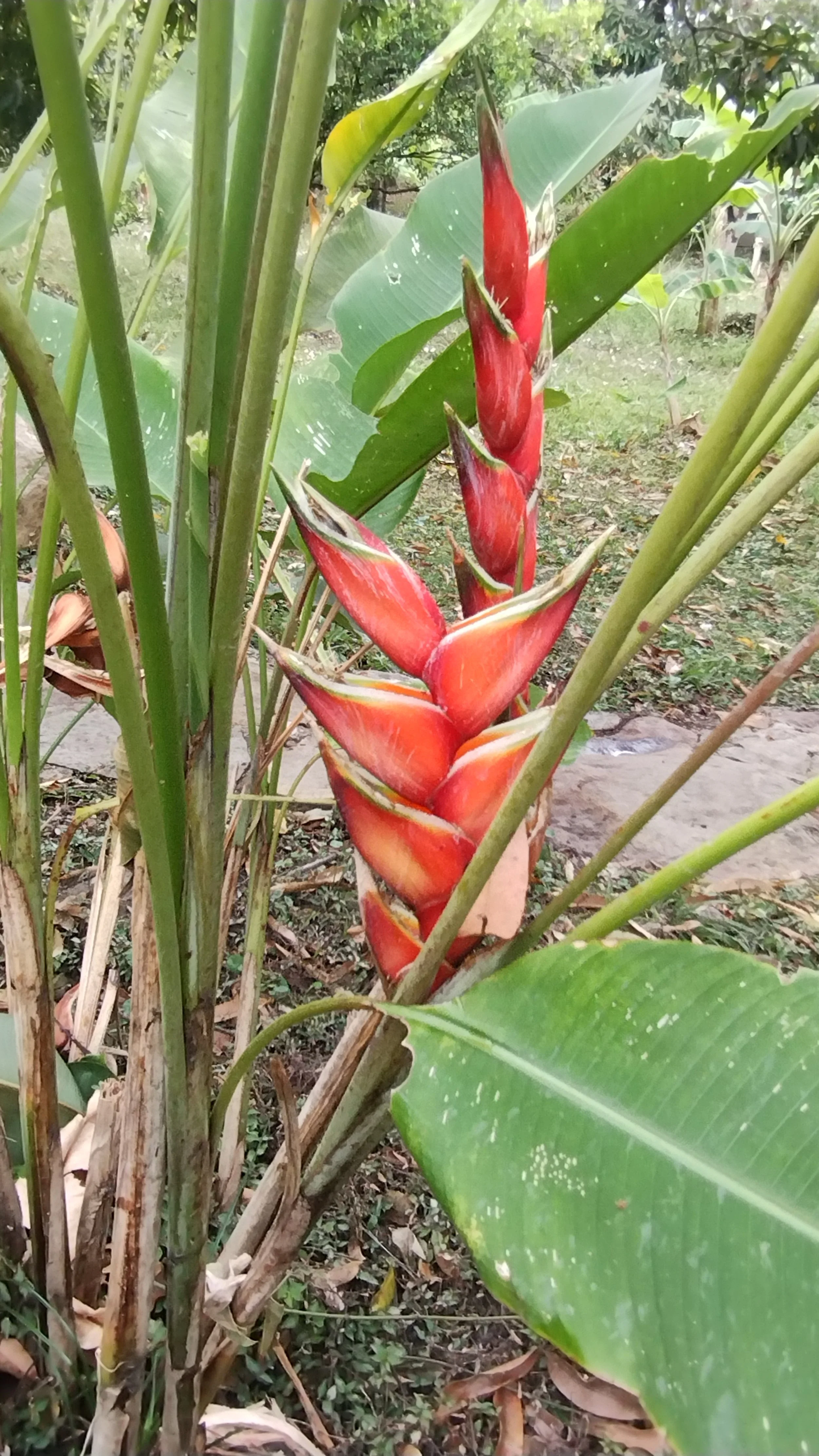
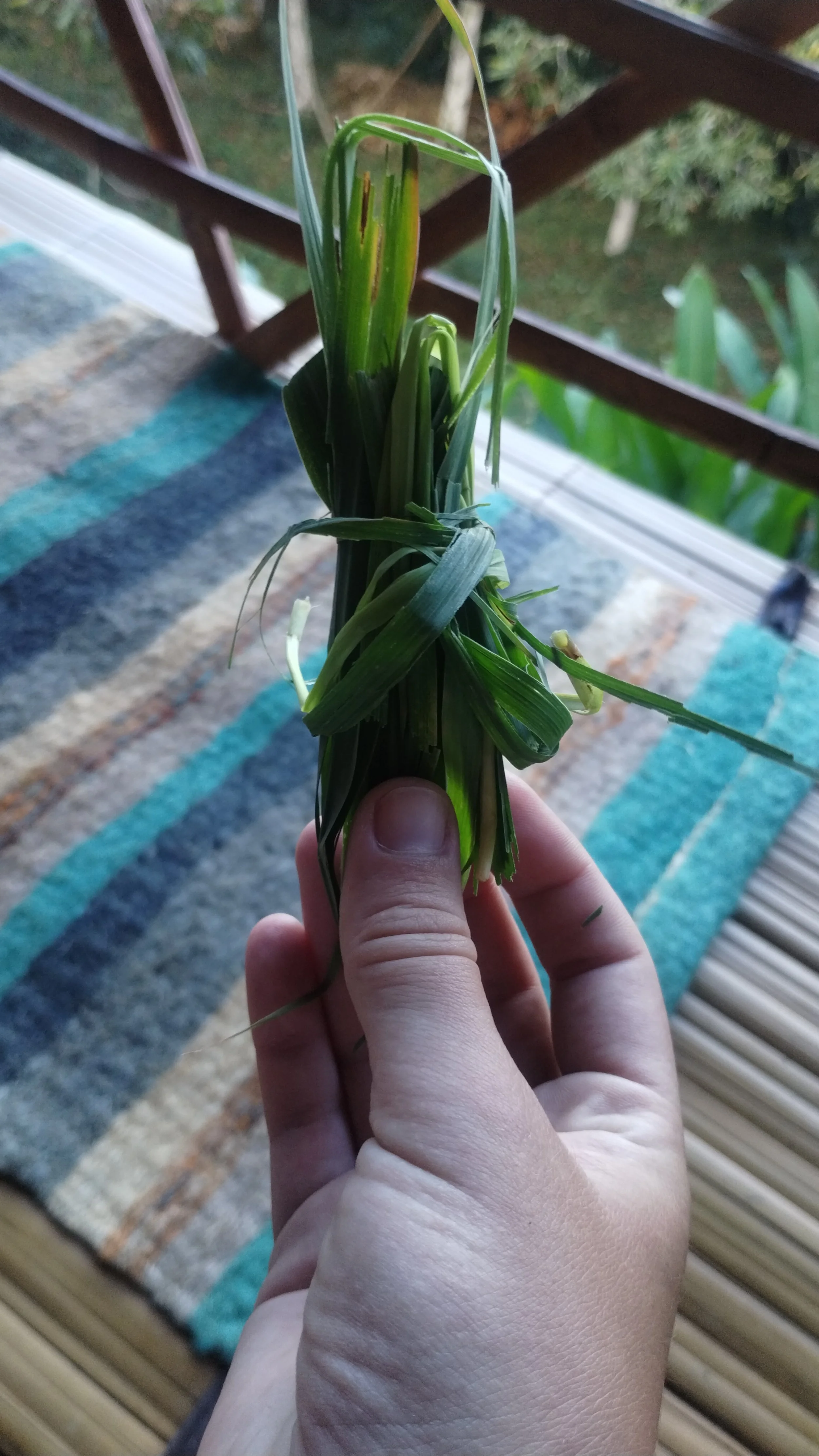
Okay NOW we get to the art - I told you it was a big post - thanks for sticking with me!
A Pilgrimage of Art
“Journey slowly now.
You have already come so very far,
but now it is time to savour the views,
to discover new lands,
to turn your eyes to the stars,
to unearth the truth of who you really are;
to recognise there is both a time to hunt and a time to take rest,
and the sweetest of all earthly treasures await those who look ever to the flower that bloom underfoot and simply find joy in the journey. ”
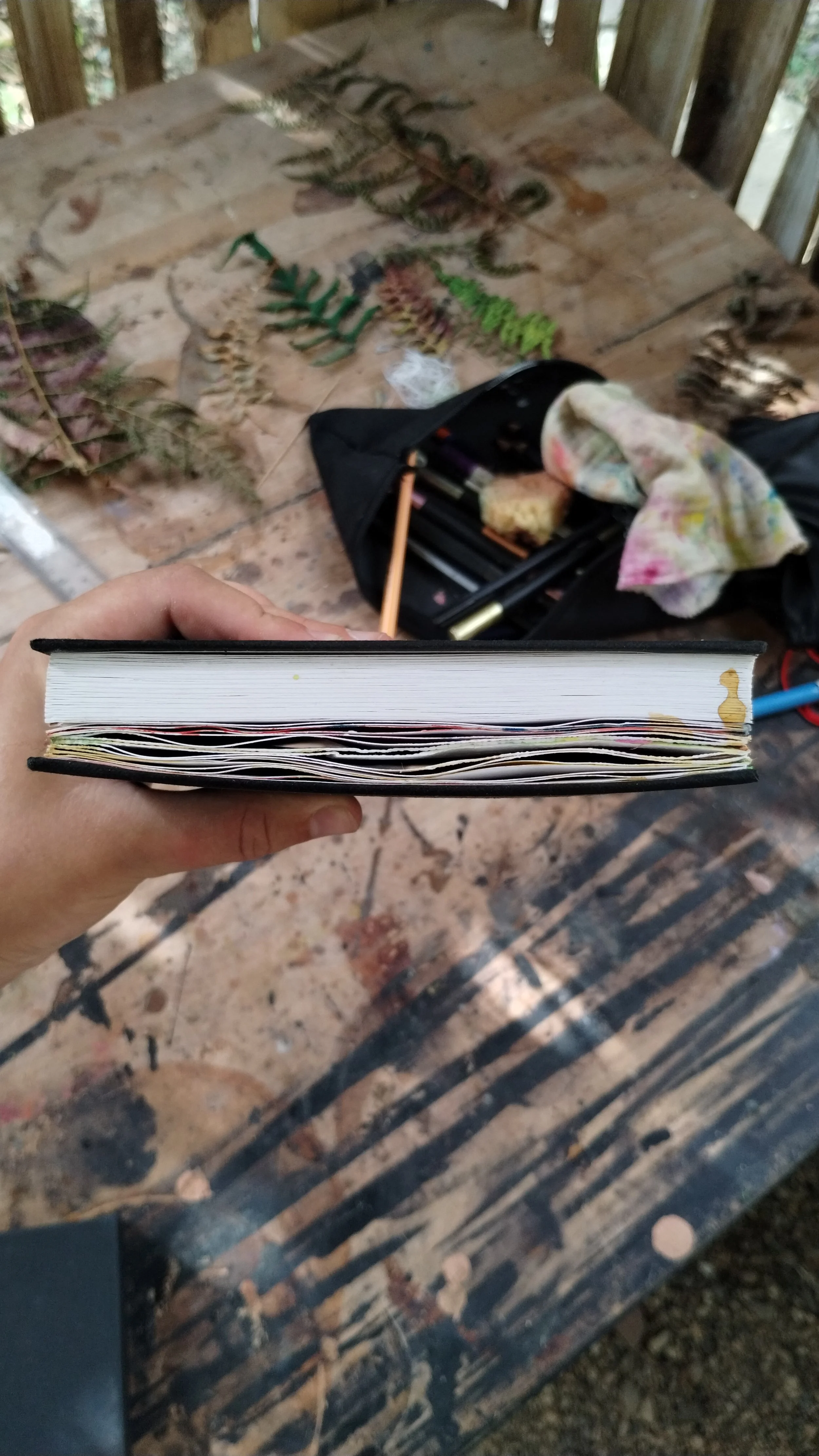
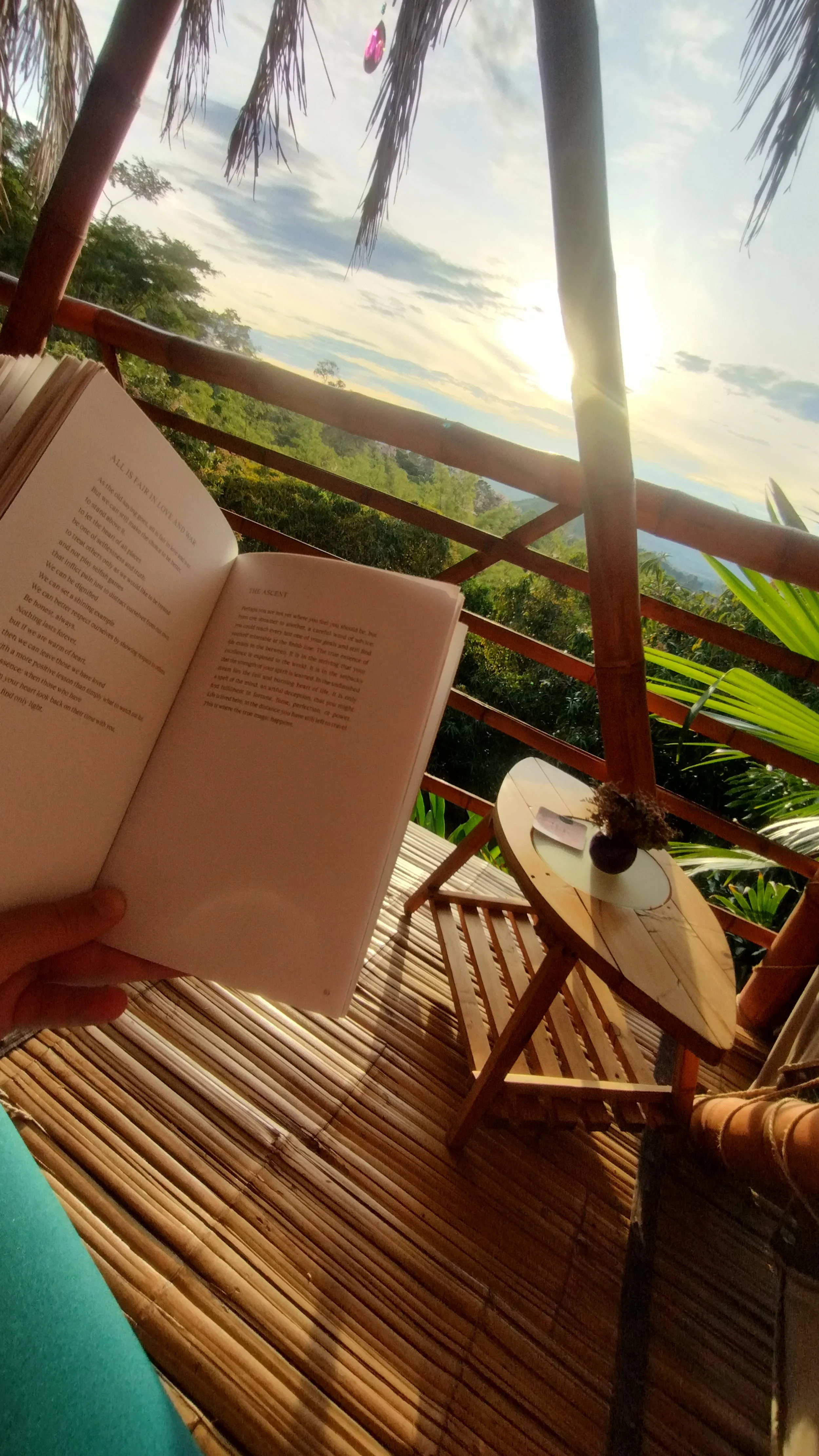
It took me a week of doing almost nothing but absorbing this new environment before the work began to emerge. I wrote a little, read a poetry book by Beau Taplin, and let the place fill my senses. These words kept repeating themselves:
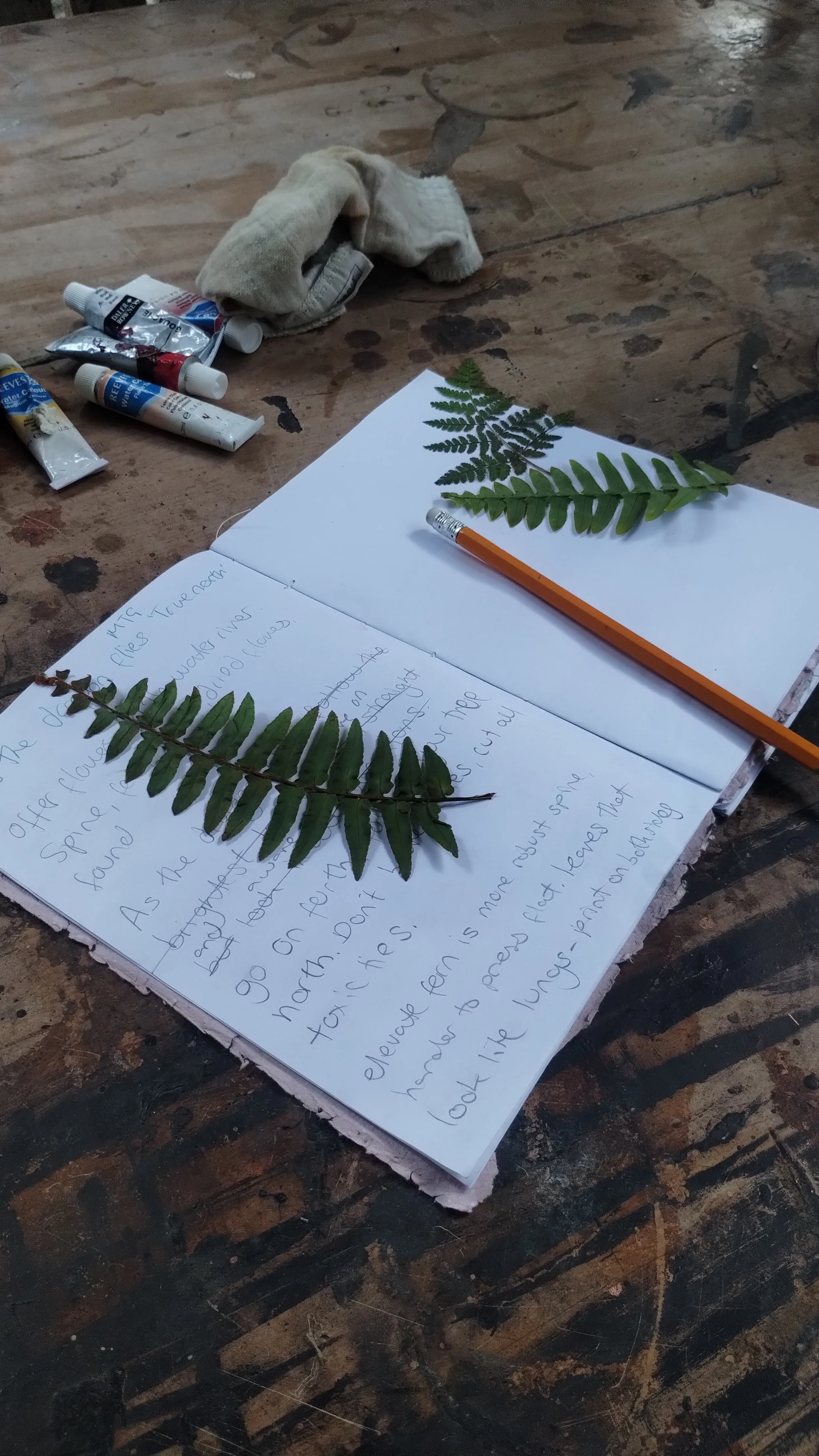
bloom (a theme from Switzerland ‘bloomlis’, Swiss-German) — offering — seed — spine — garden — path — route — root — way — pilgrim — give thanks.
So I wrote this poem…
“To offer myself to the wind, trusting the place where I will lay down, to grow my roots and make my offering to the garden of the world.
And when I emerge,may my spine be straight and flexible,giving thanks and blessing these messes — the perfectly imperfect.
Soaking in honey as a balm for my knotted tension,circumnutating myself to smell the incense with delight.
Gracefully bowing to decay,again and again in the spiral of life.
I give way to the breeze and the rain — and if it’s my time to be uprooted,may I enjoy the journey.
Let those who smell, see, touch, and listen to my song give thanks.
This is my route — nature’s way.””
The music I was listening to, random Spotify playlists throughout this journey, sometimes the ones that had lyrics were so poignant they often caught me off guard like ‘Rooted’ by Aisha Badru,
‘A lotus flower blossoming,
your journey is your offering’
and Emory Hall ‘Impermance’
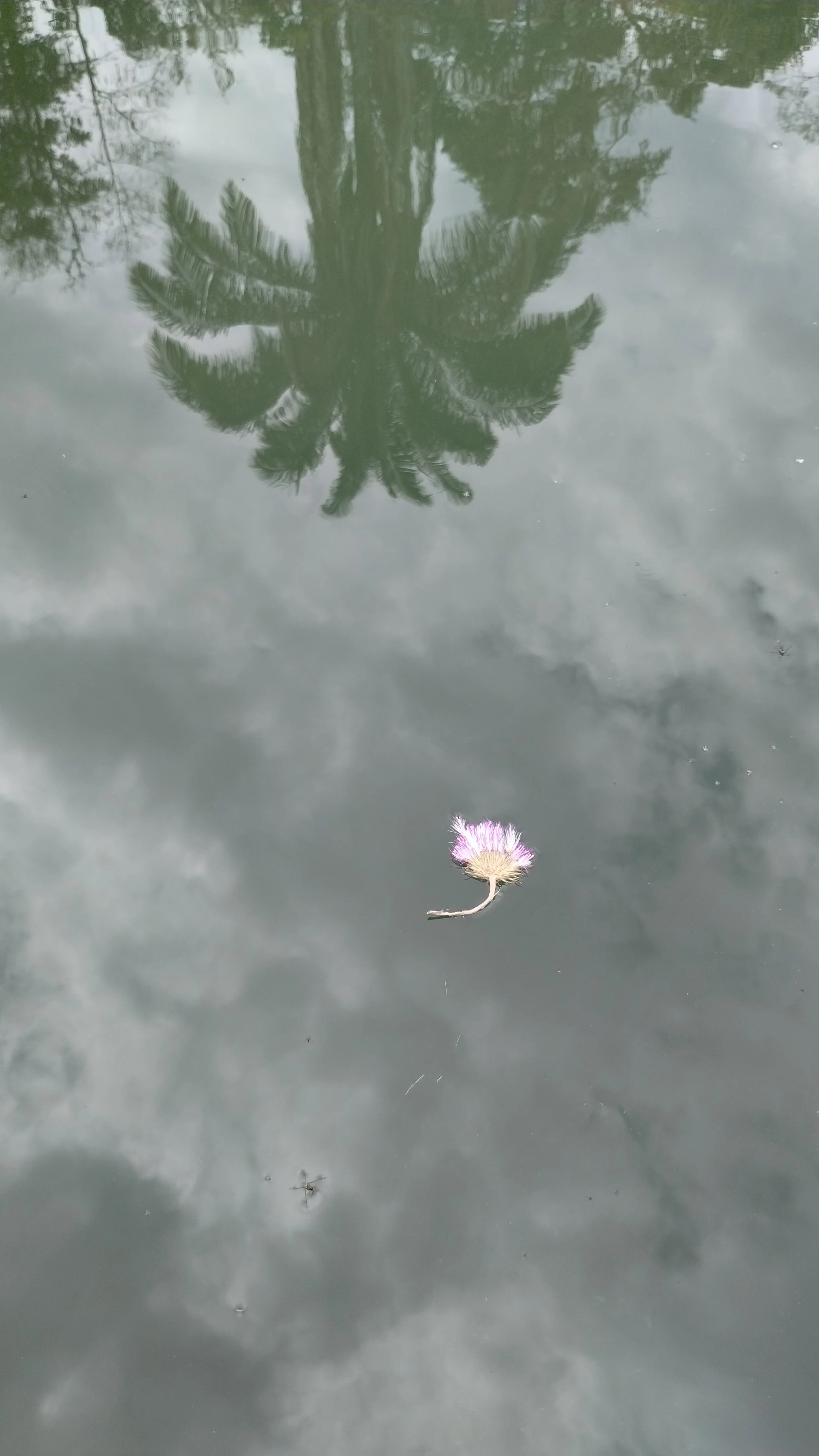
‘I watch pilgrims offer flowers to the river. The flowers become the river.
The river becomes flowers.’
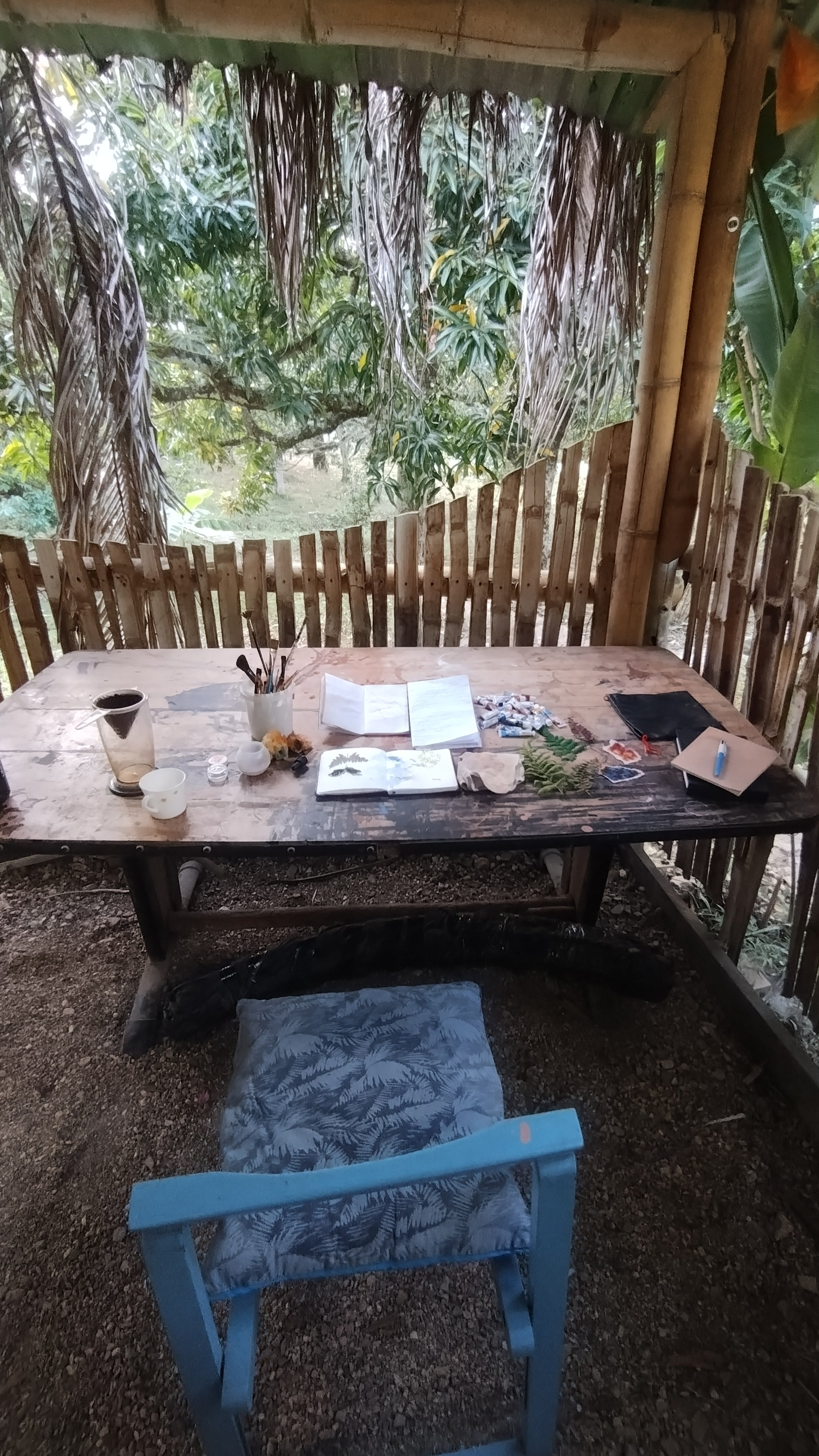
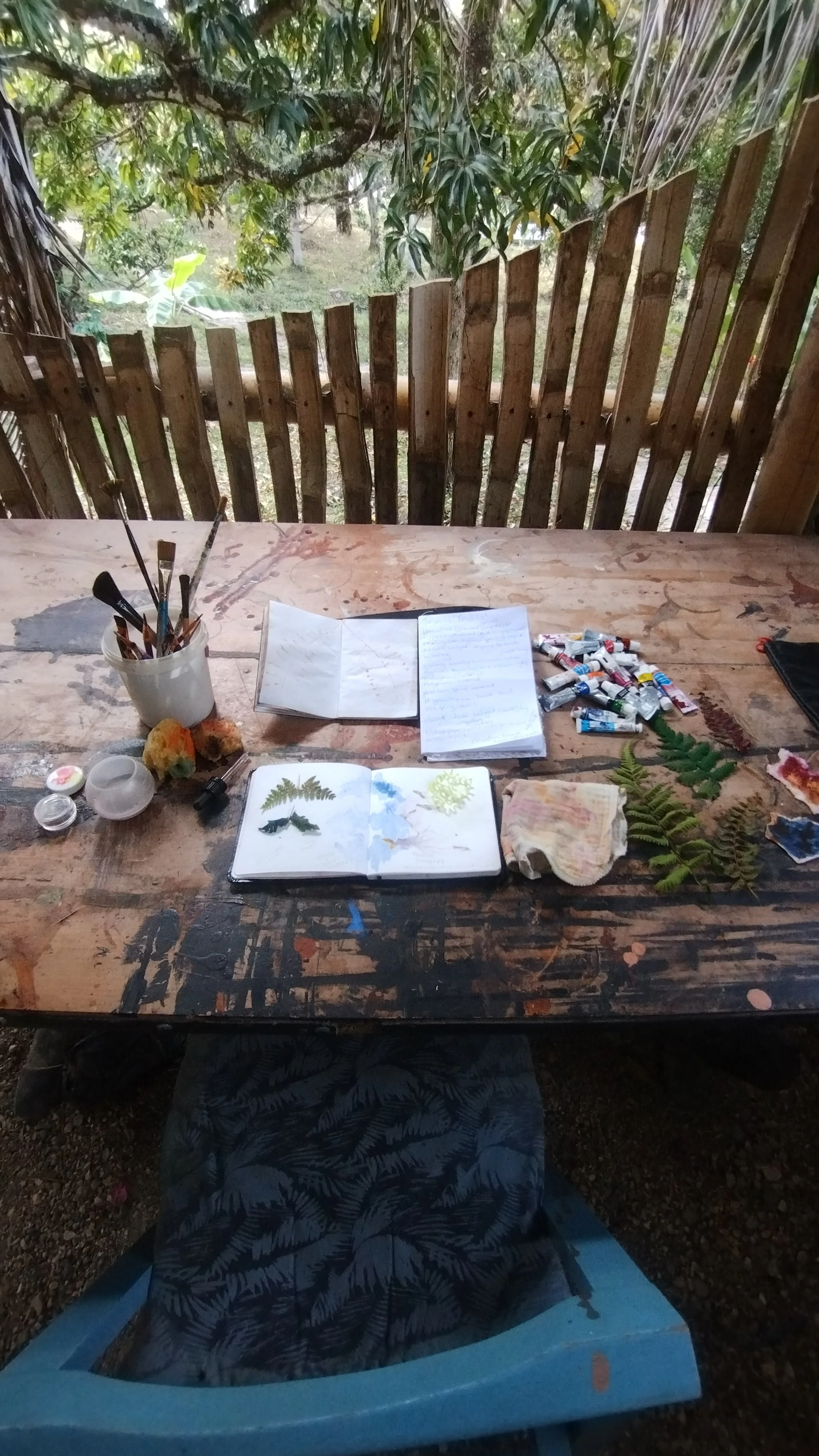
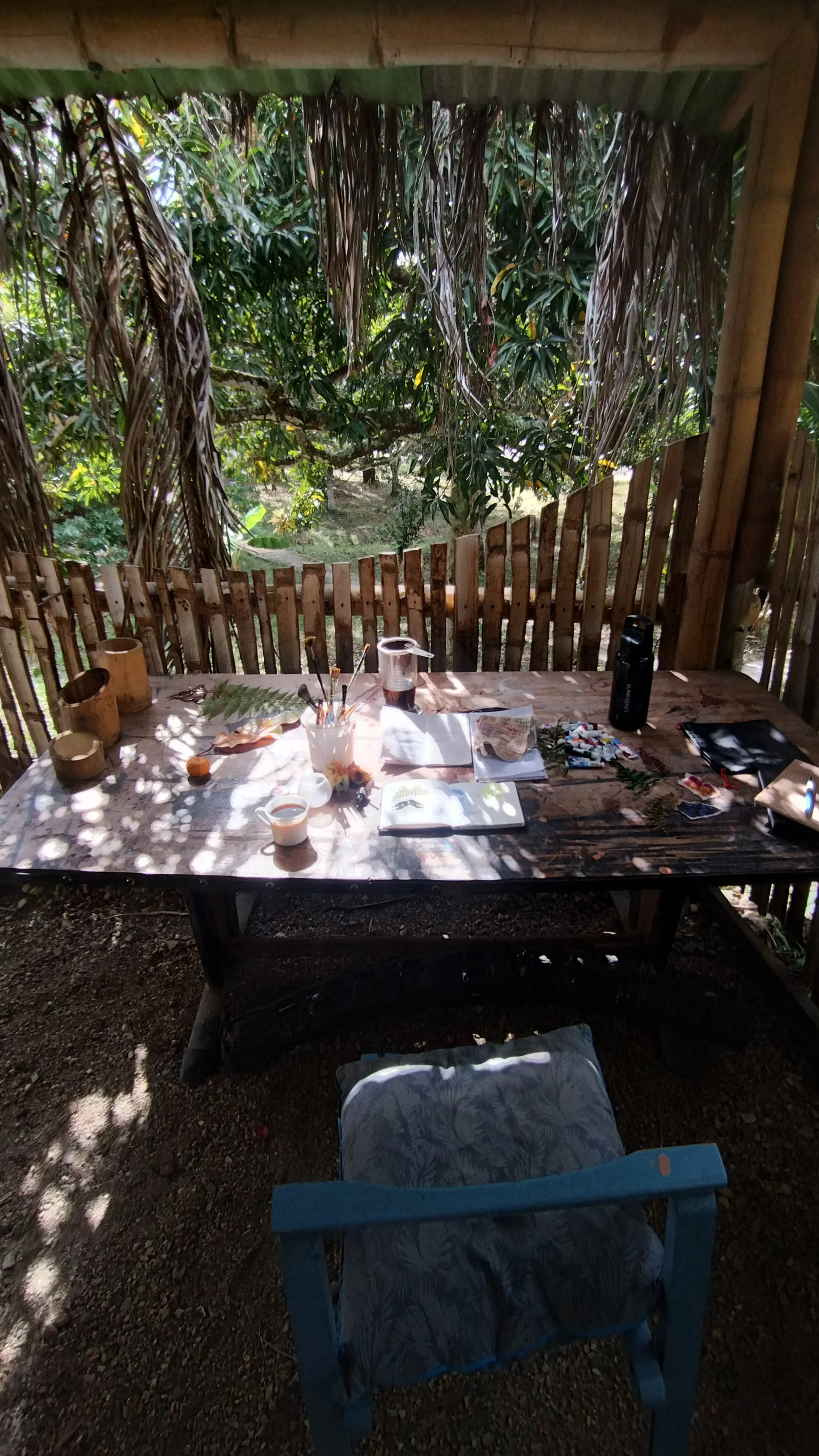
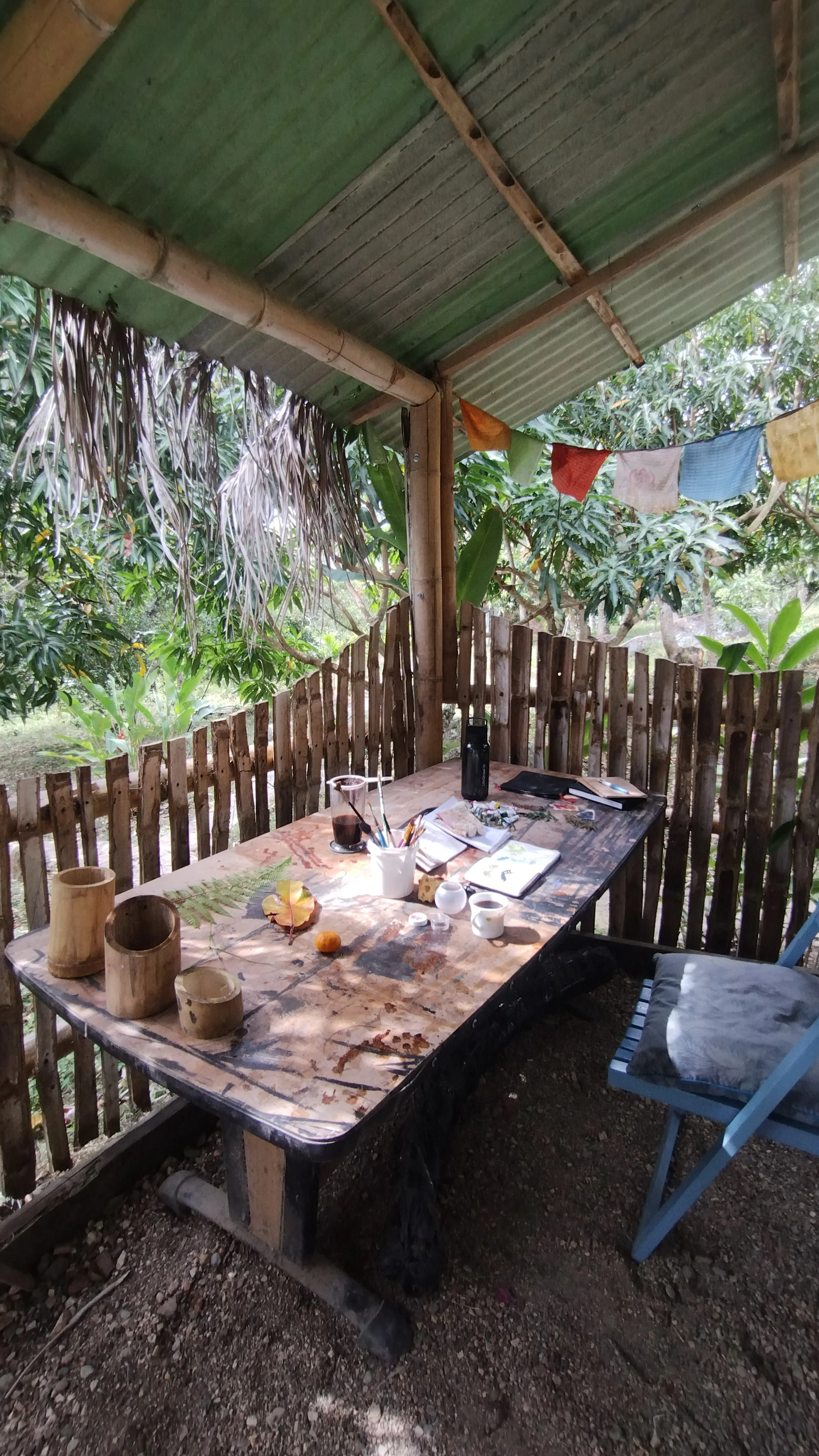
Ferns and Binding
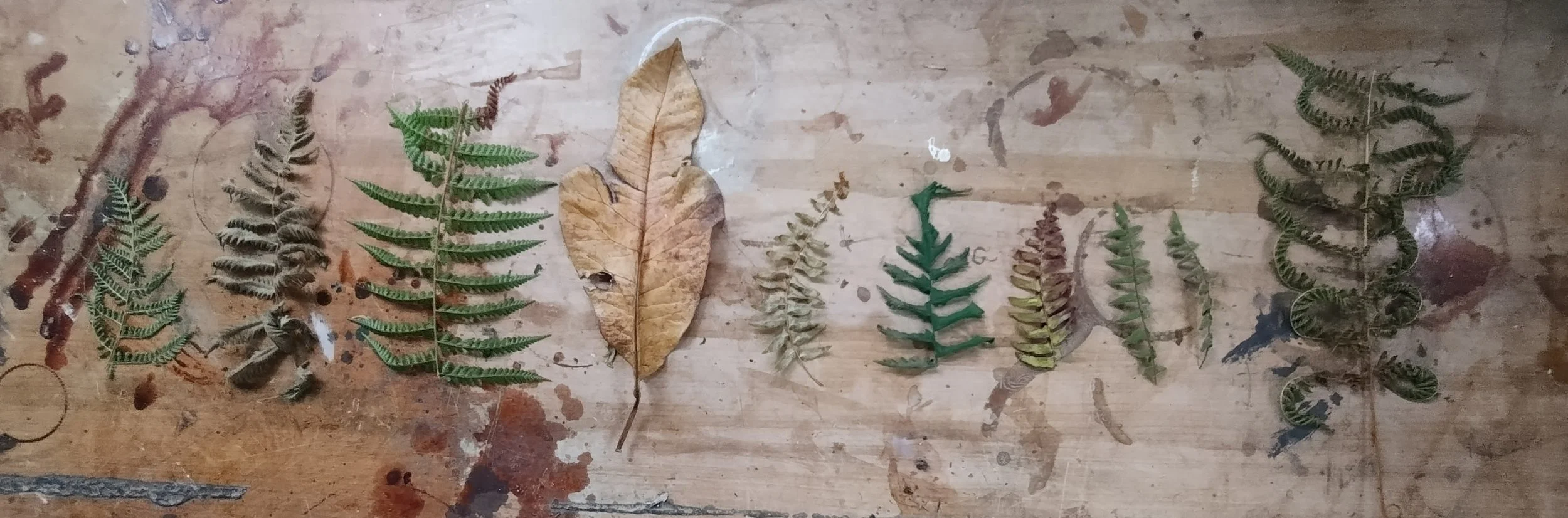
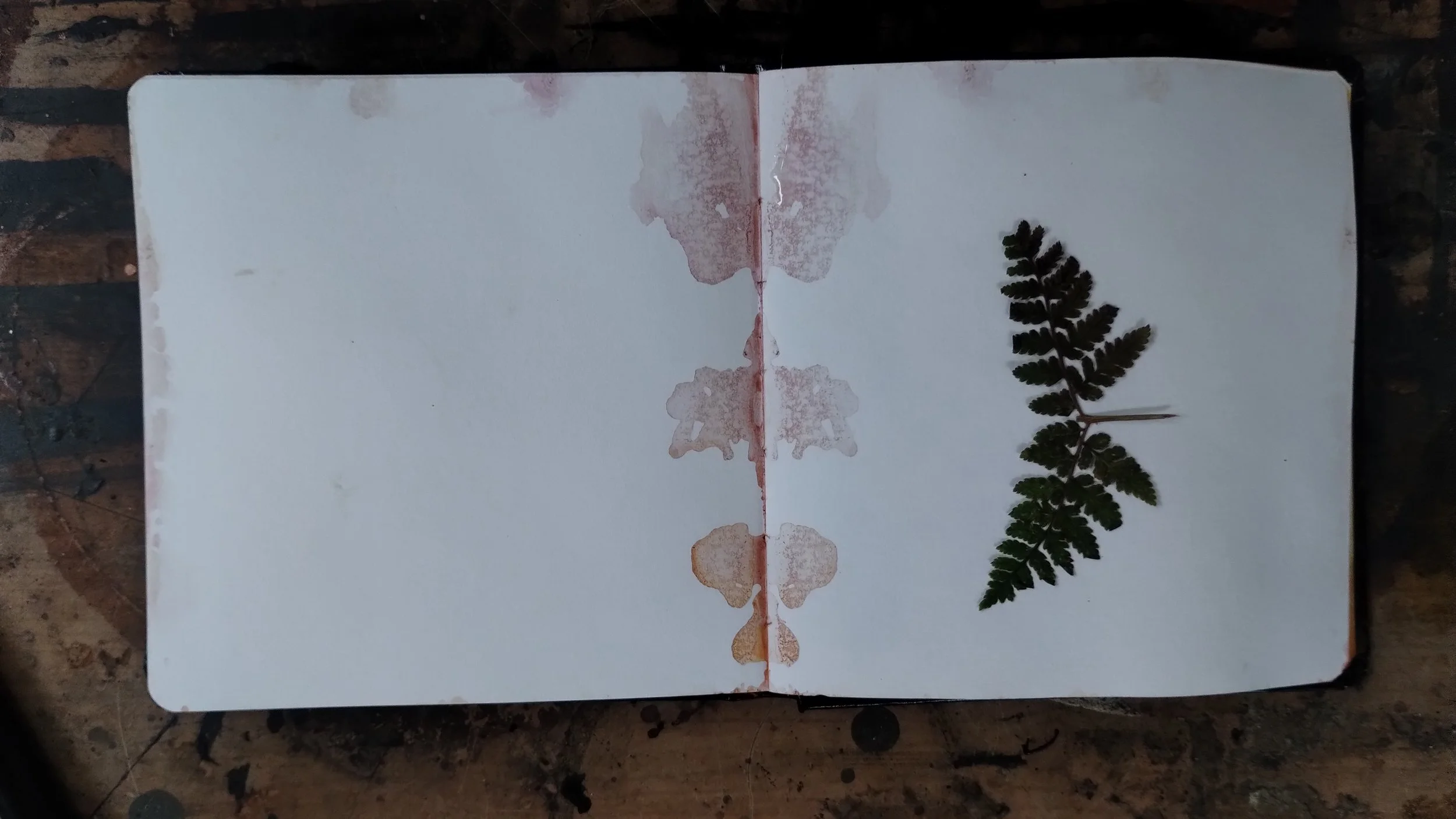
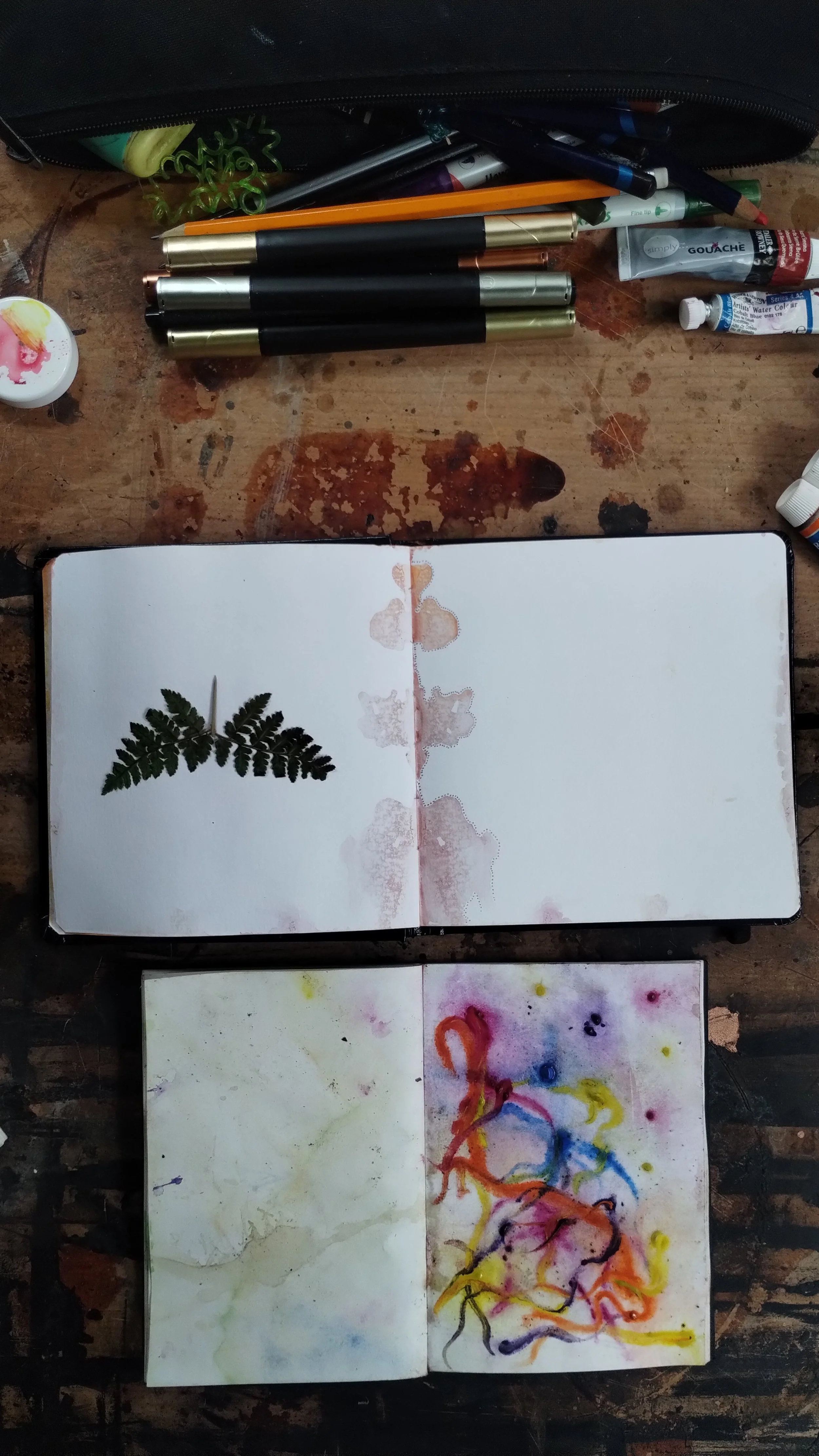
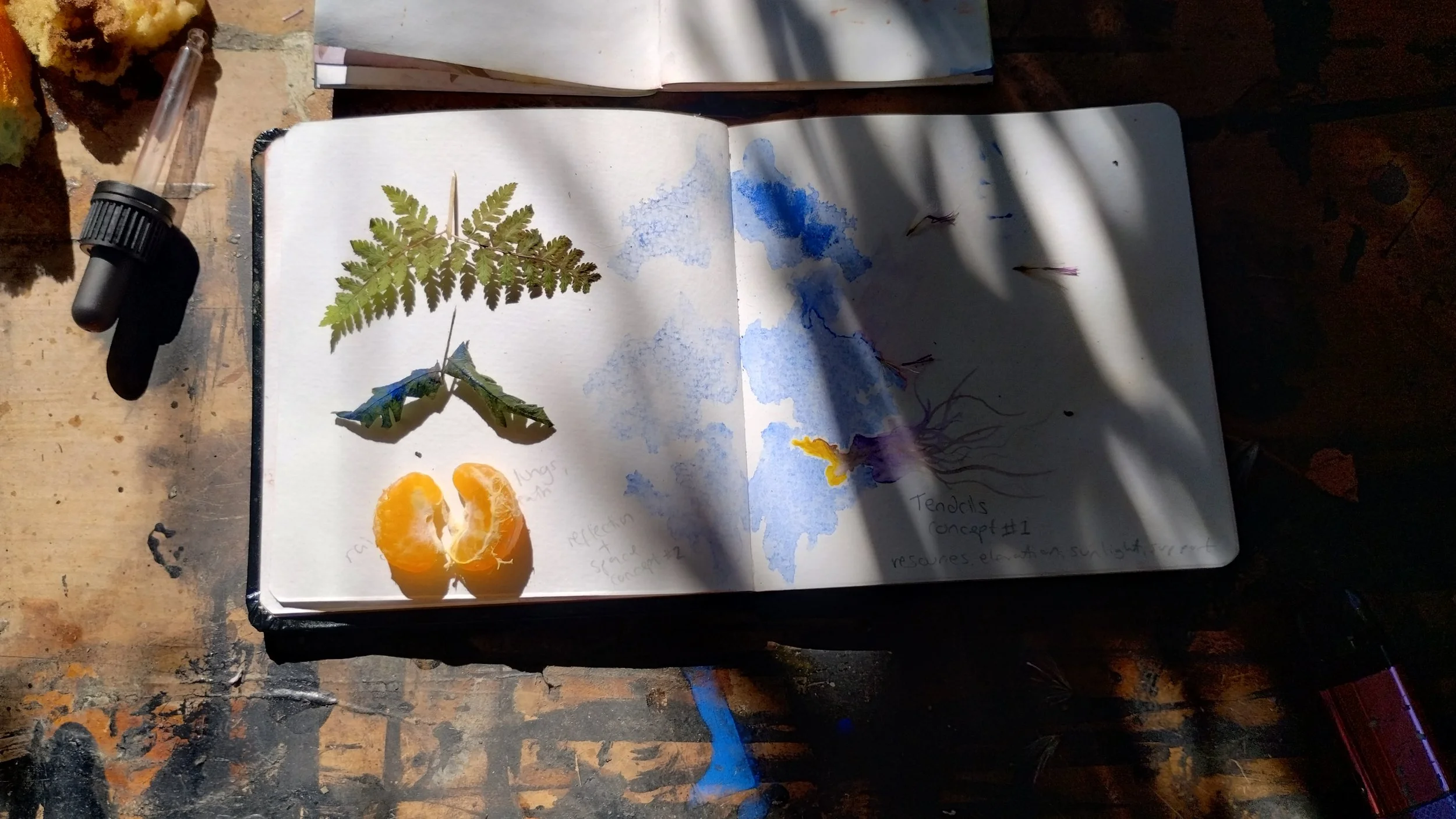
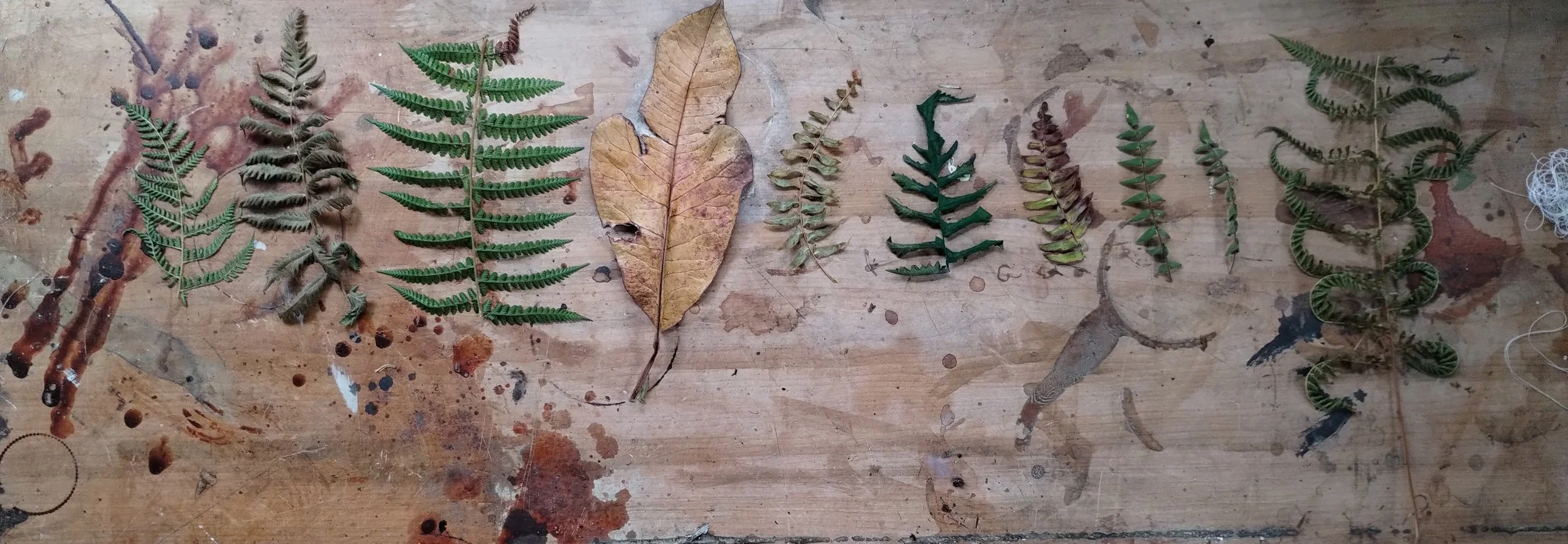
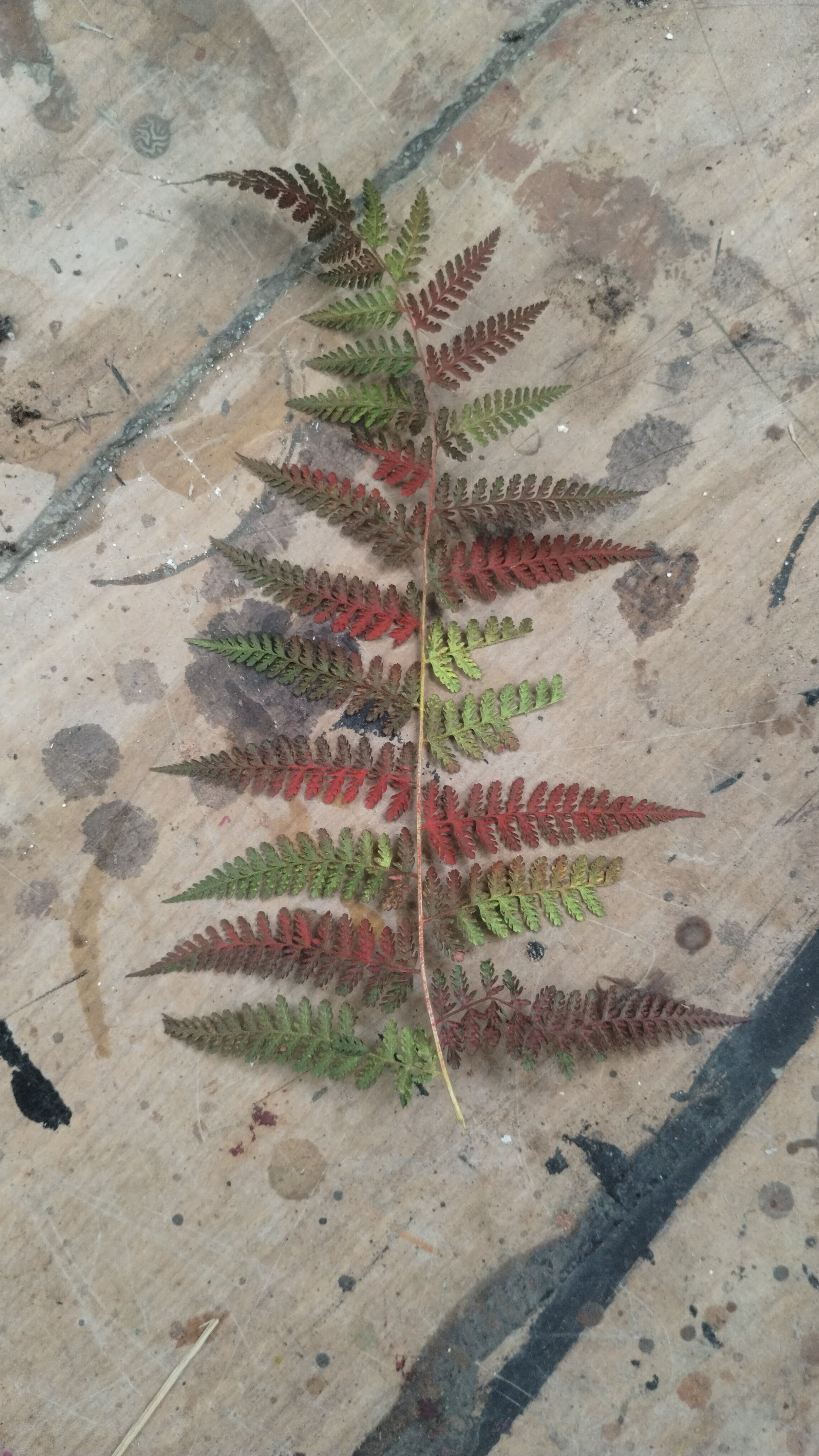
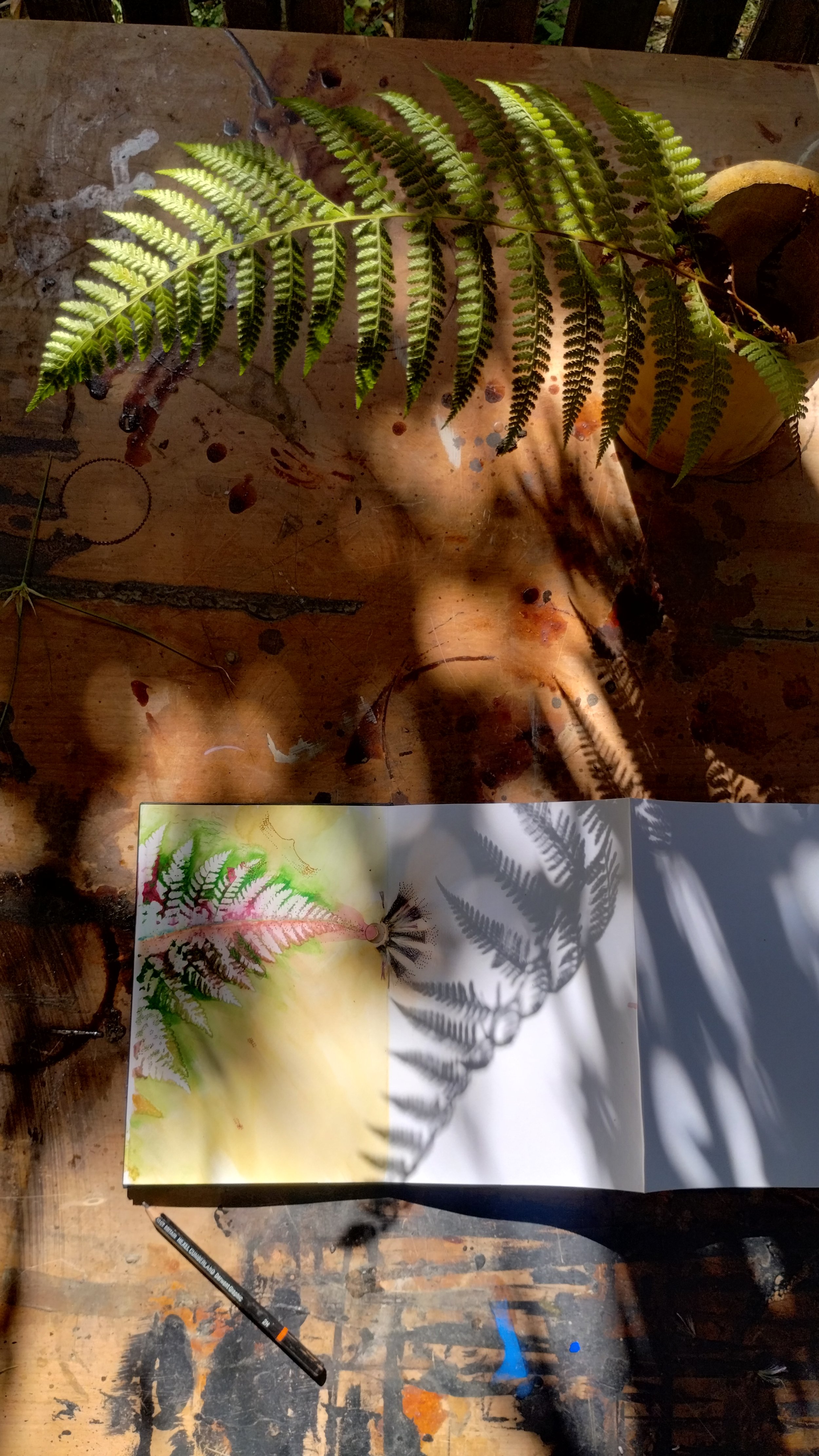
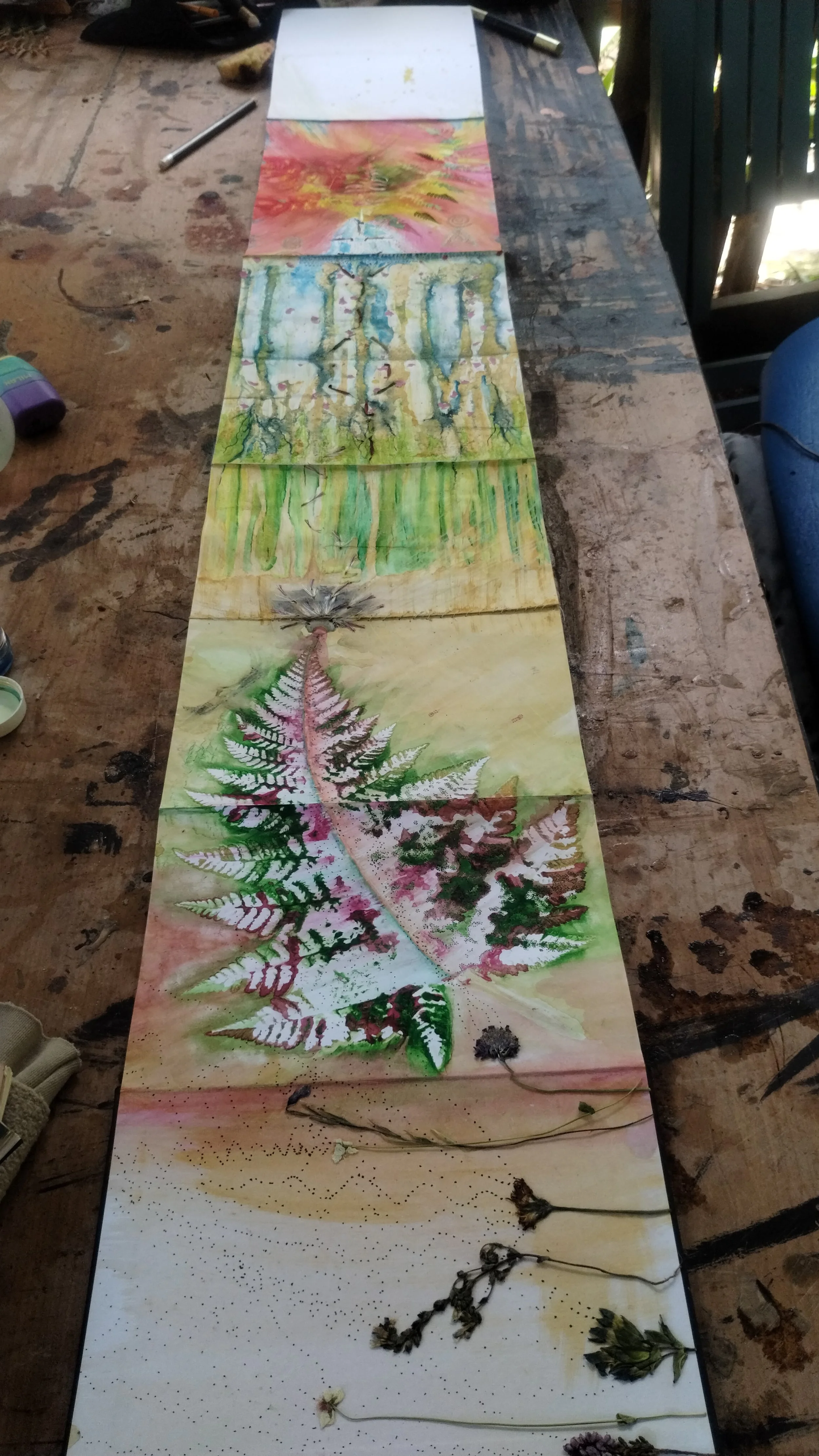
The ferns outside my cabin spoke first. Their Latin name ‘Nephrolepis exaltata’ means “to elevate.” Back in Switzerland, the fern Dryopteris expansa means “to expand.” Expansion to elevation: the process continued, unfurling like a fern maturing.
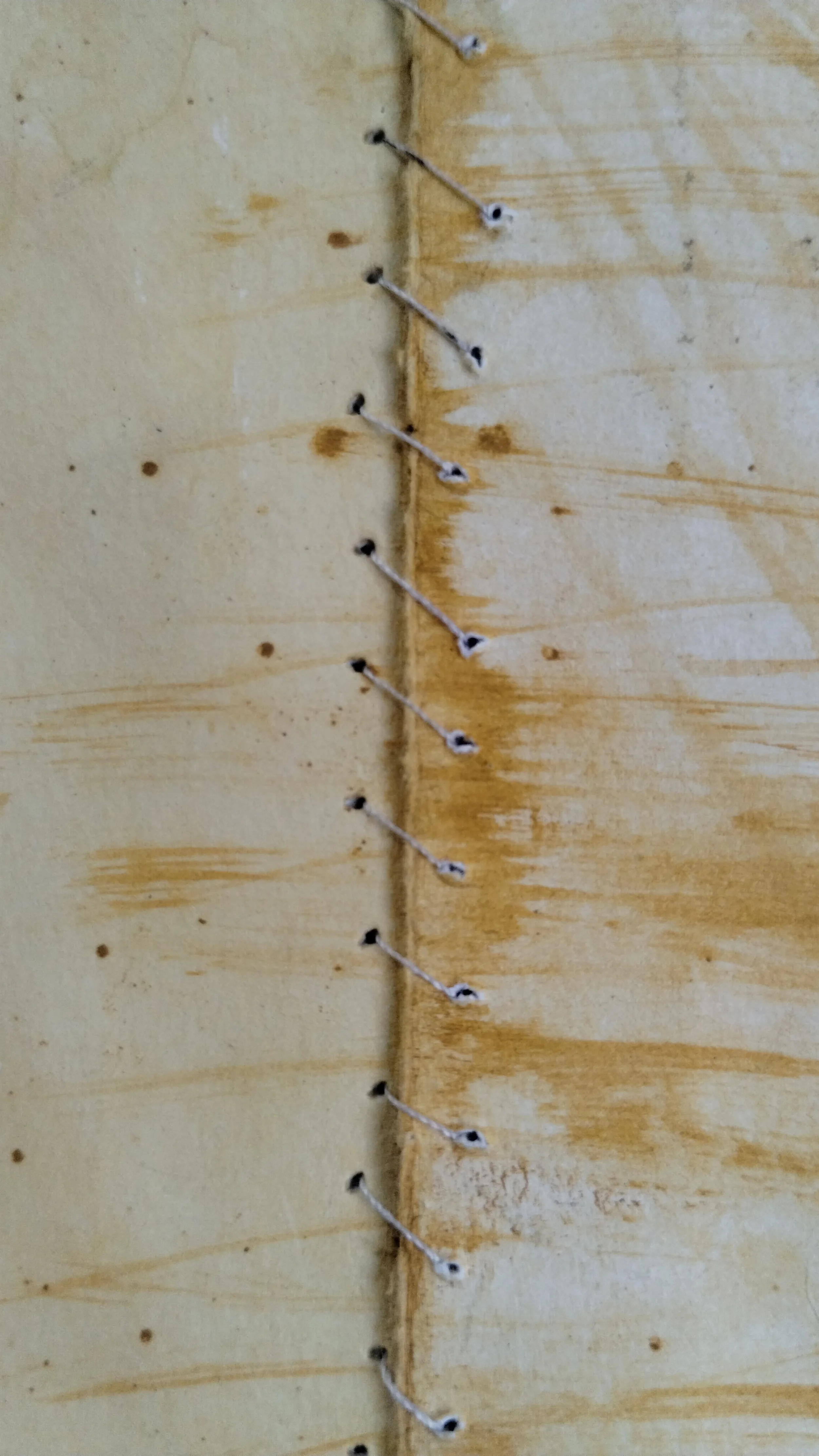
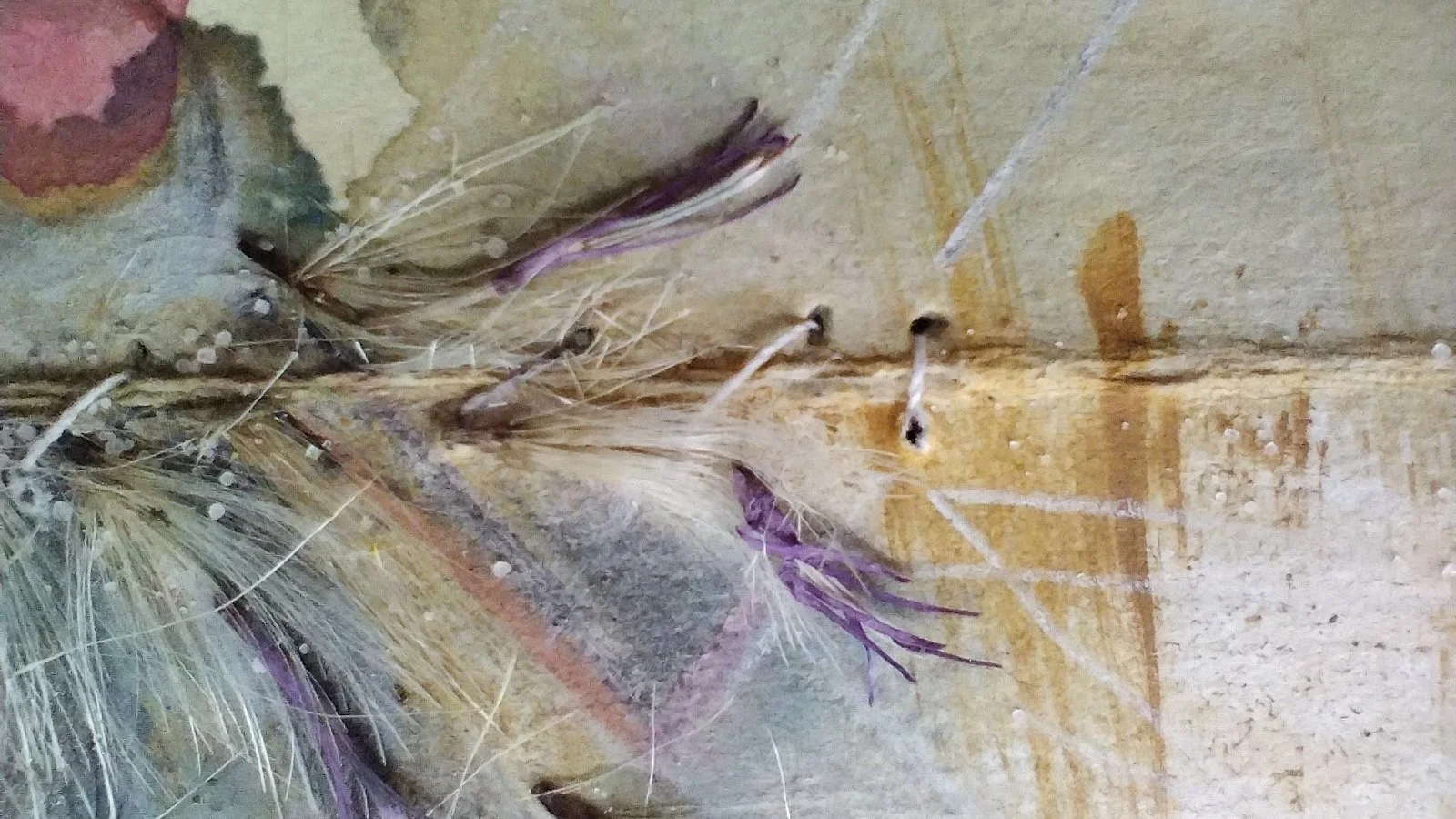
When an early watercolour experiment tore the paper at the seam, I repaired it with needle and thread — taking me back to Switzerland, where I had learned bookbinding. I was certain there was a deeper meaning, though I wasn’t sure what it was yet; still, I trusted it would reveal itself.
I began taking long pauses between marks, sometimes days. I had started to revere the sketchbook, but had this slipped into perfectionism? Prompted to remember to play. To surrender. To delight in mark-making. An ease of excitement brought me back.

Salt, Deliquescence, and Alchemy
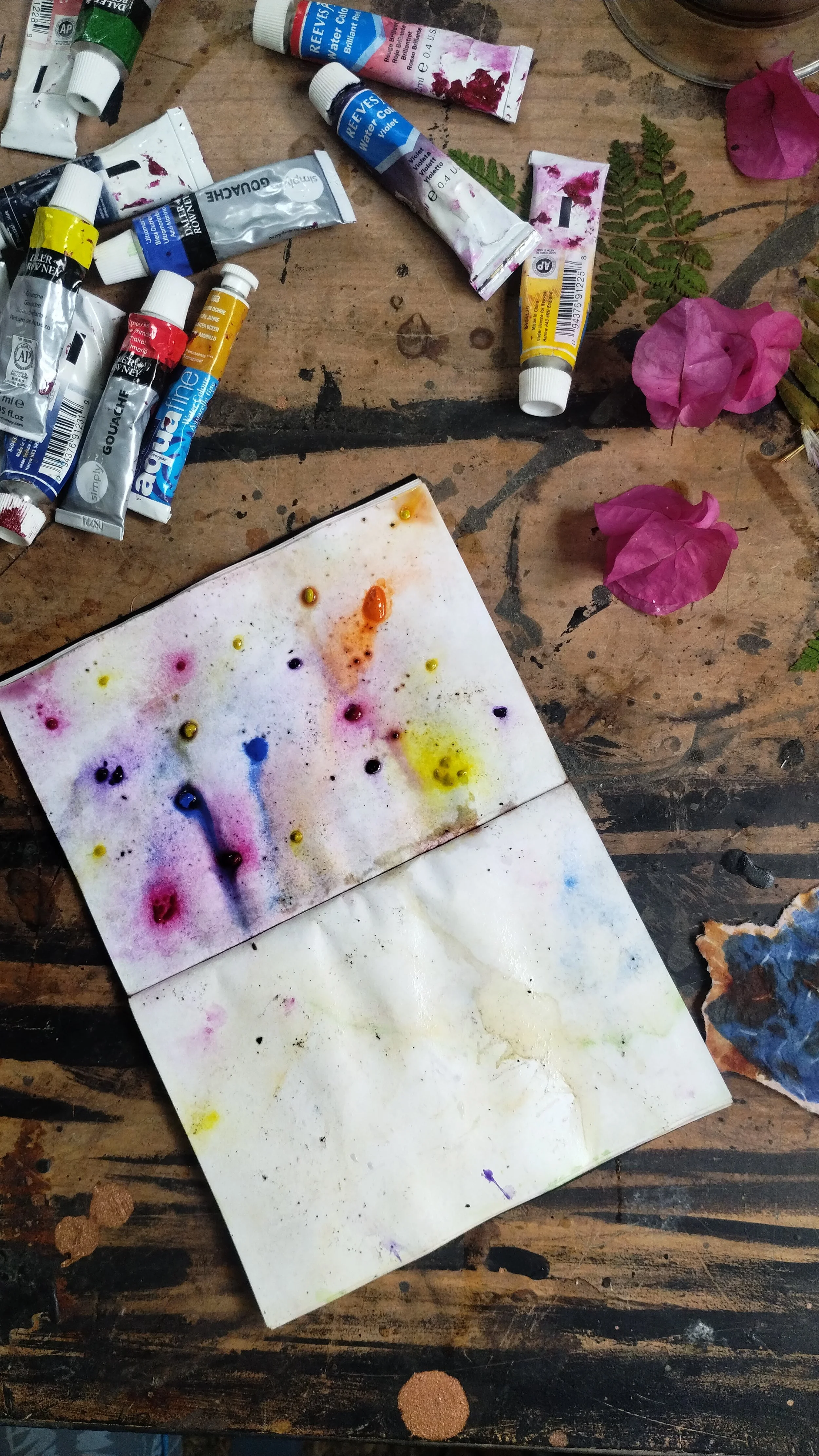
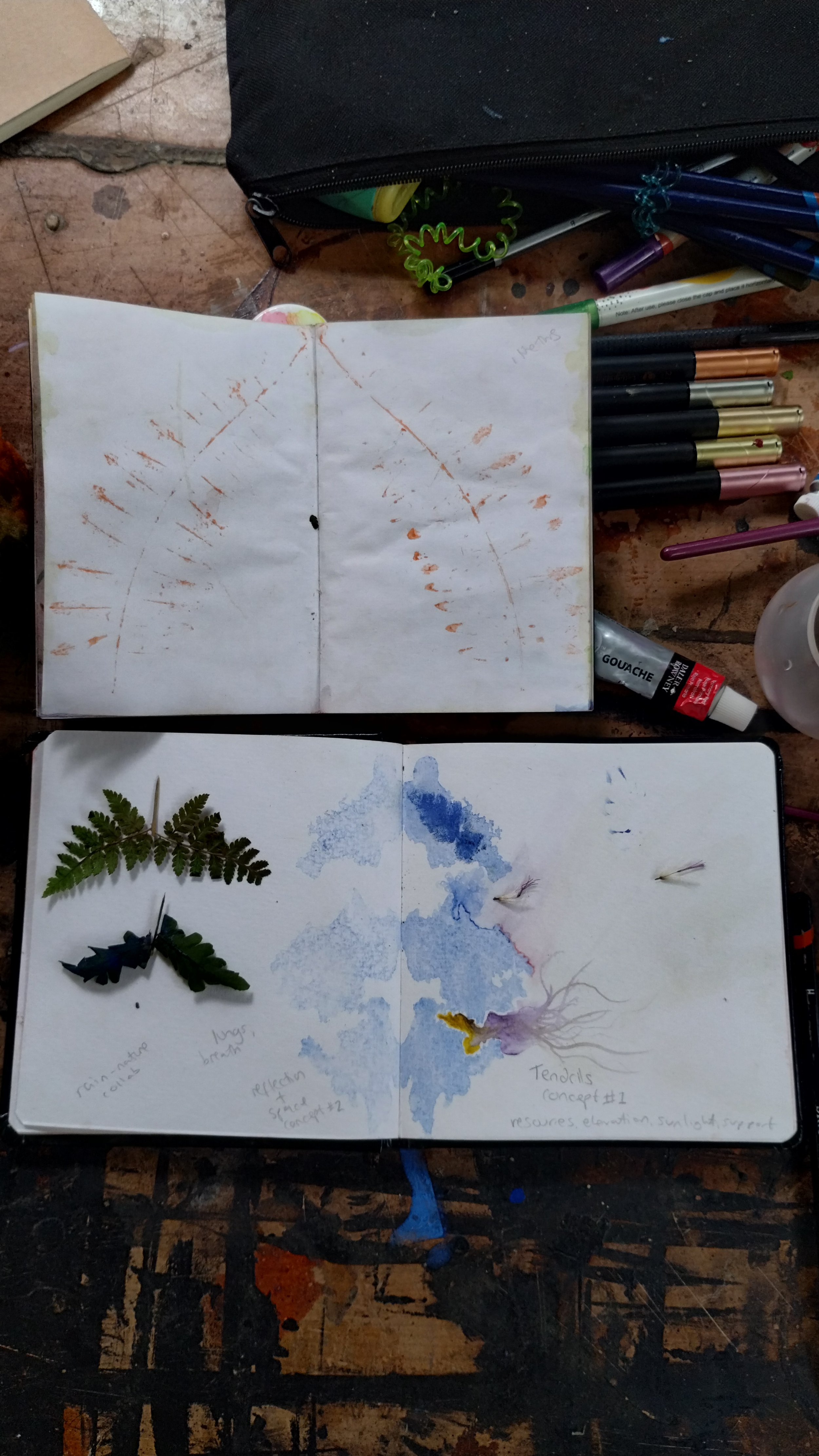
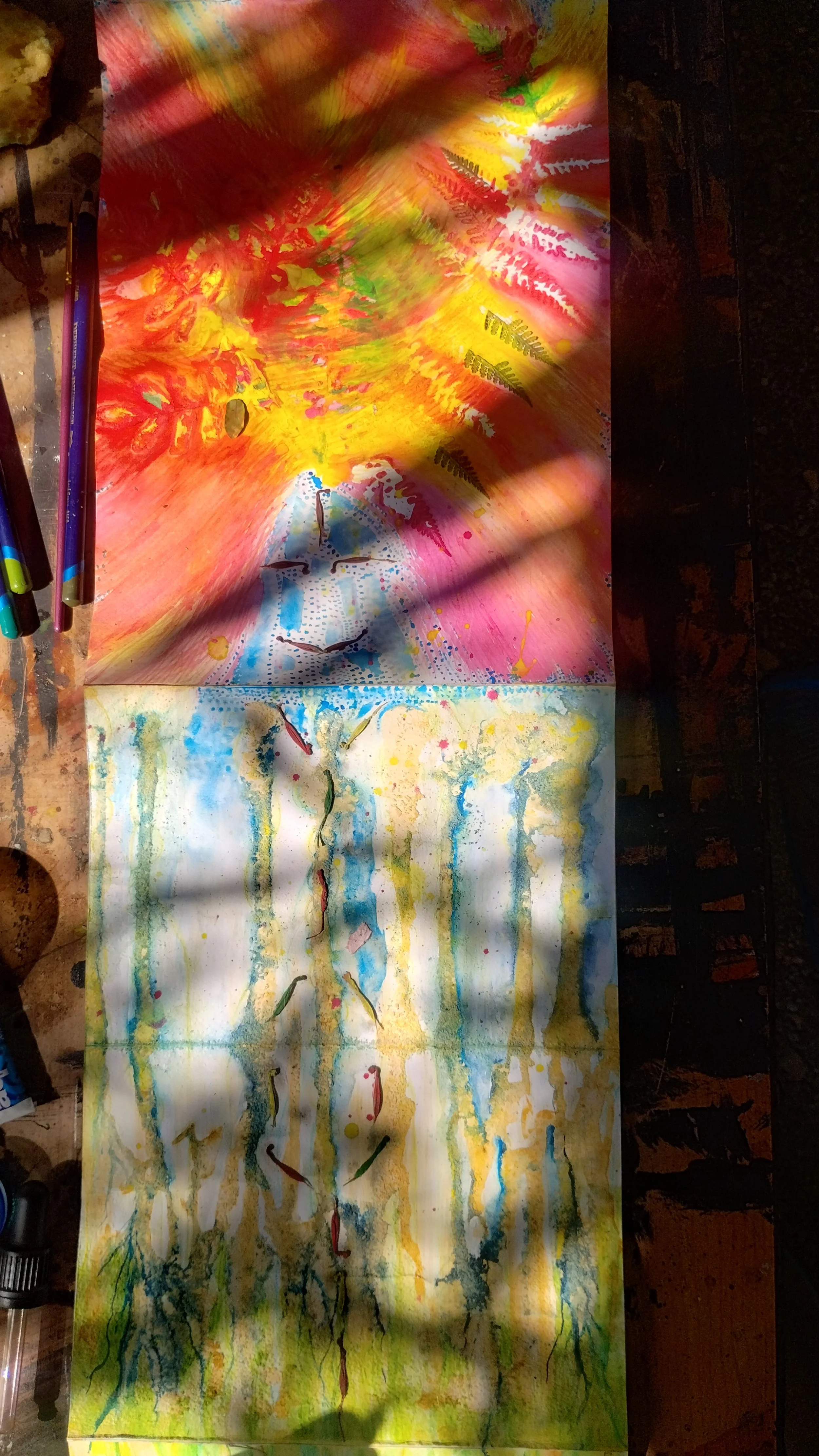
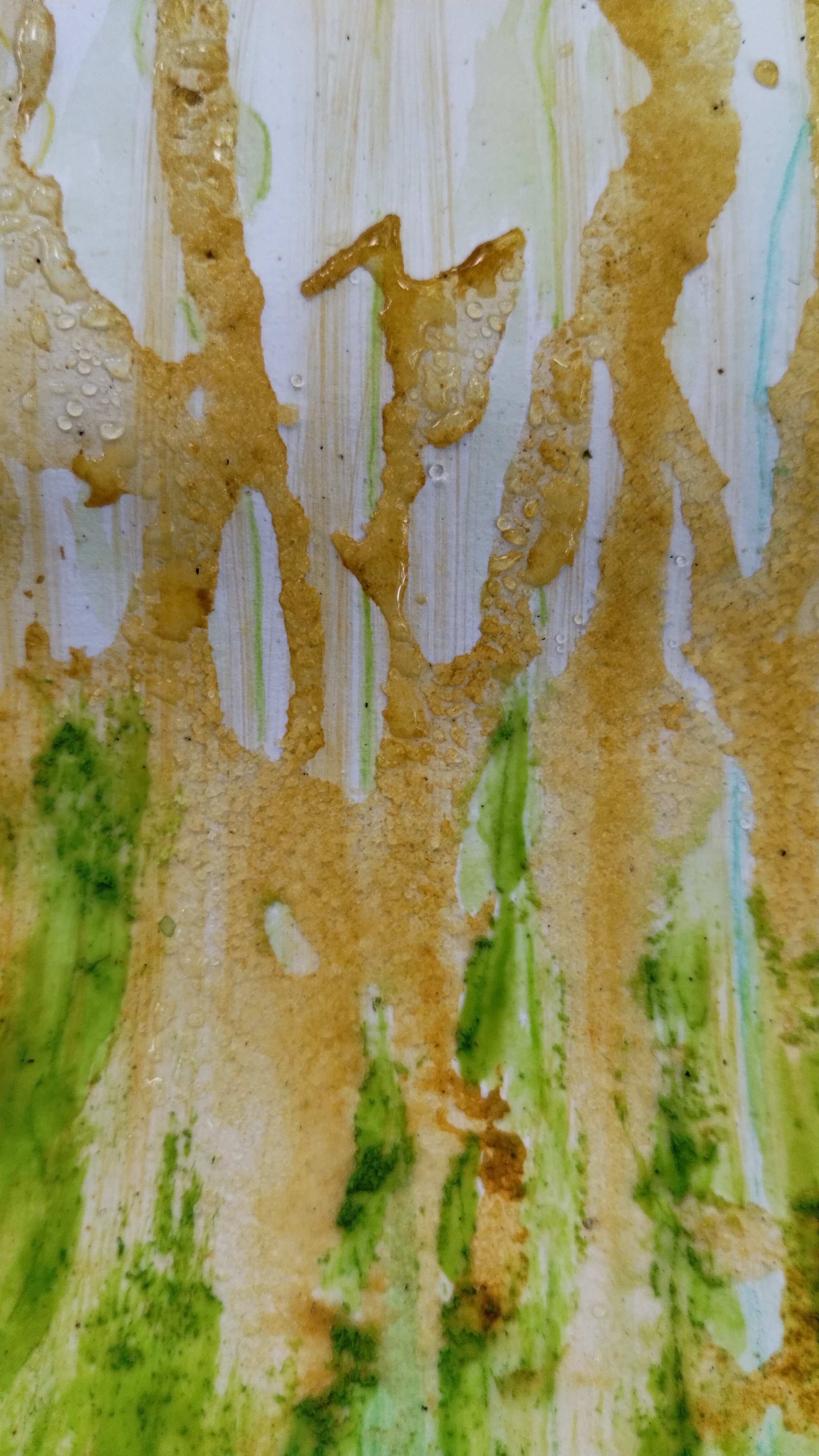
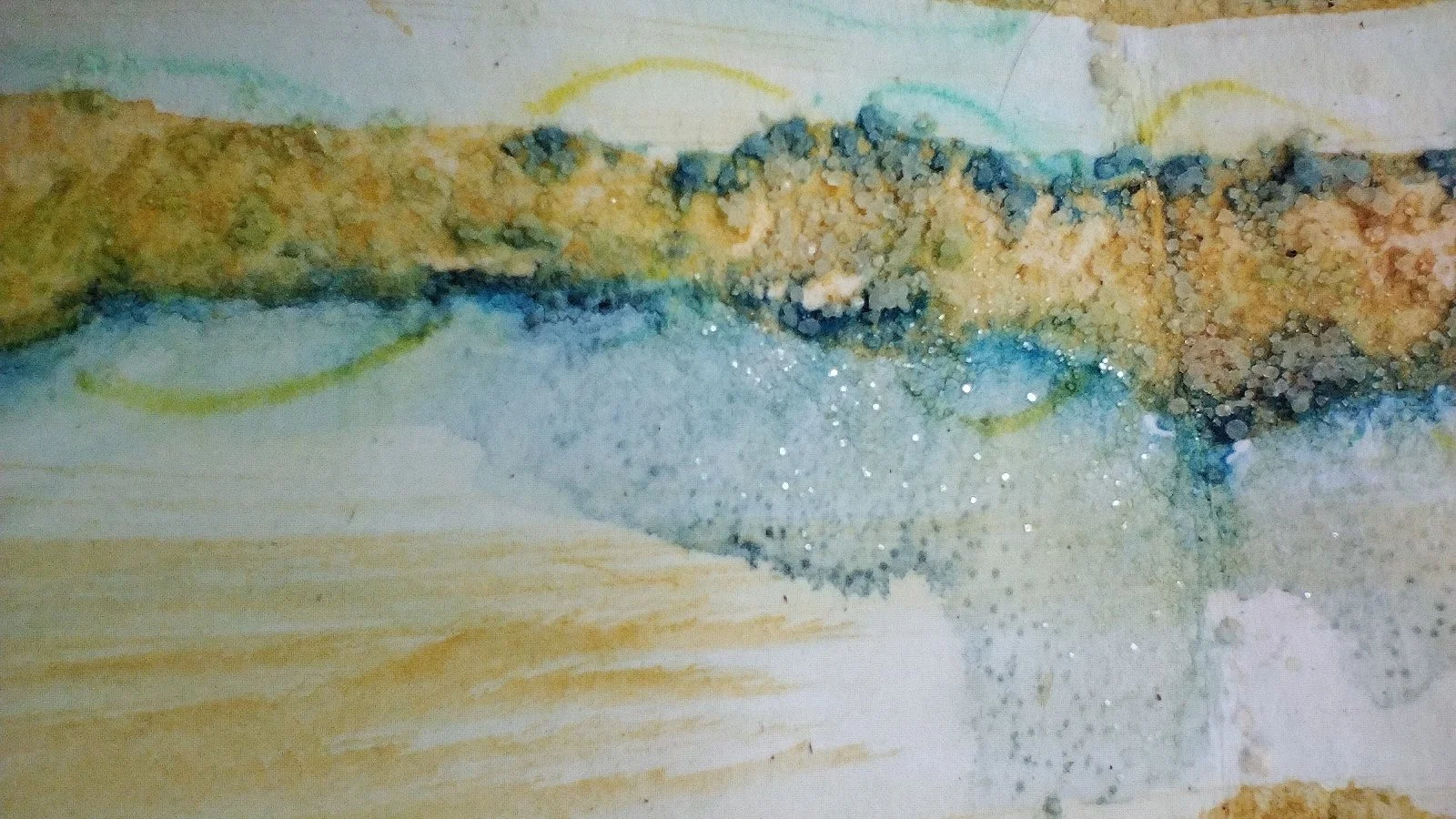
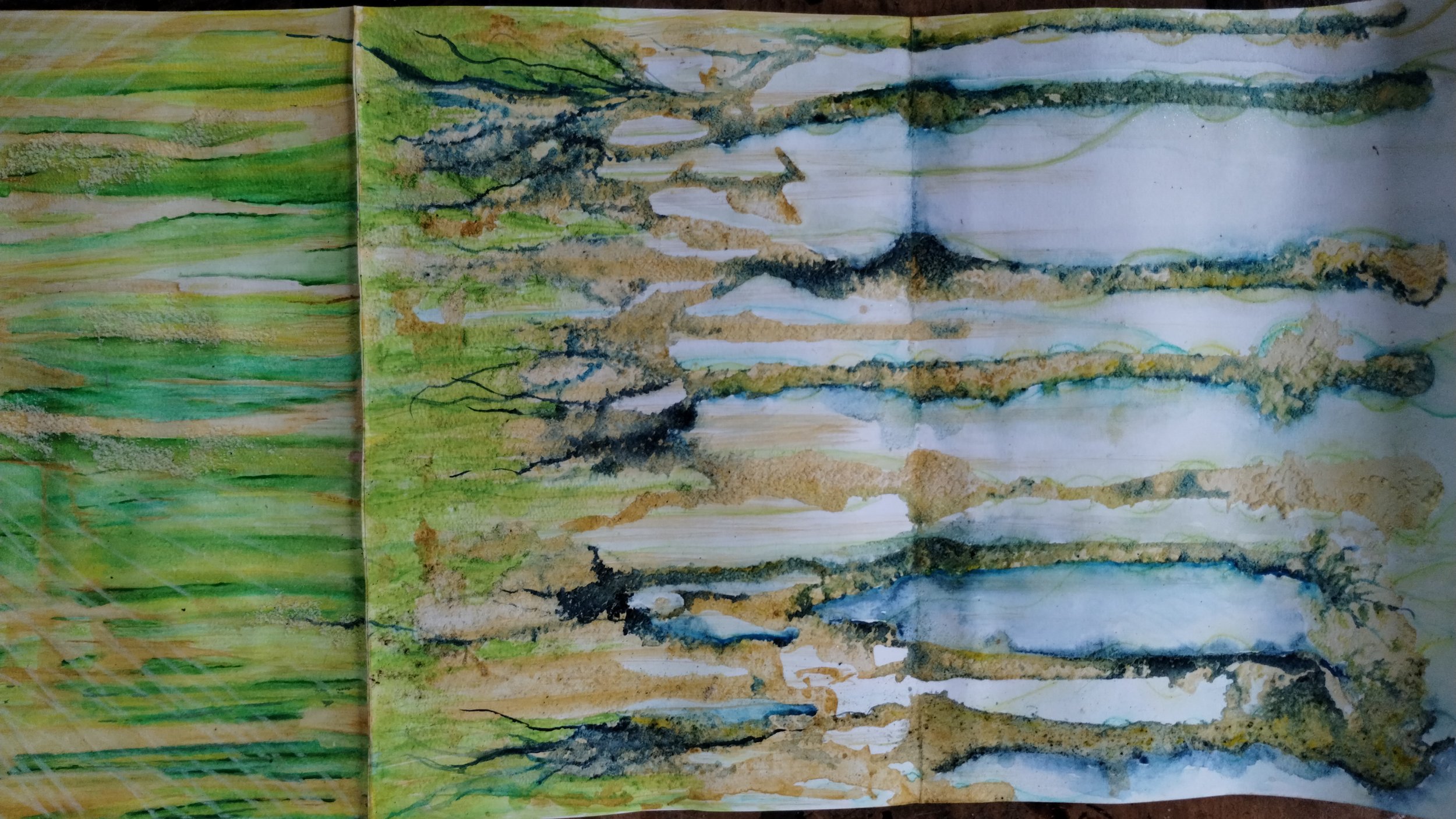
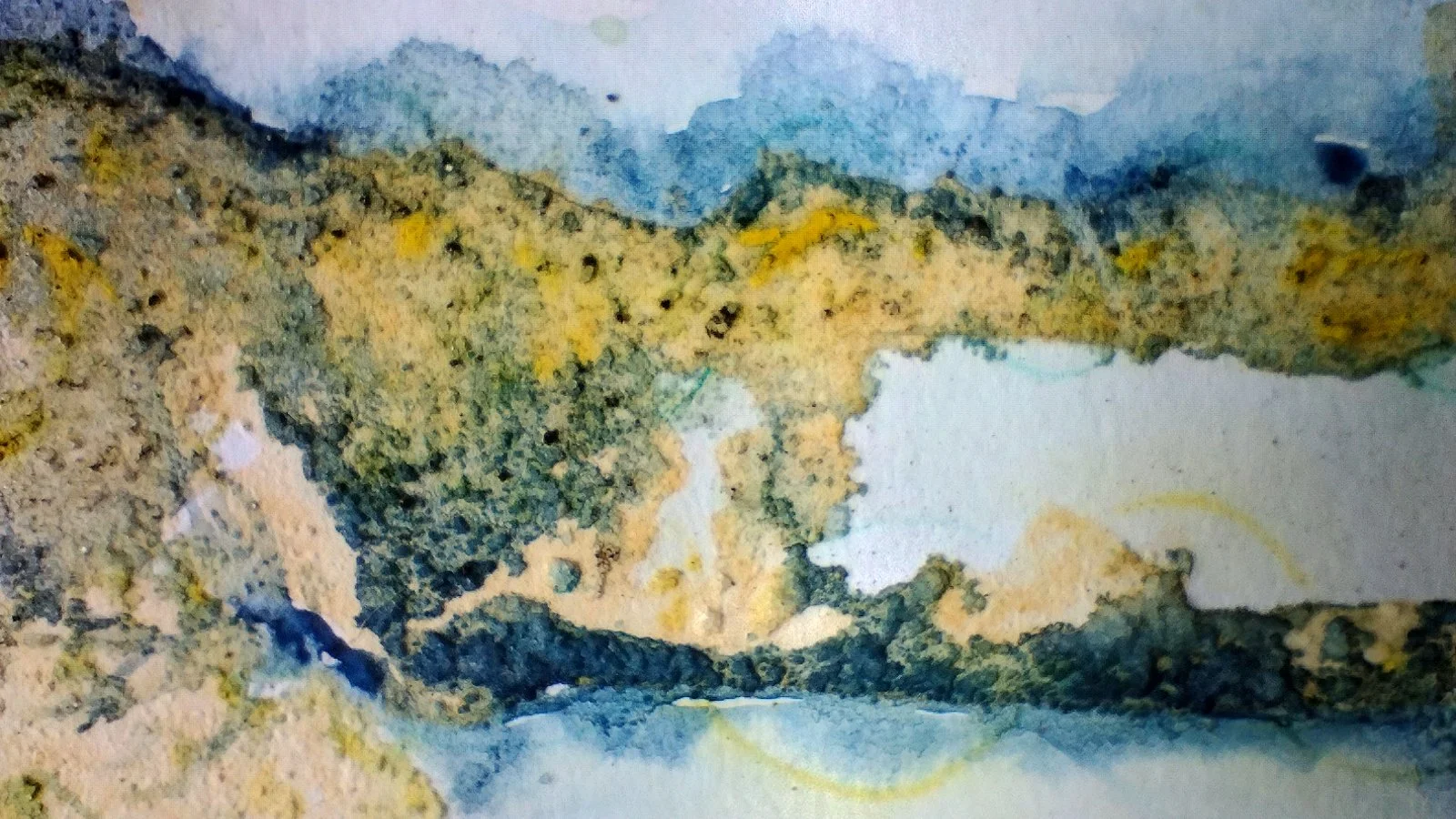
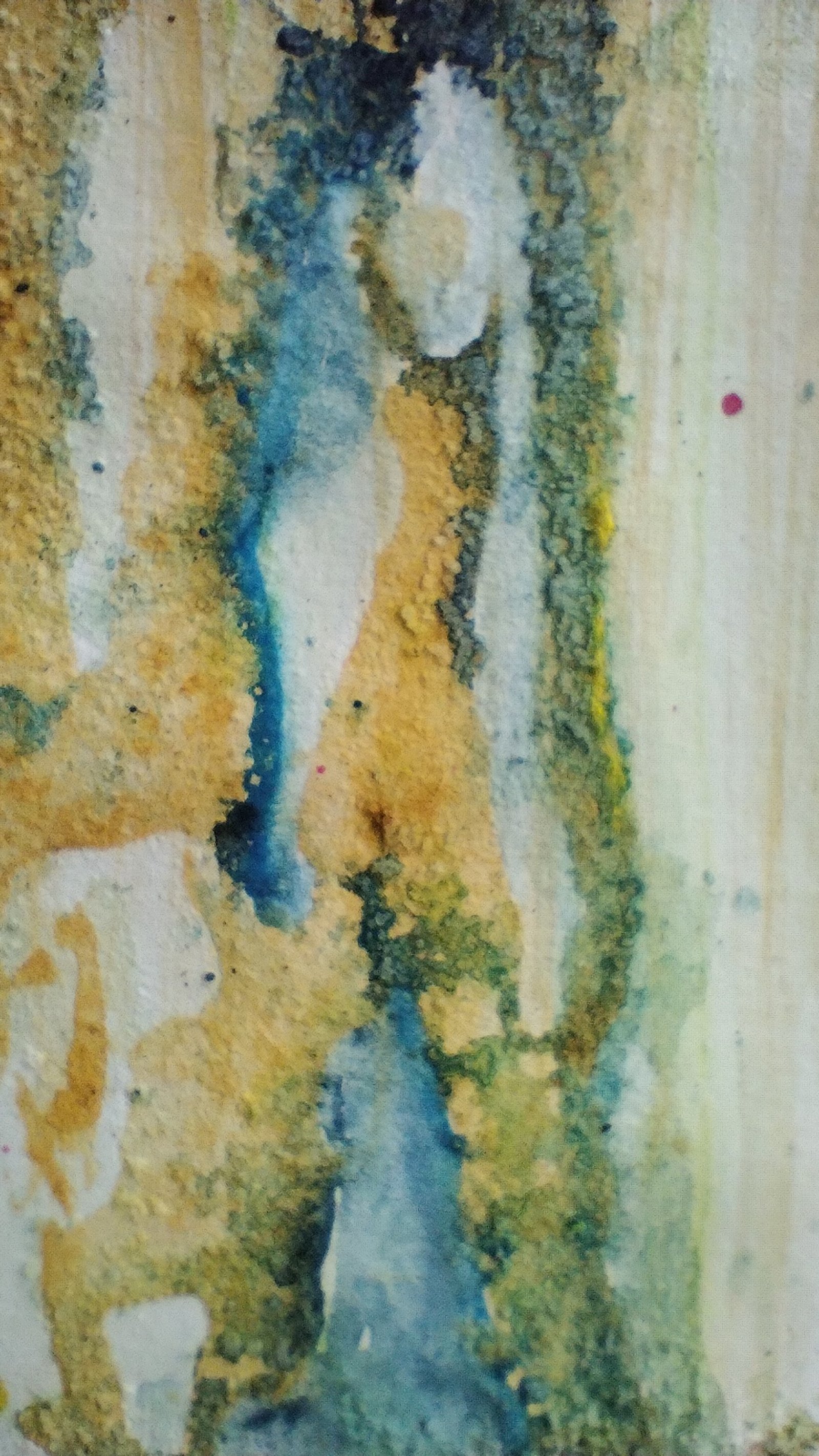
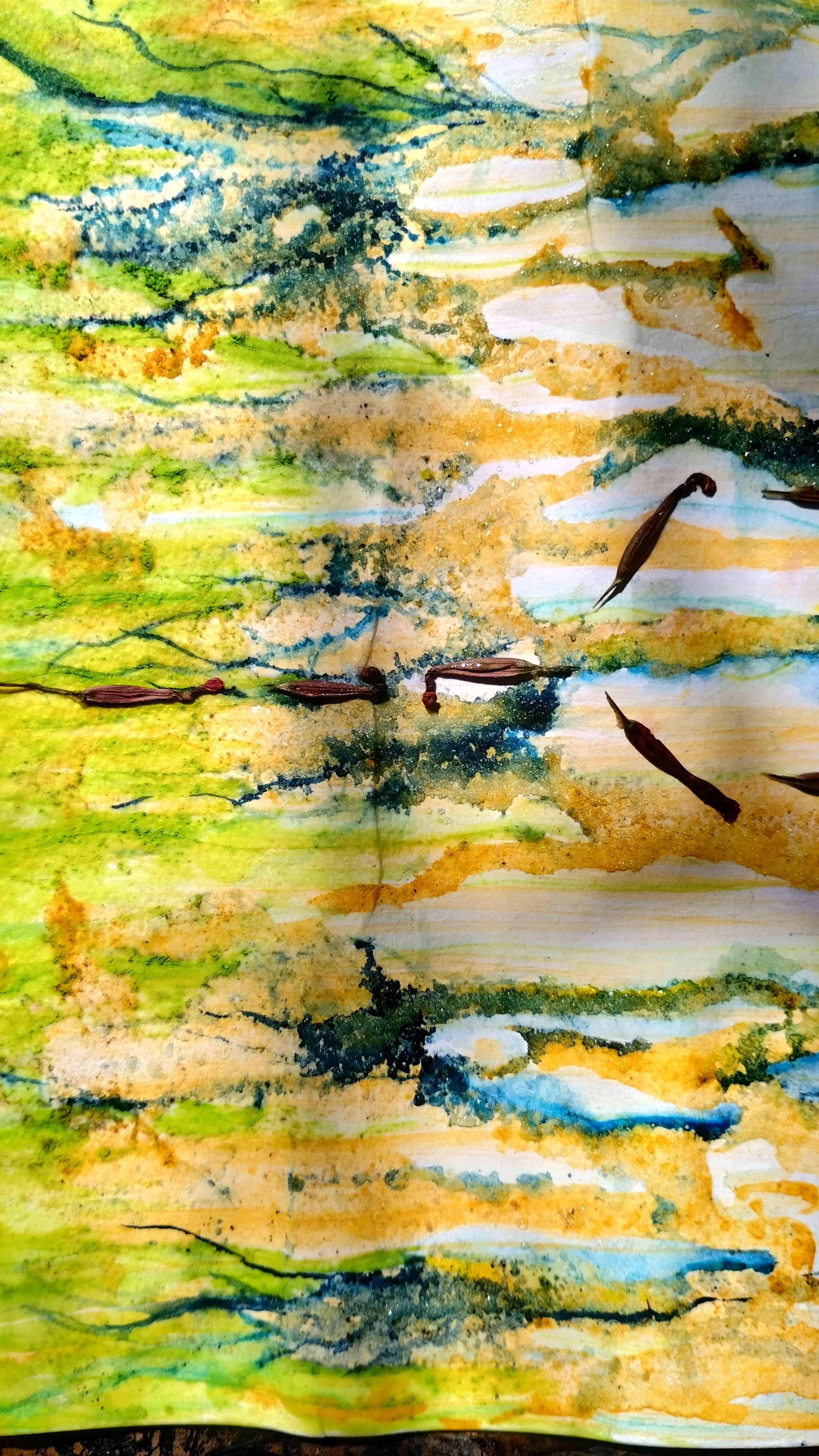
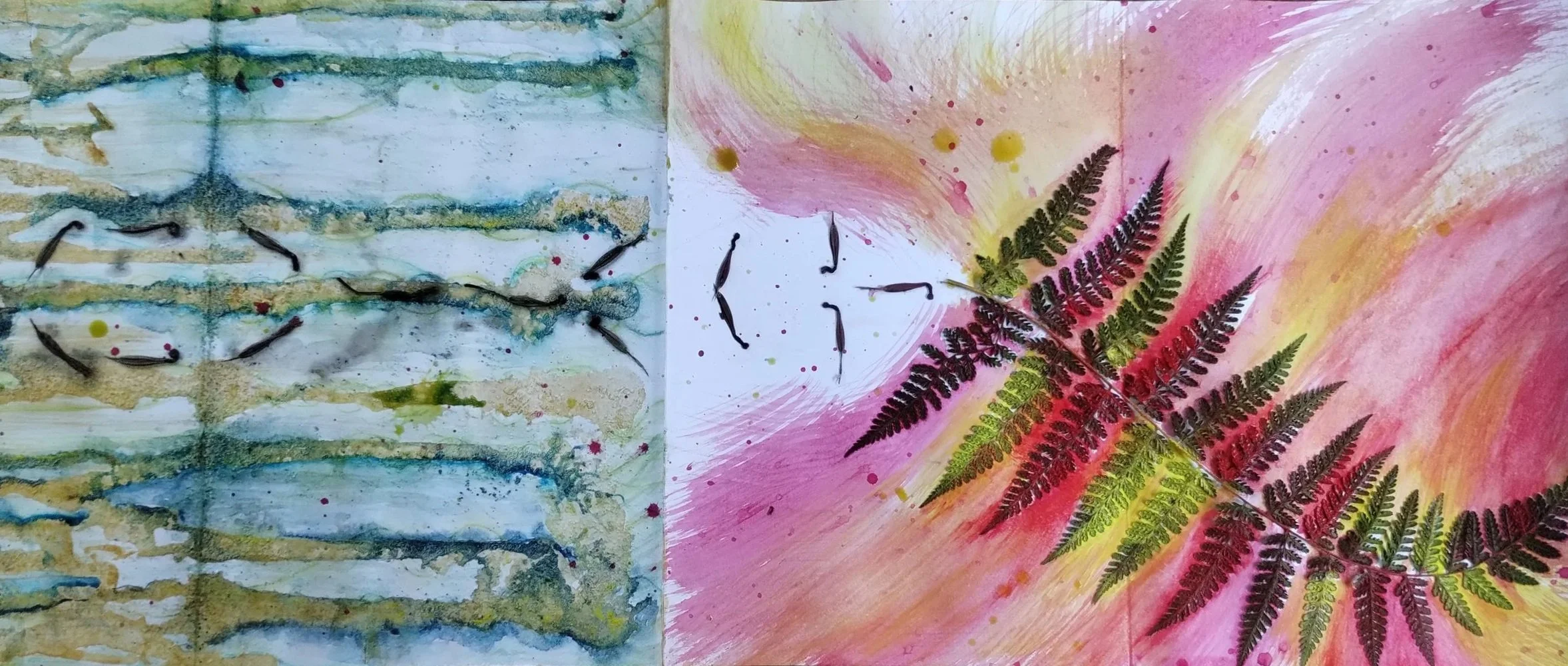
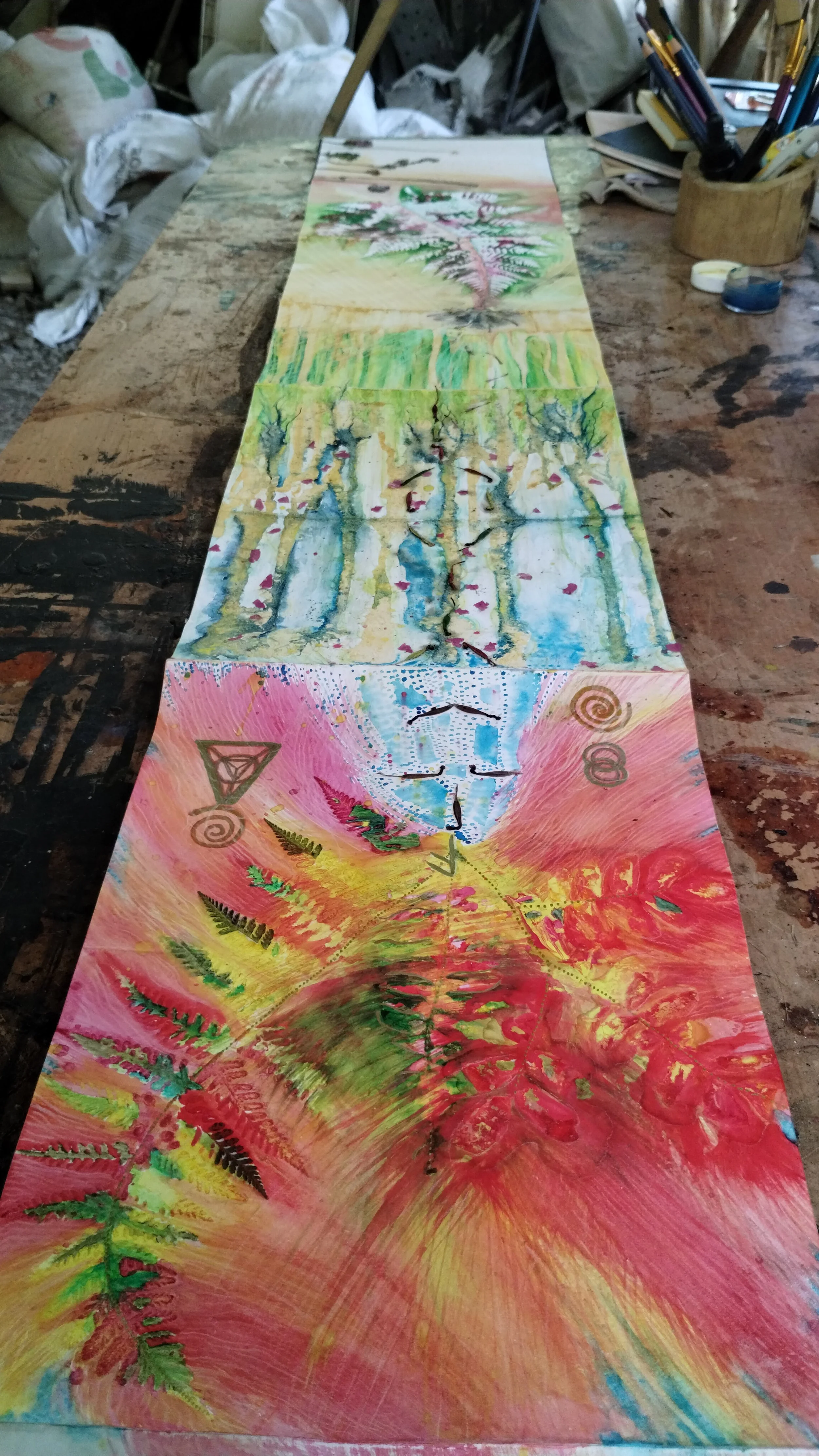
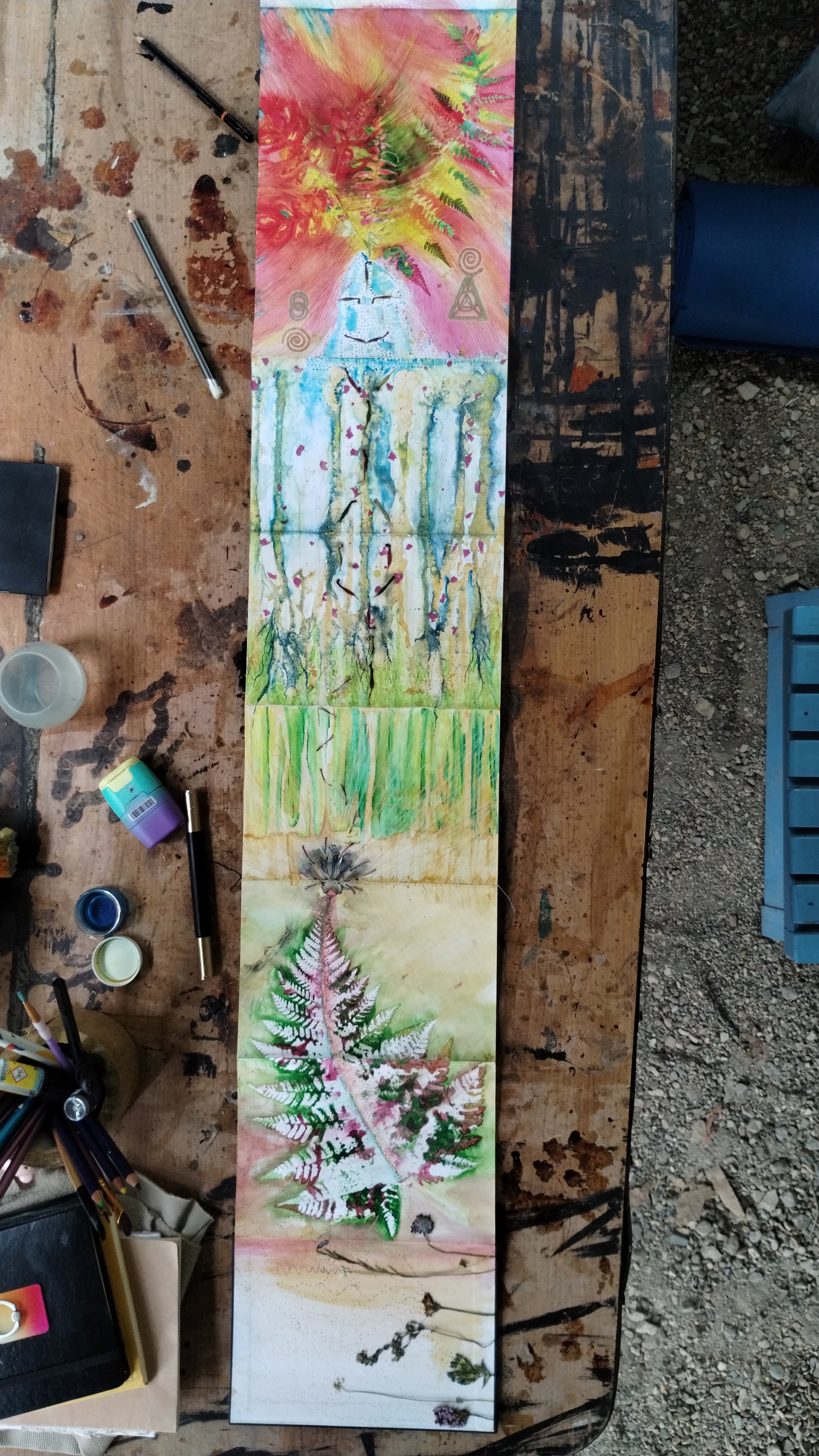
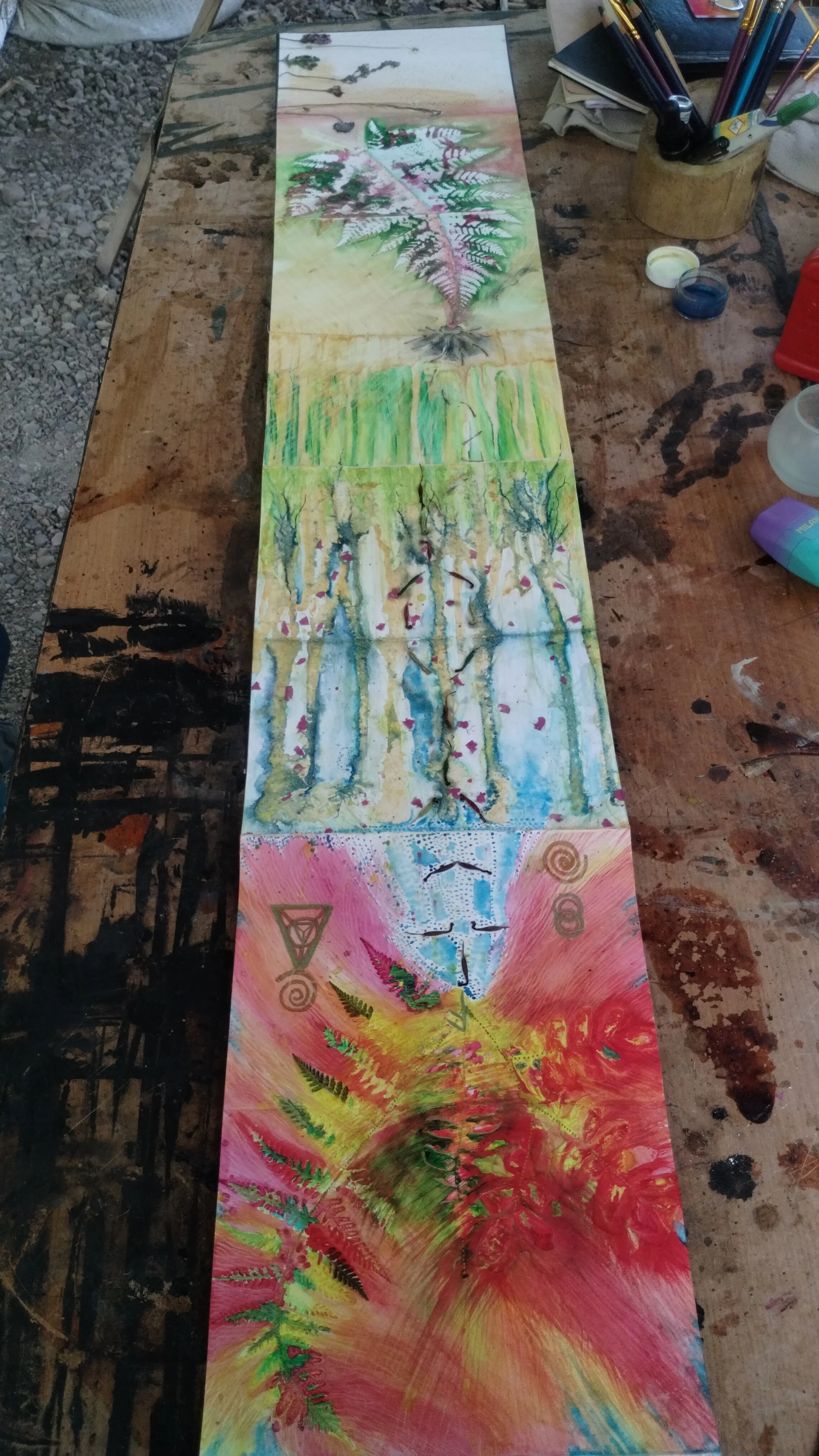
I heard salt can affect pigment by drawing the water and thus making a pattern, so I painted watery streaks and at first sprinkled, and then poured salt onto the pools of water and let them dry. The result of these salt drippings resembled crystalline structures in salt caves. Salt, after all, carries stories and history: preservation, memory, the root of the word “salary.” Colombia even has a Salt Cathedral — a site of pilgrimage and homage to miners.
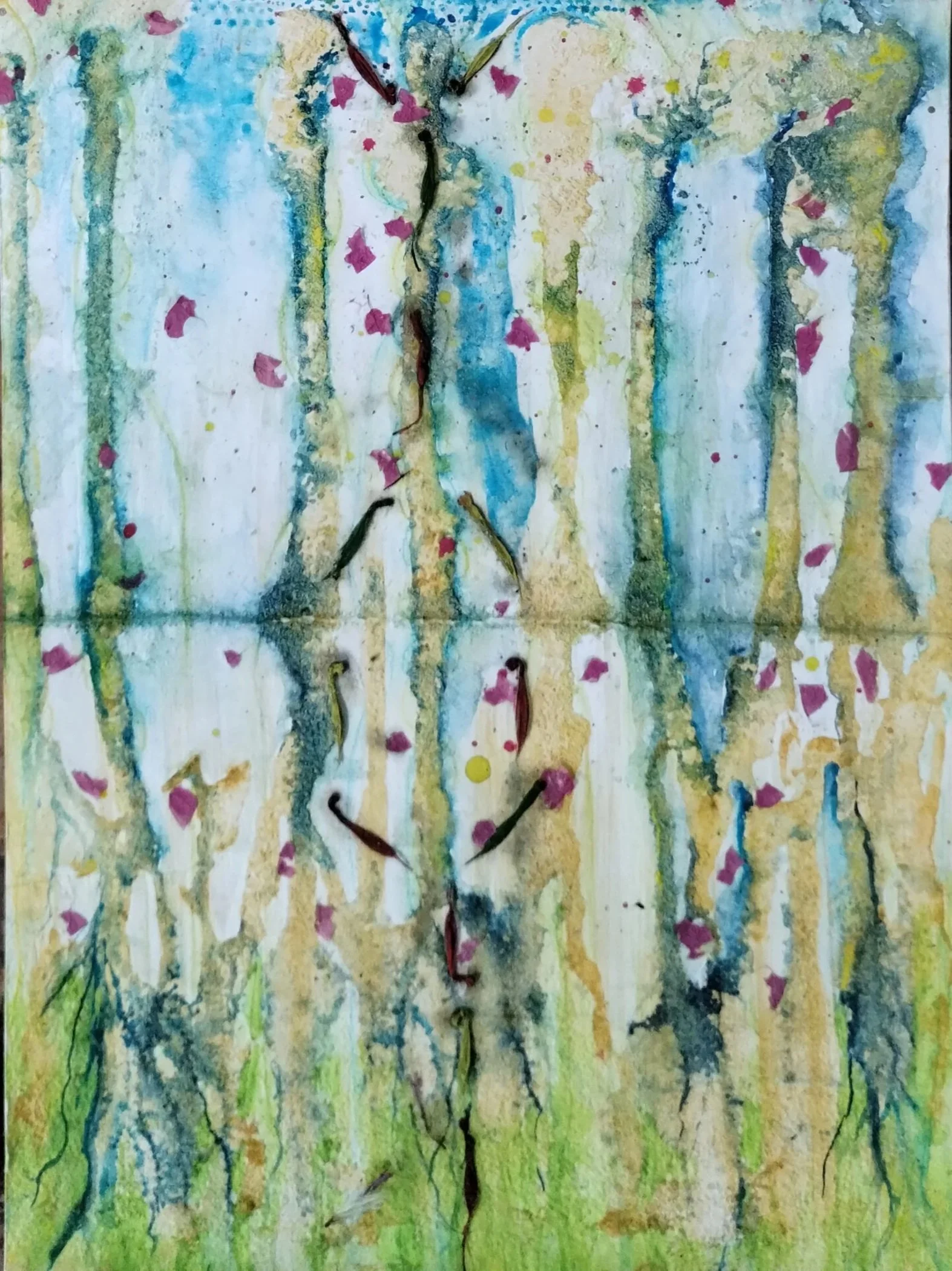
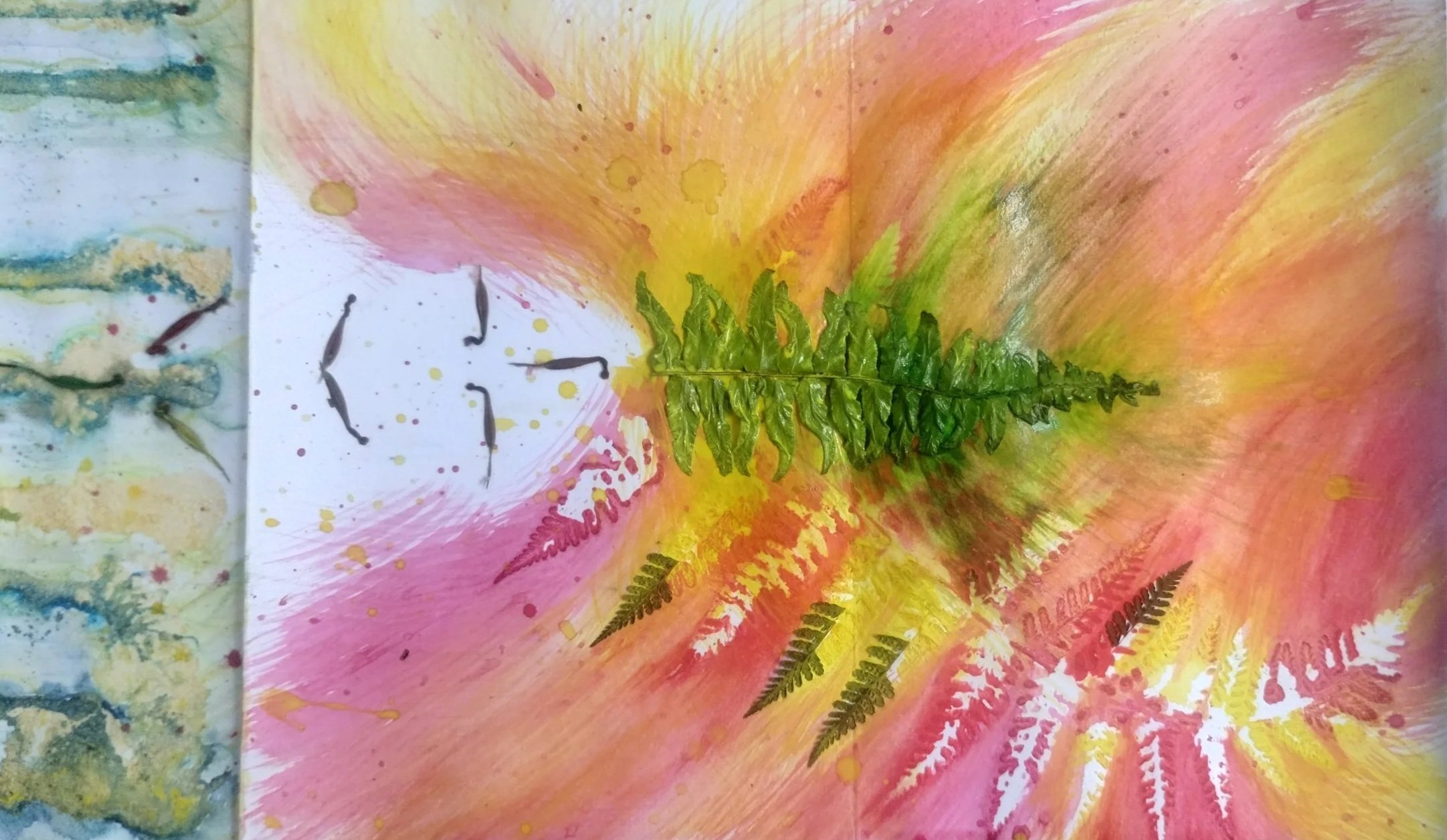
Returning the next day, I found the jungle heat had absorbed the salt through deliquescence. I grabbed my paints and touched droplets of paint upon the watery salty surface. The liquid created channels for the pigment that formed neuron-like synapses, mineral pathways conducting colour — like the nervous system itself. After it had dried, the salt crystals sparkled on the page, adding to the magic of this process. Salt is crucial for neuronal function, and the idea that salt conducts impulses made the imagery feel literal and symbolic at once. It felt alchemical.
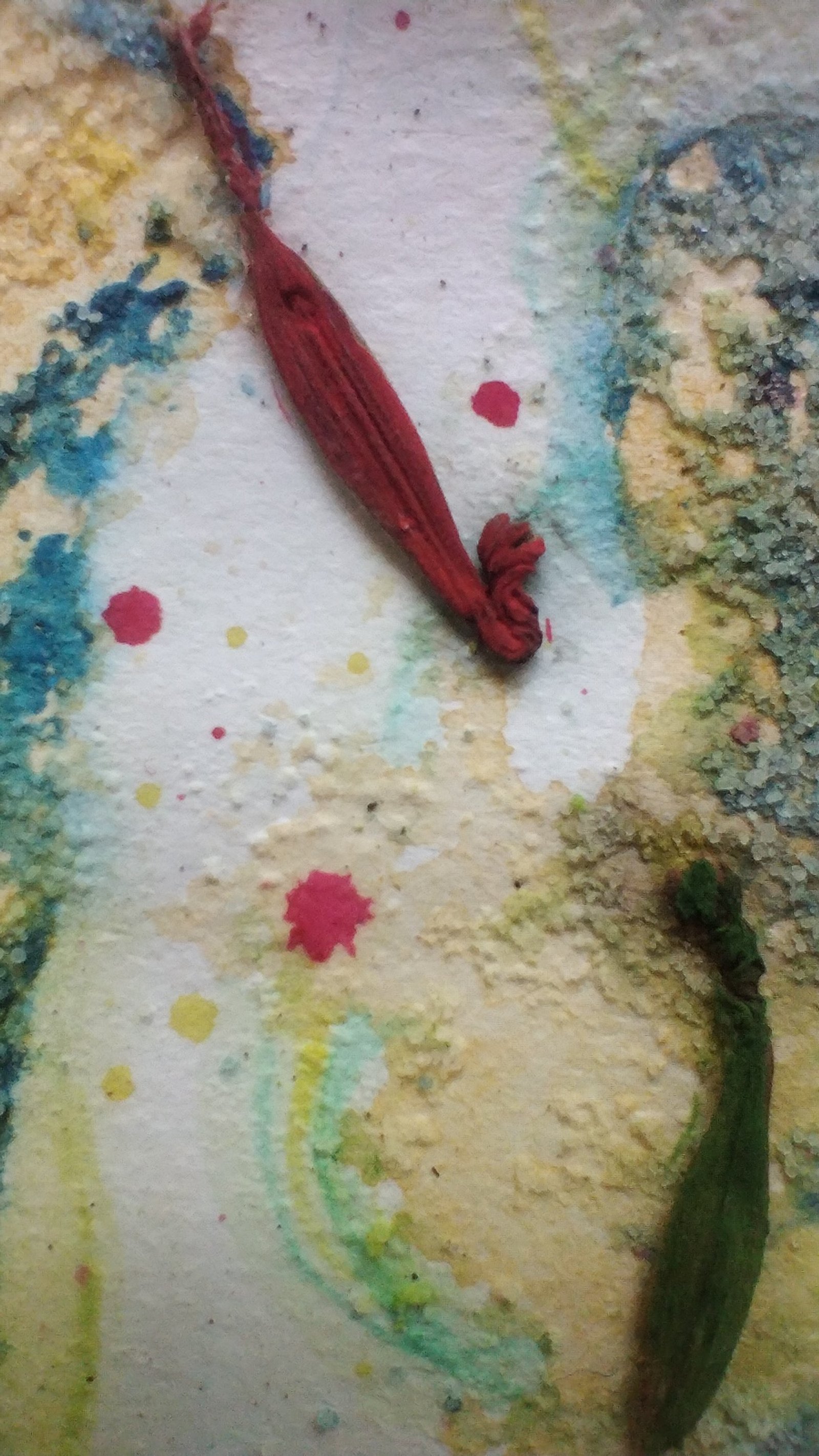
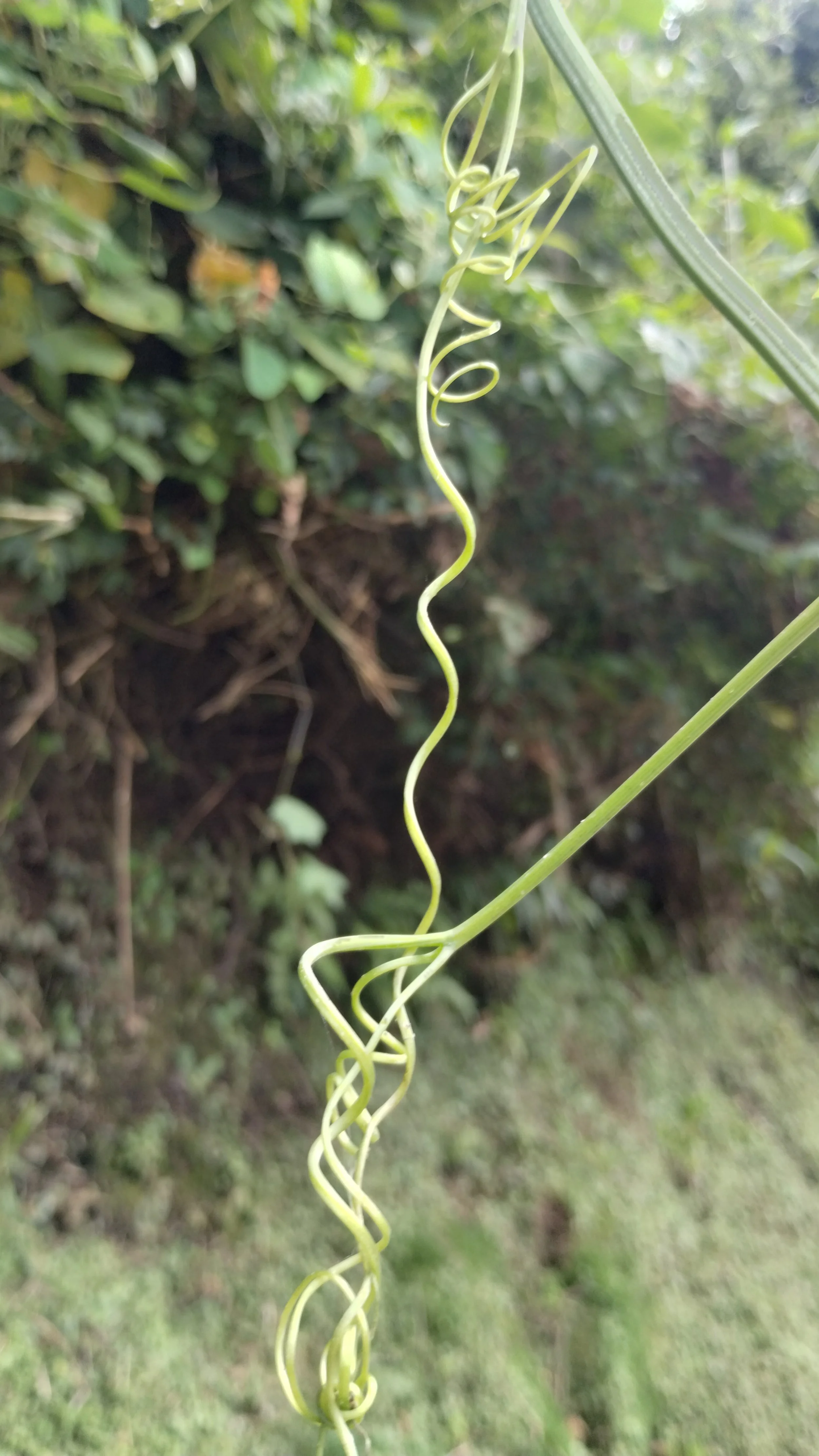
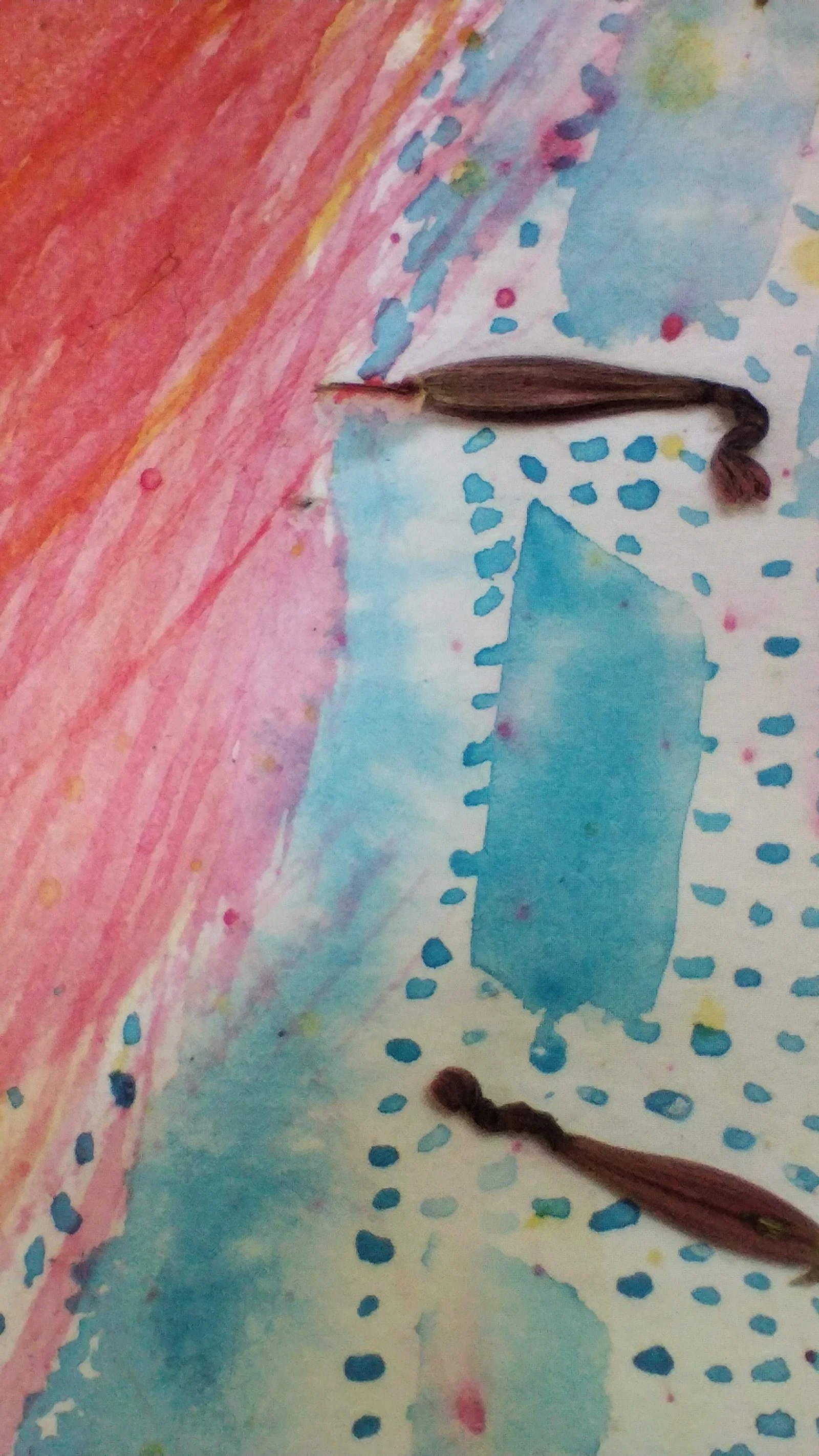
After another reflective pause, my attention had turned to tendrils , their look and behaviour ‘elevation through exploration’ I dubbed this stage. The Bougainvillea seeds looked like seahorses to me; they curled with the tendril energy — not to smother, but to support and elevate.
Seeds, Benzene, and the Ouroboros
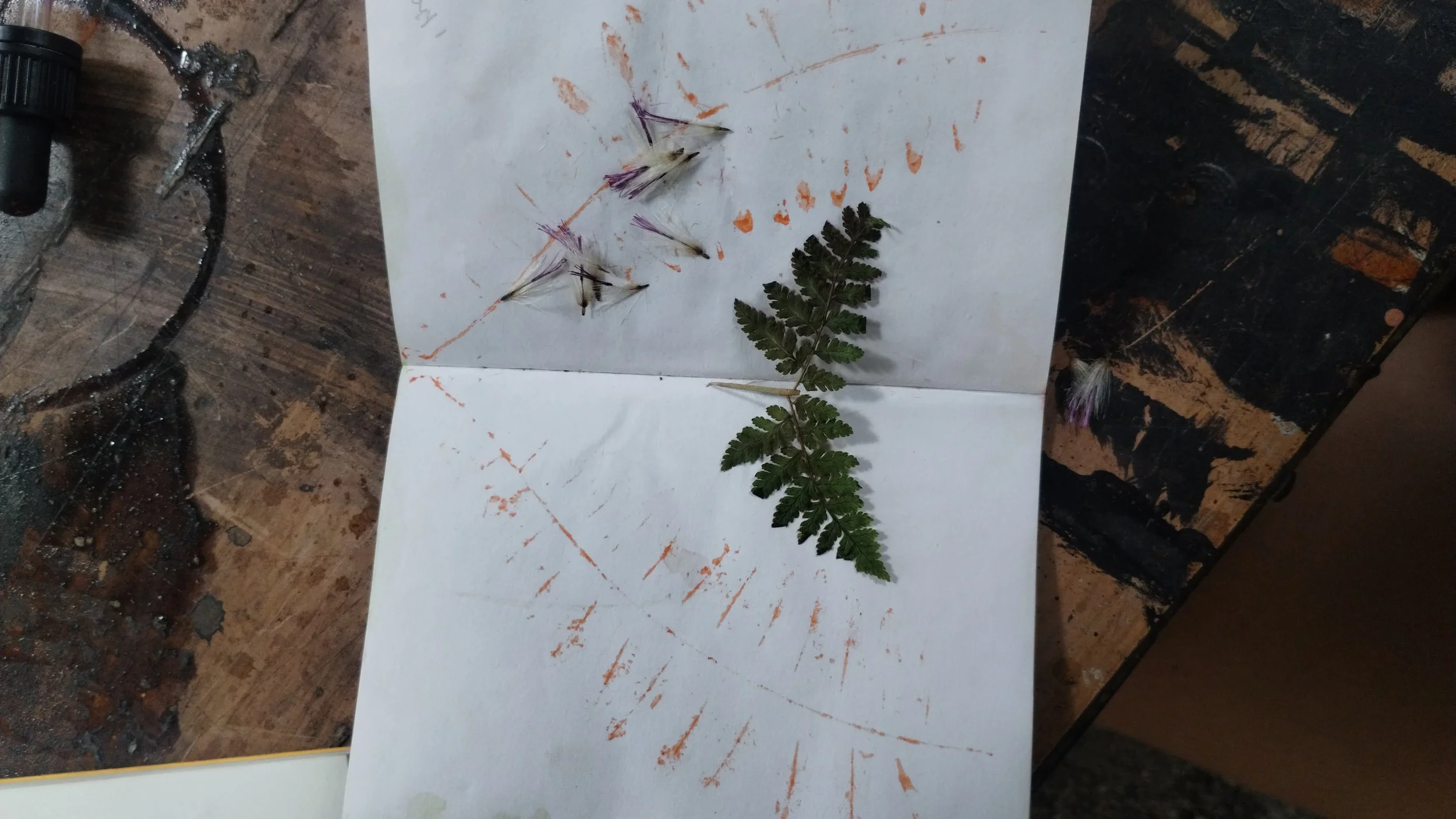
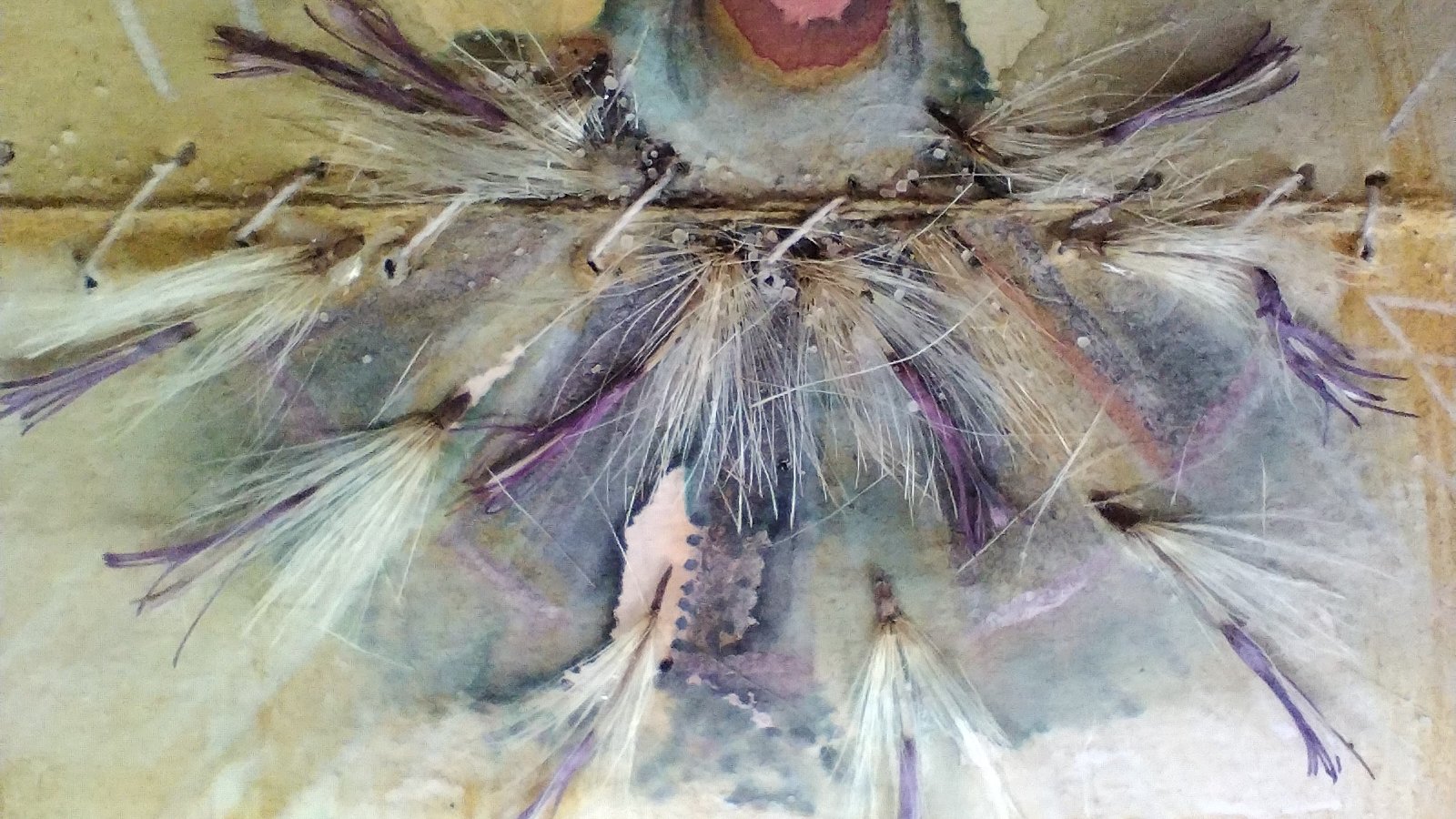
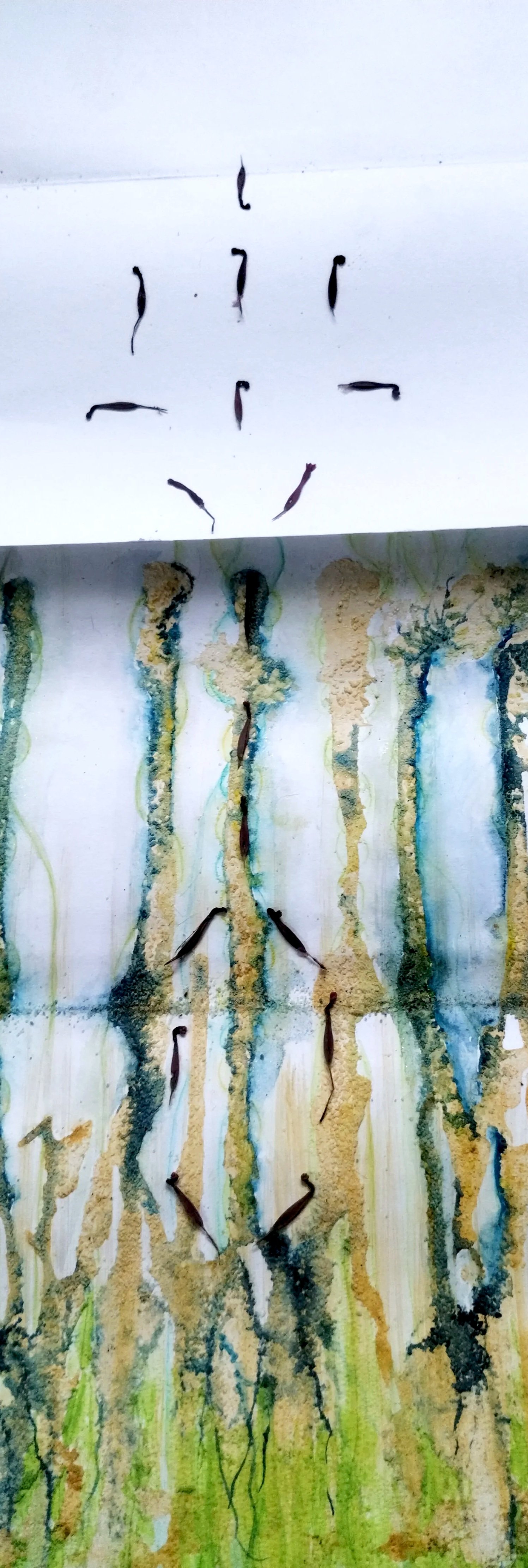
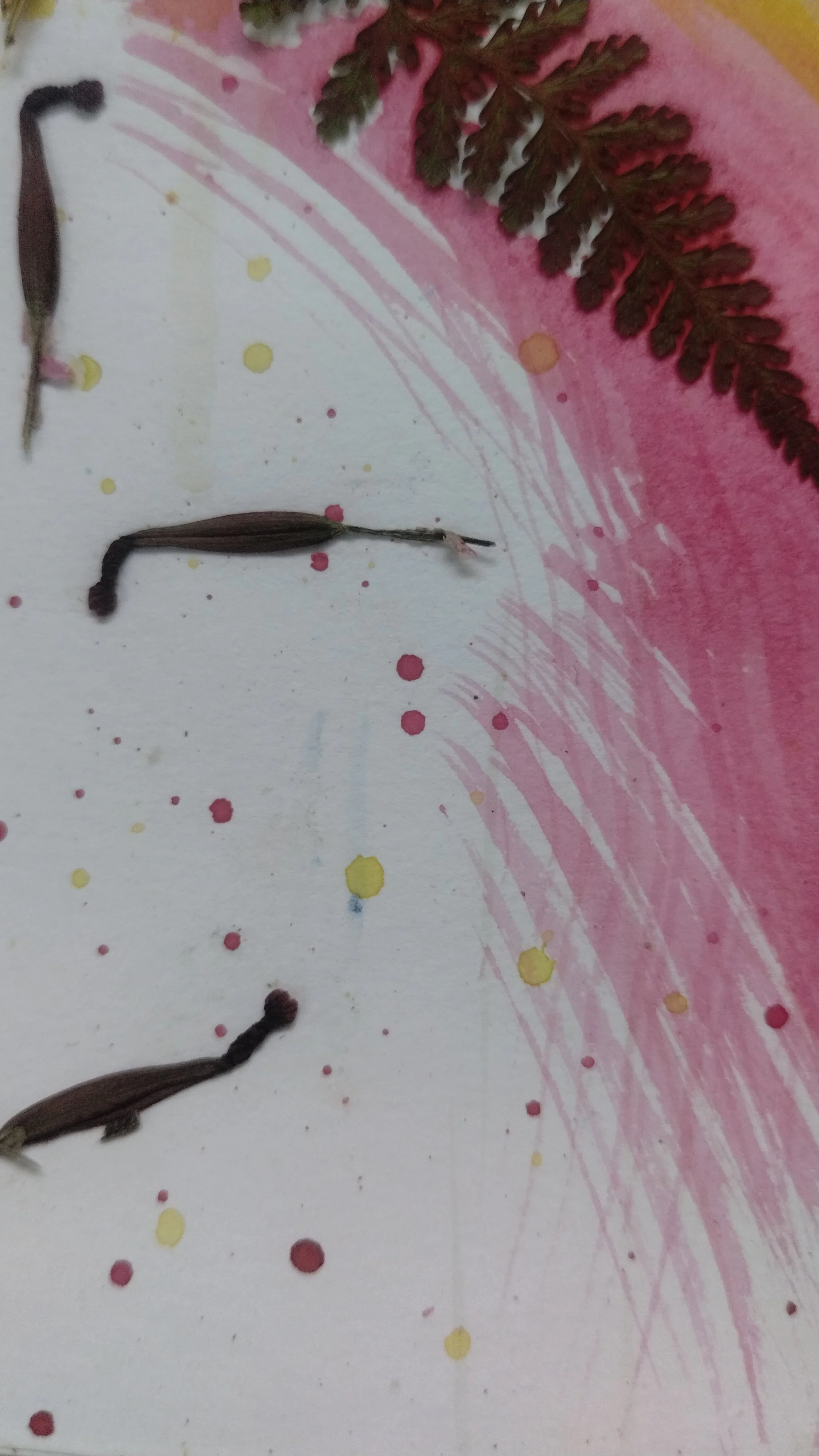
Leftover knapweed seeds from Switzerland were added as a second layer to the crowned Mount Rigi, lifting the imagery from queen to empress. I also had dried Bougainvillea* flowers that were served at a breakfast a week or so prior, so I removed their seeds and experimented by scattering them across the salt-neuron field. That didn’t feel right, so instead I arranged them in a sequence that later revealed itself as the benzene ring — echoing Kekulé’s dream of the Ouroboros.
Kekulé, who dreamt of dancing molecules forming a serpent — the Ouroboros (a symbol of alchemy)— and woke with the image of the benzene ring. The hexagon shape echoed the honeycomb being made in my outdoor studio; perhaps that pattern had seeped into my subconscious.
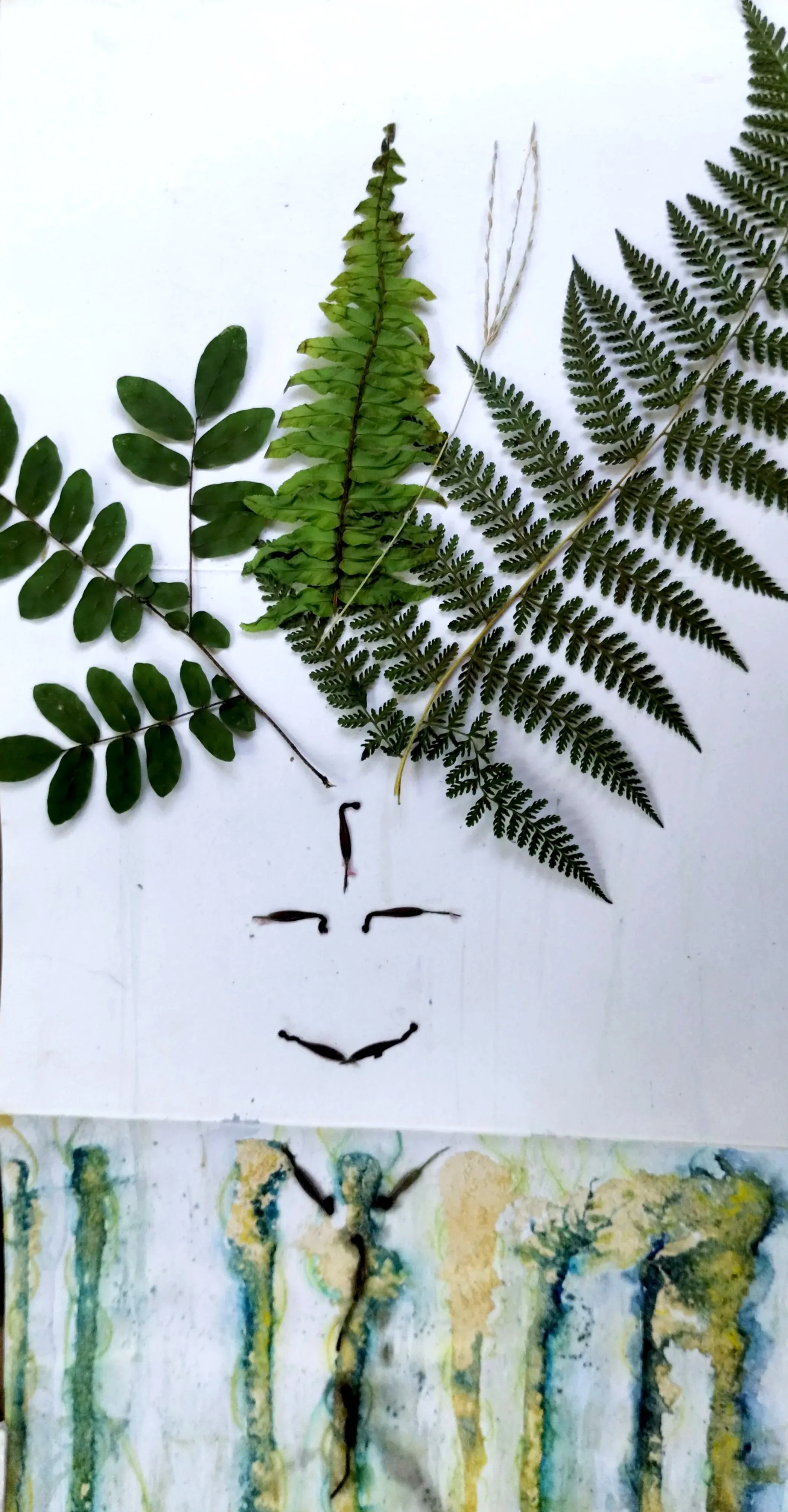
I consciously shaped the last three seeds into a face on the following page. Later on, from another angle I saw the seed pattern looked like a woman dancing, and I tore the dried Bougainvillea petals into pieces and scattered them on the salt neurons and seed sequence — part celebration confetti for the dancing woman and part ash - anticipating what would explode on the next page.
*Bourgainvillea flowers were also traded and planted in ports and railways meaning passage and permeability
Sunapse, The Weaver, and Syntropy
During this time one of my videos, Sunapse (a portmanteau of sun + synapse), was played on a big screen in Times Square, New York, as part of International Peace Day. Sunapse speaks to life force creating growth in the body and in community, the movement from individual to collective.
Research into South American archetypes led me to The Weaver — who threads chaos into order, weaving worlds together into a cohesive tapestry. I resonated deeply with this. It echoed my earlier Looming milestone from Map #2 (Navigating the Stars) and the principle of Syntropy, the meditation app I co-founded.
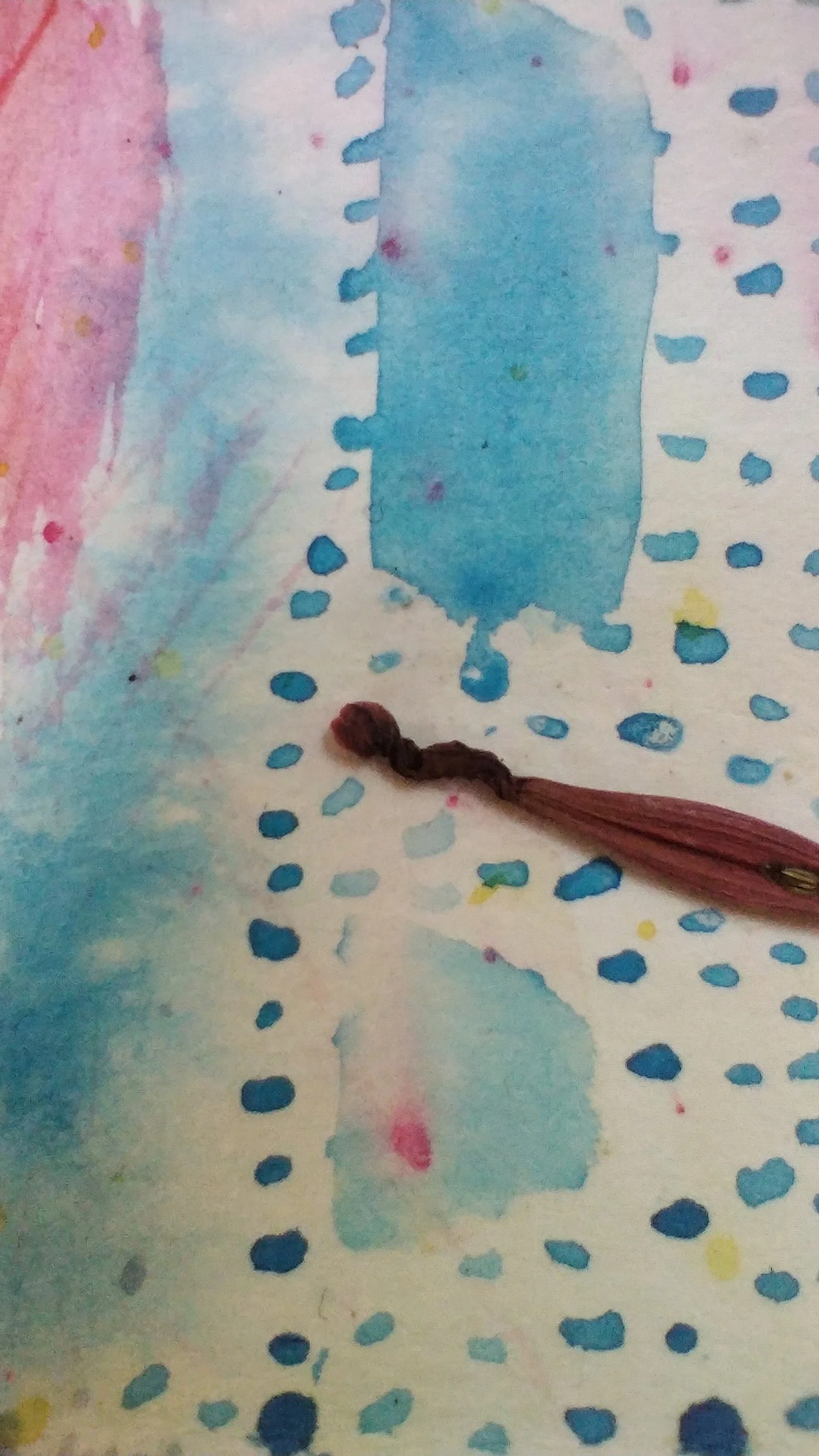
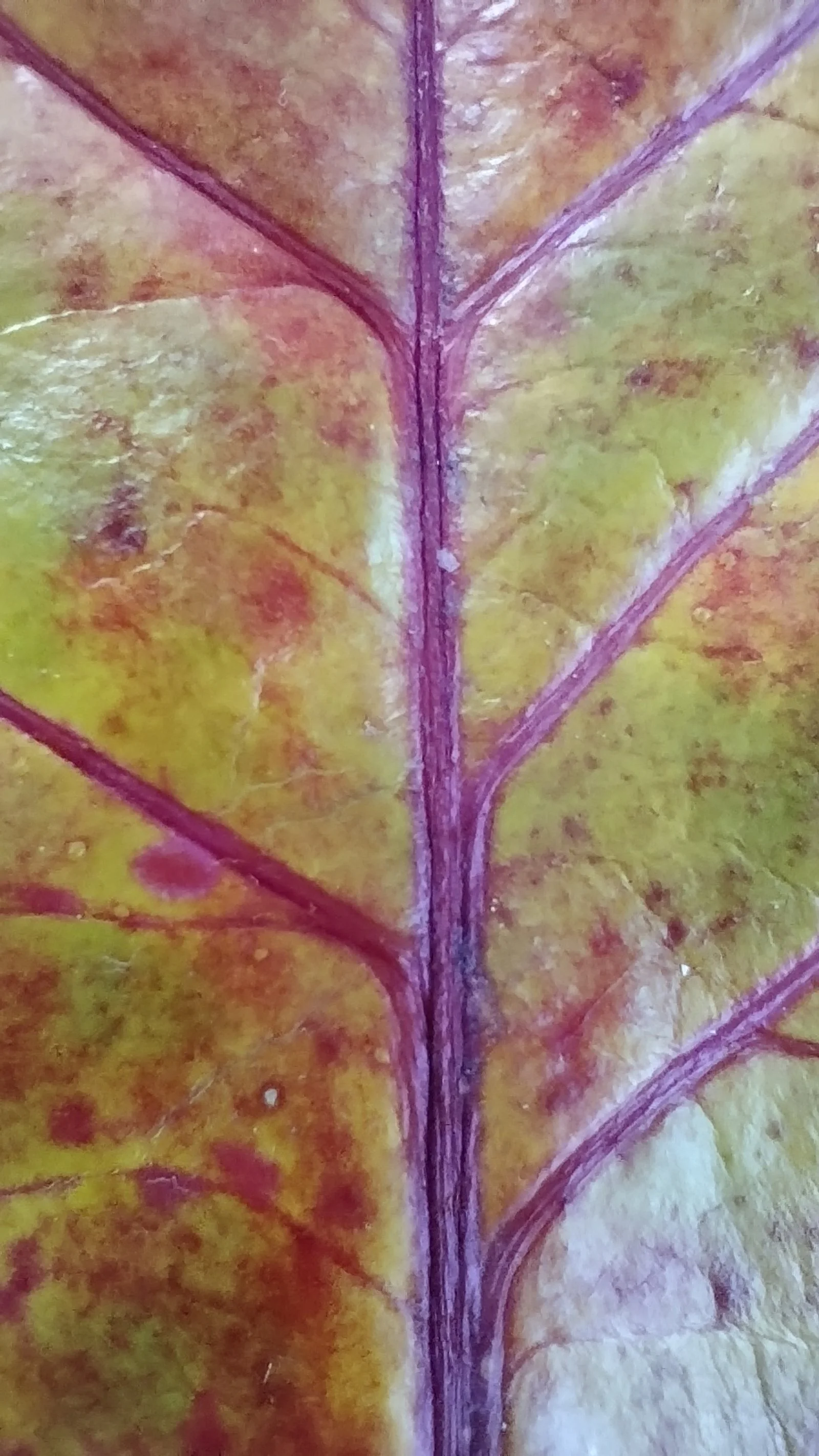
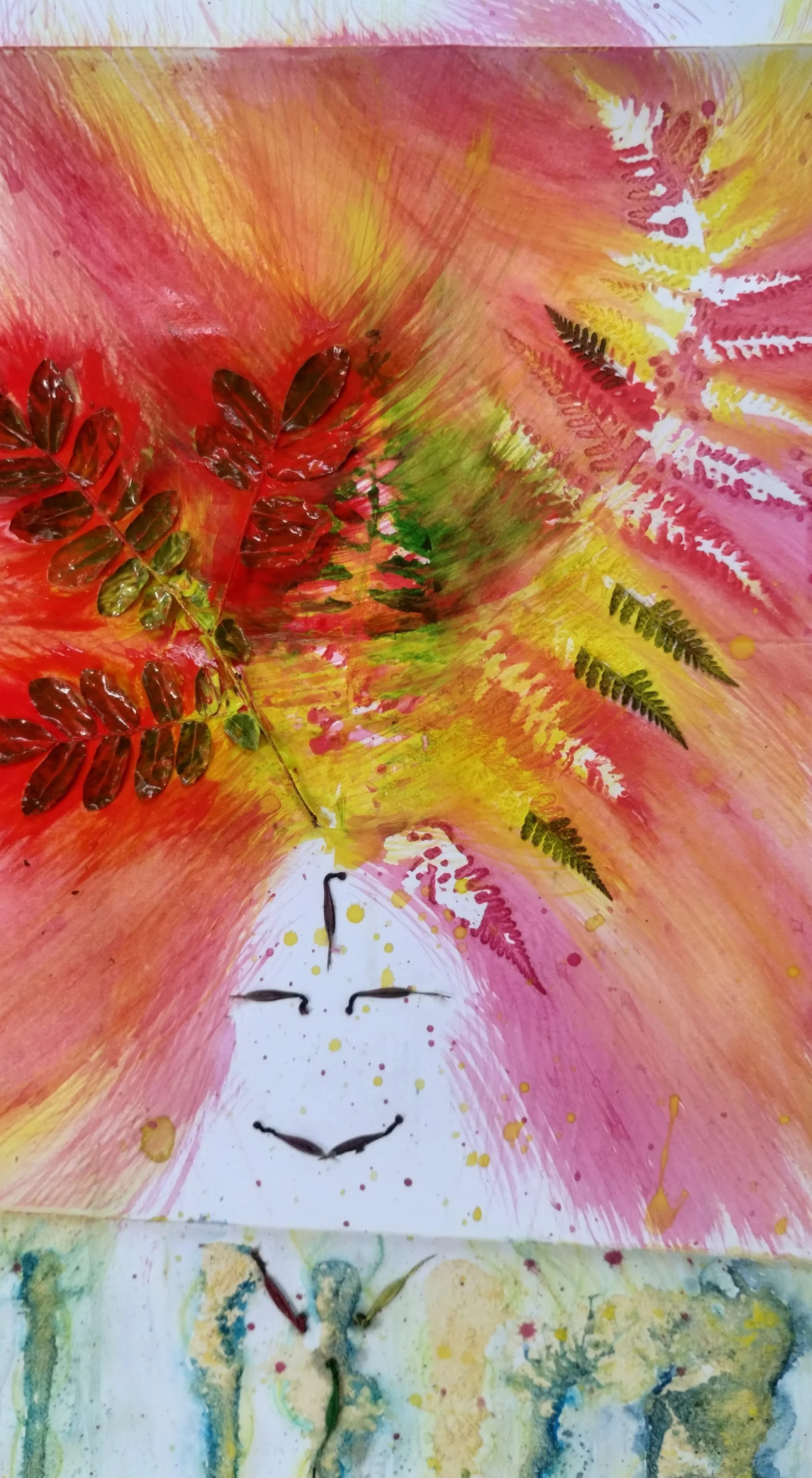
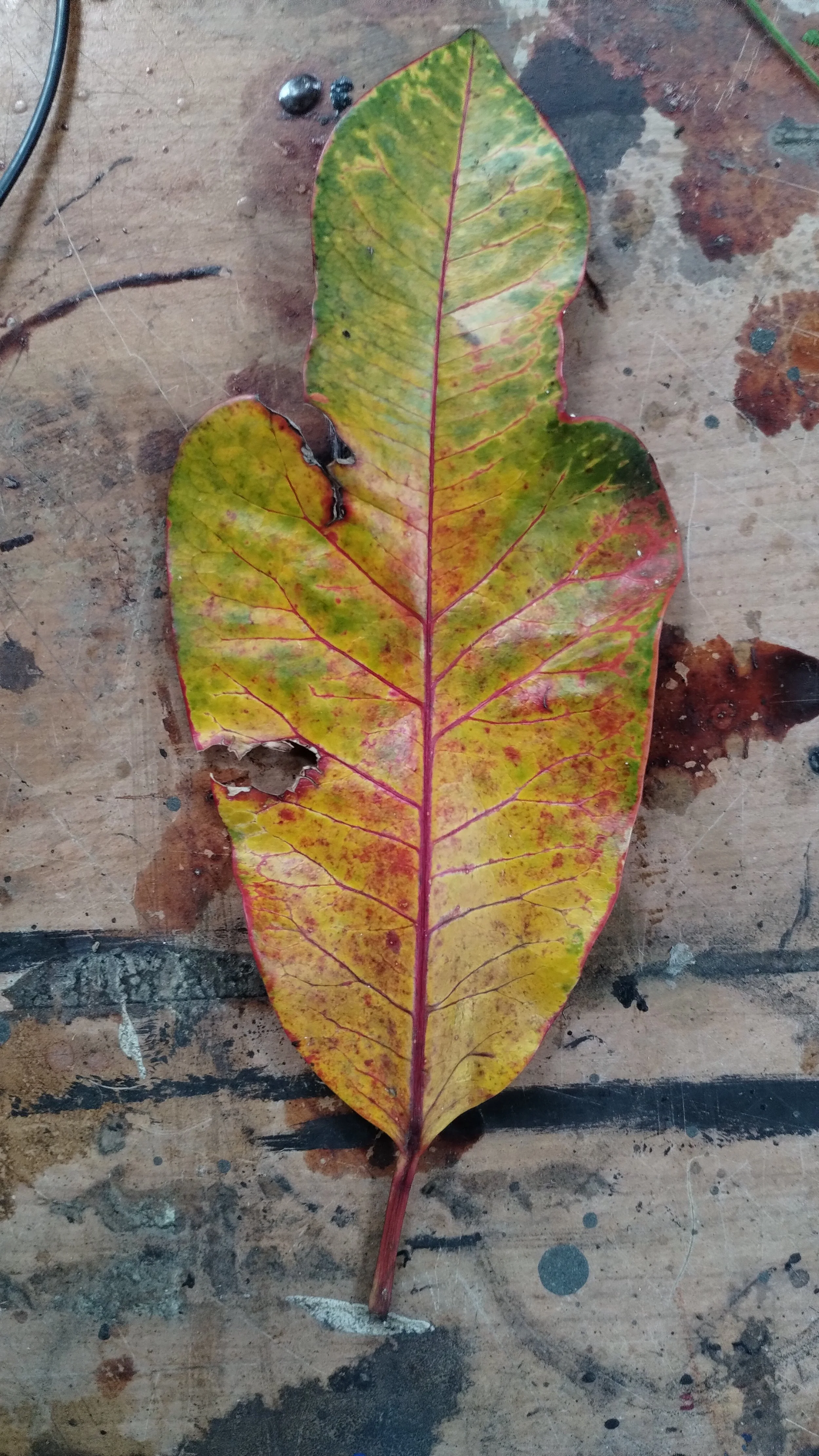
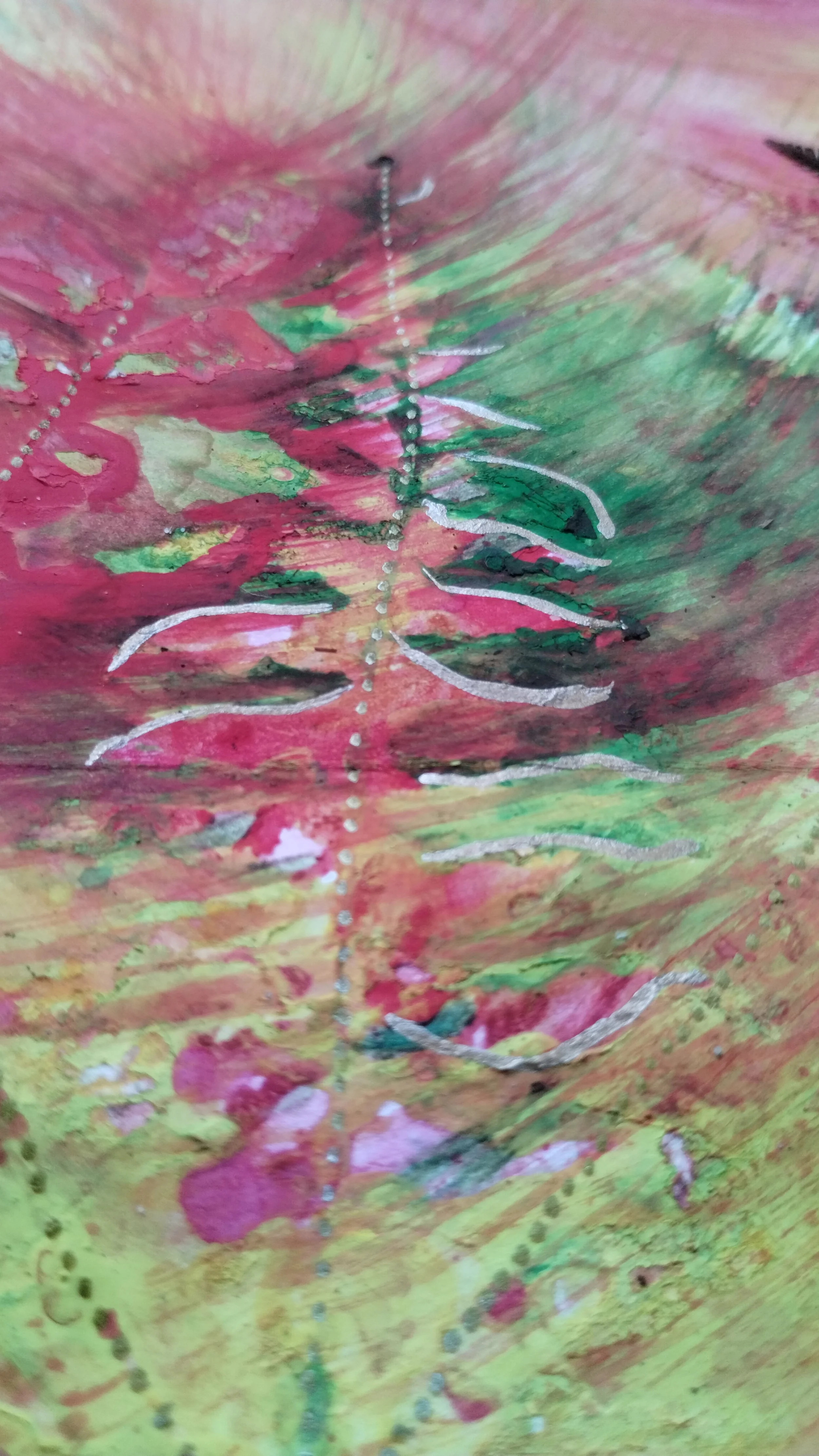
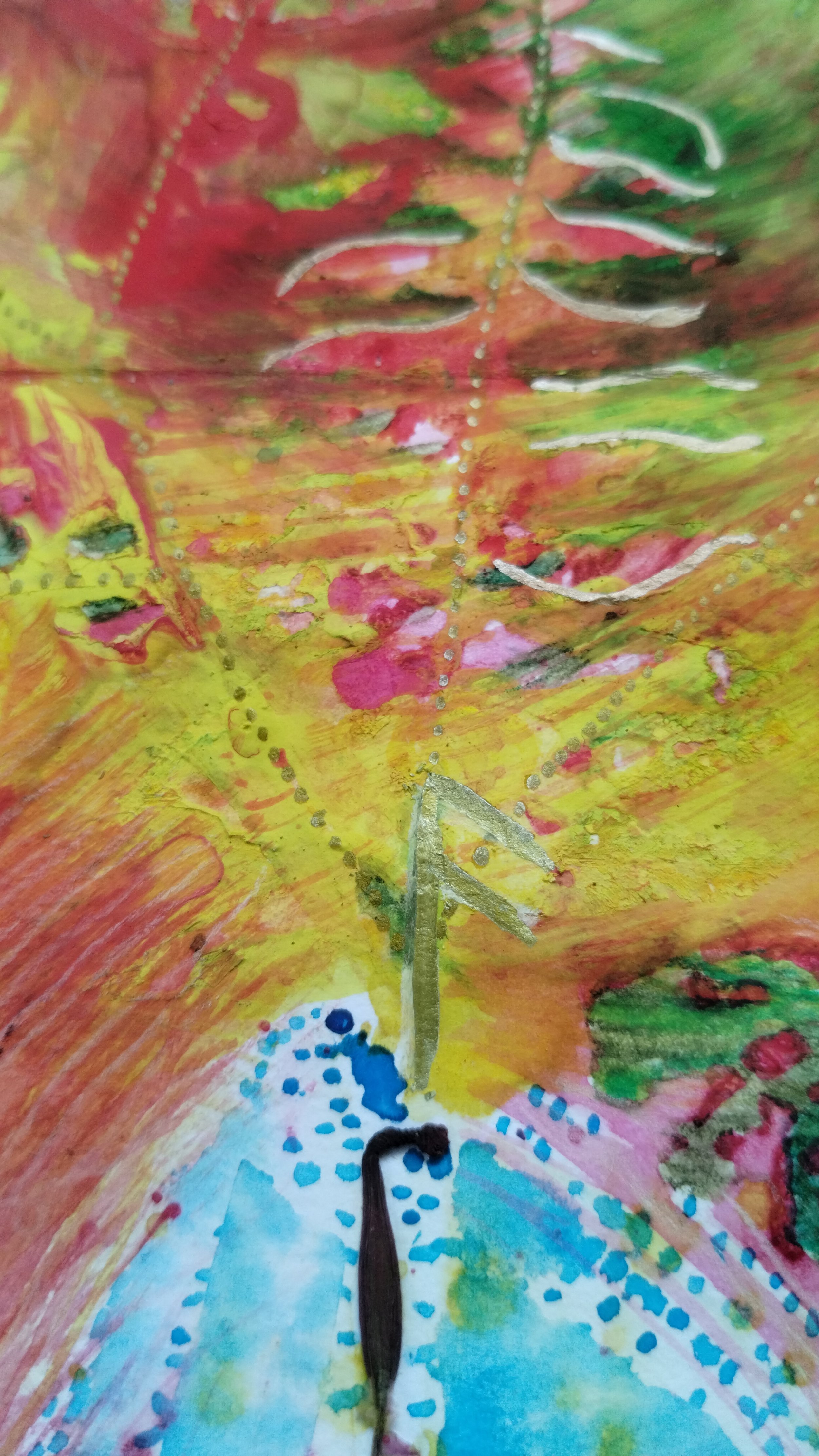
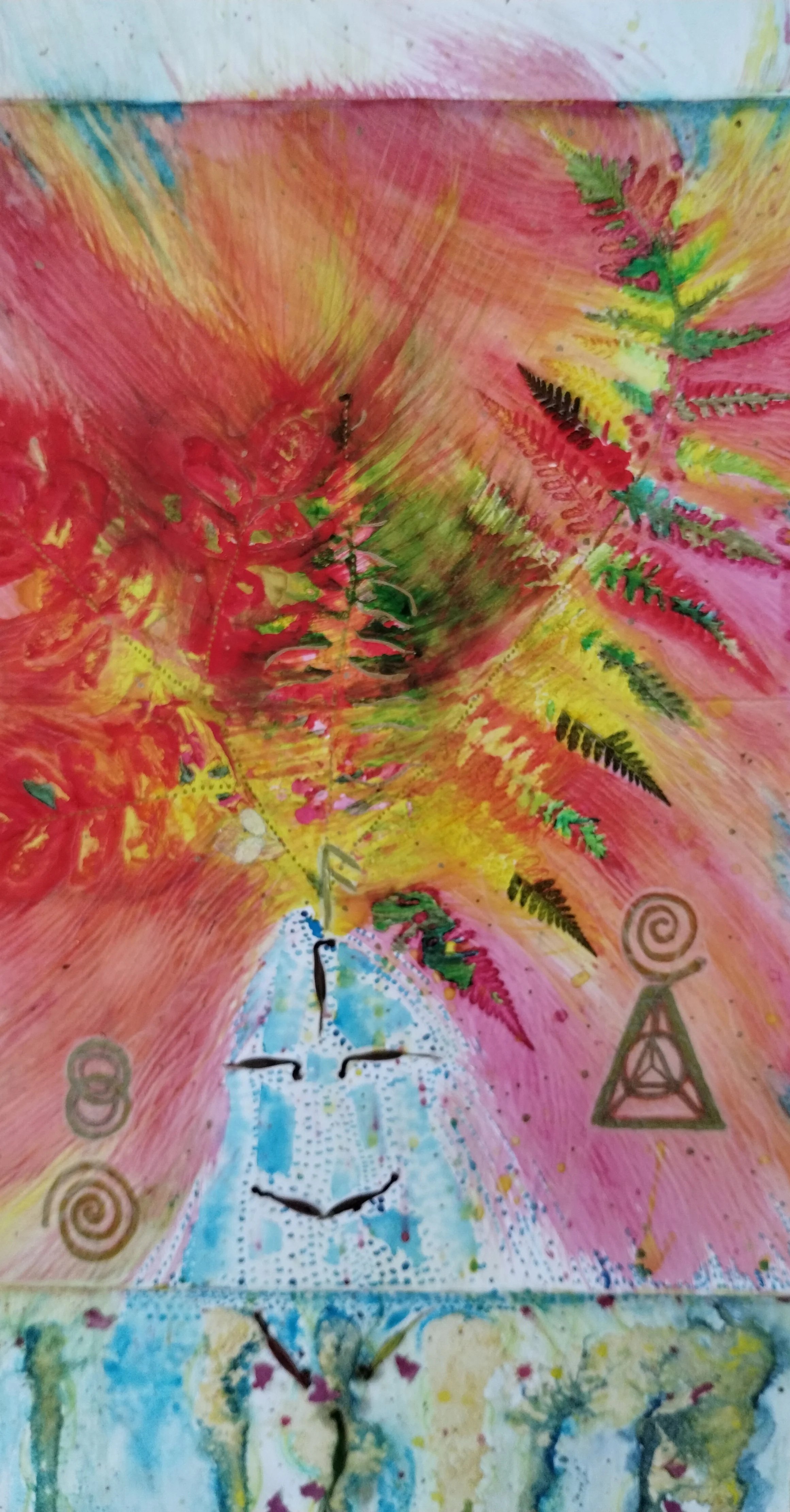
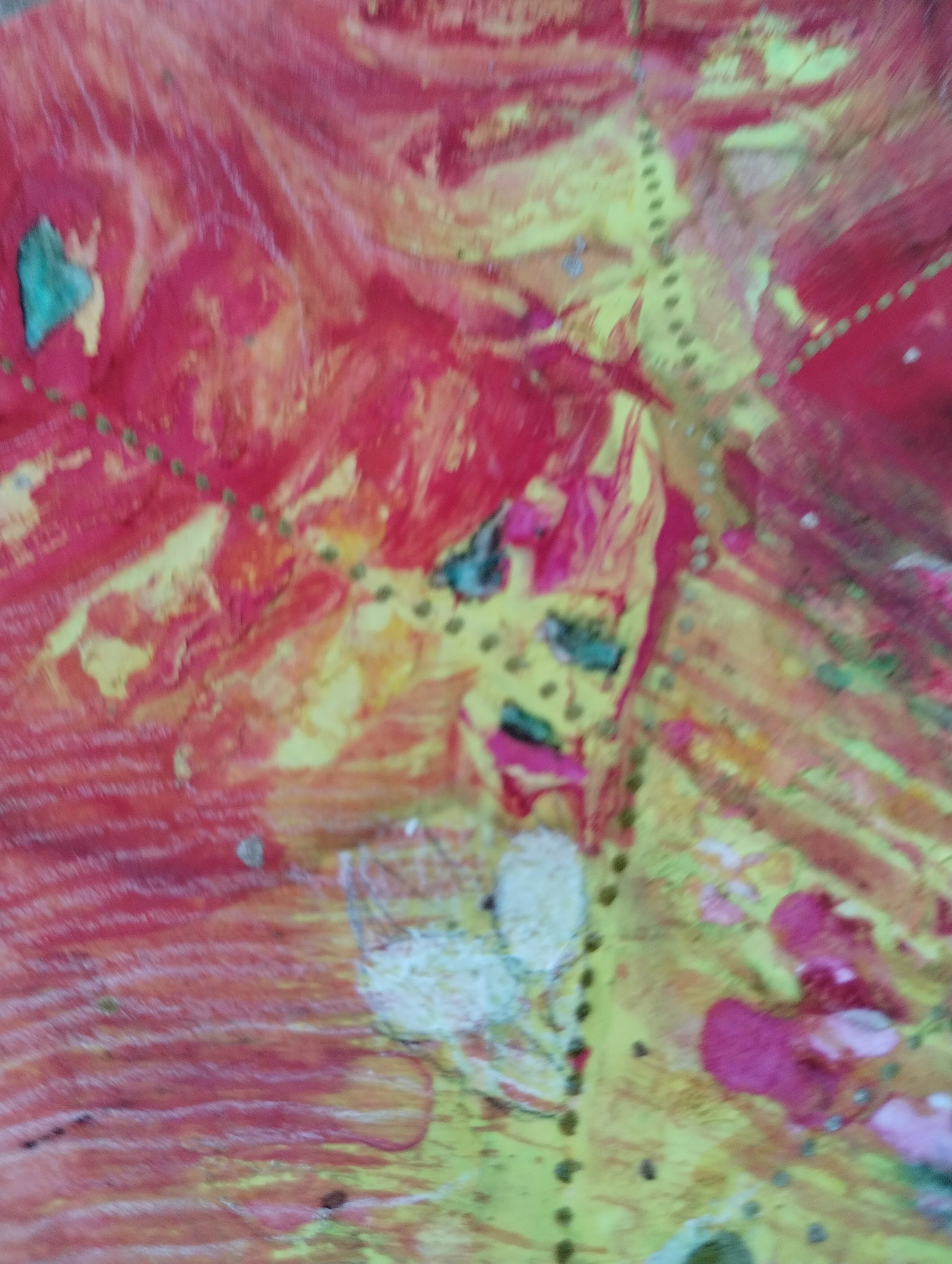
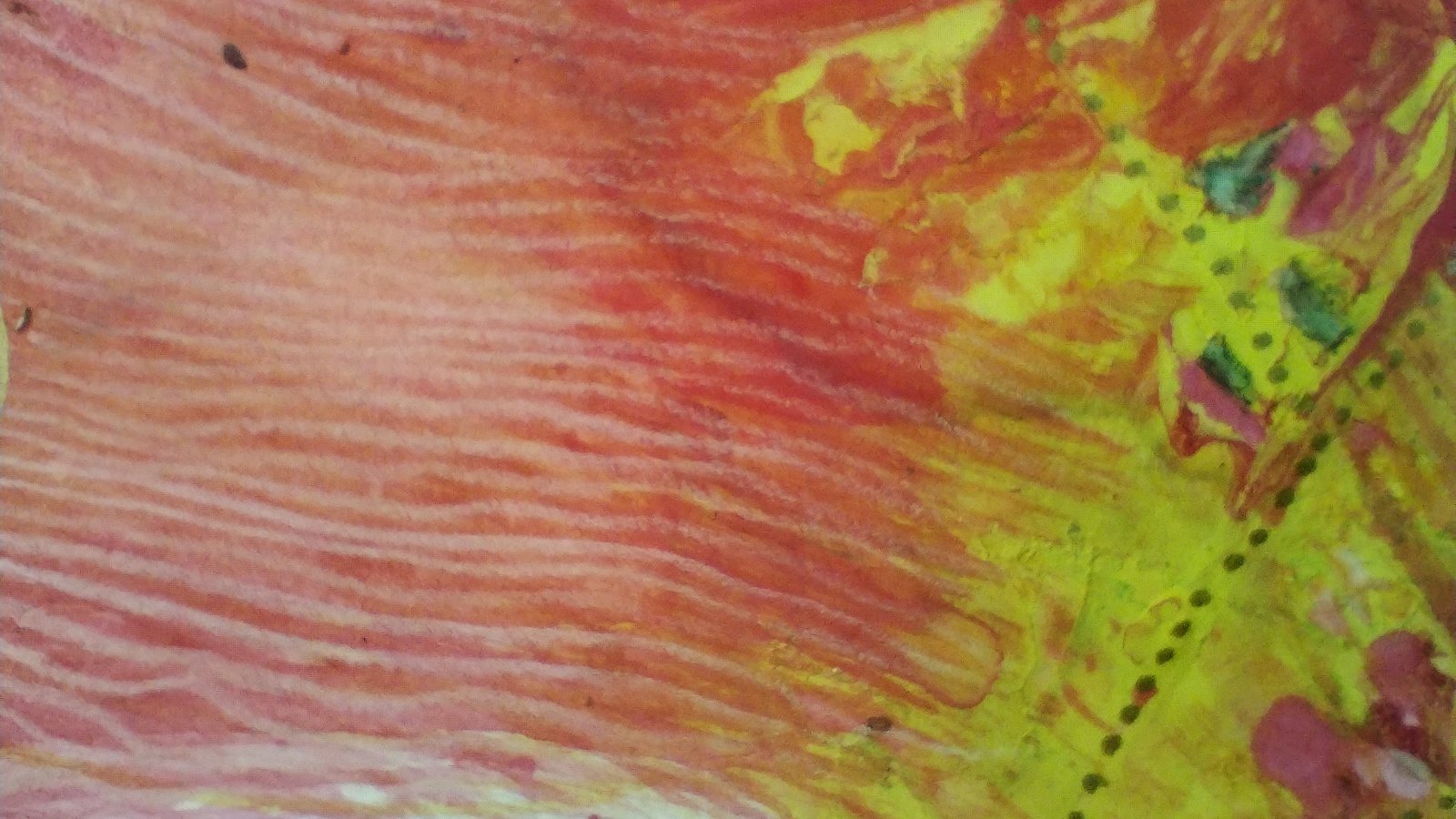
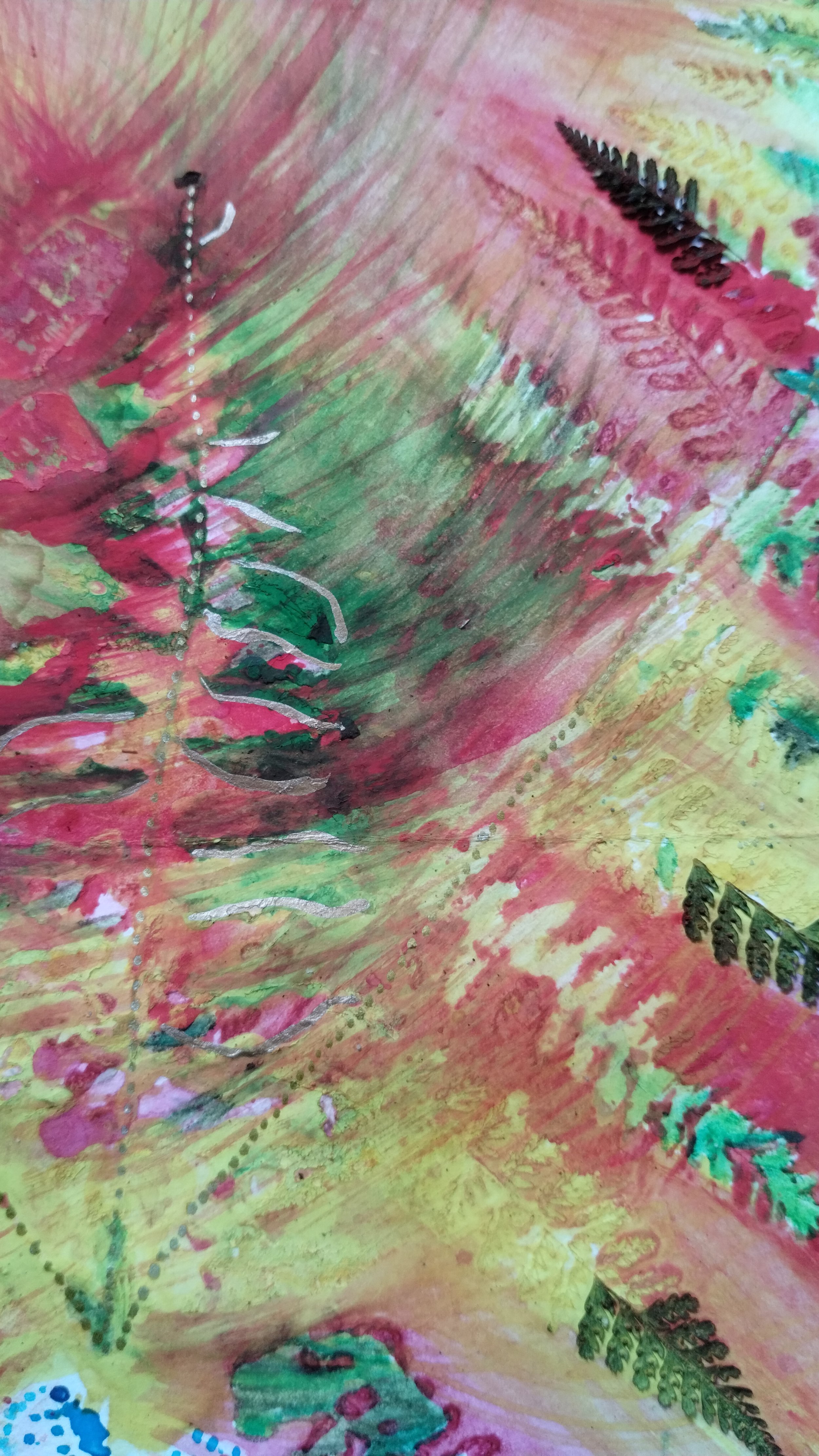
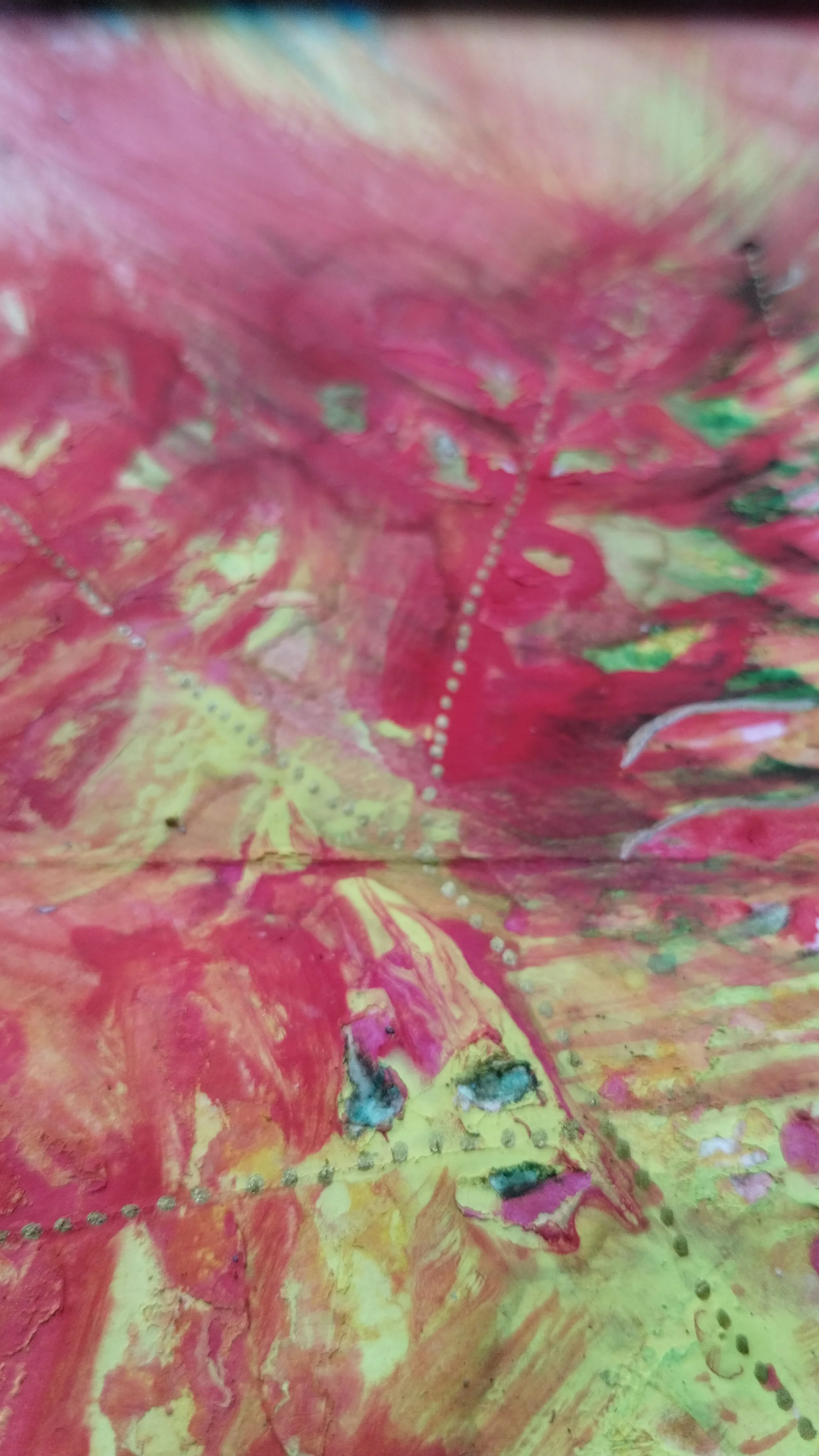
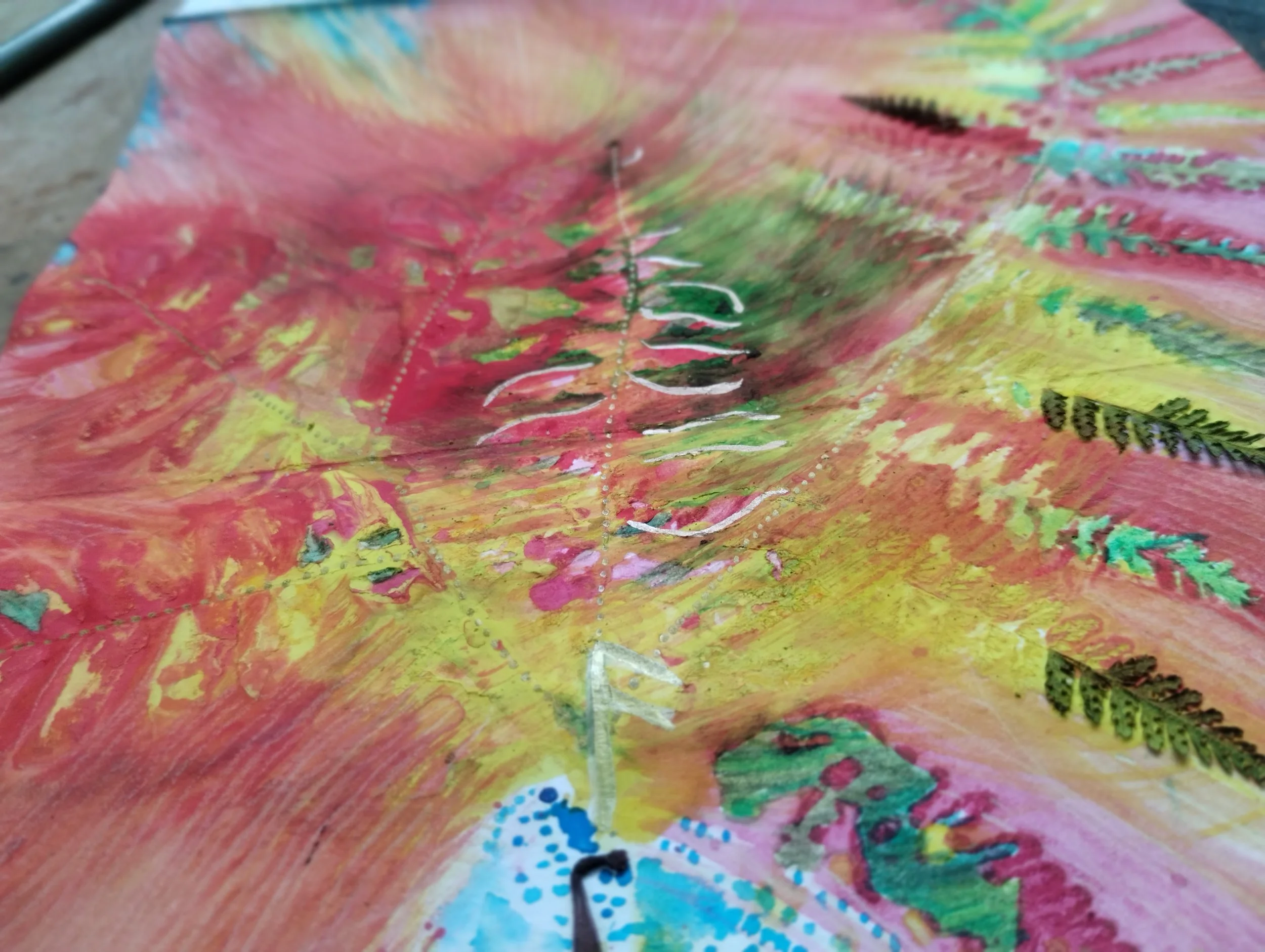
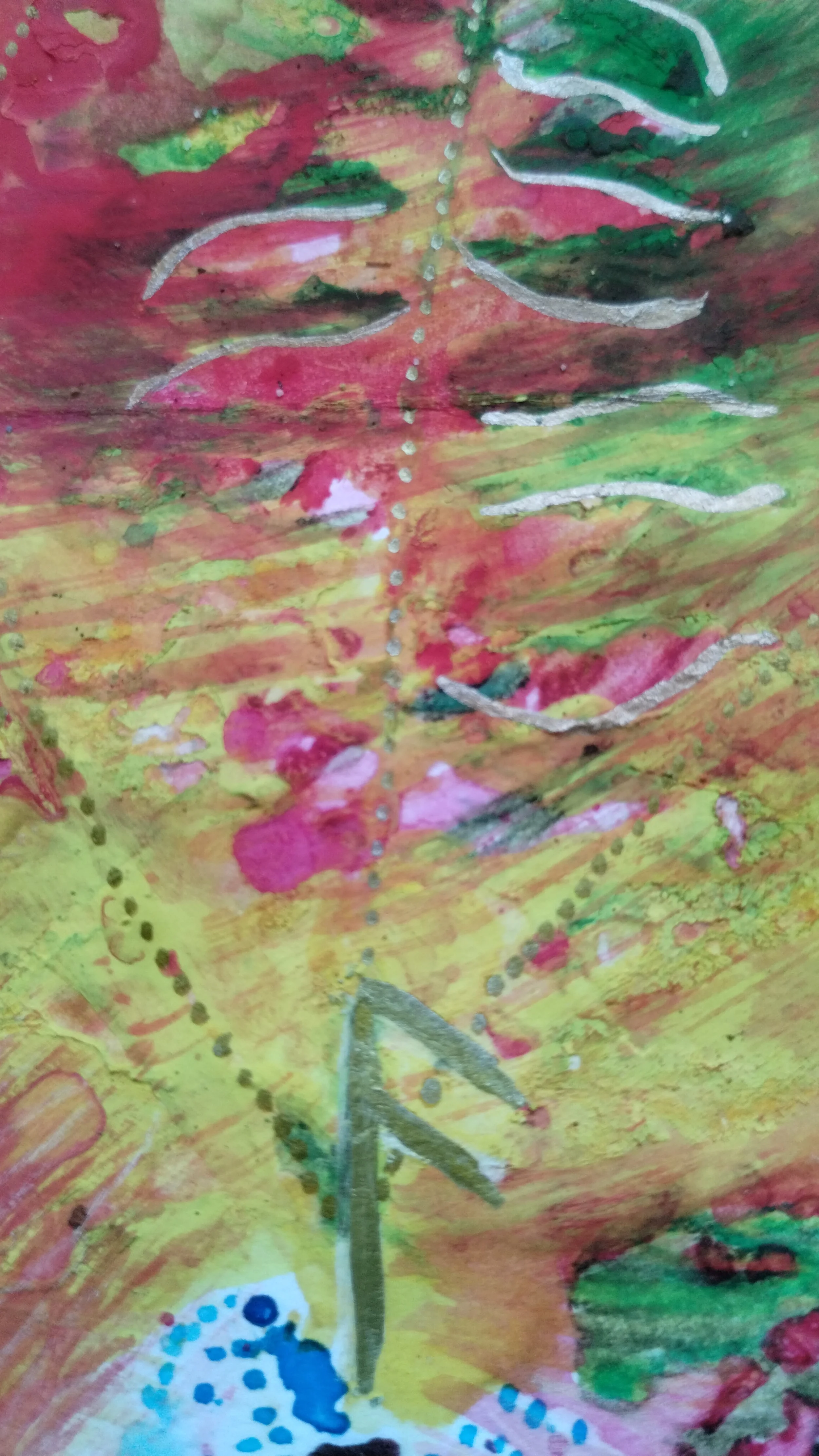
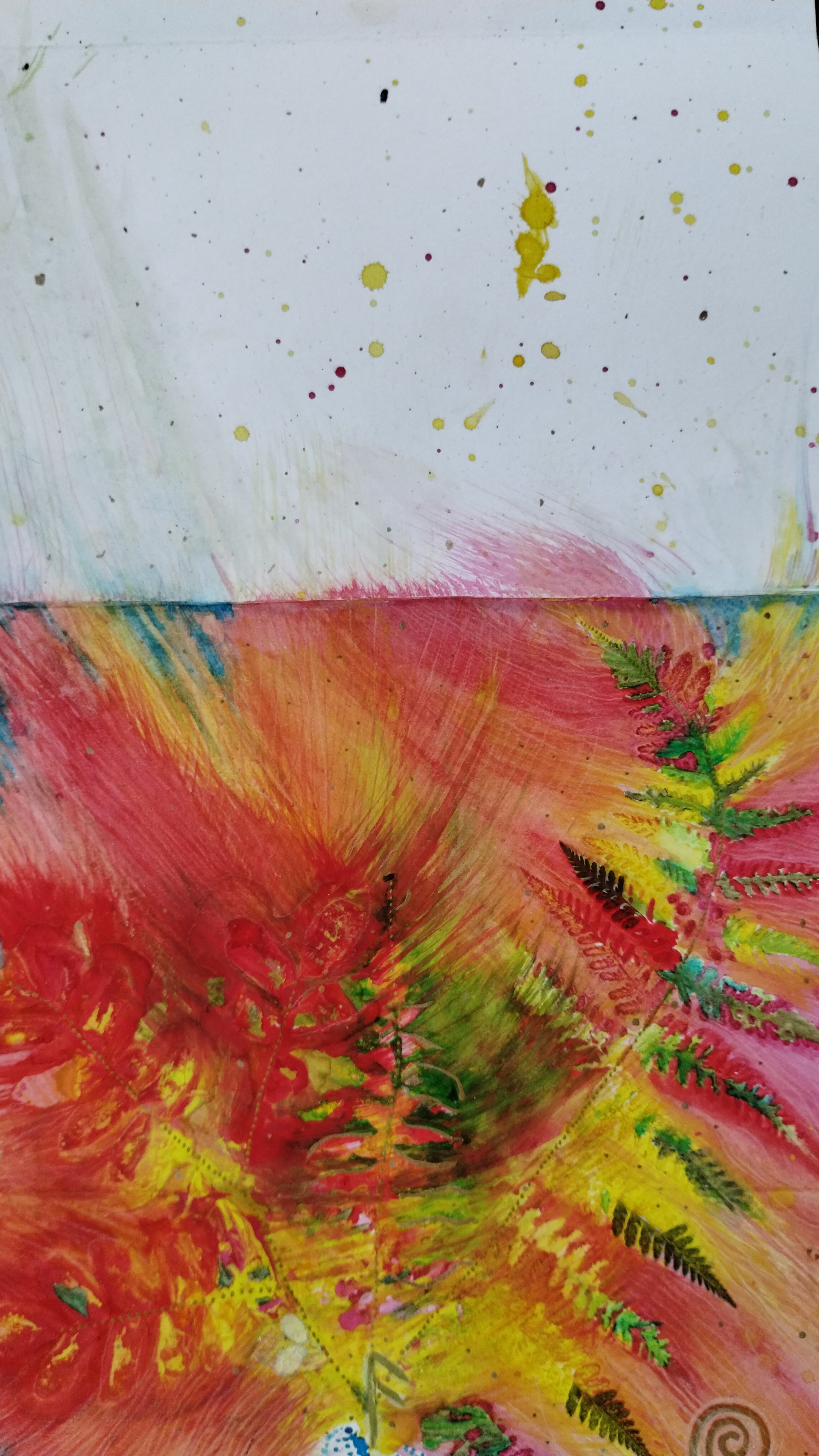
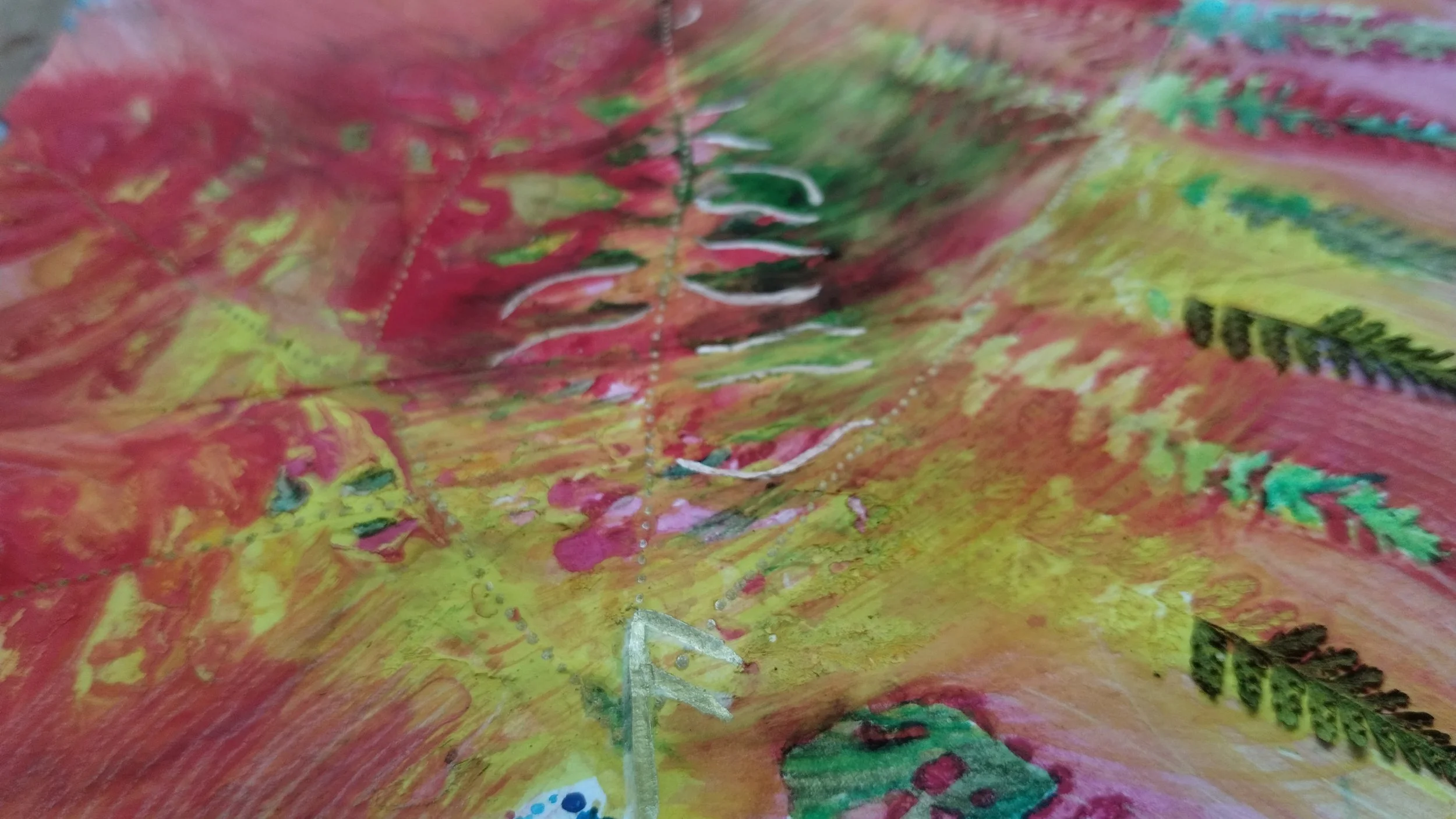
Spotify joined in again, with Alexa Sunshine Rose’s We Are Weaving Our Lives. I began dot work (one of my favourite techniques), and finally used the ferns that had guided me from day one: Nephrolepis exaltata (to elevate), Albizia lebbeck (sometimes called “women’s tongue” — a name I’m reclaiming), and Athyrium filix-femina (doorless female). The fern headdress burst with colour and life — inspired by the bright and beautiful colours of Terminalia catappa leaf (meaning “ending”).
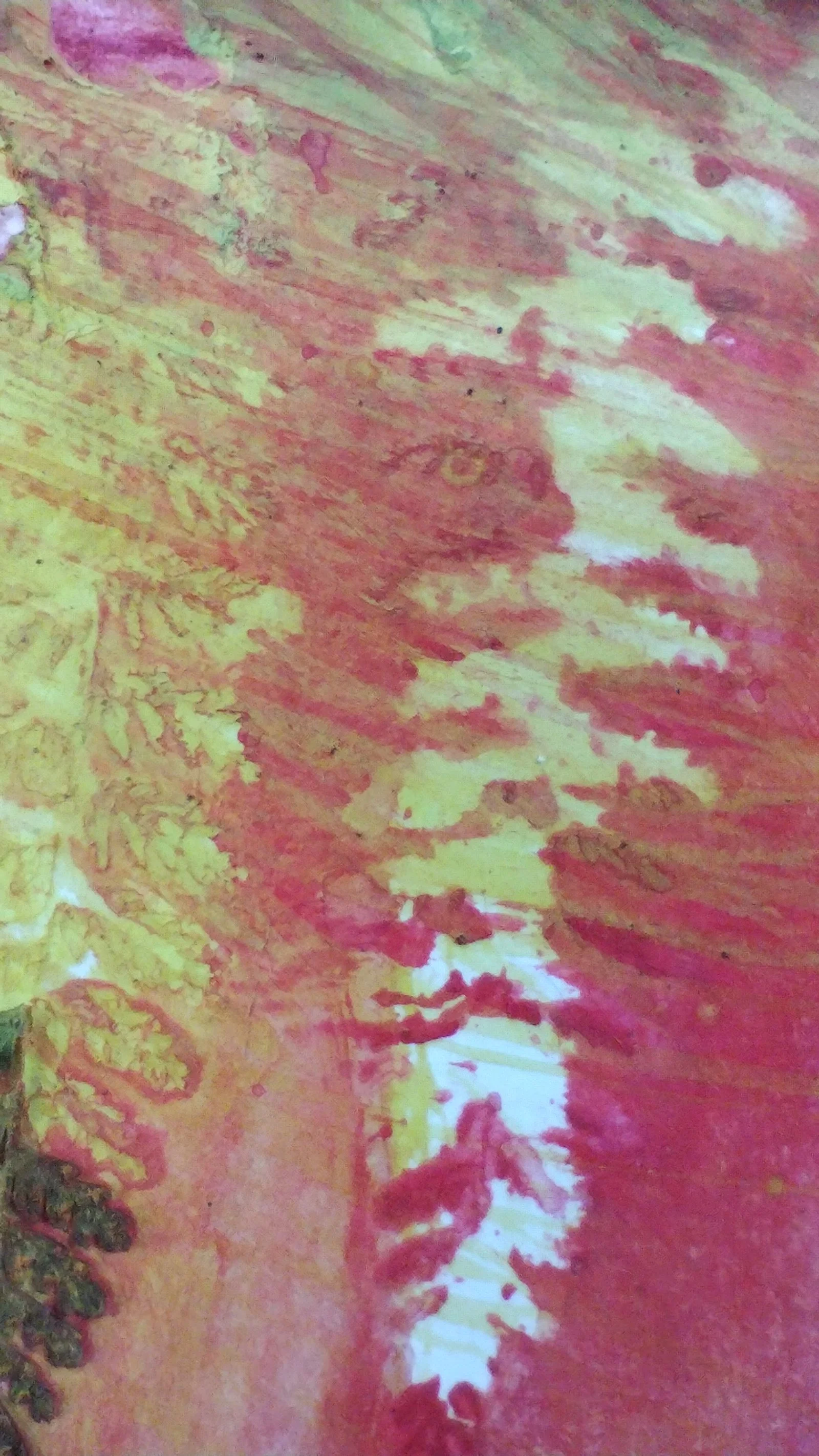
Inspecting the prints, I noticed a baby dragon in the marks. A goddess emerged. Her presence was magnanimous, as striking as a phoenix and as nurturing as honey.
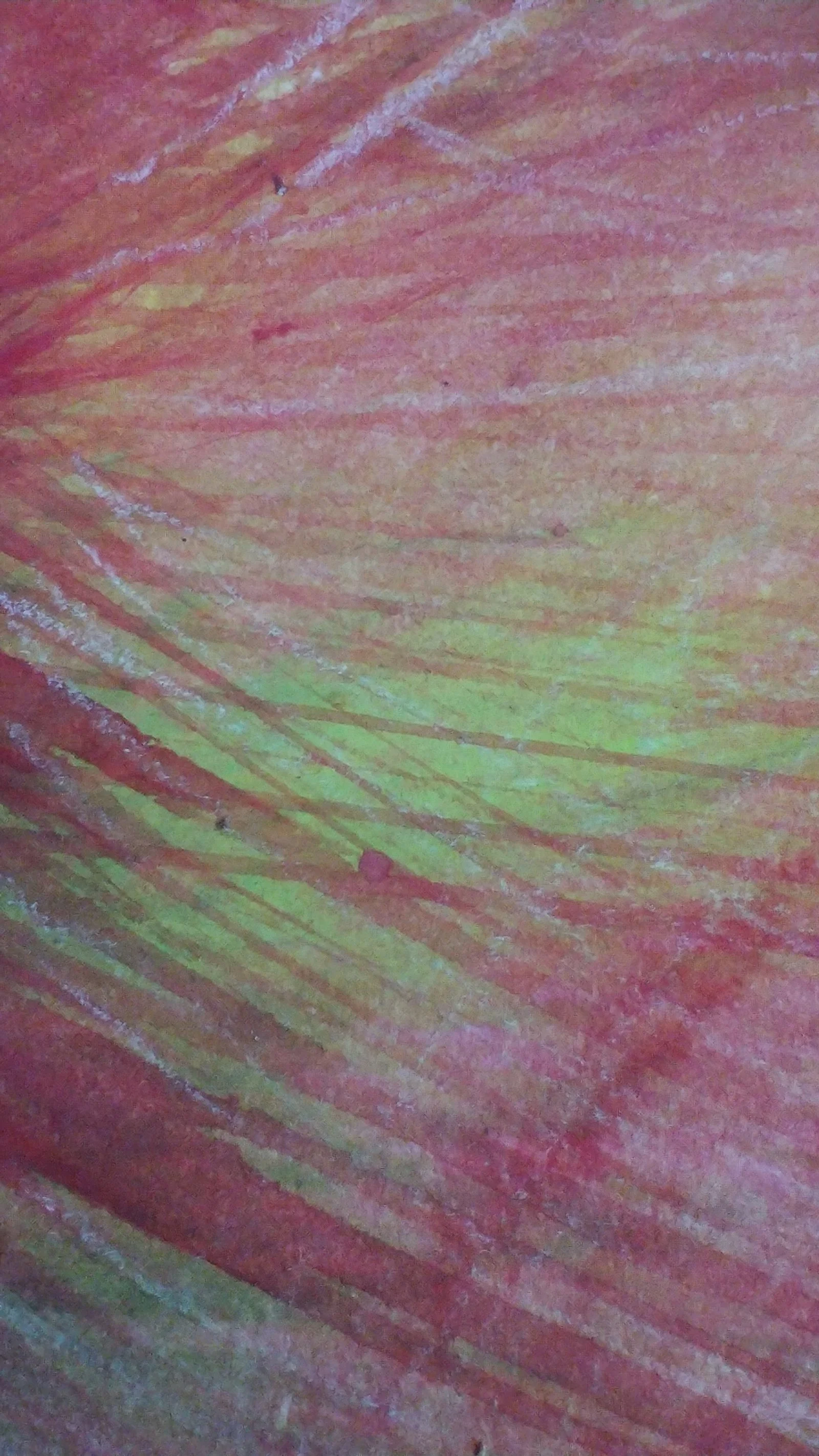
The very next day, the hummingbird built her nest in my outdoor shower (apparently the first time in nine years). I found two tiny eggs in the nest, which I drew into the goddess’s hair. As a child I always thought birds nests in tree’s looked like knots in hair, so it made the placement poetic that a nest should be in the hair. She felt like a guardian of the babies of the animal world: both earthly and mystical. The hummingbird’s swift, graceful movement echoed the goddess’s hair movement— an eruption of glory, a dance of colour and celebration.
An offering, for the next journey and page in the sketchbook.
Blessings and Golden Marks
I added golden symbols: spirals for life, personal symbols for blessings, an Ansuz-like rune for connection. White eggs, gold dots flickering like fireflies. A prayer across the page.
Closing: What This Time Has Given Me
This month has been a concentrated ceremony of connection. The land, the animals, the people, the rhythms of sun and sleep, and the materials themselves — salt, seeds, ferns, pigments — have all been collaborators. The work that emerged feels less like a single object and more like a living map: of alchemy, of pilgrimage, of a nervous system rewiring towards healthy intimacy and creative freedom.
I arrived with no Spanish and a sketchbook. I leave with the next part of the map, fragments of a new language (La luna está bonita esta noche) and the understanding that art can be both an offering and an altar. The farm has been a place of replenishment, and I feel carried forward by the space allowing me to go inward and elevated for the next part of the pilgrimage.
Switzerland blew seeds that were carried on the wind to create expansion, Colombia planted the seeds to cultivate elevation.
Follow my Instagram for ongoing Art of Pilgrimage videos (including video experiments that aren’t included in this blog) updates on my making and where I’m off to next! ✈️
If you would like to make your own map, I have created two self directed online courses and 6 week online course coming soon! 🧭
📹 Youtube video of Hummingbird nest here
🌱 Checkout Culitvarte here
With joy,
Allie x
